How much does a website cost in the UK?
What each package includes, five things that move the price, card or PayPal payment, .co.uk or .uk, and what UK GDPR and the Equality Act mean for your website.
By Eloti Designs · · 4 min read
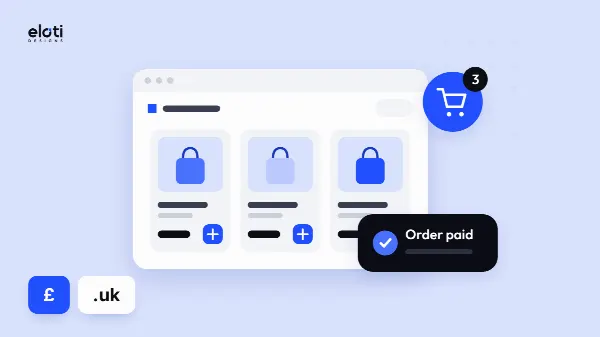
For a UK business, a website with us starts from £400. An online shop starts from £600 and a mobile app from £1,000. The website prices include your domain and hosting for the first year, you pay by card or PayPal, and nothing starts until you have a written quote.
The real cost of any website, ours or anyone else's, comes down to how big it is and what it has to do. Below we look at that, then at the running costs, and finally at three things specific to the UK: choosing between .co.uk and .uk, UK GDPR for your enquiry form, and the Equality Act.
Starting prices and what each one covers
Business website
From £400. Made for firms that want to look professional and win more enquiries. It adapts to any screen, puts call and contact buttons within easy reach, is set up to be found on Google, and you can edit it yourself.
Online shop
From £600. Products that shoppers find in seconds, a card and PayPal checkout they trust, delivery and pickup options, and all your orders gathered in a single dashboard.
Mobile app
From £1,000. Built for Android and iPhone, listed on Google Play and the App Store, with notifications to bring customers back and a connection to your website or portal.
You own what we build: the website, the domain and the content, with full admin access. Our UK website prices page lists the packages next to each other.
Why your quote may differ from the starting price
A starting price describes a well-made version of the basic package. A real quote rises or falls with five things:
- Size. More pages mean more layouts, more copy and more testing. A sole trader with a handful of pages and a firm with a page for each service and town are pricing different jobs.
- Selling. An online shop needs each product photographed, described and priced, plus delivery rules and a checkout that works first time. A big catalogue with variants takes longest.
- Features. Appointment booking, a customer portal, member areas or a link to your accounts or stock system each add development time. Our page on web apps and portals covers these.
- Content. Ready-written copy, good photography and a finished logo keep costs down. If you need them created, budget for it; branding is quoted separately.
- An app. A mobile app is a project in its own right, even when it shares logins and orders with your website.
To compare designers fairly, send each of them the same page and feature list. Our guide to preparing for a website project helps you write one, and our portfolio shows finished websites you can click through.
The second year and after
Year one's domain and hosting come with the website. From the second year, you pay a renewal of £120 a year.
Past that, the spending is up to you: refreshing content, adding pages, SEO, or campaigns aimed at the right people through digital marketing. If you want someone else to keep the site updated and checked, look at our website care plans.
Card or PayPal, after a written quote
You can pay by card or by PayPal, whichever is easier for you. The written quote reaches you before any work starts and sets out the payment terms. SEO, digital marketing and branding are priced per project rather than sold as packages, so you pay only for what you use.
We work remotely, over video calls, email and WhatsApp, and fix meeting times around your working day. You can watch the site take shape on a private link. We have built thousands of websites since 2013.
Choosing between .co.uk and .uk
Nominet UK manages the .uk country-code domain, and its UK family has four endings:
- .co.uk, the long-standing choice for British businesses;
- .uk, the newest and shortest, for companies and individuals alike;
- .org.uk, aimed at charities and not-for-profit groups;
- .me.uk, meant for personal projects.
If you can, secure both the .co.uk and the .uk version of your name, so customers reach you whichever they type. Names are sold through registrars, which hold a contract with Nominet, and whichever you choose, the domain is registered as yours.
Your enquiry form under UK GDPR
An enquiry form gathers names, email addresses and phone numbers, so UK GDPR applies. The Information Commissioner's Office (ICO) is the regulator. Three points matter most for a small business website:
- Privacy information when you collect. At the moment someone fills in your form, they should be able to see why you want their details, how long you'll keep them and who else will see them. The ICO wants this short, clear and easy to find.
- A lawful basis. The UK GDPR lists the lawful bases in its article 6. You need at least one for each use of personal data, and your privacy information should name it.
- The data protection fee. Under the “Data Protection (Charges and Information) Regulations 2018”, organisations that use personal information, sole traders included, have to pay the ICO a fee unless an exemption applies. The ICO's website explains who is exempt.
Keep the form to the fields you really use, put a link to your privacy notice beside it, and turn to the ICO's guidance if anything is unclear.
Accessibility and the Equality Act 2010
Under the “Equality Act 2010”, and the “Disability Discrimination Act 1995” in Northern Ireland, every UK service provider must make reasonable adjustments for disabled people. For a website, that can mean offering the information someone needs in a different, more accessible format when they ask for it.
Public sector bodies have had to meet stricter accessibility regulations since 23 September 2018. Those rules are aimed at the public sector, but building a clear, readable website from the start makes reasonable adjustments far easier to offer.
Questions
Do you work with businesses across the UK?
Yes. We work remotely with businesses in England, Scotland, Wales and Northern Ireland, over video calls, email and WhatsApp, at times that suit your working day.
What if I need more than a package includes?
Tell us when you ask for a quote. The written quote lists the extra pages or features you have asked for, so you see the full price before any work starts.
Can I keep a .co.uk name I already own?
Yes. Tell us which name you have and who it is registered with. Your domain stays yours, and the new website can use it.
Sources
- .uk Top-Level Domain — IANA (Internet Assigned Numbers Authority)
- .UK namespace - Registrar Resources — Nominet
- The right to be informed — Information Commissioner's Office (ICO)
- A guide to lawful basis — Information Commissioner's Office (ICO)
- Data protection fee — Information Commissioner's Office (ICO)
- Understanding accessibility requirements for public sector bodies — GOV.UK (Government Digital Service)