Category: Business News

  • Lockdown break-ups and job changes boost rentals

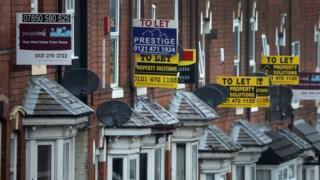
    To rent signs

    Image copyright
    Getty Images

    Image caption

    Since estate agents were allowed to reopen, demand for rental homes has increased faster than in the sales market

    Lockdown break-ups, job losses and urgent relocations are thought to have led to a surge in the rental sector.

    Demand for lettings in Great Britain is up by 22% compared to last year, according to property giant Rightmove.

    Experts say the lifting of lockdown restrictions has released “two months of pent-up tension” in the market.

    The supply of new rents is not keeping up with demand, however, prompting fears the surge will push up costs and leave some struggling to find homes.

    According to data provided by Rightmove, demand for all kinds of property plunged during the height of the lockdown.

    The restrictions prevented house viewings, surveys and searches from taking place, while removal companies were also temporarily closed.

    People were urged to stay in their current homes during lockdown unless absolutely necessary. Evictions were put on hold until 25 June.

    Since estate agents were allowed to reopen on 13 May though, demand for rental homes has increased at a quicker rate than the sales market, according to Rightmove.

    Many people have been left with an “immediate housing need” as a result of the pandemic, housing expert Miles Shipside said.

    Image copyright
    Chloe Arnold

    Image caption

    Chloe Arnold and her housemate DJ Branch are finding it difficult to find a new place in Bristol

    The sector is also coping with a backlog of people who have had to cancel planned moves during lockdown.

    Chloe Arnold and her housemate DJ Branch are two of hundreds searching for properties in Bristol, which has emerged as one of the most-searched-for places on Rightmove after moving home was allowed again.

    “It’s been really difficult if I’m honest,” said Chloe, 25, who works in recruitment. “A lot of the time landlords want couples.”

    The South West has seen the biggest surge in demand for new rental properties with a 34% increase compared to last year, according to Rightmove.

    It classed demand as the number of times website visitors clicked through to the details of a property listed online.

    “One of the reasons it has been tough is because a lot of the houses aren’t doing viewings,” Chloe said.

    “Obviously because of the social distancing, a lot of the places we are looking at, you have to decide whether you want it based on a virtual tour.

    “It’s so easy to miss things that way. In Bristol a lot of places have a problem with damp you aren’t going to see on a video tour.”

    Rent demand overtakes sales in Great Britain

    Demand measured by web visitors clicking on details of a listing

    Former banker Renecia Thompson, 35, and her four-year-old daughter moved from Anguilla in the Caribbean to the West Midlands before Christmas.

    As she had only just received her National Insurance number by the time lockdown was imposed, she had been unable to find work.

    She was turned down by eight landlords because she was claiming Universal Credit and had to stay with a friend during lockdown.

    “I was in competition with others who were in a better financial position than me,” she said. “Some landlords wouldn’t even talk to me.”

    Renecia has recently been accepted for a house in Wolverhampton after putting out a plea for a property on the Gumtree website.

    Image copyright
    Rightmove

    Image caption

    Rightmove property expert Miles Shipside says the competition for lettings will likely push up rent

    Wednesday 27 May saw more than six million people visit the Rightmove website, its busiest day ever.

    “They may need to move for a job,” said Mr Shipside. “In this environment we are in now, there is a need for people with specialist jobs to be in a certain place – just think about the Nightingale hospitals that have sprung up.

    “Where some people have enjoyed lockdown, others’ relationships haven’t survived it and this has had knock-on consequences.

    “There could be people who need to move because of job losses too.

    “And working from home has left a lot of people looking for a change in surroundings.

    “Effectively we have two months of pent-up demand that needs to be satisfied.”

    Rental market returning to pre-pandemic levels

    Sales market taking longer to recover from lockdown slump

    However, supply is struggling to match demand.

    The number of new rental listings on Rightmove is 4% below 2019 levels. It dropped to a level of 64% below during the week of 6 April.

    Landlords are “exiting the market” Mr Shipside says, due to Covid-19 and the uncertainty over tenants being able to afford rent.

    Thinktank the Resolution Foundation found one in eight renters were struggling with housing costs as a result of coronavirus.

    “They [landlords] are going to pick those with the best references and who can move in immediately. Those whose credit record is not the best tend to lose out,” Mr Shipside said.

    More people bidding for fewer properties was almost certain to push up the prices of rented accommodation, he said.

    Image copyright
    Stephen Groves

    Image caption

    Estate agent Stephen Groves said appointments were taking longer as a result of the virus

    Estate agents, having closed for two months, are now reporting an increased workload to manage the backlog of people needing new homes.

    “The number of new listings for sales has gone through the roof, but when it comes to rentals there is nowhere near enough stock,” said Stephen Groves, who runs the Home estate agents in Greater Manchester.

    “Days of working from nine to 5.30 have long gone. I was doing emails at 11 last night – everything just takes a lot longer,” he said.

    While his company is offering virtual appointments to prospective tenants, the ability to offer house viewings has been restricted.

    Staff members have to wear Personal Protective Equipment (PPE) during them and homes must be cleaned before and after the viewing.

    “Where we could do between 20 and 30 viewing of a property in a day, we are now doing four where the home is still tenanted,” he said. “Understandably people don’t want people coming to visit their homes because of the virus.”

    Image copyright
    Poppy Carr

    Image caption

    Paul and Poppy Carr of High Wycombe secured a new flat on the basis of a virtual viewing

    However, some who opted to sign an agreement on the strength of a virtual viewing have seen the benefit.

    Husband and wife Paul and Poppy Carr of High Wycombe needed to move out of their two-bedroomed apartment quickly but they could not go for any viewings in person during lockdown.

    They opted for a video tour of a new flat and negotiated a £200 reduction in their rent – partly because they noticed a de-humidifier in one room.

    “I was really surprised by the quality of the virtual viewing,” said Poppy, aged 25, a researcher who works in London. “We could see that it had been recently renovated and they had already done a deep clean.

    “I think we were lucky really because we got in there before demand boomed.”

    More about this story

    The Shared Data Unit makes data journalism available to news organisations across the media industry, as part of a partnership between the BBC and the News Media Association.

    For the full dataset, click here. Read more about the Local News Partnerships here.
  • No early return for UK tourists, says Spain

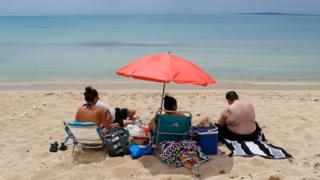
    Holidaymakers on a beach in Mallorca

    Image copyright
    Reuters

    Spain’s tourism minister has cast doubt on the prospect of an early return by UK holidaymakers to Spanish beaches.

    María Reyes Maroto said British coronavirus figures “still have to improve” before Spain could receive tourists from the UK.

    Last week, the Spanish government said foreign visitors would no longer have to undergo a two-week quarantine from 1 July.

    But Ms Reyes Maroto said tourist activity would be resumed “gradually”.

    “For Spain, it is very important that the first tourists are tourists who are in the same epidemiological situation as us, and that they are able to fly safely,” she said in a statement.

    “Regarding the United Kingdom, there have been talks with tour operators but British data still have to improve, because it’s important to ensure that the person comes well and then returns well.”

    The tourism minister said that as soon as conditions improved in the UK, Spain would be ready to receive British citizens “with the same hospitality as ever”.

    Spain normally attracts 80 million tourists a year, with the sector providing more than 12% of the country’s GDP.

    Opening up the holiday market again before the summer season is over is seen as crucial to the Spanish economy.

    However, just as Spain prepares to end its quarantine policy, the UK is set to impose a 14-day quarantine of its own for arrivals from 8 June, including returning holidaymakers.

    That would mean that any tourists coming home after taking holidays in most foreign destinations would have to spend two weeks in self-isolation.

    Other tourist destinations are also beginning to open up, with Greece announcing that flights to Athens and Thessaloniki airports will resume on 15 June – but only from those parts of Europe that have escaped the worst of the pandemic.

    Other Greek airports are due to reopen on 1 July.

    At the same time, tourism authorities in the Algarve region of Portugal have said its beaches will be open for tourists on 6 June, with flights resuming to the region’s international airport, Faro, from the UK and Ireland.

    However, the UK Foreign and Commonwealth Office continues to advise against all non-essential foreign travel.

  • Coronavirus: Restrict toilet access on flights, says ICAO

    Passengers walk through the United Airlines terminal at George Bush Intercontinental Airport on May 11, 2020 in Houston, Texas

    Image copyright
    Getty Images

    Image caption

    Data on how the coronavirus can spread between aircraft passengers is in short supply

    Air passengers should have restricted access to toilets on flights as part of wide-ranging coronavirus safety recommendations, a UN agency has said.

    The International Civil Aviation Organization (ICAO) guidelines also include limiting or suspending food and drink services on short-haul flights.

    The new guidelines are designed to protect air passengers and workers from the Covid-19 virus as lockdown eases.

    Airlines could see revenues plunge £314bn in 2020, the ICAO added.

    The aviation industry has been struggling as lockdown measures around the world have limited flights and passenger numbers.

    As those travel restrictions begin to ease, the ICAO has issued guidelines for governments, with the aim of airlines and airports having a unified response when trying to keep passengers and staff safe from coronavirus.

    • How safe is it to get on a plane?
    • What will flying look like after lockdown?

    The ICAO stopped short of saying that passengers must be socially-distanced on planes, but it did say they should be seated separately “when occupancy allows it”.

    Passengers should travel as lightly as possible, with small hand luggage stowed under their seat. Newspapers and magazines should be removed, and duty free sales should be temporarily limited, the UN’s civil aviation body said.

    Short-haul food and drinks services should be limited or suspended, or be sold in sealed, pre-packaged containers.

    Access to toilets should also be restricted, the ICAO said. Where possible, one toilet should be set aside for use by cabin crew, and passengers should use a designated lavatory based on which seat they have.

    ‘Biometrics for duty free’

    The new recommendations cover airports, aircraft, crew and cargo.

    In general, face masks should be worn in line with public health guidelines, and social distancing should be made possible where it is feasible, the UN body said.

    Areas should be routinely cleaned, and passengers should be checked for signs of coronavirus, by screening temperatures, for example. Contact tracing methods should also be explored.

    At airports, staff should have adequate personal protective equipment, which “could include gloves, medical masks, goggles or a face shield, and gowns or aprons,” the guidelines said.

    Passengers should be encouraged to check-in before getting to the airport, and to use mobile boarding passes.

    Airports should also use contactless technology, including facial and iris scanning, for “self-service bag drops, various queue access, boarding gates and retail and duty-free outlets”, the guidelines say.

    “This will eliminate or greatly reduce the need for contact with travel documents between staff and passengers,” the UN agency added.


    The recommendations are extensive and detailed – a blueprint for aviation in the Covid-19 era; and one fact stands out. Flying, for a while at least, is not going to be a whole lot of fun.

    From the moment you arrive at the terminal building, armed with your pre-printed boarding pass and luggage tags, human contact will be limited, social distancing the norm. Masks will be obligatory, and supplies of hand sanitiser everywhere.

    If you don’t like potentially intrusive technology, tough – ICAO suggests that “contactless biometrics such as facial or iris recognition ” should be used wherever possible, to reduce physical contact between staff and passengers.

    And it continues on board the plane: there are instructions to “limit interaction on board” – so no striking up a conversation with your neighbour – to reduce or suspend food and drink services, and to restrict lavatory access.

    What ICAO is trying to do here is create a common and consistent framework for the industry to follow around the world – allowing people to travel, while placating even the strictest health authorities.

    It insists the new measures should be temporary.

    But for the moment, anything that was left of the once-lauded romance of flying looks set to disappear in a pungent cloud of disinfectant.


    Airlines and aerospace firms have been struggling amid the coronavirus crisis.

    At the beginning of May, Virgin Atlantic said it would axe 3,000 jobs and quit Gatwick. Later in the month, engine-maker Rolls Royce said it would cut 9,000 jobs.

    There has been a huge reduction in air travel, with daily flights down about 80% since the start of the year.

    But now carriers are making plans to get airborne again, with plans to reintroduce some schedules.

  • Coronavirus: Customers queue for hours as Ikea reopens 19 shops

    There were long queues in Manchester

    Image caption

    There were long queues in Manchester

    Thousands of shoppers have queued for hours to get into Ikea stores after the furniture giant reopened 19 shops in England and Northern Ireland on Monday.

    They had been warned that only a limited number of shoppers would be welcomed with only one adult and one child from a household allowed in.

    But Ikea was forced to shut car parks at some stores to help ease pressure.

    In Warrington, people arrived at 05:40 to start queuing for the Ikea store to reopen at 09;00.

    The company praised shoppers for their patience.

    “Where we’ve seen strong demand we’ve taken appropriate decisions to open early for browsing and to temporarily close our car parks to help ease pressure and reduce waiting times,” Ikea said.

    “We’re incredibly grateful to the public in playing their part to help keep everyone safe.”

    Queues across the country

    In Warrington, a line of more than 1,000 people snaked around the car park with similar scenes at Ikea’s Wembley store.

    On Twitter, shoppers complained of “five-mile queues” in Croydon, Wembley and outside of London.

    Law student Alexi Norris visited Wembley to buy a desk but was shocked at the long waits.

    Customers queue for hours as Ikea reopens 19 shops

    West Midlands police took to Twitter to warn people of large queues at Ikea’s Wednesbury branch. The police urged: “Please consider if you need to go there today as you may be in for a very long wait.”

    There were long queues outside the Belfast branch, noted BBC reporter Mark Simpson.

    In Manchester one shopper (who didn’t want to be named) told the BBC that despite queues outside, inside the shop it was easy to maintain social-distancing.

    “It’s very busy with every entrance manned by staff with walkie talkies who were managing the long queues that had formed,” the shopper said.

    “We arrived just after 11:00 and had to queue for about an hour and a half before we were allowed into the store.

    “However, once inside though the store was much emptier than usual, so it was very easy to stay a safe distance from the other shoppers.”

    Risky to health

    But some criticized the long queues as a sign of runaway consumerism.

    One Twitter user said: “Don’t understand how a person sees this Ikea queue and actually joins it, rather than… heading home for a beer.”

    Others warned that people queuing were risking catching coronavirus.

    One said: “People shopping at Ikea moaning about the people in the queue at Ikea today. It’s the ‘it’s not me, it’s everyone else’ attitude that will cause the inevitable second wave.

    “Wear a mask and only go out if you have to. It’s not that hard, surely?”

    Safety measures

    An Ikea spokesperson said: “The health and safety of our customers and co-workers remains our top priority, which is why we put extensive and enhanced measures in place to create a safe and comfortable experience.”

    The measures include limiting numbers of customers in stores, a staggered entry system, screens in key areas and social-distancing wardens. All play areas and the restaurants have remained closed.

    “We ask that these measures are respected at all times,” Ikea said.

    It had asked customers to “come prepared with ready-made lists and their own bags to help ease waiting times”. It also pleaded with customers wishing to return items, “to do so at a later date”.

    “While frustrating, these planned measures are in place to ensure everyone’s safety,” Ikea said.

    “To avoid queues, we’d ask those purely wishing to browse, to visit us in the coming weeks.”

    Meanwhile, new footfall data from retail analyst Springboard has shown a sharp rise in the number of shoppers as a result of lockdown restrictions in England being eased.

    Overall, shopper numbers were up 36% on last week’s Bank Holiday Monday and 21% on the week before that. High Streets saw the largest increase, with footfall up 44% on last week and 24% on the week before.

    The increases have come despite only limited reopening allowed in England.

    Scotland, Northern Ireland and Wales have not yet allowed similar shops to open again.

  • Facebook staff anger over Trump post

    Trump

    Image copyright
    Getty Images

    Image caption

    The content of Mr Trump’s Facebook post had been hidden by a warning label on Twitter.

    Facebook staff have spoken out against the tech giant’s decision not to remove or flag a controversial post by US President Donald Trump last week.

    Mr Trump took to Facebook to repeat a tweet about the widespread protests in Minneapolis, following the death of George Floyd in police custody.

    Twitter had placed a warning over the content, which it said “glorified violence”, but Facebook said it did not violate its company policy.

    Some staff said they were ‘ashamed’.

    The president said he would “send in the National Guard”, and warned that “when the looting starts, the shooting starts.”

    The post remains untouched on Facebook after founder Mark Zuckerberg said it did not violate the company’s policy around incitement of violence.

    “People can agree or disagree on where we should draw the line, but I hope they understand our overall philosophy is that it is better to have this discussion out in the open, especially when the stakes are so high,” Mr Zuckerberg wrote in a post on the platform.

    “I disagree strongly with how the President spoke about this, but I believe people should be able to see this for themselves because ultimately accountability for those in positions of power can only happen when their speech is scrutinized out in the open.”

    “Silence is complicity”

    Several employees expressed their frustration at the decision, on social media.

    “Facebook’s inaction in taking down Trump’s post inciting violence makes me ashamed to work here,” Lauren Tan, a software engineer wrote.

    “I absolutely disagree with it… Silence is complicity.”

    Product manager Rotimi Opeke added: “I’m not sure the company sees me as anything more than just a diversity point.”

    Others suggested that Facebook should have made an exception to the policy, given its context.

    “We need to strive harder as a company, and industry, to have our Black colleagues’ and fellow citizens’ backs so that they are not having to face down institutionalized societal violence and systemic oppression alone,” added David Gillis, a director in product design at Facebook.

    Other employees used the company’s internal messaging system to try to raise their concerns, The Verge reports.

    Joseph Evans, Head of Tech at Enders Analysis said that staff at tech firms do speak out against their employers’ decisions on occasion; in 2018 Google staff walked out in protest against the firm’s treatment of women.”Part of the appeal of working for these companies is that the employees feel they’re changing the world, and hopefully for the better,” he said.

    “So the tech giants have to balance avoiding regulatory crackdowns, keeping profits high, and attracting and retaining their highly-skilled workforce.”

    Donald Trump and Mark Zuckerberg spoke on the phone on Friday.

    It’s unknown what was discussed, but both sides called the conversation productive, according to Axios news website.

    “We stand against racism”

    Today, Facebook announced that it will donate $10m (£8m) to “efforts committed to ending racial injustice.”

    “We hear you, we see you and we are with you,” the company said on social media.

    “We stand against racism. We stand with our Black community – and all those working toward justice in honour of George Floyd, Breonna Taylor, Ahmaud Arbery and far too many others whose names will not be forgotten.⁣”

    It is unclear where the $10m will go, or how it will be distributed.

  • Manufacturers urge bailout as sector suffers

    Woman working in factory

    Image copyright
    Getty Images

    The coronavirus crisis has left many manufacturers on the “cliff edge” and in need of government intervention, an industry body has warned,

    The government should step in to support key sectors, in line with other countries, Make UK urged.

    It said support should especially be targeted at the aerospace, carmaking and steel sectors.

    Its plea came as new figures showed the sharp downturn in UK manufacturing continued last month.

    The closely watched IHS Markit/CIPS Purchasing Managers’ Index (PMI) for the sector gave a reading of 40.7 for May.

    It was up from April’s record low of 32.6, suggesting the sector was not declining as quickly as before. Anything below 50 indicates contraction.

    Rob Dobson, director at IHS Markit, said: “Those who typically see the glass half-empty will note that the UK manufacturing sector remained mired in its deepest downturn in recent memory.

    “However, the glass-half-full perspective is one where the rate of contraction has eased considerably since April, meaning – absent a resurgence of infections – the worst of the production downturn may be behind us.”

    Uncharted territory

    Make UK chief executive Stephen Phipson said: “We are now in such uncharted territory that what would until recently been thought of as unthinkable is now very much the reality.

    “While the support schemes in operation are providing significant support to the economy, there are some sectors and companies who are fundamentally sound businesses and were trading positively before the pandemic.

    “Instead, however, they have now been driven to the cliff edge by the nature of this crisis and may not survive without direct government intervention.”

    • Chancellor in delicate game of economic Kerplunk

    Mr Phipson said the firms in question were in “key strategic sectors for the UK internationally” and that the government should therefore “intervene directly to provide support and ensure their survival”.

    Make UK said its research showed that almost three-fifths of manufacturers believed it would take more than a year for trading conditions to return to normal.

    Commenting on the PMI figures, the EY Item Club said they lent support to the belief that UK economic activity could improve as lockdown restrictions are progressively eased over the coming weeks.

    But it added: “Nevertheless, the UK seems on course for a record GDP contraction in the second quarter.”

    It said it expected the UK economy to shrink about 15% quarter-on-quarter in the April-to-June period.

    “While the EY Item Club expects the economy to return to clear growth from the third quarter, we still see the economy contracting around 8% over 2020,” it added.

    “This assumes that there is a gradual further lifting of the lockdown over the coming weeks, following the latest moves that came into effect on 1 June.”

  • Coronavirus: How safe is it to get on a plane?

    Many airlines are planning to resume flying, but they first need to reduce the risks of Covid-19.

  • Coronavirus: ‘Our business can now get cracking’ after lockdown

    Neil Conway

    Image caption

    Neil and his wife Susanne run a towel and bedding stall in Barnsley outdoor market

    “It’s been hard financially, but our business can now get cracking,” says Neil Conway, who runs a towel and bedding stall at Barnsley outdoor market with his wife Susanne.

    Open air markets and car showrooms will be allowed to re-open in England on Monday, with coronavirus-related measures in place.

    As with garden centres (which re-opened in May across the UK), the risk of transmission of Covid-19 “is lower in these outdoor and more open spaces”.

    To try to keep their customers safe, Neil and Susanne have overhauled how they work.

    The pair have printed new signs to encourage shoppers to keep a two-metre distance, as well as introducing contactless payments and designated payment and “pick-up” points for orders.

    “We’re hoping we can provide a good example of how things can work, and hopefully others will follow,” says Susanne.

    She says that it’s been a “funny few months” not trading during lockdown, having started work at the market when she was 12-years-old.

    “We have wanted to know when we were coming back, and we were questioning if it was ever going to happen.”

    “But now we’re really looking forward to getting started, and helping get the economy back on its feet, safety-first of course,” she adds.

    Although their market stall might benefit from lockdown measures gradually being lifted, Neil anticipates it might take some time for trade – and customer confidence – to return.

    “I don’t think we’ll take a great deal of money at first, but we’ve got to get into the swing of working again,” Neil says.

    One trade body says that those who’ve carried on selling essential items like food during lockdown have shown that trading can be done safely. But they told the BBC they believe only a fraction of outdoor markets will resume straight away.

    Joe Harrison, chief executive of the National Market Traders Federation said: “It will take a lot of time for markets to get back to their full potential, with the correct equipment in place.”

    Car showrooms have also been working to put measures in place to ensure the safety of staff and customers ahead of re-opening, said Sue Robinson, director of the National Franchised Dealers Association.

    She said they include one-way systems, hand sanitising stations, protective screens and more frequent cleaning for each car.

    Covid-19 re-opening plans

    Other retailers in England have also been pressing ahead with their coronavirus-secure re-opening plans.

    Ikea, for example, could have stayed open during lockdown. But it chose to shut, and will only re-open in England and Northern Ireland from Monday.

    One store manager told the BBC that “wardens” will be working in-store, reminding customers of social distancing guidelines.

    Other shops classed as non-essential in England, however, won’t be able to re-open until 15 June. No firm dates have been set for the reopening of non-essential shops in Scotland, Wales and Northern Ireland, but each country has plans in place.

    This includes shops selling things like clothes, toys, books and electronics, as well as tailors, auction houses, photography studios, and indoor markets.

    Tony Symons, owner of Roger’s Menswear in Kent, has already been gearing-up to start trading again.

    He says that he has ordered a Perspex screen for the till area, and will introduce shorter openings hours and a cap on the number of customers allowed in his shop at one time.

    But like Neil the market trader, Tony only expects a trickle of trade initially.

    “To be optimistic, I would say customers will come flocking through the door. Unfortunately, I don’t think that will be the case.”

    As an independent retailer without an online sales platform, Tony is relying on customer visits, and hopes that footfall will build up over time.

    “I’d like to think everyone is like me and wants to get out there and do things, but we shall see.”

  • Make Covid-19 recovery green, say business leaders

    Wind turbine

    Image copyright
    PA

    Image caption

    More than 200 UK business leaders have urged the government to invest in a Covid-19 recovery that is in line with climate goals

    More than 200 top UK firms and investors are calling on the government to deliver a Covid-19 recovery plan that prioritises the environment.

    They say efforts to repair the economy should support the government’s commitment to tackle the climate change crisis.

    They believe ministers should use the Covid-19 lockdown as a springboard to propel a green economy.

    The signatories to the letter include Lloyds Bank, Asda, Siemens and Sky.

    The proposals outlined by firms such as Mitsubishi, Signify and Yorkshire Water in a letter to the prime minister include:

    • Driving investment in low carbon innovation, infrastructure and industries.
    • Focusing support on sectors that can best support the environment, increase job creation and foster the recovery – whilst also decarbonising the economy.
    • Putting strings on financial support to ensure firms getting bailout cash are well managed, and in step with climate goals.

    In a speech on Thursday Boris Johnson briefly committed himself in principle to the so-called Green New Deal slogan “Building Back Better” for a more resilient society.

    And there are rumours that the Treasury is planning cash for labour-intensive home insulation, and further investment in electric vehicles.

    Image caption

    The letter signatories suggested further investment in electric vehicle infrastructure

    But the signatories to the letter urge ministers to publish detailed plans that will put the UK back on track to meet the medium-term climate goals, from which it’s slipping.

    They come from both multinational and national businesses across industry sectors including energy, finance, consumer goods, retail, construction, water and communication.

    ‘Job creation’

    Their letter says: “Measures that cut greenhouse gas emissions and stimulate the economy have the potential to be more effective in supporting jobs and economic growth.

    “They’ll also support our long-term climate goals and deliver better outcomes in other key areas of public interest, such as public health and wellbeing.

    “Investments in projects such as building renovation, offshore wind, electric vehicles, environmental improvements and low carbon industrial clusters have the potential to bring investment and job creation across multiple regions of the UK.”

    The initiative has been co-ordinated by The Prince of Wales’s Corporate Leaders Group (CLG).

    It told BBC News: “Clearly the immediate focus has been on keeping the economy going and, understandably, there will need to be some urgent support measures that have not had significant ‘strings attached’.

    “But as long-term support measures are introduced, there should be measures within them to ensure that the money is going to well-managed companies supportive of the UK’s long term goals.

    ‘Green strings attached’

    Green groups have called for all bailout cash to go to firms that agree green objectives.

    But the corporate leaders said: “While we can’t say no exceptions ever, green strings should be the rule, not the exception.

    “Airlines would be a very strong example of a sector that will likely need support but should also be doing its bit to adapt to the challenges of climate change and support the transition – as many senior leaders in the sector recognise.”

    Liz Barber from Yorkshire Water said: “It doesn’t have to be a hard choice; I see lots of opportunities which would rebuild the economy at the same time as helping the vulnerable, securing the stable climate and protecting the natural environment.”

    She gave the example of the Hull project Living With Water, which focuses many partners on making the city resilient to floods.

    Meryam Omi from Legal & General warned: “The government is understandably focusing on the present crisis, but they must heed the dangers of reacting too late to threats and remember one of the gravest in the world – the climate emergency.

    “Decisions policymakers take now will decide the success of the UK’s ambitious net-zero target. They’ll have implications for decades.

    “Implementing an ambitious ‘green’ recovery package, with clear pathways for companies to build aligned strategies and for investors to direct capital into ‘green’ projects at scale is now matter of necessity, not choice.”

    The government was approached for comment.

    Follow Roger on Twitter.

  • Charity shops fear deluge of donations when they reopen in June

    charity shop

    Image copyright
    Getty Images

    Charity shops fear they will be deluged by donations when they start to reopen in just over two weeks.

    English stores will start opening their doors on 15 June, in line with government guidance.

    But they face a number of challenges after the coronavirus closures with all new offerings set to be quarantined for 72 hours.

    Robin Osterley, chief executive of the Charity Retail Association, says shops are expecting to be “full to bursting”.

    The UK’s 11,000 charity shops help raise almost £300m for good causes each year.

    Many people in lockdown have taken the opportunity to clean out their homes.

    Mr Osterley said: “We’re not just anticipating a normal three months’ worth of donations but also the extra stuff that people may have picked out to donate during their clean-ups.”

    Image copyright
    Barnardo’s

    He urged people to “be thoughtful about the sorts of things you’re donating”.

    Barnardo’s, one of the country’s leading charity shop chains, is advising customers to call their local store to ensure the shop is able to take the items, in order to help manage the expected influx.

    Oxfam is asking customers to stagger donations to avoid items being left outside: “We welcome that many people are taking the opportunity to de-clutter during lockdown and are asking people to hold on to those items and donate them when shops and donation banks are open again.”

    Staged opening

    “Charity retailers are thinking carefully about which shops in their chains to open first,” pointed out Vicki Burnett, senior consultant at the Charity Retail Consultancy.

    “Many are planning a staged approach, opening the more simple-to-manage stores first and leaving the more challenging ones to later.”

    Image copyright
    David Azia/OXFAM

    British Heart Foundation has the biggest branch network with 750 stores.

    “From mid-June, we will reopen a small number of BHF shops to establish new safe ways of working with others to follow,” said Allison Swaine-Hughes, retail director at British Heart Foundation.

    Barnardo’s, the second-largest chain with 710 stores, will be opening 70 at first with a number of new safety measures.

    Oxfam, the third largest with around 650 shops, has yet to decide when to re-open stores: “Our priority remains the health and wellbeing of our staff, volunteers and customers,” the charity said.

    Cancer Research UK, with 600 stores, plans a phased-reopening from 29 June.

    “We’re planning significant safety measures and putting new processes in place to receive and handle donations,” said Julie Byard, director of trading at Cancer Research UK.

    Volunteers needed

    Charity shops rely on the UK’s biggest army of volunteers to keep them going with 233,000 people all over the country lending a helping hand.

    But, in contrast to the excess of stock expected, here they are bracing for a shortage: “We are expecting a temporary shortage of volunteers when shops re-open again,” said Robin Osterly.

    “Some may still be in isolation because of the Covid-19 crisis, while others may simply have fears of being out and about” he pointed out.

    “A large proportion of charity shop volunteers will be over 70 and therefore in the vulnerable category and it is inevitable that some volunteers may never return to the roles they had before lockdown,” said Vicki Burnett.

    “But lots of staff and volunteers are also desperate to get back to their shops, having missed the camaraderie and sense of purpose it provides, as well as to return to some form of normality.”

    There will be some recruitment activity going on over the coming months, she said.

    A customer’s viewpoint

    Image copyright
    Elizabeth Mistry

    Charity shops have many fans who delight in being able to snap up good quality second-hand items at decent prices.

    But will they rush to return to the shops with coronavirus fears still in the air?

    “I think it is very unlikely I’ll be buying second-hand clothes again for a long time,” said Elizabeth Mistry, a journalist and carer who is a keen user of charity shops.

    “But I might not be able to resist nipping into Oxfam books just to see what they have – though it would have to be something really special in the short term to actually buy it.”

    Elizabeth is worried about where donations may have come from. “Will future donors have to ID the donations for traceability?” she asked.

    She is also concerned that the virus may last on cardboard or paper.

    “I’d leave a book outside for a day or two in the sun – and even then I would wipe the cover and spine down before bringing it in.”

    Charity stores will be introducing extra hygiene to reassure customers, said Vicki Burnett.

    “They already have great hygiene processes in their shops when it comes to sorting goods – items are washed, steamed or cleaned and this will only increase in the current situation.”

    Goods that come in will be isolated for 72 hours before being sorted.