Category: Business News

  • Will coronavirus change America’s jobless stigma?

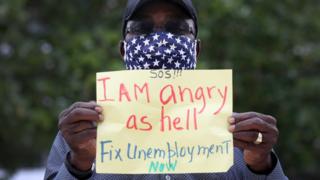
    a Florida man protests gaps in the unemployment system

    Image copyright
    Getty Images

    More than 21 million people in the US – roughly one in six workers – are now receiving unemployment benefits amid the economic havoc triggered by the pandemic.

    The dramatic numbers, a sign of the steep job losses triggered by the virus lockdown, are not unique to the US.

    But they are prompting fierce debate in a country that has long attached stigma to state aid.

    Another 2.1 million people filed new jobless claims last week.

    That pushed the new applications made since mid-March above 40 million, the weekly Labor Department figures show.

    A further 1.2 million people applied for benefits through the federal government’s coronavirus emergency relief, which expanded what kinds of workers are eligible for assistance.

    The scale of the crisis this spring created rare support among Americans for a broader safety net, said Victor Tan Chen, an assistant professor of sociology at Virginia Commonwealth University, who has studied attitudes toward unemployment in the US compared with other countries.

    But he warned that backing is already waning, despite the ongoing need.

    “This is a national and international crisis. People are understanding they have to do what they have to do to keep themselves and their families afloat, so it’s diminished that stigma – at least for the time being,” he said.

    “But you can already see that part of the culture rising up and it’s going to get worse and worse as this situation drags out.”

    Political fight

    Economists – including the head of the America’s central bank – have warned holding back further assistance may slow economic rebound, which remains uncertain, despite loosened restrictions across the US.

    But lawmakers are fighting over extending the emergency relief and whether a $600 across-the-board boost to the benefits – which can vary widely by state and worker – was too generous, noting that many low-wage workers are earning more on unemployment than they did on the job.

    Republican Senate leader Mitch McConnell said this week that he thought another round of economic relief was likely. But talks about the package are reportedly minimal and he rejected an aid proposal worth an estimated $3tn approved by the Democrat-controlled House.

    “The way that the recovery will be fast is, if people who have been out of work because of the virus have enough income so that when the economy does reopen they will be able to get out there and spend,” said Heidi Shierholz, a senior economist at the Economic Policy Institute, who was the top economist at the Labor Department during the Obama administration.

    The Labor Department’s report on Thursday showed the number of new claims in the week ended 23 May continuing to subside since the peak at the end of March.

    For the first time, the number of Americans on state unemployment programmes also dropped back, falling to 21 million in the week ended 16 May from 25 million the week earlier.

    But the figures remain much higher than anything seen since the Great Depression, with the total number of people participating in all state and federal programmes at roughly 31 million as of 9 May.

    The US also said on Thursday that the economic contraction in the first three months of the year was 5%, worse than the 4.8% initially estimated.

    ‘Still deteriorating’

    Many forecasters expect a rebound to begin this summer. But predictions by the Congressional Budget Office and others see the unemployment rate staying above 10% by the end of the year – roughly triple what it was in March and higher than the 10% peak during the financial crisis.

    On Wednesday, Boeing said more than 12,000 employees in the US will lose their jobs in coming weeks and American Airlines revealed plans to cut management and support staff by 30%, or about 5,000 jobs.

    “We know things are still deteriorating,” Ms Shierholz said. “When we’ll start to see some turnaround it’s hard to know.”

    Image copyright
    MAS Productions

    Image caption

    Singer Emma Craig

    Emma Craig, who lost her jobs as a restaurant server and supper club singer when New York’s stay-at-home orders went into effect in March, said government help has been critical.

    Without the $600 coronavirus bonus, Ms Craig said the benefits would barely cover her $1,200 monthly rent. With it, the 31-year-old says she is making “just below” what she earned in a bad week before the pandemic.

    “With the $600, I’m keeping my head above water,” she said. “If I was just getting unemployment it would be laughable.”

    The closures came just as Ms Craig felt like she was finally making it as a professional singer, a career she had been working toward for a decade.

    “It all came crashing in very quickly,” she recalled. “It was literally 24 hours – what is my career, what is the future?”

    Ms Craig said she had no qualms about seeking assistance and she is starting to feel more optimistic about the future since the unemployment benefits finally kicked in, some two months after she first applied.

    This week, offering another glimmer of hope, the supper club told her it planned to reopen though it has not set a date.

    “The light at the end of the tunnel just opened,” she said.

  • Biggest UK solar plant approved

    solar

    Image copyright
    Hive Energy

    The go-ahead has been given to the UK’s biggest solar farm, stretching 900 acres on the north Kent coast.

    The government has approved the controversial scheme, which will supply power to 91,000 homes.

    The project could include one of the world’s largest energy storage systems.

    But it has been fiercely opposed by many local people, and it’s divided green groups. Greenpeace, the RSPB and the countryside charity CPRE are against the plan.

    They say it’s industrialising the countryside – and may harm an adjacent wildlife site.

    But Friends of the Earth offered qualified support, on the grounds that the current intensively-farmed land was bad for wildlife anyway.

    Their spokesperson Mike Childs said: “No-one wants to see damage to local habitats, but this is not some lovely, untouched meadow.

    “Changing the use of the site from intensive agriculture will reduce the high level of chemicals currently harming insects and wildlife – but we have to hold the developers to account”.

    Rooftop panels?

    Environmentalists want the developers to offer free rooftop solar panels to local people who are protesting against the solar farm – and especially against the giant energy storage unit, which they fear may prove an explosion risk.

    The facility will use 25 acres of the total land and the countryside charity CPRE says the proposed battery storage system has caused fires and explosions around the world.

    The developers Wirsol Energy and Hive Energy say it’s safe. They maintain the subsidy-free project will be one of the lowest-cost power generators in the UK and will bring local councils £1m every year that it is running.

    Cheap panels

    In 2015, the government controversially announced it would phase out subsidies from solar power, to a howl of protest from the industry.

    But the cost of solar panels has tumbled by two thirds since 2010.

    The Energy Secretary Alok Sharma said the decision was taken after careful consideration – but said the project would be a world leader in solar and power storage.

    Follow Roger on Twitter @rharrabin

  • Coronavirus: UK sees almost no car manufacturing in April

    Jaguar Land Rover workers

    Image copyright
    Jaguar Land Rover

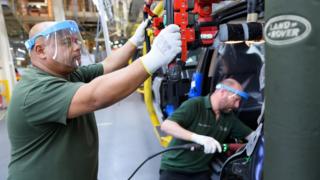
    British car manufacturing came to a screeching halt in April, down 99.7% against the same month last year.

    It was the lowest output since the Second World War, according to the industry body, Society of Motor Manufacturers and Traders (SMMT).

    Just 197 premium and luxury sports vehicles rolled off factory lines, with 45 of those sent to UK customers.

    Instead, some plants refocused to make 711,495 items of personal protective equipment for health workers.

    “With the UK’s car plants mothballed in April, these figures aren’t surprising but they do highlight the tremendous challenge the industry faces, with revenues effectively slashed to zero last month,” said SMMT chief executive, Mike Hawes.

    The loss of 400,000 cars that would normally have been made is expected to cost the British car industry up to £12.5bn in revenues.

    In April there were 830 new car engines made at UK plants, 781 of which were exported. This level was down 99.5% on the year before.

    Mr Hawes said ramping up the industry again would be a “gradual process”. Half of the UK’s engine and car makers are expected to head back to work this week.

    Production timescales will be staggered with strict social distancing measures in place. The SMMT has suggested to car manufacturers that factory workers should be provided with PPE.

    Nissan backs UK plant but protests erupt in Spain

    McLaren to cut 1,200 jobs as virus hits demand

    Car manufacturers are also expected to work with fixed teams and with partnering to limit the number of people who interact on a daily basis.

    Switch to PPE

    Before production mostly stopped, the few cars that were produced were luxury cars from brands like McLaren, Bentley and Rolls Royce.

    It takes about a month to assemble a high end luxury sports car.

    Although production of vehicle lines had stopped, the finishing touches were still being applied to 197 luxury cars that were sent to customers.

    Image copyright
    McLaren

    Image caption

    McLaren helped to make medical equipment

    With normal factory work on hold, the industry redirected its capability towards manufacturing PPE for healthcare workers.

    Face shields, visors and medical gowns were pieced together in car factories. Rolls Royce and McLaren were among the companies which helped to make medical equipment such as ventilators.

    Although the car industry is progressing with plans to resume production slowly, unions say a severely weakened industry needs urgent government help.

    Steve Turner, Unite assistant general secretary, said: “We urgently need a sector plan to support the UK’s world class auto industry through this crisis, with investment to defend jobs and support for a transition to electrification.

    “The French and German governments have wasted no time in getting behind their manufacturing workers.”

    He said that in both countries, governments are using the shutdown to intervene, with taxpayer support, in return for a transition to a greener domestic industry and support for their local supply chains.

    “The UK government needs to match this ambition, proudly talking up our manufacturing champions and working with unions to recover and meet the challenges of the future, sustaining and creating quality jobs and apprenticeships,” he said.

  • Coronavirus: Renters struggle most with pandemic costs, report says

    To let signs

    Image copyright
    PA Media

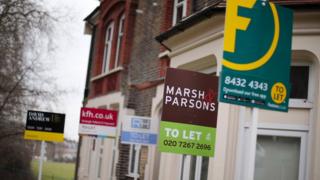
    Private renters are more likely to be struggling with payments than those who own their homes, new research by the Resolution Foundation suggests.

    The think tank concludes one in eight private renters have fallen behind with housing costs since the coronavirus crisis began, compared to one in 12 mortgaged home owners.

    Its report is based on a YouGov survey of around 6,000 adults in the UK.

    The government says it took action to support renters during the pandemic.

    The action, which the government calls “unprecedented” includes banning evictions for three months and increasing the Local Housing Allowance.

    Lindsay Judge, principal policy analyst at the Resolution Foundation, said renters tended to be in a weaker financial position going into the crisis.

    “They had lower levels of savings for example, and they spent considerably more of their income on housing costs in the first place. It’s also fair to say home owners have been more successful at directly reducing their housing costs, so we’ve seen many more home owners issued a mortgage holiday than renters are being given reductions in rent.”

    ‘A looming crisis’

    The Housing, Communities and Local Government Committee has warned “there is a looming crisis in the private rental sector”, with thousands of tenants unable to pay their rent having lost their jobs or seen a significant loss of income.

    The committee’s chair, Labour MP Clive Betts, told the BBC the UK was currently in “the lull before the storm.”

    Citizens Advice has estimated that around 2.6 million tenants expect to fall behind on their rent because of coronavirus.

    Its principal policy manager Joe Lane warned renters are now facing a countdown to the end of protection from eviction.

    “What we want the government to do is make sure there are protections for people who have fallen into arrears due to coronavirus, and also take steps to make sure landlords have to put in place things like affordable repayment plans and make sure the requirement to work with renters has some teeth.”

    ‘Inundated’

    The housing charity Shelter said its emergency helpline has been inundated with calls from distressed renters who have lost their jobs and are terrified of losing their homes.

    Image caption

    Private renter Dennie Smith says rent had been a struggle after her hair salon was forced to close

    Dennie Smith has been renting her family home for five years. She says that until the pandemic came along, she had never missed a payment.

    The £1,950 monthly rent has been a struggle since her husband lost his job last autumn. Then her South Croydon hair salon Vintage 62 had to close in late March because of the Covid-19 shutdown, meaning a sudden loss of income.

    Dennie says her landlord agreed she could postpone two months’ rent, but she will still need to pay back the arrears in future.

    “We managed to pay March but at the moment we owe April and May, and then June is due on Monday. I feel sick actually, because at the moment that’s one of our biggest outgoings, the rent.”

    Her husband is about to start a new job, but will have a lower salary than before. She hopes her business is able to re-open as soon as possible and that customers do come back quickly.

    Knock-on effect

    But landlords are also feeling the knock-on effects.

    The National Residential Landlords’ Association (NRLA) says that due to the virus, 54% of its members have experienced some combination of rent payment problems or unanticipated periods when properties are empty.

    Buy-to-let landlords are eligible for three-month mortgage holidays. The NRLA says this is helping to sustain tenancies, but means a cost further down the line.

    Sussex-based landlady Sue Hull has eight properties. One set of tenants, a couple who work full-time, had to self-isolate after their child displayed Covid-19 symptoms. Sue was sympathetic when they said how much they received in statutory sick-pay would affect their ability to pay rent, so she agreed to defer payments for two months, to be paid back over two years.

    Image caption

    Sue Hull says applying for mortgage holidays could hinder future plans to re-mortgage two other properties

    Sue does not want to apply for a mortgage holiday from a buy-to-let lender because she fears it would affect how lenders perceive her situation when she tries to re-mortgage two other properties.

    “I’ve also got another property that’s empty I’m paying council tax on” she says. “Presently I’m having to take £600 pounds a month from my own savings. So it is not something I want to sustain in the long term”.

    Ben Beadle, chief executive at the NRLA said landlords are nervous.

    “A number of our members are having issues that arose pre-Covid and not able to get possession of their property. With any sort of ban – we don’t see that as being a long-term solution. We think a careful re-opening of evictions needs to take place that prioritises pre-Covid debt, anti-social behaviour and prioritises domestic violence.”

    The NRLA wants to see existing support extended to help tenants cover their costs, including the elimination of the five week waiting time for Universal Credit.

    Clive Betts said that although the government was considering a “Pre-Action Protocol” encouraging landlords to reach out to private tenants to understand their position before taking court action, this would only be worthwhile if the courts had discretion to make sure an attempt had been made to reach an agreement with their tenants.

    Image caption

    The UK housing and rental markets are expected to be buffeted by the fallout from coronavirus

    A spokesman for the Ministry of Housing, Communities and Local Government said: “We’ve taken unprecedented action to support renters and landlords during the pandemic – including banning evictions and increasing Local Housing Allowance (LHA) – and we’ve always said we will keep this under review.

    “To help prevent people getting into financial hardship or rent arrears, we’ve given support for business to pay staff salaries and strengthened the welfare safety-net.

    “Our guidance to landlords and tenants is clear they should work together to address any concerns and find solutions to overcome rent arrears, such as an affordable repayment programme.”

    Advice for struggling tenants

    Citizens Advice said people who are struggling to pay their rent should get in touch with their landlord and try to negotiate a reduction. They should also try to arrange for any arrears to be paid back over a manageable period and keep a note of discussions.

    The organisation also suggested exploring options for increasing income – for instance, making claims for benefits or other financial support introduced by the government to help ease the financial impact of the pandemic.

    The government has paused eviction proceedings until 25 June and has also temporarily extended notice periods for some tenancy types to three months. It is not yet clear what, if any, alternative measures will be put in place post 25 June.

  • Coronavirus: Debenhams makes some restaurant employees redundant

    Debenhams storefront

    Image copyright
    Getty Images

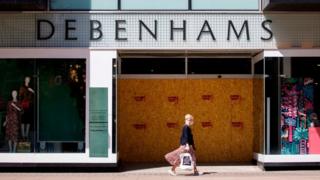
    Some restaurant employees at crisis-hit Debenhams say they will be made redundant at the end of the month.

    Staff say they will not receive redundancy pay from the company and will not have paid notice periods.

    They heard during a conference call on 28 May that administrators had decided to close a majority of store cafes.

    Debenhams said it was pursuing a “leaner and more flexible operating model” to help it adapt to changes in the retail industry.

    The company fell into administration for the second time in a year in April.

    Catering staff were told in an email that, because they were losing their job on 31 May, they were no longer eligible for the government’s Coronavirus Job Retention Scheme that pays 80% of salaries.

    In one email seen by the BBC, staff were told that administrator Geoff Rowley advised “we are unable to keep people on furlough if there is no job for them to return to”.

    In a separate email, staff were told that claims for redundancy payments would have to be made through the UK government.

    Image copyright
    Louise Crowe

    Louise Crowe, who worked in the Debenhams restaurant in Barrow-in-Furness, told the BBC she had no idea she would be made redundant during the conference call.

    “A lot of us were wondering what this would be,” she said. “Would it be getting us back into work and how we would do it?

    “He told us the administrators have advised us not to reopen the restaurants, so you’re all redundant. We’ll get our final pay [on Friday] and that’s it basically, our contracts are terminated from the 31 May.

    “In this present climate there’s going to be a lot of people looking for jobs, we’re all in the same boat.

    “Tomorrow I’ll start being proactive and hope for the best. Hopefully when things pick up there might be more jobs available.”

    ‘Kids to feed’

    Jessica Riseley said she had only worked at a Debenhams restaurant for 16 weeks before the lockdown began.

    “I don’t fall under the redundancy category to claim any money,” she said. “I have a young family to feed, mortgage to pay, it’s totally unexpected.

    “The government announced they’d pay furlough to October. I don’t understand why they couldn’t keep us on furlough until we found a job.”

    Image copyright
    Jessica Riseley

    She added: “It’s a struggle with only 80% of your normal wage anyway, but to then have nothing… I’ve got three children, my husband’s a car salesman, his payment is based on commission.

    “They’ve given us three days to find a new job. And even when I do find a new job, it’s just waiting for that next pay to come in.

    “It’s going to be tough, it’s probably going to be a job I didn’t want to have, but I have to do it for the sake of my children.”

    ‘It’s pretty dire’

    Sarah Smith told the BBC she had worked in a Debenhams restaurant since October 2016.

    “Debenhams are getting away with not offering anything because they’re in administration,” she said.

    “I’ve looked into it and because of my age I’ll only be getting one and a half weeks’ worth of redundancy pay – half a week for each year I’ve worked there.

    “It’s pretty dire. But I’ve seen news about protests in Ireland about the lack of a redundancy package, so maybe we’ll see something similar in the UK.

    “I think it’s really wrong that they’ve treated us like this.”

    A Debenhams spokesperson told the BBC that, despite the restaurant redundancies, it is preparing to reopen “the vast majority of its stores from 15 June” following negotiations with the landlords of 120 sites.

    They added: “In the context of a retail industry undergoing profound change, the management team is working on the future shape of the group, with a view to seeking an exit from administration as a going concern.

    “With a leaner and more flexible operating model, Debenhams will have the ability to adapt to what are likely to be fundamental shifts in the future trading environment.”

  • Coronavirus furlough scheme to finish at end of October, says chancellor

    Man in mask walks past empty shops

    Image copyright
    Matthew Horwood

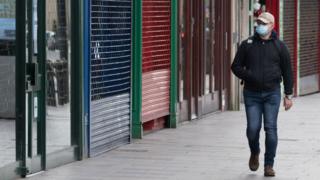
    The UK’s coronavirus furlough scheme will finish at the end of October, Chancellor Rishi Sunak has confirmed.

    At the No 10 briefing, Mr Sunak also set out how employers will have to start sharing the cost of the scheme.

    From August, employers must pay National Insurance and pension contributions, then 10% of pay from September, rising to 20% in October.

    Also, workers will be allowed to return to work part-time from July, but with companies paying 100% of wages.

    Mr Sunak said the Coronavirus Job Retention Scheme will adjust so “those who are able to work can do so”.

    Some 8.4 million workers are having 80% of their salaries paid for by the government – up to £2,500 a month – under the scheme, which was originally intended to last until the end of July.

    Earlier this month, the chancellor extended the scheme until the end of October, but did not spell out how employers would start contributing.

    Under Friday’s changes, furloughed workers will continue to get 80% of pay until the end of October, but by then a fifth of their salary will have to be met by employers.

    “Then, after eight months of this extraordinary intervention of the government stepping in to help pay people’s wages, the scheme will close,” Mr Sunak said.

    Asked if he would “switch the furlough scheme back on” in the case of a second peak in cases and the reintroduction of lockdown measures, the chancellor said the scheme “as it stands in a national way, in the way that it is designed” will end in October.

    “Eight months, as I said, is I think a generous and long period of time,” he said.

    The chancellor is attempting a delicate balancing act.

    Slowly withdrawing very expensive government support programmes without crashing the economy.

    Cash-strapped employers must decide if they can take on an increasing burden to keep workers for whom there may be little or no work.

    The chancellor says the government can’t go on meeting the full cost of the furlough scheme.

    But the withdrawal is more gradual than many had feared and the government hopes that the support withdrawal will be mirrored by business demand recovering.

    We may be about to find out how many real jobs are left in the post-coronavirus economy.

    Read more from Simon here.

    Employers’ claims under the scheme have reached £15bn so far, however the scheme is expected to cost a total of around £80bn, or £10bn a month.

    The Office for Budget Responsibility is set to publish detailed costings next week.

    It comes as the latest UK-wide figures show another 324 people have died after testing positive for coronavirus in hospitals and the wider community, bringing the total to 38,161.

    Some 131,458 people were tested for coronavirus on Thursday, with 2,095 more positive cases reported.

    Restaurateur David Moore told the BBC he is “deeply, deeply worried” about the changes to the scheme.

    Mr Moore, who owns London restaurant Pied a Terre, said it is unfair for hospitality firms to start paying towards wages when they do not have any revenues.

    “It is massively disappointing and sheer lunacy to try to get an industry who hasn’t had any revenues for what will be then probably five months, to ask them to start contributing,” he told BBC Radio 4’s The World at One.

    He warned that some businesses could go bust as a result.

    “Will we have any money coming through the door to help contribute? If we don’t it is all too late, a lot of businesses are heading down the pan.”

    Labour’s shadow chancellor Anneliese Dodds also warned about job losses.

    “It is concerning that there is no commitment within these plans for support to only be scaled back in step with the removal of lockdown,” she said. “Nor is there any analysis of the impact on unemployment of a ‘one size fits all’ approach being adopted across all sectors.”

    Image copyright
    Getty Images

    Image caption

    Chancellor Rishi Sunak says the next phase is about getting people back to work

    How will the scheme change?

    From 1 July, businesses will be allowed to bring furloughed employees back part-time, a month earlier than previously announced. The move is aimed to help support people back to work, the government said.

    It will be down to individual firms to decide what part-time means. They will be able to set the hours and shift patterns staff will work when they return, but companies will have to pay wages while they are in work.

    “Extending the job retention scheme and making it more flexible is key to getting the economy back on its feet,” said Federation of Small Businesses national chairman Mike Cherry.

    “By providing employers with the adaptability they’ll require as businesses adjust to a new normal, and bringing forward the flexible furlough launch date, the government is giving hope to small firms right across the UK.”

    From 1 August the level of government grant will be reduced “to reflect that people are returning to work”.

    Furloughed workers will continue to receive 80% of their pay, but from August it will include a growing employer contribution. It will start with bosses paying NI and pensions in August, plus 10% of pay in September, rising to 20% in October.

    The details: How employers’ contributions will increase?

    During August the government will pay 80% of wages up to a cap of £2,500. Employers will have to pay NI and pension contributions. For the average claim, that’s 5% of the gross employment costs the employer would have incurred had the employee had not been furloughed.

    In September, the government will cut its grants to 70% of wages up to a cap of £2,190. Employers will pay NI and pension contributions and 10% of wages to make up the 80% total up to a cap of £2,500. That works out at 14% of the average gross employment costs the employer would have incurred.

    In October the government grant will be cut to 60% of wages up to a cap of £1,875. Employers will pay NI and pension contributions and 20% of wages to make up the 80% total up to a cap of £2,500. That’s 23% of the gross employment costs the employer would have incurred had the employee not been furloughed.

  • Kylie Jenner: Forbes drops celebrity from billionaire list

    Kylie Jenner

    Image copyright
    Getty Images

    Image caption

    Kylie Jenner is the youngest self-made billionaire of all time

    Forbes magazine has struck celebrity Kylie Jenner from its list of billionaires and accused her family of inflating the value of her cosmetics business.

    The magazine said the family went to “unusual lengths” to present its youngest member as richer than she was.

    In tweets, Ms Jenner dismissed the article as “inaccurate statements and unproven assumptions lol”.

    “i’ve never asked for any title or tried to lie my way there” she wrote.

    “i can name a list of 100 things more important right now than fixating on how much money i have” she added.

    The move reverses the status Forbes conferred on Ms Jenner in 2019, when it declared her a self-made billionaire.

    The description sparked controversy, with critics scoffing at the “self-made” title and pointing to her upbringing as a Kardashian family reality television star.

    Forbes, which is known for its widely cited billionaire rankings, credited Ms Jenner’s status to the success of her cosmetics company, which she founded in 2015 and includes Kylie Cosmetics and Kylie Skin.

    • How did the Kardashians make their millions?
    • How a reality TV teen became a beauty giant

    Ms Jenner last year announced she was selling a 51% stake in the company to beauty giant Coty for $600m.

    Forbes said the family’s accountant had provided it with tax returns that suggested the firm had done more than $300m in sales in 2016 and that publicists claimed sales of $330m the following year.

    But information shared by Coty, which is publicly traded, showed Ms Jenner’s firm is “significantly smaller and less profitable than he family has spent years leading the cosmetics industry and media outlets, including Forbes, to believe”, Forbes said.

    Coty’s presentation to investors about the business suggested the firm did only $125m in sales in 2018.

    “If Kylie Cosmetics did $125 million in sales in 2018, how could it have done $307 million in 2016 (as the company’s supposed tax returns state) or $330 million in 2017?” Forbes asked in the article.

    Despite the magazine’s downgrade, Ms Jenner is hardly hurting.

    Forbes said she pocketed $340m from the sale of her business. It now estimates her net worth at “just under $900m”.

    Forbes writers has previously accused other would-be billionaire of inflating their riches, including US Commerce Secretary Wilbur Ross and President Donald Trump.

  • Virus-hit self-employed to receive second payment

    Man checking stock in a van

    Image copyright
    getty images

    Image caption

    Self-employed people can apply for a second lump sum in August

    Self-employed people whose work has been affected by coronavirus will receive a “second and final” grant in August, the government says.

    More than two million people have applied for a single grant of up to £7,500 so far.

    They, and other self-employed people, will be eligible for a second payment in August of up to £6,570, Chancellor Rishi Sunak has announced.

    It comes as details of the extended furlough scheme were also outlined.

    How the scheme works

    Until now, self-employed workers who qualify have been in line for a grant of 80% of their average profits, up to £2,500 a month for three months. This is being paid in one instalment.

    Some 2.3 million of these workers have signed up for grants totalling £6.8bn.

    Those whose work has been affected by coronavirus will still be able to apply for this lump sum until 13 July.

    At the government’s daily press conference, Mr Sunak has now announced applications for a second taxable grant will open in August.

    This will be slightly less generous, covering 70% of the applicant’s average monthly trading profits.

    It will also be made in a single payment, covering three months and capped at £2,190 a month, or £6,570 in total. Applicants will need to confirm their work has been affected by the virus, but they would not need to have taken the first grant to be eligible for the second.

    Image copyright
    Dimitri Djuric

    Image caption

    Self-employed musical director Yshani Perinpanayagam says it has been tough

    One of those eligible is musical director Yshani Perinpanayagam, who has seen work dry up since her show at the Royal Shakespeare Company was cancelled at the start of lockdown.

    She was worried that without more support she would not have known how she would feed herself, having paid many essential bills using savings, but she still worries about the long-term outlook if people are unable or slow to return to arts venues.

    “Another grant would make things more manageable in the immediate future, but hopefully it is not just a short-term plug,” she said.

    “I hope this is the beginning of looking into the bigger problems for the arts.”

    • Full details of help for the self-employed
    • Hardship risk ‘could undermine test and trace system’

    The announcement comes after a cross-party group of 113 MPs signed a letter sent by Labour’s Siobhain McDonagh to Mr Sunak calling for more support for the self-employed.

    It warned that failing to offer an extension would “would pull the safety net from under the feet of millions of self-employed workers”.

    Mr Sunak also announced more details of how the furlough scheme for employees will be paid for in the coming months.

    That scheme has been extended until October.

    The Treasury says that there is not direct parity between the two schemes but, unlike furloughed workers, the self-employed could technically continue with some work while receiving support from the government.

    “Our five million-strong self-employed community will be greatly relieved to know that the income cliff-edge they were facing in two days’ time has now been removed,” said Mike Cherry, of the Federation of Small Businesses.

    “The hope is that more and more sole traders will be able to return to work safely as restrictions are eased. Policymakers have rightly recognised that self-employed business owners working in a lot of sectors – not least hair and beauty, events and travel – will be massively impacted by the current downturn for many weeks to come.

    He added that more should now be done for those not receiving these payments.

    A number of self-employed people, such as directors who pay themselves in dividends and the newly self-employed, are unhappy at missing out on the government’s self-employment support package.

  • Coronavirus: Chancellor set to outline furlough scheme changes

    A bar manager closes the bar

    Image copyright
    PA Media

    Image caption

    Pubs have been ordered to close to help slow the spread of the virus

    Chancellor Rishi Sunak is to set out details of how employers will be asked to help pay the wages of furloughed workers.

    The government is paying 80% of workers’ salaries up to £2,500 a month for some 8.4 million workers under its furlough scheme.

    The Treasury has not denied reports that firms will be asked to contribute about 20% of wages from August.

    Ministers previously announced that the scheme will be extended to October.

    The chancellor said earlier in May that the government will provide the same level of earnings, but that it will ask companies to “start sharing” the cost of the scheme from August.

    It is thought that employers could also be asked to cover National Insurance and pension contributions for furloughed workers from August.

    Mr Sunak is due to lead Friday’s daily Downing Street press briefing to outline changes to the scheme.

    The furlough scheme, aimed at mitigating the economic effects of the coronavirus pandemic, was originally intended to last until the end of July. Officially called the Coronavirus Job Retention Scheme, it has since been extended until the end of October.

    Employers’ claims under the scheme have reached £15bn.

  • Coronavirus: New mortgage holiday should affect credit rating, says Nationwide boss

    Nationwide building society

    Image copyright
    PA Media

    Image caption

    Nationwide announced a sharp fall in profits

    A borrower’s credit rating should be marked if they take a further mortgage holiday, the Nationwide has said.

    Lenders look at somebody’s credit rating when deciding whether to agree to a fresh loan or contract and the interest rate they will charge.

    Joe Garner, chief executive of the Nationwide Building Society, said an extension to the mortgage break was a sign that a borrower was “struggling”.

    He made the comment as the UK’s largest mutual announced a plunge in profits.

    Its statutory pre-tax profit fell to £466m in the year to April, compared with £833m the previous year.

    The building society said it had already faced pressure on its profits before it took a £101m hit as a direct result of coronavirus.

    • Mortgage payment holiday extended for further three months
    • ‘Short-lived’ rebound in house hunter demand

    Mortgage holidays started in March, allowing people to defer payments without affecting their credit rating.

    That respite from payments would end for the first applicants in June, but the Treasury and regulators have said that those who need to will be permitted to defer for another three months.

    Mr Garner said that 280,000 of its members had taken a payment break, the vast majority of which were mortgage holders.

    “Probably the very first people to apply would be those who are really on top of their financial position and we know there are a lot of people who have taken them as a precaution, and will go back to paying in full at the first opportunity,” he said.

    Image copyright
    Getty Images

    For those who needed a further payment break – which could include people who have continued to be furloughed, on sick pay, or who are self-employed – there should be some kind of notice on their credit rating, Mr Garner said.

    This should not be a “big black mark”, he said, but “a middle way” that would alert lenders, but not restrict people’s ability to remortgage.

    “If someone is struggling, and if there is no sign on their credit rating, they could go out and take further and further loans, which would not be in their interest,” he told the BBC’s Today programme.

    The rules over whether credit ratings would be immune from further mortgage holidays have yet to be finalised.

    Credit ratings are used widely to inform lenders’ decisions on financial products – from granting personal loans to allowing access to mobile phone contracts.

    Credit card breaks

    The UK banking sector has approved 1.8 million mortgage holidays during the crisis, according to figures from trade body UK Finance.

    There have also been 877,800 freezes on credit cards, up 26% since the start of the month, and 608,000 payment holidays on personal loans, up 30% over the same period.

    However, in some circumstances, the build-up of interest could risk taking people over a limit which itself would leave a mark on their credit reference.

    Millions of people have seen the first £500 of an arranged overdraft made interest-free for three months.