Category: Business News

  • Coronavirus: Sex workers fear for their future

    Escort Estelle Lucas stands in her bedroom with her eyes cast down

    Image copyright
    Estelle Lucas

    Image caption

    Estelle Lucas has lost nearly all her income during the coronavirus outbreak

    With social distancing rules in place and strip clubs and brothels closed, sex workers around the world have seen their incomes disappear almost overnight as a result of the coronavirus pandemic. Fearing for their livelihoods, as well as their health, some are offering services online to keep their business going, while others are turning to charities for help.

    Estelle Lucas has worked as an escort for the past 10 years in Melbourne, carefully building relationships with her clients. But the spread of Covid-19 and the need for social distancing has prompted a ban on sex work, leaving her worried those efforts will go to waste.

    “It’s fair to say that if I’m not working for six months, a lot of people are going to forget me,” she says.

    “I can’t contact my clients and just have a conversation with them. That doesn’t work in my industry. We need to build intimacy and that’s just not possible in the current environment.”

    Before the coronavirus outbreak, Estelle says she was earning an above-average income, and had hoped to soon pay off the mortgage on her home in Melbourne’s inner suburbs.

    Now nearly all her income has been lost. She has tried to adapt by moving her business online, but says that cannot replace physical contact.

    Image copyright
    Estelle Lucas

    Image caption

    Estelle Lucas has organised an online support group to help other sex workers during the crisis

    “Unfortunately, there are things that can’t be translated,” she says. “I have made efforts to go online but not everyone is tech savvy. Some of my clients don’t even really know how to use a smartphone.”

    While the regional government has outlined a clear roadmap to reopening restaurants and cafes, there has been no plan for the sex industry. That uncertainty, coupled with the many unknowns surrounding the virus itself, has left many sex workers with deep anxiety.

    “I’m scared that all my work will come back to zero and I will just have to start hustling like I did when I first started out,” Estelle says. She also fears for her clients’ health. “Are they even going to be there?” she says. “There’s a lot of nervous energy going around.”

    Financial assistance from the Australian government is available to those who have lost their income because of the Covid-19 crisis, but to qualify for the payments workers need to be able to show they have been paying tax – something that unregistered sex workers including migrants and trans people, often won’t be able to do.

    It’s a problem facing sex workers in dozens of countries around the world, according to Teela Sanders, a criminology professor at the University of Leicester.

    “Governments have been very good at providing social protection for the majority of people, particularly self-employed people, but sex workers are not included,” she says.

    • Sex workers ‘should have access to emergency fund’
    • Virus forces offline sex workers to start again online

    That’s left sex worker collectives and advocacy groups calling for members of the public to donate to emergency funds.

    So far, an online appeal by the Las Vegas Sex Worker Collective has raised $19,300 (£15,680) while a campaign by a coalition of support groups in Italy has raised almost €21,700 (£19,500).

    “These have been a real lifeline to sex workers for immediate bill paying, access to food etc,” says Prof Sanders.

    Some sex workers have been forced to continue working, risking hefty fines or exposure to the virus.

    Media playback is unsupported on your device

    Media captionThe BBC investigation revealed some brothels were still trading

    “In developing countries, sex workers are often the main breadwinner for the whole family, for their siblings, their children and their grandparents. So this affects the whole extended family,” Prof Sanders says.

    Niki Adams from the English Collective of Prostitutes echoes that view. She told the BBC most sex workers in the UK are mothers and if they are continuing to work, it is because they are desperate for money.

    But some sex workers find themselves unable to keep working – even if they would choose to.

    In Daulatdia brothel in Bangladesh, police guard the entrance, preventing customers from entering.

    Image caption

    “Nazma” says even if the brothel were open, she would be scared to see clients in case they had the virus

    It is one of the world’s biggest brothels, a shanty town made up of tin sheds and narrow alleyways that is home to 1,300 women and their 400 children.

    The brothel has been closed since March, leaving many of the women struggling to buy essential items and relying on donations from charities.

    “We cannot work now, so we don’t have any income, which is scary,” says “Nazma”, who didn’t want to give her real name.

    Nazma supports three children who live with her sister back in her village. She came to the brothel 30 years ago when she was just seven. Although she needs money, she worries about the dangers of working during the pandemic.

    “Even if we could work, people’s lives are at risk from the virus. We’d be scared to go to bed with our clients anyway, as we don’t know who is affected,” she says.

    Daulatdia sits on the banks of the Padma River, near a major ferry terminal. It is the main transport hub that connects the Bangladeshi capital Dhaka with the country’s southern districts.

    Image caption

    Some 1,300 women live in the shanty town brothel, which is now closed for business

    Prior to the coronavirus outbreak, thousands of truck drivers would pass through the area every day, delivering agricultural products and other goods to Dhaka.

    Many of the women and children who live in the brothel are victims of trafficking.

    “A lot of them who were kidnapped as children were sold there,” says Srabanti Huda, a lawyer and human rights activist based in Dhaka.

    While the Bangladeshi government and local aid organisations have delivered some emergency funds to the women, Srabanti says it hasn’t been enough and some women received nothing at all.

    “The amount of donations they’ve received from the government does not even cover a packet of powdered milk for the children,” she says.

    In early May, Srabanti organised a private aid delivery, distributing packets of basic supplies for each of the 1,300 women registered at the brothel.

    “There was one woman who said she has not been able to get her insulin or diabetic medications for over a month,” Srabanti says. “Another said she has not been able to buy her blood pressure medications since the lockdown started two months ago.”

    Image caption

    Srabanti Huda organised an emergency aid delivery to Daulatdia brothel in Bangladesh

    Reduced access to healthcare services is an issue facing sex workers globally, according to Prof Sanders. The problem is particularly acute in areas where there is high demand for regular antiviral drugs from those living with HIV.

    “There’s been real issues around access,” she says.

    Prof Sanders is working with a team in Nairobi to develop an “Uber-style” app that will enable sex workers to order medication using their phones and have it delivered.

    “It’s sent directly to them via a mode of transport rather than the person coming into the clinic,” she says.

    Back in Daulatdia brothel, another sex worker who didn’t want to be named is returning from a trip to see her daughter, who lives in a nearby home for the children of sex workers.

    Even when the brothel reopens, it will take a long time for the industry to recover, she says.

    “People are afraid if they come to us, they might get infected,” she says. “We are afraid too. We might get infected from them. This fear of getting infected will come up all the time.”

    Additional reporting by Salman Saeed.
  • Coronavirus: Australia set for first recession in three decades

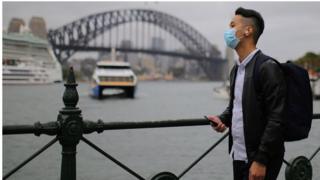
    A man wears a face mask in front of the Sydney Harbour Bridge in Sydney, Australia.

    Image copyright
    Getty Images

    Australia is set for its first recession in 29 years as the country feels the impact of the virus pandemic.

    Official figures show that the economy shrank by 0.3% in the first three months of the year, amid bushfires and the early stages of the outbreak.

    Economists expect data for the current quarter to confirm that the shutdowns have pushed the country into recession.

    It comes even after the government and central bank stepped up measures to support the economy.

    The latest gross domestic product (GDP) figures highlight that the economy was struggling from a devastating bushfire season, a slowdown in tourism and weak domestic demand even before the virus-related restrictions started.

    “This was the slowest through-the-year growth since September 2009, when Australia was in the midst of the global financial crisis, and captures just the beginning of the expected economic effects of Covid-19,” Bureau of Statistics chief economist Bruce Hockman said.

    In March the Reserve Bank of Australia cut its main interest rate to a record low of 0.25%. The central bank also launched an unlimited bond buying programme.

    Media playback is unsupported on your device

    Media captionThe Australian zoo that was ‘smashed’ twice

    While the central bank kept the cost of borrowing on hold at its meeting on Tuesday, Governor Philip Lowe said the country was facing the toughest conditions since the Great Depression.

    “The Australian economy is going through a very difficult period and is experiencing the biggest economic contraction since the 1930s.”

    However, he did add a note of optimism to his outlook: “It is possible that the depth of the downturn will be less than earlier expected.”

    Glimmer of hope

    “The rate of new infections has declined significantly and some restrictions have been eased earlier than was previously thought likely,” he said.

    The Australian government has also pledged hundreds of billions dollars to help support businesses and individuals and has signalled that more stimulus measures would be announced soon.

    Last month Japan fell into recession for the first time since 2015 as the world’s third biggest economy shrank at an annual pace of 3.4% in the first three months of the year.

    The week before Germany, Europe’s largest economy, slipped into recession, while other big economies, including the UK and the US are also seeing sharp downturns.

    A recession is widely defined as two quarters in a row of economic contraction, or shrinking GDP.

  • Coronavirus: UK holidaymakers ‘welcome’ in Portugal

    Tourists on a beach in the Algarve

    Image copyright
    Getty Images

    Portugal’s foreign minister has said anyone in the UK thinking of going to Portugal this summer would be “most welcome” amid coronavirus.

    Augusto Santos Silva said tourists will be warned how full beaches are so that they can avoided crowded spots.

    Mr Santos Silva told the BBC that an “air bridge” agreement between the UK and Portugal could be in place by the end of June.

    Holidaymakers would not be subject to a 14-day quarantine under a deal.

    He said any travel quarantine “was an enemy of tourism”, but that he respected the UK government’s decision to enforce one on almost all arrivals to the UK from next Monday.

    Mr Santos Silva said “rules” would ensure that people would be able to holiday safely.

    The minister suggested that nightlife in Portuguese resorts this summer will be very limited and people would not be allowed to congregate in groups at night.

    He said hotels and apartments which comply with standards set by the tourism board would be labelled as “clean and safe”.

    Air bridges

    Later on Wednesday, the UK home secretary will tell MPs that a travel quarantine is needed “to prevent a second wave of the virus.”

    Priti Patel will also say that “air bridges” between the UK and countries with low Covid-19 infection rates are possible in the future, so that people arriving from certain places will not have to self-isolate.

    Portugal’s foreign minister confirmed talks on the matter were ongoing with the UK.

    Mr Santos Silva said that he was hopeful that an air bridge between the UK and Portugal could be secured by the end of June.

    But he insisted that Portugal would not impose any type of quarantine for people arriving in his country.

    Instead, he said Portugal would rely on temperature checks at airports and that Portugal was, in coordination with other EU countries, considering carrying out “random testing” on passengers.

    UK aviation bosses hope that a large number of air bridge agreements will be in place by 29 June, when the travel quarantine is set to be reviewed.

    More tourists from the UK head to the Algarve each summer than from any other country.

    But Spain, another country whose tourism sector relies heavily on British holidaymakers, is taking a different approach.

    Image copyright
    Reuters

    The Spanish government has said it will only allow UK tourists in this summer if the infection rate in the UK falls more significantly.

    The UK travel quarantine will apply to people arriving from any country, apart from the Republic of Ireland, and will also apply to UK nationals.

    People will be required to self-isolate in a private residence for two weeks.

    The government says people “could be contacted regularly during this period to ensure compliance.”

    People who break the rules could be fined £1,000.

    UK travel companies say the travel quarantine already means people are not booking holidays. They warn that more businesses in the sector now face financial ruin.

    The measure will be reviewed every three weeks.

    When deciding whether to keep the quarantine in place, the government will consider several factors. They include the rate of infection internationally, prevention measures in other countries, the extent to which other countries with more relaxed border arrangements have seen imported cases, as well as the effectiveness of testing methods at minimising the risk of new cases of the virus entering the country.

    Quarantine debate

    A growing list of Conservative MPs have spoken out against the blanket travel quarantine.

    However, a YouGov poll of 1,565 adults in Great Britain suggests that there is public support.

    63% of those surveyed thought people should be quarantined as per the government’s plan.

    About one quarter thought that the quarantine should only apply to people arriving from countries with a “high number of coronavirus cases.” Only 4% thought that there should be no quarantine at all.

    Labour has questioned why a travel quarantine wasn’t introduced some weeks ago.

    New figures show that between the beginning of January and the end of April, 14,225 flights arrived into UK airports.

  • How lockdown made food firm ‘aim higher’

    THIS is a recently-formed company which makes vegan, meat-alternative food. A lot of its business came from supplying restaurants, but then they were shut as part of the lockdown.

    Co-founder of THIS, Andy Shovel, says this spurred him to launch an ambitious sales drive, getting tits products on the shelves of a number of supermarkets. The lockdown forced his firm to “aim higher” with its sales targets, he says.

    Film by Jeremy Howell.

    Find more business tips at CEO Secrets. You can also follow the series on the BBC News app by adding the topic ‘CEO Secrets’ in My News.

  • Coronavirus: Adelie Foods to close with 2,000 jobs lost

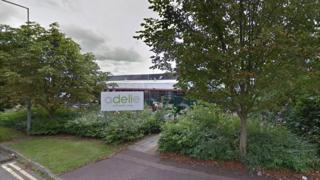
    Adelie Foods in Milton Keynes

    Image copyright
    Google

    Image caption

    Adelie Foods was hit by a drop in the sandwich trade hit by the coronavirus lockdown measures

    One of Britain’s largest sandwich makers is ceasing trade with the loss of more than 2,000 jobs.

    Adelie Foods, which has sites at Milton Keynes and Southall in west London, went into administration last week.

    Administrators Deloitte announced that attempts to rescue the firm had failed and there would be 2,169 redundancies with 22 staff retained.

    Deloitte said the coronavirus pandemic and lockdown had presented problems for sandwich sales.

    Rob Harding, joint administrator at the firm, said: “Covid-19 has presented huge challenges to this business given the lockdown measures and associated impact on the ‘food to go’ sector.

    “It is with sadness that we now have to announce such a significant number of redundancies.”

    Frank Loveday, regional secretary of the Bakers, Food and Alied Workers Union, said the union was offering support and advice to its members who have lost their jobs.

    “The Covid-19 has taken a lot of casualties in all areas. It was hoped that Adelie might be bought by another sandwich company, but where are sandwiches being sold at the moment? They were big suppliers to cafe operators and they are not open,” he said.

  • EasyJet hopes to reopen 75% of route network by August

    Enhanced cleaning on-board an Easyjet plane

    Image copyright
    PA Media

    Image caption

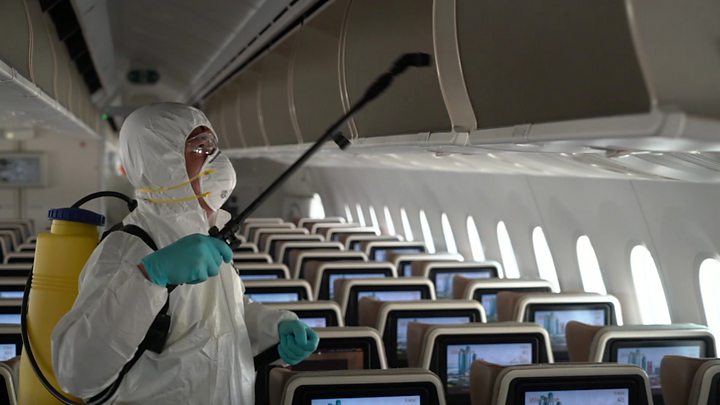
    EasyJet is introducing enhanced disinfection measures

    EasyJet says it hopes to resume flights on 75% of its route network by the end of August, although the number of daily services will still be significantly down for a normal summer season.

    The airline is already starting limited services this month, as it adjusts to the coronavirus collapse in air travel.

    Customers and cabin crew must wear face masks, and no food will be served.

    EasyJet is axing 4,500 jobs, and could be ejected from the FTSE 100 this week because its share price has tumbled.

    However, news of a slow return to services, along with what the airline claimed was its biggest ever summer promotion, helped to push EasyJet’s share price 2.75% higher on Tuesday.

    EasyJet said half of its network would be reopened by the end of July, increasing to 75% during August.

    “Flights will be at a lower frequency than normal, meaning the airline will operate at around 30% of its normal capacity between July and September,” the airline said.

    The carrier said services would operate from all its UK bases.

    EasyJet previously announced it would resume operations on 15 June, with flights mainly restricted to domestic routes in the UK and France.

    Rival Ryanair has operated a very limited schedule of flights during the pandemic, and has said it is planning to resume 40% of its “normal flight schedules” in July.

    EasyJet is introducing a series of safety measures, including requiring passengers to wear face masks at airports and on aircraft.

    It has produced thousands of face mask covers inspired by comic books to be handed to children flying on selected routes in an attempt to ease their anxiety about the new rule.

    Spain doubts

    Other steps to boost hygiene include not selling food during flights, enhanced cleaning of planes, and disinfection wipes and hand sanitiser being provided.

    Passengers will be invited to sit away from people not in their party on flights with empty seats.

    Image copyright
    Reuters

    EasyJet’s chief commercial and planning officer, Robert Carey, said: “We are delighted to announce that we will be flying the majority of our route network across Europe, meaning customers can still get to their chosen destination for their summer holidays this year.”

    The airline industry has been one of the hardest hit sectors since the UK and other countries went into lockdown. Aviation bosses are in talks with the UK government about controversial quarantine measures

    And on Monday, Spain’s tourism minister cast doubt on the prospect of an early return by UK holidaymakers to Spanish beaches.

    María Reyes Maroto said British coronavirus figures “still have to improve” before Spain could receive tourists from the UK.

    EasyJet says its planned destinations include Spain and other major European tourist hotspots, but the final list and timings will only emerge as various country restrictions are eased and customer demand increases. “There are a lot of moving parts,” a spokesman said.


    Have you booked or are you planning to book EasyJet flights this summer? Tell us about your experience by emailing

    Please include a contact number if you are willing to speak to a BBC journalist. You can also contact us in the following ways:

  • Traders want shorter days, says London Stock Exchange

    City trader

    Image copyright
    Getty Images

    A majority of investors, bankers and brokers would support a shorter trading day to improve their quality of life, the London Stock Exchange has said.

    A consultation by LSE found that most wanted markets to open from 09:00-16:00 as opposed to 08:00-16:30 as they do now.

    Traders complain they also have to work before and after market hours, so end up doing long anti-social days.

    It can affect people’s mental health and family life, trade groups warn.

    “Shortening trading hours has the potential to improve wellbeing and diversity on our trading floors and ultimately to deliver better outcomes for our clients,” said Galina Dimitrova, director for investment and capital markets at the Investment Association.

    “The fact that the majority of respondents to the LSE’s consultation on market trading hours agree, adds further weight to the argument that it is time to reduce trading hours.”

    ‘Thinly stretched’

    The proposal would mean markets would trade for seven hours as opposed to eight and a half. By contrast, US exchanges are open for six and a half hours and Asian exchanges for six.

    Traders are typically in the office from as early as 06:00 and may not finish until 18:30, said April Day, managing director of equities at the Association for Financial Markets in Europe, which also backs the move.

    “We believe shorter hours would concentrate trading, which is at times quite thinly stretched over the current unnecessarily long hours, particularly given the efficiencies brought by increased automation,” she said.

    Before the proposal can be taken further, the LSE said it will await the result of consultations taking place in Europe. Rival stock exchange firm Euronext is also asking members what they think.

    “A significant majority of respondents agreed that a reduction of market hours could lead to improvements in diversity and wellbeing,” an LSE spokesperson said.

    “There was also widespread consensus from respondents that any change to trading hours would ideally require a broadly aligned approach across European exchanges and other trading venues.”

  • House prices see largest monthly fall for 11 years, says Nationwide

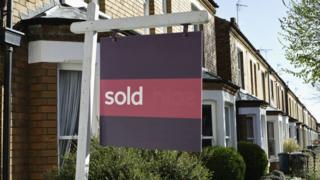
    A sold sign outside a house

    Image copyright
    Getty Images

    House prices fell 1.7% in May from the previous month, the largest monthly fall for 11 years, according to the Nationwide.

    Annual house price growth halved from 3.7% to 1.8%, as the coronavirus crisis hit market activity.

    The latest HMRC data showed that residential property transactions fell 53% in April compared with 2019.

    “The medium-term outlook for the housing market remains highly uncertain,” the Nationwide warned.

    “We have already seen a sharp economic contraction as a result of the necessary measures adopted to suppress the spread of the virus,” said Robert Gardner, Nationwide’s chief economist.

    But he pointed out that the raft of policies adopted to support the economy should “set the stage for a rebound once the shock passes” and help limit long-term damage.

    “These same measures should also help ensure the impact on the housing market will ultimately be less than would normally be associated with an economic shock of this magnitude,” he predicted.

    The figures are based on Nationwide’s lending data, do not include cash purchases, and may have a greater volatility owing to the very low levels of activity.

    Yet, the big month-to-month drop in Nationwide’s house price index in May – the largest since February 2009 – “is just the start of a protracted decline over the remainder of this year,” warned Samuel Tombs, chief UK economist at Pantheon Macroeconomics.

    Temporary pause?

    Before the pandemic struck the UK, the housing market had been steadily gathering momentum, the Nationwide said.

    Activity levels and price growth were edging up thanks to continued robust labour market conditions, low borrowing costs and a more stable political backdrop following the general election.

    “Behavioural changes and social distancing are likely to impact the flow of housing transactions for some time,” Mr Gardner said.

    Recent Nationwide research suggested that one in eight people had put off moving because of the lockdown.

    But the majority saw the current situation as a temporary pause in the market, with would-be buyers planning to wait six months on average before looking to enter the market.

    Early indicators of housing demand have picked up since in-person property viewings were permitted again on 13 May, said Pantheon Macroeconomics.

    It said the daily volume of Google searches for the three main property portals had increased to be just 13% below its pre-lockdown level, having been down 50% in April.

    “Relatively few people likely will be forced to sell their homes, given that mortgage payment holidays are easily available and home ownership has declined,” said Mr Tombs.

    “Nonetheless, the huge size of the blow from Covid-19 to households’ incomes and the deterioration in consumers’ confidence suggests that house prices must drop.”

    He predicted a 5% fall in prices by the end of the third quarter of the year.

    Image copyright
    Getty Images

    Image caption

    Lots of mortgage holders have deferred payments during the coronavirus outbreak

    Separate figures from the Bank of England show how the mortgage market decelerated sharply alongside the house sales shutdown.

    Some 15,848 mortgage approvals for house purchases were recorded in April – about 80% below February levels before the coronavirus crisis took hold, the Bank said.

    This was around half the number of approvals taking place in the trough during the financial crisis, and the lowest since the figures started in 1993.

    Approvals for re-mortgaging fell by a lesser extent during the month, to 34,400, some 34% lower than in February.

    Support for struggling borrowers

    The UK’s financial watchdog has confirmed the support firms should give to mortgage customers who are either coming to the end of a payment holiday or who are yet to request one.

    The Financial Conduct Authority (FCA) said last month that homeowners struggling financially due to coronavirus would be able to extend their mortgage payment holiday for a further three months, or cut payments.

    On Tuesday, it confirmed customers yet to apply for a payment holiday have until 31 October 2020 to do so. Meanwhile the current ban on lender repossessions of homes will be continued to 31 October.

    “The measures we have confirmed today will mean anyone who needs to can get help from their lender, if they are still struggling to pay their mortgage due to coronavirus,” said Christopher Woolard, interim chief executive at the FCA.

    “It is important that if a consumer can afford to re-start mortgage payments, it is in their best interests to do so. Customers should talk to their firm about the best option available for them.”

    On Friday, the Nationwide’s chief executive, Joe Garner, argued that it would be prudent for extensions to mortgage holidays to be marked temporarily on a borrower’s credit file.

    However, the FCA said the current guidance – that taking a deferral should not have a negative impact on a borrower’s credit file – should continue.

    The regulator pointed out that lenders could still use details obtained from other sources, such as bank account information, when making their decisions on whether to grant other loans.

  • Coronavirus: Ministers ‘looking at ways to relax travel quarantine rule’

    Passengers from the Holland America Line ship Zaandam walk through arrivals in Terminal 2 at Heathrow Airport in London, after flying back on a repatriation flight from Florida.

    Image copyright
    PA Media

    Image caption

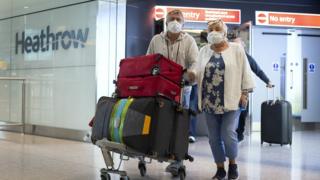
    Passengers at Heathrow Airport earlier this year, after being rescued from a cruise ship

    The government is looking at ways to relax the 14-day quarantine rule for people entering the UK over the coming months, BBC Newsnight has learnt.

    From Monday, most people arriving by plane, ferry or train – including UK nationals – must self-isolate.

    But some MPs and businesses have expressed concern at the plan, warning it will damage the travel industry.

    One government source told Newsnight that ministers were looking at ways around the coronavirus quarantine.

    This could include expanding the list of workers who are exempt from the 14-day rule, or travel corridors to countries with low infection rates, which the government has previously said it was considering.

    Any changes would be guided by the science but one possible date for a relaxation to the rule could be 20 July, coinciding with school holidays, Newsnight was told.

    The quarantine measures come into force on 8 June, although some professions are exempt, such as lorry drivers, police officers, seasonal farm workers, and healthcare professionals.

    Also exempt will be people coming from the Irish Republic, the Channel Islands and the Isle of Man.

    Travellers will have to tell the UK government where they will be staying and if they do not provide an address, officials will arrange accommodation.

    In England, there will be random spot checks and £1,000 fines, while governments in Scotland, Wales and Northern Ireland can impose their own penalties.

    Housing minister Simon Clarke told BBC Breakfast that the quarantine policy was “a proportionate step” which would minimise the risk of new cases coming into the UK “just at the time that we are getting a grip on it”.

    He said it was a “temporary, time-limited measure”, but added that it was “vital” it was introduced for as long as required.

    The plan is expected to be set out in more detail when it is laid before Parliament this week. MPs are returning to Westminster on Tuesday after weeks of proceedings taking place virtually.

    Extra guidance about what arrivals would be allowed to do is also expected to be set out, including that travellers will be allowed to take public transport if they are unable to get to their accommodation by any other means.

    The quarantine plan is due to be reviewed every three weeks, with the first review due at the end of June.

    Image copyright
    Reuters

    Image caption

    On Monday, some primary children returned to school, but had to socially distance

    Image copyright
    Reuters

    Image caption

    Meanwhile, horseracing resumed behind closed doors

    Announcing the plan last month, Home Secretary Priti Patel said the measure would “reduce the risk of cases crossing our border”.

    But there has been criticism from some of the government’s own MPs as well as the travel and aviation industry.

    One former cabinet minister told Newsnight the idea was “daft” and suggested the government will not “go to the stake on this”.

    Meanwhile, more than 200 business leaders have called on the government to scrap the policy, saying it was “deeply worrying for our economy and our country”.

    The group of firms – including hotel The Ritz and upmarket travel agent Kuoni – want the government to instead introduce “air bridges”, an arrangement which allows people from countries with low levels of coronavirus to travel.

    Last month, the bosses of airlines including EasyJet, Tui, Jet2 and Virgin Atlantic also said they had “serious reservations” about a “blanket approach” to all arrivals into Britain.

    Media playback is unsupported on your device

    Media captionWhat will flying look like after lockdown?

    At the weekend, former environment secretary Theresa Villiers told BBC Radio 4’s Westminster Hour she thought quarantine rules should be targeted on flights “from Covid hotspots”.

    She also said the government was “actively looking at air bridges”.

    BBC transport correspondent Tom Burridge said reports in the Portuguese media “suggest an air bridge with Portugal is on the cards”.

    But, he added, the UK is behind other countries in Europe in terms of controlling the virus and so, in negotiations, “the ball might not be in the UK’s court”.

    Spain’s tourism minister said British coronavirus figures “still have to improve” before the country would receive tourists from the UK, while Greece will not allow UK visitors when it opens up later this month.

    • THE ISOLATION TAPES: Elis and John take on yoga
    • DAVID ATTENBOROUGH’S MINDFUL MIX: Soothing sounds to escape to

    A UK government spokesman previously said: “These cross-government public health measures are designed to keep the transmission rate down, stop new cases being brought in from abroad and help prevent a devastating second wave of coronavirus.

    “All of our decisions have been based on the latest scientific evidence.

    “The list of exemptions has been agreed by all government departments in consultation with their stakeholders which will ensure critical supplies and services can continue and will be kept under review.”

    It comes as the number of people who have died after testing positive for the virus in the UK reached 39,045.

    In other developments:

    • Oxfam will begin reopening its network of charity shops in England from 15 June – although it has not yet confirmed which stores would open
    • MPs return to Westminster on Tuesday following the Whitsun recess after the government dropped virtual proceedings. The Commons Speaker has urged MPs to agree on a plan to allow all members to continue to take part in Parliament, including those with health conditions
    • Demand for lettings in Great Britain is up by 22% compared to last year, according to property giant Rightmove, with experts saying lockdown break-ups and job changes have boosted the market
    • Hotels and tourist accommodation in Northern Ireland will be allowed to reopen on 20 July

    What is your reaction to the possible relaxing of the UK travel quarantine rule? You can get in touch by emailing

    Please include a contact number if you are willing to speak to a BBC journalist. You can also contact us in the following ways:

  • Coronavirus could ‘drag on US economy for a decade’

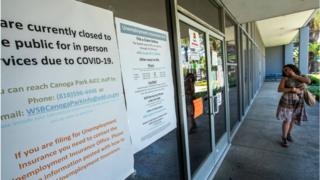
    Woman outside closed California State Employment Development Department office due to coronavirus.

    Image copyright
    Getty Images

    The drag on the US economy from the virus pandemic will last almost a decade, according to projections by the Congressional Budget Office (CBO).

    It forecasts the outbreak will cut US economic output by 3% between this year and 2030, a loss of $7.9tn (£6.3tn).

    The warning comes as tens of millions of people are out of work due to lockdown measures.

    America’s historic downturn comes even after trillions of dollars have been pumped into the economy.

    The nonpartisan CBO said the majority of the loss was caused by the sharp contraction in economic activity this year, which it had not predicted in its last 10-year report, published in January.

    “Business closures and social distancing measures are expected to curtail consumer spending, while the recent drop in energy prices is projected to severely reduce US investment in the energy sector,” CBO director Phillip Swagel wrote in response to an inquiry from Senate Minority Leader Charles Schumer.

    “Recent legislation will, in CBO’s assessment, partially mitigate the deterioration in economic conditions,” he added.

    Since the virus pandemic hit the US the government and the central bank have provided trillions of dollars of support for the world’s biggest economy.

    Still, unemployment has soared to levels not seen since the Great Depression of the 1930s as more than 40 million Americans have already been put out of work.

    America’s unemployment rate hit 14.7% in April and on Friday the US Labor Department is expected to confirm that it reached 20% in May. In March that figure stood at just 4.4% having risen from a 50-year low from the month before.

    There is an ongoing debate in the US Congress over a new $3tn a new stimulus plan as well as a proposal to renew several federal aid programmes that would otherwise lapse, including a temporary increase to jobless benefits that is set to expire in July.

    The CBO is a federal agency within the US government that provides budget and economic information to Congress.