Scandal-hit payments firm Wirecard has said the €1.9bn (£1.7bn) missing from its accounts simply may not exist.
Wirecard’s chief executive quit on Friday as the search for missing cash hit a dead end in the Philippines.
On Sunday the central bank of Philippines said none of the money appears to have entered the country’s financial system.
The German company also said it was withdrawing its financial results for 2019 and the first quarter of 2020.
“The Management Board of Wirecard assesses on the basis of further examination that there is a prevailing likelihood that the bank trust account balances in the amount of 1.9 billion EUR do not exist,” the company said in a statement on Monday.
The missing money accounts for around a quarter of its total balance sheet.
Wirecard boss quits amid hunt for missing €1.9bn
The company said it was continuing to discuss a financial lifeline with banks, including a current arrangement that is due to expire at the end of this month.
It said it was also considering several potential plans to save the company, including cost cuts, the restructuring of its operations, and selling or shutting parts of the business.
The scandal emerged after a series of articles in the Financial Times last year focusing on alleged accounting irregularities in Wirecard’s Asian operations.
The missing money was supposed to be held in accounts at two Asian banks and had been set aside for “risk management”, the company said.
The exit of Wirecard’s chief executive Markus Braun on Friday came after auditor EY refused to sign off its 2019 accounts over the missing funds.
Wirecard joined Germany’s blue-chip Dax 30 share index two years ago. At the time, it was valued at €24bn, but its shares have crashed in recent days giving it a stock market valuation of less than €3bn.
Lower-income households are using savings and borrowing more during the coronavirus lockdown, while richer families are saving more as eating out and trips abroad are banned.
That’s according to research from the Resolution Foundation, a think tank.
Lower-income households are twice as likely as richer ones to have increased their debts during the crisis, it said.
Workers in shut down parts of the economy have average savings of £1,900, it found.
That compares to the £4,700 buffer of someone who has been able to work from home during the lockdown.
“Pre-coronavirus Britain was marked by soaring wealth and damaging wealth gaps between households,” said George Bangham, economist at the Resolution Foundation.
“These wealth divides have been exposed by the crisis. While higher-income households have built up their savings, many lower-income households have run theirs down and had to turn to high-interest credit.”
Wealth gaps across the country have also grown, with London and the South East accounting for 38% of all wealth between 2016 to 2018, up from 32% a decade earlier.
Wealth inequality remains almost twice as high as income inequality, it adds.
Impact on young people
Last month, the think tank found that young people are most likely to have lost work or seen their income drop because of Covid-19.
More than one in three 18 to 24-year-olds is earning less than before the outbreak, it found.
It said younger workers risk their pay being affected for years, while older staff may end up involuntarily retired.
Last year, a different think tank, the Institute for Fiscal Studies, found widening inequalities in pay, health and opportunities in the UK are undermining trust in democracy.
It warned of runaway incomes for high earners but rises in “deaths of despair”, such as from addiction and suicide, among the poorest.
My Money is a series looking at how people spend their money – and the sometimes tough decisions they have to make. Here Zak Hoblyn from London takes us through a week in his life as a first-time buyer during the coronavirus pandemic.
Originally from Wiltshire, Zak is 27 and lives in North London with his fiancée Leah who is a radio presenter. He works as a lift and crane engineering surveyor and loves his job. However, he says it is made hard by his height; reaching for door releases can be difficult at 5ft 6″. The couple hope to get married in July 2021 in Glastonbury.
He enjoys running so much he describes himself as “addicted” to it. He is running both the rescheduled Tokyo and London marathons (last year he completed the Paris marathon – his first ever.) Another hobby is finding bars and pubs in an attempt to soak up the London vibe. He is a Liverpool fan, so residing and working within Arsenal and Tottenham can be challenging.
This week Zak and Leah bought and moved into their first home.
Over to Zak…
A 06:30 alarm rudely awakens a deep sleep, I check my emails and BBC Sport on my phone with the screen brightness on full to help wake myself up. Whilst checking my emails I have a confirmation email from the van hire company which Leah and I will be using tomorrow to move out of our apartment (£86) for 24-hour hire.
I head to Kings Cross on the bus, my travel is all paid for by my company so no expenditure. Once at Kings Cross I have to walk past a Pret A Manger which was closed last week due to coronavirus but is open today! Without doubt due to the fact all the coffee at home is packed away somewhere, I go in and order my normal filter white coffee (99p) for the caffeine boost I am desperately needing.
I finish my first two sites opposite Paddington station which were on the same road in quick time so I see a small independent café (on the hunt for more caffeine) but unfortunately the card minimum is £5. Not to worry, nothing a vegetable samosa can’t sort out.
I am in North London come 14:00 and I am left waiting for a client. Whilst doing so I order a circular saw online as I need to cut my 3m long oak table to be able to move it out of the apartment (£39.99). I buy a sparkling water (99p) from a petrol station and use the toilet, two birds, one stone! Public toilets are gold dust in London.
Total spend: £132.97
Image copyright Zak Hoblyn
I am up early again as I need to pick up the hire van from just outside Camden. I buy an avocado and some breakfast muffins from Lidl for a pre-move breakfast (£1.24). I pick up the hire van and pay (£2.50) for an hour’s parking in Haringey, enjoy the avocado and muffins and start loading the van.
One trip to the new place with the van full, unload with help from the seller which was greatly appreciated then we were back in the van going back to the old place for round two! Whilst lugging a washing machine and fridge into the van Leah hears the sweet, sweet sound of an ice cream van. I had the audacity to order a 99 with an ice lolly plopped right in the middle whilst I got a usual 99 with a flake for the other half [£4.20.]
Once the new place was full at 19:00 we could not even fathom the thought of going to the shop to buy ingredients, so we get on Uber Eats and hunt down the closest highest reviewed fish and chip shop. Two cod and chips… [large of course] comes to £24.59. This included delivery. It did take us five minutes to remember to change the home address on our Uber Eats account. The day ends with me returning back to the old flat to cut my table with my new circular saw at 23:30… the now old neighbours will not be happy, a 15-hour day, I am still wondering if my wallet or body will ever recover?
Total spend: £32.53
Five hours sleep and I am up, scrambling around boxes and bags trying to hunt for my toothbrush, I am out the house by 07:00 as I need to drop the van back before 08:00 to ensure I do not exceed the 24-hour hire. The traffic is very calm and I make good time. I stop at a petrol station to top the van up. Luckily, due to coronavirus and the issue Opec are having with balancing the price, £15 is more than enough. Once the van is done I get a bus to Kings Cross, I am working with a colleague today and he is a little late so I head to Pret and stock up on coffee and food because our fridge is still empty. I opt for an avocado and egg baguette, oat cookie and white filter (£4.93).
We work hard and have a lot done by 12:00. Luckily the premises, usually extremely busy with human traffic using the lifts, is absolutely silent again due to coronavirus – this makes our job a lot easier. We stop for lunch, back to Pret (creature of habit, I know) for a duck wrap, sparkling water, another cookie and a white filter. I also buy my colleague a fizzy drink as he is doing the hard bits today as he can see how broken I am from the move yesterday (£8.83).
I get home around 15:30 and remember that we have to use a portable BBQ on the balcony as we have no oven! I take a three-minute walk to Tesco to pick up halloumi, Heineken beer and some caramel ice creams. We have a freezer for the first time in two years so this is a novelty (£7.20). We enjoy the BBQ and catching up on the day, whilst blissfully ignoring the boxes on the floor, despite Leah’s monstrous effort at getting through a lot of it. How do two people have so much stuff?
Total spend: £35.96
Image copyright Zak Hoblyn
My day starts a little later today. I head to Finchley Road. I of course stop at the Pret outside the station (99p). I get an email from my boss telling me to go home at lunch to crack on with the house – what a star! I get home for 12:30 and begin my DIY on the leaking sink and the flush that does not flush! Diagnostics done, jog to B&Q to pick up spares (£15.57), a new outlet valve for the toilet and a new basket strainer for the sink. Repairs worked a treat until I remember I need a new flush for the toilet. Another jog to B&Q and I spend £5.25. I also buy Rug Doctor formula for £11.
When I go outside I get a call from Leah asking me to meet her at Asda Home. We buy a portable stove, super glue and a mop and bucket (£30.33) – they were all fairly essential items. The food consumed tonight was tortellini.
Total spend: £63.14
Image copyright Zak Hoblyn
Image caption
A photo of Zak and Leah taken last September
My day starts at 06:30. I head to the North Circular to cover a colleague’s patch and then come back into London to the Whittington Hospital. After this I stop at Lidl for two packs of sushi and a Diet Coke (£3.97). My day ends at 15:00. Once home we begin decorating, sanding down the bathroom and then we head to Tesco to pick up some Rug Doctor (£31.98). We are home in under an hour and begin the process of cleaning the stairs. After two hours we begin to tire so I jog to Lidl and pick up two bottles of beer (£3.95).
Total spend: £39.90
My Money
More blogs from the BBC’s My Money Series:
Working overtime today so I am back in Kings Cross for 08:00 and without hesitation head to Pret for the white filter (99p). Our work is done by 12:30 so I head home and begin painting the bathroom walls whilst my partner is just waking up from a nap after her morning shift. We continue decorating together until around 18:00 when we decide food supplies are needed. I swap my painting t-shirt for something a little more presentable and head to Lidl. I pick up some empanadas, arancini and four tins of lager (£6.97).
We work late into the night fuelling off lager, red wine and prosecco which our lovely new neighbour brought round for us yesterday. With the bathroom half gold and half pink we gingerly head to bed and consider, have we been too garish? Bed by 01:00.
Total spend: £7.96
Image copyright Zak Hoblyn
Sunday started with a poor attempt at a lie-in. We got up just before 10:00 for a final coat of pink for the bathroom. Breakfast wrap on the move whilst we head out the door to drop off the Rug Doctor at Tesco. The queue was pretty small considering it is a Sunday and we only had to wait five minutes before making it into the store and dropping the Rug Doctor off.
We purchase sweets and fizzy drinks (£3.50) as we require a little pick-me-up whilst heading down to Vauxhall for the Black Lives Matter protests. We get home for 15:15 and head straight to Asda from the station to pick up a smaller paint roller (£2). We then go next door to Lidl and purchase gnocchi for dinner and some tortilla wraps for the week, as well as some lagers as tonight is my partner’s night off (£13.32). We continue with the bathroom whilst enjoying gnocchi and lagers late into the night. Nice way to end a busy, emotional week.
Total spend: £18.82
Image copyright Zak Hoblyn
Image caption
Black Lives Matter protests at Vauxhall
Total spent this week: £331.28
How does Zak feel about his week?
If it was not for the move I think it would have been a very cheap week. That being said there were no scary hidden costs that we did not expect. The fixes within the house were basic maintenance to some extent so that could have been a lot worse. I definitely spent more on coffee this week but I think that is due to Pret finally opening.
The beer runs were cheaper as we live next to a Lidl now so no more paying corner shop prices. I think this saved me £10 over the week. Whilst life is cheap due to the virus it is also cheap on experiences and social interactions. I would prefer to spend more money on a nice cold draft with the people I love.
We’re looking for more people to share what they spend their money on. If you’re interested, please email or get in touch via our My Money (World) Facebook group, or if you live in the UK, please join our My Money (UK) Facebook group and we’ll aim to contact you.
Go Outdoors’ owners are set to call in administrators as the coronavirus pandemic pushes High Street retailers to breaking point.
JD Sports, which owns Go Outdoors, filed a notice of intention to appoint administrators on Friday, according to reports in the Sunday Times.
The chain employs about 2,400 staff across 67 stores, specialising in camping equipment, bikes and clothes.
The coronavirus pandemic has ramped up pressure on the firm.
It did not comment on the reports when contacted by the BBC.
The Manchester-based JD Sports group bought Go Outdoors in 2016 for £112m. But the chain has been struggling in recent years, and forced store closures under the coronavirus lockdown have further exacerbated the firm’s problems.
It is understood the accountancy firm Deloitte has been appointed to oversee the process, which could see the company restructured or requests made for rent cuts or “holidays” for its stores.
A spokesperson for Deloitte told the BBC it had no comment at this time.
Lockdown struggles
While non-essential retailers have since been allowed to reopen in Northern Ireland and England, analysts have questioned how comfortable customers will feel returning to the shops.
Compared with the same period in 2019, footfall was down 45.3% on the first day of reopening in England, according to retail analyst firm Springboard.
Several big brands have been struggling due to the lockdown measures introduced in March to stop the spread of Covid-19.
Cath Kidston, Laura Ashley and the UK arm of Victoria’s Secret have all called in administrators. Last week, Poundstretcher announced that it has launched a company voluntary arrangement, an insolvency process that allows companies to continue trading while pushing through store closures and rent cuts.
The government will introduce new measures on Monday to protect businesses critical to public health from foreign takeovers.
Changes to legislation would give ministers extra powers to protect those needed to help in future pandemics, who might be struggling now.
The new powers will cover firms such as pharmaceutical companies.
Business Secretary Alok Sharma said: “The UK is open for investment, but not for exploitation.”
The government already has the power to scrutinise takeovers for several reasons, including national security or financial stability. It may block a takeover or seek assurances from a buyer about their plans for a company.
But changes to the 2002 Enterprise Act will mean that the government can intervene if a business that is involved in a pandemic response – a personal protective equipment (PPE) manufacturer, for example – is the target of a takeover by a foreign firm.
They will also expand the government’s ability to scrutinise takeovers involving companies who work in artificial intelligence or encryption technology.
‘Critical businesses’
The economic disruption caused by the Covid-19 pandemic “may mean that some businesses with critical capabilities are more susceptible to takeovers”, the Department for Business, Energy and Industrial Strategy said in a statement.
“These powers will send an important signal to those seeking to take advantage of those struggling as a results of the pandemic that the UK government is prepared to act where necessary to protect our national security,” Mr Sharma said.
Image copyright EPA
It follows the April announcement of European Union (EU) plans to help block foreign takeovers of European firms struggling with the virus downturn. It wants to allow governments to invest in “weak” companies, which could include some form of ownership.
While it called them “measures of last resort”, the European Commission said it was consulting member states.
In March, the European Commission issued guidelines to ensure a strong EU-wide approach to foreign investment screening “in a time of public health crisis and related economic vulnerability”.
The UK formally left the EU on 31 January, but is currently in a transition period until the end of the year. During this period, the UK will continue to follow all of the EU’s rules and its trading relationship will remain the same.
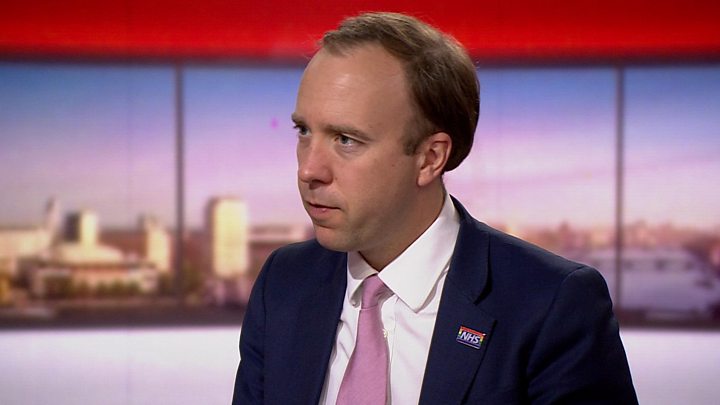
Media captionMatt Hancock: “We’re about to see another step in the plan”
The government will “bring forward proposals” on how to safely reduce the 2m social distancing rule in England this week, says Matt Hancock.
The health secretary said the distance could be lowered with “mitigations” to cut the risk of transmission.
Labour said it would support a change to 1m “under certain circumstances”.
Mr Hancock confirmed new easing of lockdown measures would be announced in the coming days, including whether pubs and restaurants can re-open on 4 July.
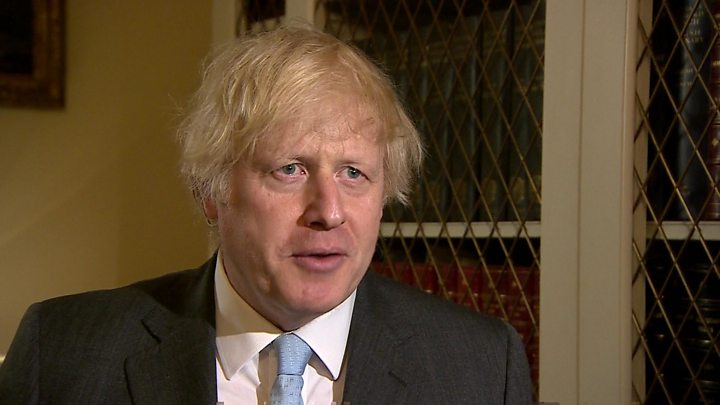
Boris Johnson said the government was “sticking like glue” to the roadmap it announced in May – when it said the venues could re-open on 4 July “at the earliest”.
He added: “We are going step-by-step, making things easier for people, helping people to see more of each other, allowing more social contact, more social interaction, and we will be setting all that out.
“But it’s very important that we don’t lose our vice like grip on the disease. We have got to keep it on the floor where we have got it and so we have got to keep making those trade-offs.”
Is it safe to relax the 2m rule?
Result of 2m rule review to come next week – Sunak
Mr Johnson announced a review into the 2m rule last week, with Chancellor Rishi Sunak confirming on Saturday its conclusion would be published this week.
But speaking on the BBC’s Andrew Marr programme, Mr Hancock appeared to go further, saying: “The proposals we’ll bring forward are how you can safely reduce the 2m with the sort of mitigations we’ve been talking about.”
He said there were “all sorts” of measures that could be introduced, referring to the use of face masks on public transport, Perspex screens in shops, and studies on the reduction of transmission risk when people sit side-by-side or back-to-back.
But while the health secretary said he “very much hopes” to reduce the distance, the government would be “guided by the science”, and would only make changes “in a way that is safe and doesn’t lead to resurgence of virus”.
Media playback is unsupported on your device
Media captionBoris Johnson: “On social distancing… watch this space, you won’t have very much more to wait now”
The government has faced pressure from leaders of the hospitality sector and its own MPs to lessen the 2m rule, with widespread concerns around the impact it would have on the UK economy.
The World Health Organisation recommends a distance of at least 1m (just over 3ft), but the UK government’s scientific advisers say that being 1m apart carries up to 10 times the risk of being 2m apart.
The other nations of the UK are yet to announce any plans to change the 2m distance rule.
Scotland’s First Minister Nicola Sturgeon has said she is looking at the evidence, and Northern Ireland’s Economy Minister Diane Dodds has said she is open to changing it.
A coronavirus adviser to the Welsh government said the risk in reducing the distance “isn’t very big”.
Officially, the review is still under way. But it now seems inevitable the result will be a move from a 2m social distancing rule in England to 1m.
The government is set to announce this in the week ahead – probably alongside a confirmed date in early July for pubs and restaurants to reopen, under certain conditions.
Scientists seem relaxed about this change – the chief scientific adviser Sir Patrick Vallance having indicated that, ultimately, this is a political decision, with no continuing body of evidence to stand in the way of the move.
A member of Sage, Professor Calum Semple, says he has changed his mind and it is now reasonable to “relax these rules”.
It’s understood there will need to be “mitigation” – requirements to stop overcrowding in bars, taking contact details of people booking restaurant tables and a more widespread use of face coverings, for example.
But as the eminent microbiologist Prof Peter Piot reminded us today, the virus won’t just fade away. He said it will be with us for some time and a second spike of some sort was highly likely.
The pubs and bars may reopen in England and Northern Ireland within weeks (Scotland and Wales are keeping the issue under review).
But no health or scientific official or adviser will be celebrating any time soon.
Labour’s shadow health secretary, Jon Ashworth, said his party were “prepared to look at [the proposals] carefully”, adding that if a change was “backed by the science, then that’ll be an understandable move”.
But he said countries who have lower social distance rules also have a “broader combination of measures”, such as face shields and tracing apps, and his support would depend on other mitigations being introduced.
Mr Hancock also said pubs and restaurants would find out this week whether they can re-open on 4 July.
He said the potential date was “part of the plan that we’ve been working through” since it was announced last month as a possible next step.
The health secretary added: “The plan is clearly working because the number of new infections is coming down, the number of people on ventilated beds in hospital is coming down and, thankfully, the number of people who are dying is coming down.”
Mr Hancock said he “wouldn’t rule out” following in the footsteps of countries like New Zealand – where customers need to register their details before going to the venues – as it could be “an additional way that you can do contact tracing so that you can find people who might be at risk”.
But he said there were “lots of ideas out there” and the government would confirm its plans this week.
WEIR, BURROW AND DARBY: Life with MND under lockdown
THE NEXT MUST-SEE DRAMA IN LOCKDOWN: The Salisbury Poisonings
How have you been affected by the issues relating to coronavirus? Share your experiences by emailing .
Please include a contact number if you are willing to speak to a BBC journalist. You can also contact us in the following ways:
The deepening cold war between the US and China will be a bigger worry for the world than coronavirus, according to influential economist Jeffrey Sachs.
The world is headed for a period of “massive disruption without any leadership” in the aftermath of the pandemic, he told the BBC.
The divide between the two superpowers will exacerbate this, he warned.
The Columbia University professor blamed the US administration for the hostilities between the two countries.
“The US is a force for division, not for cooperation,” he told me in an interview with BBC’s Asia Business Report.
“It’s a force for trying to create a new cold war with China. If this takes hold – if that kind of approach is used, then we won’t go back to normal, indeed we will spiral into greater controversy and greater danger in fact.”
Tensions grow
Mr Sachs’s comments come as tensions between the US and China are continuing to grow on several fronts – not just trade.
This week President Trump signed legislation authorising US sanctions against Chinese officials responsible for the repression of Muslims in Xinjiang province.
And in an interview with the Wall Street Journal President Trump said he believed China might have encouraged the international spread of the virus as a way to destabilise competing economies.
Image copyright Reuters
Image caption
The US has banned Huawei from using US chip technologies but is allowing American firms to work with the firm on 5G standards
The Trump administration has also targeted Chinese companies, in particular Chinese telecoms giant Huawei, which Washington says is being used to help Beijing spy on its customers. China denies this, as does Huawei.
But President Trump’s tough stance on China and Huawei may have all been part of a political ploy to get himself re-elected – at least according to a new book by former National Security Advisor John Bolton.
Professor Sachs agrees that targeting Huawei was never simply a security concern.
“The US lost its step on 5G, which is a critical part of the new digital economy. And Huawei was taking a greater and greater share of global markets.
“The US concocted in my opinion, the view that Huawei is a global threat. And has leaned very hard on US allies… to try to break the relations with Huawei,” he said.
Tensions flare
The US is not the only country that China has been locked in conflict with.
This week tensions have flared at the India-China border, with at least 20 Indian soldiers killed in some of the worst violence the two sides have seen in almost fifty years.
Meanwhile, China has been actively funding economic projects in Pakistan, Myanmar, Sri Lanka and Nepal – India’s closest neighbours – which have rankled fears in Delhi that Beijing is trying to cut off its influence in the region.
Mr Sachs admitted that China’s rise is of concern to its neighbours in Asia – especially if it doesn’t do more to assuage fears that it is trying to grow in a peaceful and cooperative way.
“Do I believe that China could do more to ease fears which are very real? I do,” he told me.
“The big choice frankly is in China’s hands. If China is cooperative, if it engages in diplomacy, regional cooperation and multilateralism, in other words – soft power – because it is a very powerful country…. then I think that Asia has an incredibly bright future.”
MPs are to grill health officials on whether they overpaid for personal protective equipment to deal with coronavirus.
The MP leading the inquiry says the crisis should not be an excuse for failing to achieve value for money.
One focus of their interest could be a little-known pest control company which won a contract to supply PPE worth more than £100m.
The government says it wants firms that can quickly provide a lot of PPE.
Coronavirus: First official analysis finds PPE failings
Coronavirus: PPE supplies ‘stable but fragile’
PestFix, part of a company called Crisp Websites, signed the £109m contract with the government on 13 April to supply what were specified as “urgently needed gloves, gowns and masks to the NHS supply chain.”
The business operates from a unit by Littlehampton Marina on the West Sussex coast. Its accounts show that last year it had net assets of just £18,000.
Yet officials sealed the deal with PestFix without putting the order out to other suppliers in a competitive tendering process, saying in the contract that because it was a matter of “extreme urgency” they were able to place the order “without competing or advertising the requirement”.
PestFix says it has delivered more than 67 million items of PPE into the NHS Supply Chain.
“Our small, dedicated global team, spanning three continents, has worked non-stop for the past 70 days to support efforts of getting PPE to the front line involving an ongoing and herculean logistics operation,” its director, Dan England, told BBC News.
But the contract has added to concerns that in the scramble to get hold of vital equipment as the coronavirus situation deteriorated, the government may have paid too much.
Meg Hillier MP, the chair of the Public Accounts Committee, would not comment on particular cases before taking evidence on Monday.
But she said: “Just getting numbers on its own isn’t enough. You need to get value for money for the taxpayer, even in difficult times.”
A hundred public sector contracts worth £342m had been signed for Covid-related PPE by the end of last month, according to the specialist data firm, Tussell.
So nearly a third by value was accounted for by the single order to PestFix.
One of the UK’s most senior civil servants, the permanent secretary of the Cabinet Office, Alex Chisholm, told the committee last week that is was difficult to make value for money assessments in the current situation.
“You’ll find for PPE, ventilators and lots of other things we’ve purchased, that the per unit cost of buying things at great speed from multiple sources in a sellers’ market has been higher than we would like to have paid,” Mr Chisholm said.
“So if you compared the average cost a year ago to what we’ve been paying now, it’s been expensive”.
But he said the spending was necessary and there was no alternative.
The procurement process has been fraught with problems.
A shipment in early May of more than 80 tonnes of protective gowns from Turkey was first delayed and then rejected by inspectors as faulty.
Meg Hillier is incensed by the Turkish episode, saying “We should not be paying money for old rope.”
But small businesses say they have been doing their best to help in the country’s hour of need.
Image copyright Ocean Footprint
Image caption
Peter Harrison’s firm Ocean Footprint invested in its own PPE machine.
The next biggest contract for PPE, after PestFix, was granted to a marine supplies company near Salisbury, Ocean Footprint, which had been buying protective masks from China to sell to boatyards.
Ocean Footprint agreed to supply the NHS with three million high grade masks for £5m. In the next few days it will have delivered more than a million of them.
“I’m open about what we’ve done,” says the managing director Peter Harrison, adding that it is easy to forget how anxious a time it was for health officials and suppliers as the deals were being struck.
“It was desperate. It was all hands on deck. We hadn’t even reached the peak.”
The company knew that getting hold of enough masks in rivalry with other countries would be impossible, so it invested £100,000 in its own mask-making machine in order to be able to complete the order.
The NHS could have bought similar masks much more cheaply before the crisis, Mr Harrison admits, but he says frantic worldwide demand, rising raw material costs and the need for air transport have sent prices spiralling upwards.
He says that at the price he is selling to the government he could offload his entire stock to other buyers in a day.
A not-for-profit campaign group, The Good Law Project, has announced that it will seek a judicial review of the decision to award PestFix with its PPE contract.
The review would be to find out why there was no competition for the order and how the company was chosen.
Dan England from PestFix says: “We continue to work in close partnership with the NHS, MOD Procurement and DHSC Covid-19 procurement teams, who have all demonstrated incredible dedication in supporting PestFix to deliver this highly complex transaction.”
A Department of Health and Social Care spokesperson said: “During this unprecedented global pandemic, we have been working around the clock to ensure PPE is delivered as quickly as possible to those on the frontline and we have delivered more than 1.7 billion items since the outbreak began.
“We are prioritising companies that can provide large volumes of PPE at a fast pace, while ensuring all new PPE undergoes vigorous checks to ensure they meet the safety and quality required. We are grateful for all offers – some will be rejected based on these standards.”
Image caption
Debt charities have warned that deferring payments can create difficulties later
Banks have been told to give more time to millions of people struggling with debt owing to the coronavirus crisis.
Credit card, store card, catalogue credit and personal loan customers will be able to defer repayments for another three months.
The help was first ordered by the City regulator, the Financial Conduct Authority (FCA), in April.
Anyone taking advantage of the freeze must still pay back the debt at the end of the deferral period.
This has prompted debt charities to warn of the potential for individuals’ financial problems to simply be stored up for a later date.
The FCA said that if borrowers could resume their repayments they should do so, to avoid getting into more serious difficulty in the future. Banks may also be stricter in who qualifies for the payment deferral, and might only agree to a reduction in minimum repayments.
The regulator stressed that using the payment deferral should not affect a borrower’s credit rating. However, it warned that loan providers did have other ways to check on whether payment holidays had been taken, such as asking for bank statements, when making decisions on whether to agree to credit applications.
Overdraft concern
Alongside the help for credit and store cards, bank customers have already been allowed to apply for an interest-free overdraft of up to £500.
The FCA confirmed that these would also be extended for three months. Anyone wanting to take advantage for the first time can apply by the end of October.
However, the FCA has not extended the guidance that ensured overdraft customers were no worse off on price when compared with the prices they were charged before planned rule changes on overdrafts.
Sarah Coles, from investment platform Hargreaves Lansdown, said: “Banks will be able to ramp up overdraft charges to the sky-high levels they were planning before this all kicked off. Suddenly you could be left paying around 40% interest on your coronavirus debts.
“This feels like an awful time to be dropping this kind of burden on people.”
On Friday, the FCA said it did not propose to extend this temporary measure. The overdraft rules benefit some people, primarily those who had previously fallen into using unarranged overdrafts.
Long-term issues
Although these extensions are currently proposals, banks only have until Monday to comment and the FCA expects the rules to be implemented soon after.
Help for people with car finance, payday loans, rent-to-own deals, pawnbroking, and buy-now-pay-later agreements will be updated by the regulator at a later date.
“The proposals would provide an expected minimum level of financial support for consumers who remain in, or enter, temporary financial difficulty due to coronavirus,” said Christopher Woolard, interim chief executive at the FCA.
“Where consumers can afford to make payments, it is in their best long-term interest to do so, but for those who need help, it will be there.”
Banks pointed out that many people would still be charged interest during payment deferrals, which would increase the debt.
“Any customer with concerns over their financial situation should check with their lender to see what support would be the best option for them,” said Eric Leenders, from UK Finance, which represents lenders.
More leeway on credit repayments will come as a huge relief to many families juggling bills during the crisis.
These continued interest-free overdrafts could be a life saver.
But, aside from overdraft costs, the help is not free money.
You will have to make up missed payments on credit cards and loans once the so-called holiday is over.
So you could face an even bigger crunch later on, at a time when jobs and livelihoods may still be in danger.