Category: Business News

  • Jet2 and Eurostar cut summer flights and trains

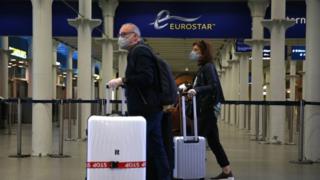
    Passengers wearing facemasks at the Eurostar terminal at St Pancras station in London

    Image copyright
    AFP

    Jet2 and Eurostar have announced that they will be cancelling some summer flights and trains in 2020 and 2021 due to the coronavirus pandemic.

    Eurostar is cutting direct services to three French cities due to lack of demand and difficulties implementing protection measures on long journeys.

    Separately, pilots union Balpa has said that airline Jet2 is to make 102 pilots redundant.

    The airline will be reducing its flying programme for 2020 and 2021.

    Eurostar said: “As we restart our service, we are focusing our timetable on our routes between capital cities, which have the highest demand from customers at the moment and shorter journey times.”

    The company said its services were operating with restrictions on food service, the compulsory wearing of masks, significantly increased hygiene measures and high-frequency cleaning.

    However, these standards were “more challenging to maintain on long distance routes”.

    Eurostar’s direct summer services to Lyon, Avignon and Marseilles, which were meant to start in May, will no longer be run at all in 2020 or 2021.

    Instead, the rail company will focus on its main routes between London, Paris, Brussels and Amsterdam.

    A spokesman for Jet2 said that the airline was facing “complicated” challenges relating to the coronavirus crisis and “changes on an almost daily basis”, which had resulted in the need to reduce its flying programme.

    “Sadly, the overall effect of these reductions has been the need to propose a number of colleague redundancies across our business.”

    He said the company had “every confidence” that it would “bounce back from the unprecedented demands currently placed on the company” but it did have to make “difficult decisions in the current climate”.

    Image copyright
    SOPA Images

    Jet2, which has bases at airports in Leeds, Birmingham, Stansted, Newcastle, Manchester, Edinburgh, Glasgow and Belfast, is the latest airline to issue formal notice of redundancy and start a consultation process with its workforce.

    In May, Virgin Atlantic announced that it would be slashing more than 3,000 jobs in the UK across its business and would end its operation at Gatwick airport, as a result of the pandemic.

    The airline said it had to apply for emergency loans from the government in order to avoid collapse.

    And in June, German airline Lufthansa said it would cut 22,000 jobs and have 100 fewer aircraft, just weeks after the German government injected €9bn to prevent it from going bust.

    Ryanair and EasyJet have also announced that they will be cutting between 15-30% of their workforces, while British Airways is proposing to make 12,000 of its 45,000 staff redundant.

    ‘Through the mill’

    Balpa general secretary Brian Strutton said he was concerned about the “knee-jerk” way in which airlines like Jet2 had been responded to falling customer numbers due to the pandemic.

    “Many of the pilots whose jobs are on the line in Jet2 have just recently moved there after having lost their jobs at Thomas Cook – these pilots have been through the mill already,” he said.

    Mr Strutton said Jet2 played an “extremely important role” at airports in the north of the UK, and it was important that it did not collapse:

    “Once again, I reiterate my call for the government to step in, call for a job cuts moratorium, and work on a strategic support package to help this industry get through this crisis.”
  • IMF says decline in global growth worse than forecast

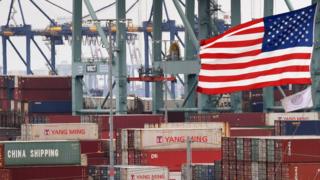
    Chinese shipping containers are stored beside a US flag after they were unloaded at the Port of Los Angeles in Long Beach, California on May 14, 2019.

    Image copyright
    Getty Images

    The International Monetary Fund has lowered its global growth forecast for this year and next in the wake of the coronavirus pandemic.

    It now predicts a decline of almost 5% in 2020, substantially worse than its forecast only 10 weeks ago in April.

    The UK economy is expected to contract more than 10% this year, followed by a partial recovery in 2021.

    That would be one of the most severe declines, although not as deep as forecast for Italy, France or Spain.

    The IMF’s managing director, Kristalina Georgieva, had already warned that the April forecast had been overtaken by events, and that the likely path of the global economy was looking worse.

    That is reflected in the new projections for both the world and the British economy. The previous April forecasts were a 6.5% decline for the UK and 3% for the world.

    Unusual

    The gloomier outlook partly reflects the fact that data since April have pointed to a sharper downturn than the earlier forecast envisaged.

    The IMF how expects a larger hit to consumer spending. The report points out something that is unusual about this downturn.

    Usually people dip into savings, or get help from family and welfare systems to reduce the fluctuations in their spending. Consumer spending usually takes a much smaller hit in a downturn than business investment.

    But this time, lockdowns and voluntary social distancing by people who are wary of exposing themselves to infection risks have hit demand.

    The IMF also expects people to do more “precautionary saving”, reducing their consumption because of the uncertain outlook ahead.

    Image copyright
    AFP

    Image caption

    IMF chief Kristalina Georgieva

    The report also warns there is likely to be more economic “scarring’”. More firms going out of business and people being unemployed for longer may mean that it is harder for economic activity to bounce back as quickly as hoped.

    There is also a danger that, for firms that do survive, their efficiency is likely to be in undermined by the steps they take to improve safety and hygiene – to reduce the risk of workplace transition of the coronavirus.

    Dramatic slowdown

    The biggest contractions in economic activity envisaged by the IMF this year are in developed economies particularly in Europe. The UK is likely to be one of the deepest.

    The new forecast does predict the UK’s growth figure next will be larger than in the April forecast. But that is more than fully offset by this year’s deeper decline. Overall, the new IMF forecast implies the British economy in 2022 would be smaller than was implied by the April forecast.

    For all the 16 individual countries for which the IMF gives specific forecasts, there is a downgrade for this year compared with the April projection.

    The largest change was for India, where the IMF previously predicted much slower growth, but growth nonetheless. Now the forecast is a sharp 4.5% contraction.

    For just one of those 16 countries, the IMF does still see growth this year. That is China, but at 1% that still represents a dramatic slowdown.

    The IMF’s new assessment underlines once again the severe economic damage being wrought by the pandemic and the response to it.

    The predicted declines in activity are however not quite as severe as what was forecast earlier this month by the Organisation for Economic Cooperation and Development.

  • Coronavirus: Swissport set to halve its UK workforce

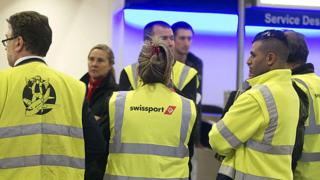
    Swissport staff

    Image copyright
    Getty Images

    Swissport is set to cut more than half of its UK workforce as air companies struggle with the effects of the coronavirus crisis.

    It is consulting on cutting up to 4,556 jobs, the GMB union said.

    Chief executive Jason Holt said the company had to reduce the size of its workforce to survive.

    Swissport operates at airports across the UK, including Heathrow and Gatwick, which are among those badly hit by the crisis.

    Air travel collapsed around the world after governments imposed travel restrictions during coronavirus lockdowns.

    • Who’s exempt from the quarantine rules?
    • UK airlines warn quarantine will ‘kill air travel’

    While some airlines are making plans to start flying some routes again as lockdowns lift, Swissport has said its revenue is forecast to be almost 50% lower than last year due to the crisis.

    Mr Holt said in a message to staff: “We must do this to secure the lifeline of funding from lenders and investors to protect as many jobs as possible in the UK and Ireland.

    “It’s true that we’ve seen tough times before – volcanic cloud, 9/11, the financial crisis – and we’ve weathered these. But this time it’s different. We have never seen anything like Covid-19 in our lifetimes.

    “We are now facing a long period of uncertainty and reduced flight numbers, along with significant changes taking place to the way people travel and the way goods move around the world.

    “There is no escaping the fact that the industry is now smaller than it was, and it will remain so for some time to come.”

    ‘Devastating news’

    Swissport employs about 8,500 workers at airports, including baggage handlers and check-in staff.

    The GMB union said the announcement was “devastating news”, with jobs set to be lost that were essential for regional economies.

    Nadine Houghton, national officer of the GMB, said: “With Swissport now considering job cuts on this scale we have deep concerns about the viability of many of our regional airports and the benefits for regional connectivity that they bring.”

    Oliver Richardson, national officer of Unite, said: “We can’t wait any longer, the UK government needs to urgently intervene with a bespoke financial package and an extension of the 80% furlough scheme for the aviation industry.”

    The Department for Transport has consistently said that while the aviation sector is important to the UK economy, all firms, including aviation companies, should first explore existing government schemes and try to raise capital from investors before the government will consider the situation of individual firms.

  • Coronavirus: New advice for businesses in England on how to reopen safely

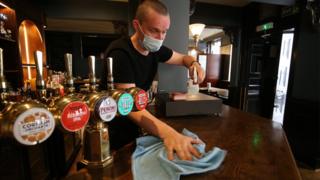
    Tony Bennett the owner of The Devereux pub in Temple, London

    Image copyright
    PA Media

    Image caption

    Pubs are among the venues which will be allowed to open in England from 4 July

    Updated guidance has been published on how hairdressers, hotels, pubs and other businesses in England can reopen safely from 4 July.

    It includes advice to reconfigure seating, minimise self-service, cancel live acts and stagger arrivals.

    Customers will be urged to book in advance, order online or through apps and not to lean on counters.

    It comes after Boris Johnson announced sweeping changes to England’s lockdown, including a relaxing of the 2m rule.

    Pubs, restaurants, cinemas and hairdressers are among the venues which will be allowed to reopen in ten days’ time.

    Updated sector-by-sector guidance has now been published by the government.

    In the biggest easing of lockdown yet, Mr Johnson also said the 2m social-distancing rule will be replaced with a “one-metre plus” rule.

    This means people should stay at least 2m (6ft) apart where possible, but otherwise should remain at least 1m apart while taking steps to reduce the risk of transmission, such as wearing face coverings.

    The 2m rule will remain in Scotland and Wales. In Northern Ireland, ministers have said social distancing of 1m is “safe and appropriate” for children at school.

    Announcing the changes on Tuesday, Mr Johnson said the following venues will be able to reopen from 4 July:

    • Pubs, bars and restaurants but only with a table service indoors, and owners will be asked to keep contact details of customers to help with contact tracing
    • Hotels, holiday apartments, campsites and caravan parks but shared facilities must be cleaned properly
    • Theatres and music halls but they will not be allowed to hold live performances
    • In other changes weddings will be allowed to have 30 attendees, and places of worship will be allowed to hold services but singing will be banned
    • Hair salons and barbers will be able to reopen but must have protective measures, such as visors, in place
    • Libraries, community centres and bingo halls
    • Cinemas, museums and galleries
    • Funfairs, theme parks, adventure parks, amusement arcades, outdoor skating rinks and model villages
    • Indoor attractions where animals are exhibited, such as at zoos, aquariums, farms, safari parks and wildlife centres

    Some other venues will remain closed by law, including nightclubs, casinos, indoor play areas, nail bars and beauty salons, swimming pools and indoor gyms.

    It comes as struggling retailers must pay their quarterly rent to landlords on Wednesday.

    The latest figures show a further 171 people have died after testing positive for coronavirus in the UK, taking the total to 42,927.

    From 4 July, Mr Johnson also said two households in England will be able to meet indoors and stay overnight – with social distancing.

    The meeting of households will not be exclusive so, for example, one set of grandparents could see their relatives one weekend, and the other set of grandparents the next.

    But, unlike the bubble system, people will have to maintain social distance – so family members who live apart will not be able to hug.

    At Tuesday’s final daily Downing Street coronavirus briefing the government’s chief scientific adviser Sir Patrick Vallance and the chief medical officer for England Professor Chris Whitty stressed Mr Johnson’s plan was not “risk-free”.

    And Mr Johnson warned all the changes were reversible if the virus were to begin to run out of control.

    • CORONAVIRUS NEWSCAST: Evan Davis takes the temperature of the economy
    • SEAN PENN: The Hollywood actor’s role in getting Americans tested

  • George Floyd: Ben & Jerry’s joins Facebook ad boycott

    Ben & Jerry's ice cream shop sign

    Image copyright
    Getty Images

    Ben and Jerry’s has joined a growing list of firms pulling advertising from Facebook platforms throughout July.

    It’s part of the Stop Hate For Profit campaign, which calls on Facebook to have stricter measures against racist and hateful content.

    Ben and Jerry’s Tweeted that it “will pause all paid advertising on Facebook and Instagram in the US”.

    Earlier this week outdoor brands The North Face, Patagonia and REI joined the campaign.

    Ben and Jerry’s said it is standing with the campaign and “all those calling for Facebook to take stronger action to stop its platforms from being used to divide our nation, suppress voters, foment and fan the flames of racism and violence, and undermine our democracy.”

    After the death of George Floyd in police custody, Ben and Jerry’s chief executive Matthew McCarthy said “business should be held accountable” as he set out plans to increase diversity.

    Earlier this week the freelance job listing platform Upwork and the open-source software developer Mozilla also joined the campaign.

    Facebook has said it was committed to “advancing equity and racial justice”.

    “We’re taking steps to review our policies, ensure diversity and transparency when making decisions on how we apply our policies, and advance racial justice and voter engagement on our platform,” it said on Sunday.

    The statement also pointed to the company’s Community Standards, which include the recognition of the platform’s importance as a “place where people feel empowered to communicate, and we take seriously our role in keeping abuse off our service”.

    • Facebook staff anger over Trump post
    • Outdoor brands boycott Facebook ads

    Stop Hate for Profit

    The Stop Hate for Profit campaign was launched last week by advocacy groups, including the Anti-Defamation League, the National Association for the Advancement of Colored People, and the Color Of Change.

    The movement has said it is a “response to Facebook’s long history of allowing racist, violent and verifiably false content to run rampant on its platform”.

    Stop Hate for Profit has called on advertisers to pressure the company to adopt stricter measures against racist and hateful content on its platforms by stopping all spending on advertising with it throughout July.

    Last year the social network attracted advertising revenue of almost $70bn (£56bn).

    Facebook, and its chief executive Mark Zuckerberg, have often been criticised for the handling of controversial subjects.

    This month the company’s staff spoke out against the tech giant’s decision not to remove or flag a post by US President Donald Trump.

    The same message was shared on Twitter, where it was hidden behind a warning label on the grounds that it “glorified violence”.

    Unilever, the parent company of Ben and Jerry’s, did not immediately respond to a request for comment from the BBC.

  • Soreen boss: ‘School closures caused our sales to slump’

    When schools were closed in Britain in March, as part of the coronavirus lockdown, it had a surprising impact on one of the country’s best-known food brands. Soreen, which makes malt loaves, suddenly saw its sales slump. The firm’s CEO, Mark Simester, explains why.

    Video by Jeremy Howell

  • Hairdresser: ‘We’ve built a waiting list of over 2,000 people’

    Katya Milavic-Davies

    Image copyright
    Katya Milavic-Davies

    Hairdressers will be allowed to reopen from 4 July – and clearly it’s not a moment too soon for thousands of customers desperate for a trim.

    “We’ve built up a waiting list of more than 2,000 people,” said Katya Davies, who runs four Myla and Davis hairdressers in south London.

    Amid mounting speculation that the lockdown would be eased for large swathes of the service sector, Ms Davies opened her appointment book a couple of weeks ago.

    July is already looking full, she said, and there’s now a big rush to get the salons ready in time. They will open an extra four hours each day to cope with demand.

    “We can’t wait to get back to work and we’ve planned our reopening schedule around the 2m distancing rule. We don’t plan to change that, although the switch to 1m-plus will ease the burden a little,” she said.

    “Our salons will be able to work at around 65% capacity although wearing visors will be quite cumbersome and bring its own problems, especially for the comfort of our workers who will be dealing with clients back-to-back.”

    Prime Minister Boris Johnson anticipated the huge demand for a haircut when he announced the easing of the lockdown after more than three months

    He said: “Almost as eagerly awaited as a pint will be a haircut, particularly by me, and so we will reopen hairdressers with appropriate precautions, including the use of visors.”

    The details of the new guidelines are expected to be announced soon, but are expected to include use of protective screens and an increase in handwashing facilities.

    Image copyright
    Dale Hollinshead

    Busy preparations

    “We’ve already had lots of texts and calls from customers excited to be able to return to the saloon,” said Dale Hollinshead, who runs Hazel & Haydn, in Birmingham’s Jewellery Quarter.

    “It’s been a long lockdown for all of us,” he said. His salon has two floors, which makes social distancing a little easier to deal with, he reckons.

    “We’ve been busy preparing the salon for opening in the last few weeks and have put plastic screens in place and have floor markings that are ready to go down.

    “We have a range of plastic visors and face masks for staff and will do whatever else the guidelines require to ensure everyone is safe.”

    The salon will extend opening hours from 8am to 8pm when it reopens on 4 July, and stylists will work shifts in teams to reduce the number of people that customers come into contact with.

    “We’re really looking forward to getting back to business,” Mr Hollinshead said.

    Image copyright
    Belle Cannan

    Embracing the new normal

    “We’re very pleased about the news that we can finally reopen,” said Belle Cannan, co-founder of Salon Sloane in London’s Chelsea. “We all want to get back to work and our clients are excited to see us.”

    She had been preparing to reopen based on 2m social distancing, but welcomed the reduction to 1m, saying: “It means we will be able to work at around 75% capacity rather than 50%.

    “We’ve remained in contact with clients through lockdown with advice to help them avoid hair disasters. Then a couple of weeks ago we started taking provisional appointments, and the phone’s been very active.”

    Clients will be offered face-masks while stylists will be wearing lightweight visors. Other changes will see a hand-sanitising station for clients, and the reception will be screened off.

    Ms Cannan said: “There are some of our usual touches that have had to go, such as offering tea, coffee or magazines to clients. They will also have to put on their own gowns and hang up their own coats.”

    But she’s confident clients will adjust: “People having been waiting so long for this that they will be happy with the new normal.”

  • Coronavirus: Go Outdoors calls in administrators

    Go Outdoors logo

    Image copyright
    Go Outdoors

    Go Outdoors’ owner has called in administrators for the business as the effects of coronavirus piles pressure on High Street retailers.

    JD Sports, which owns Go Outdoors, said the Covid-19 lockdown had brought into “sharper focus” the costs of the business, especially its lease terms.

    After appointing administrators, JD Sports then bought back the firm.

    The chain employs about 2,400 staff across 67 stores, specialising in camping equipment, bikes and clothes.

    After appointing Deloitte as administrators, JD Sports paid £56.5m for Go Outdoors in what is known as a pre-pack administration.

    The restructuring, which will also be led by Deloitte, will primarily focus on trying to renegotiate rent terms with landlords.

    • What shops are open?
    • Shoppers rush to the High Street as England stores reopen

    “The terms of the property leases in Go were extremely inflexible, with the stores having an average remaining period to lease expiry of approximately 10 years with upwards only rent reviews, many of which are fixed at rates above inflation regardless of the market rent in the location,” the firm said.

    JD Sports will continue to pay rent on Go Outdoor properties while the terms are being renegotiated.

    How many jobs and store locations are kept will in part depend on how those negotiations turn out, it said.

    “Subject to realism and flexibility in the future leases, it is the group’s intention to retain the majority of Go’s retail estate and preserve as many jobs as possible,” it said.

    JD Sports will pay Go’s debts to stock suppliers and its tax liabilities, and it will honour customer returns and gift cards. All of Go’s employees will transfer across to the new company on the same terms and conditions.

    The Manchester-based JD Sports group bought Go Outdoors in 2016 for £112m. But the chain has been struggling in recent years, and forced store closures under the coronavirus lockdown have further exacerbated the firm’s problems.

    While non-essential retailers have since been allowed to reopen in Northern Ireland and England, analysts have questioned how comfortable customers will feel returning to the shops.

    Compared with the same period in 2019, footfall was down 45.3% on the first day of reopening in England, according to retail analyst firm Springboard.

    Several big brands have been struggling due to the lockdown measures introduced in March to stop the spread of Covid-19.

    Cath Kidston, Laura Ashley and the UK arm of Victoria’s Secret have all called in administrators.

    Last week, Poundstretcher announced that it has launched a company voluntary arrangement, an insolvency process that allows companies to continue trading while pushing through store closures and rent cuts.

  • Coronavirus: Lockdown to be relaxed in England as 2m rule eased

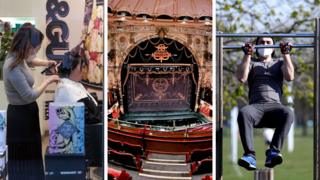
    A three picture composite of a hairdresser works in London on 18 March 2020, a deserted Coliseum Theatre in London on 11 June 2020 and person uses outdoor gym in Clapham on 24 March 2020

    Image copyright
    PA Media

    Pubs, restaurants, hotels and hairdressers can open from 4 July in England, when social distancing rules will be eased.

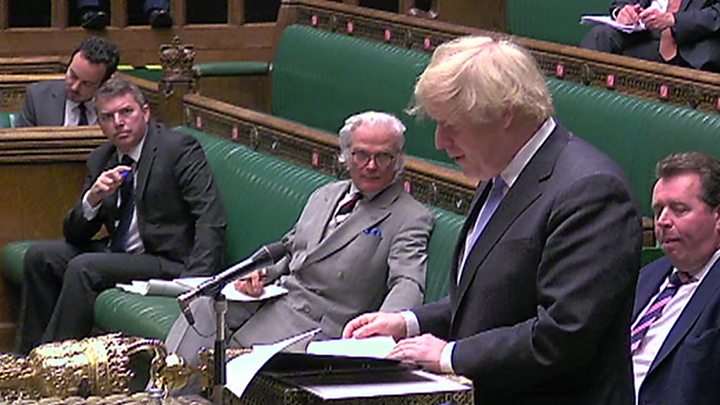
    Prime Minister Boris Johnson said people should remain 2m apart where possible but a “one metre plus” rule will be introduced.

    Two households in England will also be able to meet indoors and stay overnight – with social distancing.

    The prime minister warned that all the steps were “reversible”.

    Scotland’s First Minister Nicola Sturgeon, Wales’ First Minister Mark Drakeford and Northern Ireland’s Arlene Foster have said the 2m rule will remain in place in their nations for the moment.

    Indoor gyms, swimming pools, nail bars and indoor play areas are among the list of businesses that will remain closed, as they have been since lockdown started on 23 March.

    • Lifting lockdown: All you need to know
    • ‘There will be a shortage of holiday cottages’

    The meeting of households will not be exclusive so, for example, one set of grandparents could see their relatives one weekend, and the other set of grandparents the next.

    But, unlike the bubble system, people will have to maintain social distance – so family members who live apart will not be able to hug.

    Mr Johnson said people would be encouraged to use “mitigation” – such as face coverings and not sitting face-to-face – when less than 2m from each other but “where it is possible to keep 2m apart, people should”.

    Media playback is unsupported on your device

    Media captionBoris Johnson is cheered as he announces English pubs can reopen from 4 July

    Mr Johnson said the “national hibernation” was beginning to end, and “life is returning to our streets” but warned the virus was still not defeated and vigilance was required.

    He said: “Our principle is to trust the British public to use their common sense in the full knowledge of the risks, remembering the more we open up, the more vigilant we need to be.”

    The venues listed as being able to reopen include:

    • Pubs, bars and restaurants but only with a table service indoors, and owners will be asked to keep contact details of customers to help with contact tracing
    • Hotels, holiday apartments, campsites and caravan parks but shared facilities must be cleaned properly
    • Theatres and music halls but they will not be allowed to hold live performances
    • In other changes weddings will be allowed to have 30 attendees, and places of worship will be allowed to hold services but singing will be banned
    • Hair salons and barbers will be able to reopen but must put protective measures, such as visors, in place
    • Libraries, community centres and bingo halls
    • Cinemas, museums and galleries
    • Funfairs, theme parks, adventure parks, amusement arcades, skating rinks and model villages
    • Indoor attractions where animals are exhibited, such as at zoos, aquariums, farms, safari parks and wildlife centres

    What cannot open from 4 July?

    The following places will remain closed by law

    • Nightclubs and casinos
    • Bowling alleys and indoor skating rinks
    • Indoor play areas including soft-play
    • Spas
    • Nail bars and beauty salons
    • Massage, tattoo and piercing parlours
    • Indoor fitness and dance studios, and indoor gyms and sports venues/facilities – although Culture Secretary Oliver Dowden tweeted that ministers hope to be able to reopen gyms and leisure facilities in mid-July
    • Swimming pools and water parks
    • Exhibition or conference centres – other than for those who work for that venue.

    Read more detail on how lockdown measures are easing in England here.

    Mr Johnson said the government could not open everything at the same time and said “difficult judgements” had to be made.

    Labour leader Sir Keir Starmer said he welcomed the statement overall, adding “I believe the government is trying to do the right thing and in that I support them”.

    He added he thought it was “safe for some children to return to school” and he urged clarity over getting all children back to school safely.

    Restrictions have to lift at some point. The big question is whether the UK is moving too soon.

    The number of infections has fallen dramatically.

    There are now just over 1,000 new cases a day on average.

    That compares with an estimated 100,000 at the peak at the end of March – we don’t know the exact figure because there was limited testing in place.

    Huge progress has, therefore, been made.

    But the number of infections is still significantly higher than other countries.

    France and Germany are seeing fewer than half the number of infections that the UK is (and Germany has a larger population), while Italy has fewer than a quarter.

    It is why there are plenty of experts, including former government chief scientific adviser Sir David King, voicing concern that restrictions are easing too quickly.

    But, of course, not lifting them comes at a cost too – to the economy, to people’s health and wellbeing and to wider society.

    At the end of the day it is a finely balanced judgement call.

    We will only know whether it was the right one or not in the weeks and months to come.

    Current evidence suggests being 1m apart carries between two and 10 times the risk of being 2m apart, scientists advising the government have said.

    Under new guidance, the government wants people to keep 2m apart where they can. If not, to remain at least 1m apart while taking steps to reduce the risk of transmission.

    They include measures such as not sitting face-to-face, cutting the number of people in an enclosed space, or by having hand-sanitiser available to use.

    Mr Johnson said it was each nation’s own responsibility to make their own lockdown restrictions but said all parts of the UK were now “travelling in the same direction”.

    During the government’s final daily coronavirus press briefing, chief scientific adviser Sir Patrick Vallance said the R value for the UK – the average number of people that one infected person passes the virus on to – was between 0.7 and 0.9.

    It came after the prime minister said he did not believe there was “a risk of a second peak of infections that might overwhelm the NHS”.

    He highlighted a further decline in the seven-day rolling average of deaths, and championed an increase in testing – now totalling over 8 million since the beginning of the pandemic.

    ‘Big moment’

    BBC political editor Laura Kuenssberg said: “This is not a return back to normal business, but it is a very big moment, and a step to a new normal.

    “One important point to note though, as I understand it, the advice from the government will still be that people should work at home if they can.”

    Wetherspoon chairman Tim Martin said: ” We are extremely pleased that pubs are reopening on 4 July after a long hiatus.

    “We are going to discuss the precise government proposals with our pub managers and staff before we comment further on the details.”

    UK Hospitality chief executive Kate Nicholls said: “Getting venues open again, even with social distancing measures in place, is the best way to secure businesses and jobs.”

    But she warned while many businesses would endeavour to reopen the capacity constraints caused by social distancing would mean some were unviable and government support remained “crucial”.

    A further 171 deaths have been reported across all settings in the UK, taking the total to 42,927. Latest testing figures showed there were 874 positive cases identified in the 24 hours to 09:00 BST on Tuesday.

    • WEIR, BURROW AND DARBY: Life with MND under lockdown
    • THE NEXT MUST-SEE DRAMA IN LOCKDOWN: The Salisbury Poisonings

  • ‘There will be a shortage of holiday cottages’

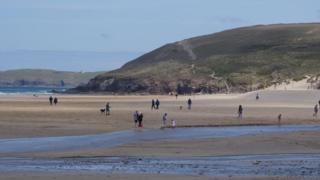
    Perranporth beach, Cornwall

    As English hotels and other forms of accommodation prepare to reopen on 4 July, there is a “frenzy” of appetite for holidays, says one listings site.

    Sarah and Steve Jarvis, who run the Independent Cottages website, say traffic in the past week has been 150% up on the same time last year.

    “We’re very excited and very busy,” said Steve, adding that the lifting of restrictions on Tuesday was “very welcome news”.

    But he added that not all holidaymakers will get the accommodation they want.

    “There will be a shortage of holiday cottages,” he told the BBC. “There are forward bookings to be honoured and there will be fewer properties available.”

    Independent Cottages has more than 1,800 properties on its books, with more than 1,500 of them in England.

    Unlike online travel agents, it does not take a percentage on bookings, but charges an annual listing fee and allows property owners to deal directly with holidaymakers.

    Image copyright
    Sarah and Steve Jarvis

    Image caption

    Sarah and Steve Jarvis say demand for cottages is high

    Sarah said travel industry guidelines on coronavirus allowed holiday lets to cope with back-to-back bookings.

    However, some holiday cottage owners were opting to leave two to three days between bookings to allow for thorough cleaning, further constraining the supply of accommodation.

    “There’s a lot to clean,” she said. “It’s all very achievable, but some owners will feel that they want to leave a gap.”

    One issue that is still unclear is the question of accommodation for stag and hen parties and other mass gatherings.

    Such occasions can bring together as many as 18 to 20 people from different households, all using shared areas.

    “We’re being asked about this a lot,” said Sarah. “The 2m rule isn’t much of an issue in a self-catering cottage. but we don’t know how many households are allowed.”

    Self-catering accommodation is ideal for helping people “ease back to a new normal” as lockdown restrictions are lifted, says another holiday provider, holidaycottages.co.uk.

    The firm’s chief marketing officer, James Starkey, welcomed the government’s announcement, saying it gave would-be holidaymakers “something to look forward to”.

    “Self-catering accommodation by its very nature allows for natural social distancing, with people visiting holiday properties staying in self-contained units without having to use shared facilities,” he said.

    “Our owners already adhere to high standards of cleaning, but all have now been provided with additional information on cleaning best practice for before and after a stay.”

    ‘End of the tunnel’

    Hotels, too, are busy preparing to open their doors to guests on 4 July.

    Accor, which operates 270 hotels in the UK, says it will be reopening them gradually. It hopes to have 90% of them back in business by the end of August.

    Image copyright
    Accor

    Those booking in will see plenty of changes. Restaurants and bars will be serving food and drink on a “grab-and-go” basis, while fridges in the rooms will not contain any mini-bar items.

    Every other room will be unoccupied and rooms will be left empty for 24 hours after a guest checks out.

    Thomas Dubaere, Accor’s chief operating officer for Northern Europe, told the BBC Accor had been able to test its safety measures in other countries which had already eased lockdown.

    He said guests were comfortable with the measures “as long as we keep good service and a friendly smile”.

    “They still get the service. It’s just in a different way for the time being,” he added.

    Mr Dubaere welcomed the government’s moves to allow hotels to reopen.

    “We’re seeing the light at the end of the tunnel,” he said.

    Can I book with confidence?

    Domestic tourism will now most likely be operational in some form in all parts of the UK by 15 July – starting with self-catering in Northern Ireland from Friday.

    Holidaymakers will still have some concerns, not least the possibility of a local or national spike in coronavirus cases over the summer.

    Any new lockdown would mean a return to the refund or rebooking rights currently in place.

    That gets more complicated if you are told, under the test and trace system, to self-isolate. Any refund rights would be subject to the terms and conditions when you book.

    The traditional backstop of insurance (albeit less common among domestic travellers) may not help, unless you bought your policy months ago.

    Coronavirus is no longer an unknown event, so anyone buying travel insurance now is unlikely to be covered for any coronavirus-related delays or cancellations.

    Self-catering holiday accommodation is now open again in Northern Ireland, and hotels will follow on 3 July.

    A decision will be taken in Wales on 9 July on whether to open up the country to tourists again. If this is given the go-ahead, it’s likely to take effect from 13 July.

    The Scottish government has said that hotels and tourist accommodation may be able to reopen from 15 July at the earliest, if its next review of lockdown restrictions on 9 July decides that conditions are favourable.

    UK Hospitality, which represents hotels and accommodation as well as other areas of the hospitality sector, said it greeted the government’s relaxation of the lockdown restrictions in England “with relief and praise”.

    “The government has given due recognition to how hard hospitality has been hit by this crisis,” said UK Hospitality chief executive Kate Nicholls.

    “Our sector was one of the first to be seriously affected and we are going to be one of the last to reopen.” However, she added that government support would remain crucial.

    “Many businesses have been closed for months with no revenue and are now facing substantial rent and PAYE bills,” she said.

    “We need financial help from the government, otherwise some of these businesses are going to go under right at the point at which they are allowed to open once again.”

    Abta, the travel association, described the latest measures in England as “a step in the right direction on the road to restarting travel in earnest”.

    “However, the travel sector remains in a perilous state, with redundancies announced each week, and more needs to be done to help the whole sector recover,” it added.

    “We need a more comprehensive roadmap as soon as possible that includes timeframes for relaxing international travel restrictions too, so businesses and customers can plan ahead.”