Category: Business News

  • Shoppers rush to buy shorts and raincoats as stores reopen

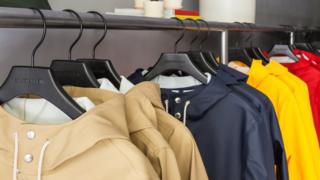
    Stutterheim jackets

    Image copyright
    Stutterheim

    Image caption

    Stutterheim sells direct to consumers around the world via its website

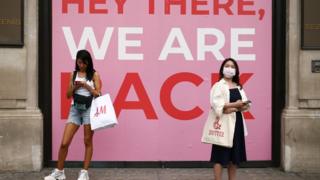
    Shorts and raincoats have been snapped up as returning shoppers kept one eye on the UK’s unpredictable weather.

    M&S said nine out of 10 bestselling menswear items were shorts, while it flogged 1,000 raincoats in the first few days of reopening.

    There’s been a huge demand for men’s socks ahead of Father’s Day.

    John Lewis said TV sets were also popular perhaps as buyers bagged new sets in time for the football season’s kick off.

    The department store chain reopened 13 shops this week and now said a further nine will reopen their doors next week.

    The details emerged after the first week that clothes and homeware shops – deemed non-essential – have been allowed to re-open since lockdown.

    Retailers have also been buoyed by news that store sales partly recovered in May, driven by DIY stores and garden centres reopening amid the lockdown.

    On a mission

    “We’ve seen our customers coming out on a mission – be that something for growing kids or new summer items for a family picnic,” said Alison Grainger, head of clothing & home retail for M&S.

    “Unsurprisingly, purchases have reflected what’s been selling well throughout this unprecedented time – casualwear, activewear, basics – items we all need for the new normal.”

    One surprisingly in-demand item at John Lewis has been the humble button.

    “Buttons and fabric have been really popular as many people are looking to create their own unique facemasks at home, but buttons are also useful for creating ‘ear savers’,” the store said.

    Ear savers are straps with buttons at each end that face masks can be attached to, rather than being hung on ears.

    John Lewis also reports “growing sales” of sofas and “high demand” Items such as plates, bowls and bed sheets.

    At M&S,, shoppers were buying Father’s Day gifts with many dads likely to be handed t-shirts o Sunday, perhaps along with new socks.

    On Monday alone M&S sold 13,000 men’s t-shirts in store with its £6 plain top accounting for 85% of the sales.

    But that was far outstripped by the number of women’s tops sold.

    The chain sold 43,000 womenswear t-shirts on Monday, with the best-seller a navy jersey t-shirt.

    Confident shopping

    Both chains reported customers responding well to the changes introduced to allow safe shopping.

    M&S installed perspex screens at till points and used a new counting app to ensure stores were managing the flow of customers in and out.

    “Our aim is to help our customers shop clothing with confidence, with extensive measures in place to ensure social distancing,” said Alison Grainger.

    John Lewis said its “careful” reopenings have given it confidence to announce the return of more stores next Thursday, including Peter Jones in London’s Chelsea.

    The other stores reopening on 25 June are Cribbs Causeway, Leeds, Liverpool, Milton Keynes, Newcastle, Southampton, Tunbridge Wells and York.

    “We are already applying lessons learned from our first store openings earlier this week,” said Berangere Michel, director for customer service at the chain.

    “We found that in some shops we were able to increase the number of customers and still maintain robust social-distancing, and made our signage clearer in order to help customers navigate the changes.”

    Customers at the department store are still be able to touch products, lie on beds, try on and test wipeable products such as sunglasses, prams, and tech products, he added.

  • Coronavirus: Quarantine rules for some countries set to be relaxed

    Tourists on a beach in the Algarve

    Image copyright
    Getty Images

    The government is planning to relax its travel quarantine rules in early July for some countries.

    Talks are taking place between UK officials and those in a number of European countries, including Portugal.

    However, the UK hopes to make an announcement on 29 June that it has secured a number of “travel corridors”.

    The government had previously said that the quarantine would be reviewed every three weeks and 29 June marks the end of the first three-week period.

    A travel corridor would mean that two people travelling in both directions between two countries would not have to self-isolate after they travel.

    However the broader travel quarantine is expected to remain in place.

    A senior aviation source has told the BBC that the quarantine could remain throughout the summer for anyone arriving from countries which do not have a travel corridor with the UK.

  • DIY spending splurge helps May sales recover

    B&Q worker

    Image copyright
    Getty Images

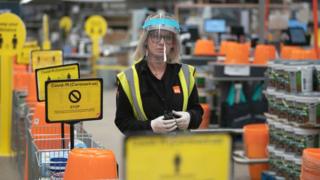
    UK retail sales partly recovered in May, driven by DIY stores and garden centres reopening amid the lockdown.

    The amount of goods sold last month increased by 12%, in comparison with record falls seen in April, according to the Office for National Statistics.

    Sales were boosted by a 42% rise at household goods stores, such as hardware, furniture and paint shops.

    Despite the rebound seen in May, retail sales still remain well below pre-lockdown levels.

    Non-essential retailers in England and Northern Ireland have, however, since been allowed to reopen.

    Most shops in Scotland are to reopen from 29 June. Non-essential retailers in Wales will be told they can reopen from Monday, the first minister is expected to announce on Friday.

    Non-food stores saw the biggest increase in sales last month, the Office for National Statistics (ONS) said, with DIY sales providing a bright spot.

    “According to retailers in this sector, consumers appeared to be carrying out home improvements while spending more time than usual in their homes,” the ONS said.

    However, despite the May boost, sales overall were still down by 13.1% compared with February, before the coronavirus lockdown measures were introduced.

    In the three months to May, sales fell by 12.8% compared with the previous three months, the fastest quarterly decline since records began in 1996.

    Samuel Tombs, chief UK economist at Pantheon Macroeconomics, cautioned that the “overall consumer picture remains bleak”.

    “May’s recovery in retail sales should not be interpreted as a sign that the economy is embarking on a healthy V-shaped recovery from Covid-19,” he said.

    “Naturally, spending on goods will recover faster than on services, which usually require human contact and remain largely unavailable.”


    May’s retail sales were always going to be better than the off-the-charts collapse in April, when the full force of the lockdown was underway.

    The decline is now reversing. But it’s far from clear when retail sales will return to pre-Covid-19 levels.

    When non-essential shops re-opened in England on Monday, with lots of queues for some of the most popular stores, footfall was still far lower than normal. And with social distancing in place, retailers will have to limit customer numbers where necessary.

    Fewer customers will mean fewer sales. With unemployment set to rise and the various government support schemes starting to ebb away, many people’s finances will start to come under real pressure.


    Shopping habits

    Online sales rose to their highest proportion on record in May while consumers stayed at home. They accounted for 33.4% of total spending, compared with 30.8% in April, the ONS added.

    Lynda Petherick, head of retail for Accenture UK and Ireland, said: “Given the wholesale shifts in consumer behaviour these last few months, it would be optimistic to assume shopping habits will return to normal in the immediate future.

    • Five ways shopping will be different from now on
    • ‘People queued for an hour to enter’ the shop

    “As the proportion of shoppers buying online continues to soar, the individual retailers who best recover in this new environment will be those who can quickly adapt to accelerating trends, such as the shift to ecommerce,” she added.

    Peter Cowgill, executive chairman of JD Sports, told the BBC’s Today programme that the chain’s online sales had “gained a lot of momentum” in April and May.

    He added that he hoped to see the same “kickback” in stores after non-essential retailers in England were allowed to reopen on 15 June.

    “I think that as consumer confidence continues to grow though, that the level of footfall will grow with it,” Mr Cowgill added.


    On Monday, stores across England selling non-essential goods opened their doors for the first time since the lockdown began.

    Shoppers arrived early to centre:mk in Milton Keynes. Some were picking up goods they had been waiting months to buy, such as baby clothes and home furnishings. Others were there for the sales. These shoppers told us what they bought – and why.

    Read more here.


    Action Fraud warned on Friday that customers should take additional care when shopping online during lockdown.

    Since shops were forced to close due on 23 March, the UK’s reporting centre for fraud has received reports of online shopping fraud totalling £16.6m in losses.

    However, separate research suggests that shoppers might be feeling anxious about their return to the High Street.

    More than half of UK customers expect they will now go shopping less often over the next one or two years, according to a survey of more than 1,000 people by accountancy giant EY.

    Silvia Rindone, partner in consumer product and retail at EY, said that retailers “must do all they can to help alleviate customers’ concerns”.

    “People need to know the shopping environment and communal space is safe and that the brand is taking health and safety as seriously as they are.”

  • May UK government borrowing hits record £55.2bn

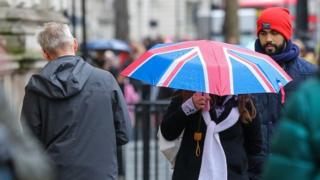
    A woman shelters from the rain beneath a Union Jack umbrella during rainfall in central London.

    Image copyright
    Getty Images

    Government borrowing hit a record monthly high of £55.2bn in May, as the coronavirus continued to press heavily on finances.

    The Office for National Statistics had said April’s deficit was the highest since records began in 1993, but has now revised that from £62bn to £48.5bn.

    April’s figure was changed after the government received more from taxes and National Insurance.

    It also spent less than thought on the Coronavirus Job Retention Scheme.

    May’s borrowing was nine times higher than in the same month last year and, the ONS said, last month was the first time since 1963 that debt as a percentage of GDP had passed 100%.

    • •Where do governments go when they need money?

    The deficit – the difference between spending and tax income – for the 12 months to May is now estimated to have been £103.7bn, £87bn more than in the same period last year, another record.

    But but the ONS estimates borrowing for the financial year 2020-21 will dwarf that at £298bn. That would be the largest deficit since World War Two.

    The ONS said that although the impact of the pandemic on the public finances was becoming clearer, its effects were not fully captured in the release, and that estimates were subject to greater than usual uncertainty.

  • Colgate reviews China’s Darlie brand amid race debate

    Taiwanese actress and singer Rainie Yang attends a Darlie toothpaste event in 2018 in Taipei, Taiwan.

    Image copyright
    Getty Images

    Colgate-Palmolive is reviewing Chinese toothpaste brand Darlie as firms reassess race stereotypes in products.

    The popular Chinese brand features a caricature of a man with blackface make-up and the name translates as “black person toothpaste”.

    It is owned by Colgate and its joint venture partner Hawley & Hazel and sold widely across Asia.

    A string of high-profile brands are also reviewing names and logos in light of the racism debate in the US.

    The toothpaste brand was originally called Darkie before it was changed to Darlie in 1989, following pressure from shareholders and other groups. But the blackface logo remained.

    “For more than 35 years, we have been working together to evolve the brand, including substantial changes to the name, logo and packaging. We are currently working with our partner to review and further evolve all aspects of the brand, including the brand name,” a Colgate spokesman told the BBC.

    Colgate paid $50m (£40m) in 1985 for 50% of Hong Kong-based Hawley & Hazel, the maker of Darlie. The brand controls 17% of the toothpaste market in China, 21% in Singapore, 28% in Malaysia and 45% in Taiwan, according to data firm Euromonitor International.

    On Wednesday, PepsiCo said it was changing its Aunt Jemima branding, while other food brands featuring African-American characters are reviewing their logos. Mars Inc said it was considering possible changes to the branding of its Uncle Ben’s rice, which entered the market in the 1940s.

    With racial injustice under the spotlight, following the death of African-American George Floyd while in police custody and the Black Lives Matter movement, corporate America has been forced to tackle the issue.

    Many British firms have also been under pressure to admit links to the slave trade including brewer Greene King, Lloyd’s of London and banks including RBS and Lloyds Banking Group.

  • Bank and Church of England apologise for historic slavery ties

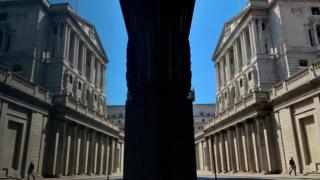
    Bank of England reflected in glass

    Image copyright
    Getty Images

    The UK’s central bank and the Church of England have both apologised for the role that some of their senior figures played in the slave trade.

    Former Bank of England governors and directors profited from slavery, as did a bishop and dozens of other clergymen.

    The Bank said it would ensure that images of former governors who were involved in the slave trade are not displayed in its buildings.

    The Church described its history as a “source of shame”.

    “Slavery and exploitation have no place in society,” a Church spokeswoman said.

    Slaves branded

    In 2006, the Church voted to apologise to the descendants of victims of the slave trade.

    Its missionary arm, the Society for the Propagation of the Christian Religion in Foreign Parts (SPG), inherited three sugar estates in the Caribbean.

    The plantation was run for the Church by professional planters, but its profits went to the missionary group. Slaves working on the estate were branded on their chests with the word “society”.

    And now, the Daily Telegraph has reported that nearly 100 clergymen also benefitted individually from slavery.

    “While we recognise the leading role clergy and active members of the Church of England played in securing the abolition of slavery, it is a source of shame that others within the Church actively perpetrated slavery and profited from it,” the spokeswoman said.

    When slavery was abolished in 1833, the UK government raised huge amounts for compensation. However, that money was not paid to those who had been enslaved, but was given instead to slave-owners for their “loss of human property”.

    ‘Unacceptable part of history’

    A database compiled by University College London shows that at least 11 former Bank governors and 16 early directors either benefitted from those payments or had links to the slave trade.

    “There can be no doubt that the 18th and 19th Century slave trade was an unacceptable part of English history,” a Bank spokeswoman said.

    “As an institution, the Bank of England was never itself directly involved in the slave trade, but is aware of some inexcusable connections involving former governors and directors and apologises for them.”

    She said the Bank had started a “thorough review” of its image collection to ensure no pictures of anyone involved in the slave trade remained on display.

    Pressure has been growing on companies around the world to address links to slavery and tackle racial inequality following the death of George Floyd in the US last month while in police custody.

    Videos showed Mr Floyd, who was unarmed and in handcuffs, dying after a white policeman knelt on his neck for nearly nine minutes.

    On Wednesday, pub chain Greene King and insurance market Lloyd’s of London also apologised for their historical links to the slave trade.

    One of Greene King’s founders owned a number of plantations in the Caribbean, while the maritime insurance business, which centred around Lloyd’s, thrived on the trans-Atlantic slave trade.

  • Pub chain ‘has no choice’ but to open on 4 July

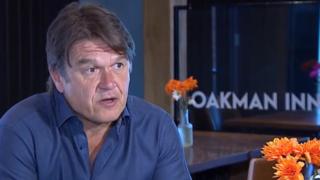
    Oakman Inns’ founder Peter Borg-Neal

    The founder of the pub chain Oakman Inns has vowed to reopen all of its sites on 4 July even if the government has not relaxed restrictions.

    “We cannot wait for the government to make a decision,” Peter Borg-Neal wrote on Twitter.

    The government has said pubs would not be able to reopen until July at the earliest under lockdown measures.

    But it has not yet given a definitive date for reopening pubs, despite pressure from the industry.

    Mr Borg-Neal’s vow came as the British pubs’ trade body demanded a definitive date so that staff could prepare.

    But some health experts fear that opening venues such as pubs or restaurants too early could increase the number of coronavirus cases, especially as outbreaks reoccur in countries such as China.

    “To open without proper forward planning would also be wrong,” Mr Borg-Neal wrote.

    He later told the BBC: “I’m not trying to be some reckless rebel.

    “We need to plan ahead, get staff off furlough, remove furniture, install hand-washing stations, change layouts in pubs,” he said. “You can’t just give us a couple of days’ notice and expect us to open safely.”

    He added: “We would not open unless we thought it was 100%-safe to do so.”

    Oakman Inns told the BBC that it had not yet received a response from the government following the announcement.

    “If they wanted to stop us, they could threaten a licencing review, in which they would need to show that we have broken licencing laws. I do intend to seek legal advice on this,” Mr Borg-Neal said.

    “In a conflict situation we might not open all of our pubs immediately, I could just open one or two to see what they do.”

    On 21 March, the government brought in regulations requiring pubs, cafes and restaurants to stop serving customers food and drink for consumption on the premises.

    Mr Borg-Neal said he would have no choice but to open regardless in July, whether the regulations were still in force or not.

    “We can hang around and definitely go bust, or open and see if they destroy us,” he said.

    Oakman Inns and Restaurants has 25 pubs spread over the south of England and the Midlands, with plans to open three more.

    The Department for Business, Energy & Industrial Strategy has not responded to a request for comment.

    Media playback is unsupported on your device

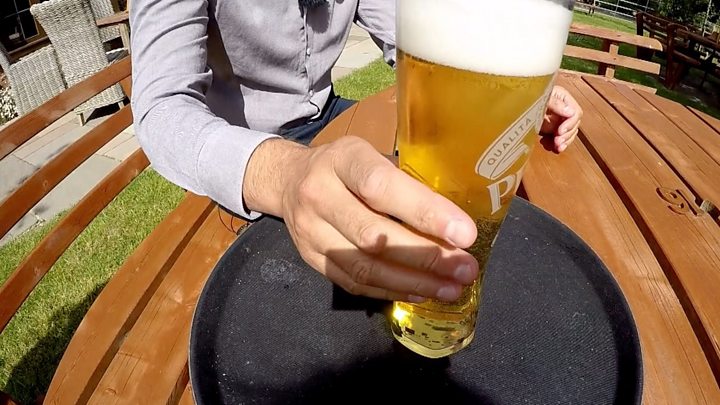
    Media captionA pub near Milton Keynes has been testing a possible post-lockdown system

    On Thursday, the British Beer and Pub Association set out demands in a letter calling for a definitive opening date from the government by Friday.

    “Without this certainty by the end of this week, many businesses in the sector will be forced to cut costs to ensure their survival through the extended period of financial uncertainty,” it said.

    “This could result in hundreds of thousands of job losses and permanent pub closures.”

    It said that pubs and beer businesses are “burning through £100m every month in cash while they remain closed”.

    “These costs… could tip many pubs over the edge unless they are given clarity and confidence on when exactly they can reopen,” it said.

    Other pub bosses also joined in the call for clarity.

    Mark Davies, chief executive of the Hawthorn Leisure chain, said: “Our pubs are part of the social fabric of their communities, but there’s so much our partners need to do to get ready for reopening, from bringing staff off furlough, to adopting new health and hygiene protocols and implementing social distance measures, not to mention getting beer into their pubs from suppliers.

    “If we’re to stand any chance of getting the Great British pub open by 4 July, it’s imperative that the government provides clear guidance by Friday at the absolute latest.”

  • Lockdown price hikes for beans and cleaning spray

    Cans of Heinz baked beans

    Image copyright
    Getty Images

    Image caption

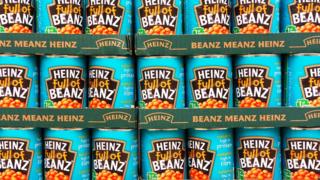
    Baked beans have been consistently pricier during lockdown.

    Supermarkets have been charging more for baked beans and cleaning spray since the UK went into lockdown in March.

    The Office for National Statistics has been tracking prices of high-demand products throughout the coronavirus crisis.

    On average, spray cleaning products are nearly 5% more expensive than in March, while beans cost almost 3% more.

    The ONS says overall prices for high-demand products have remained stable.

    More chores

    Early in the pandemic, supermarkets including Lidl and Tesco limited the amount of tinned foods customers could buy amid fears that food shortages could be caused by shoppers stockpiling certain goods.

    With many people taking on more chores at home during the lockdown, and some choosing to disinfect items brought in from outside, demand for spray cleaning products has also increased.

    Statisticians tracked online prices for goods from several major UK retailers for 13 weeks, from just before the UK went into lockdown to 14 June.

    “We began scraping prices on the 16 March for items that were subject to stockpiling early on in the pandemic, such as toilet paper, medication and long-life foods,” said ONS prices statistician Helen Sands.

    While the prices of those goods have stayed relatively consistent, the cost of tinned beans and spray cleaning products have increased, she said.

    A Tesco spokesperson said price hikes were most likely due to the fact the firm stopped offering multi-packs of some products, in an attempt to stop shoppers stockpiling essential items.

    • Shops slash number of special offers in lockdown
    • Toy and vegetable costs rise as fuel price drops

    The ONS says the cost of a sample group of basic foods including pasta, flour and tinned soup increased 1% overall since mid-March, while a selection of household hygiene products went up by 1.1%.

    The Institute for Fiscal Studies has also been tracking grocery data during the coronavirus crisis.

    It found a fall in supermarket promotions during the first month of lockdown helped cause a 2.4% rise in the price of groceries in one month.

    A Sainsbury’s spokeswoman said the supermarket didn’t increase prices on tinned beans or cleaning spray, while other retailers contacted by the BBC didn’t respond to a request for comment.

  • US jobless claims worse than expected despite reopening

    A business closed sign in NYC

    Image copyright
    Getty Images

    A further 1.5 million Americans filed for unemployment last week, a higher-than-expected number that signals the economic damage caused by the pandemic is continuing.

    Although reopening is underway throughout the country, the number of new applications for benefits fell by just 58,000, the Labor Department said.

    It was the 13th week in a row the figures have held above one million.

    The claims remain more than double the pre-pandemic record set in 1982.

    The smaller-than-expected decline in claims last week likely reflects “some moderation” in the pace of reopening, Wells Fargo economics said.

    Human suffering

    US employers added a surprise 2.5 million jobs last month and the unemployment rate fell to 13.3%, the Labor Department said earlier in its monthly report.

    But most analysts expect the US unemployment rate to be above 9% at the end of the year – close to the high set in the aftermath of the 2008 financial crisis.

    The Labor Department’s report on Thursday showed more than 29 million people – nearly one in five American workers – continued to collect jobless benefits as of 30 May.

    “Like the threat posed by the virus, we must not become complacent about the level of human suffering associated with the economic downturn simply because of its persistence,” said Mark Hamrick, senior economic analyst at Bankrate.com.

    The head of the US central bank this week warned of “significant uncertainty” regarding the recovery and told Congress he thought further economic relief would be necessary.

  • Coronavirus: Bank pumps £100bn into UK economy to aid recovery

    Two people with facemasks outside shop

    Image copyright
    PA Media

    The Bank of England will pump an extra £100bn into the UK economy to help fight the “unprecedented” coronavirus-induced downturn.

    Bank policymakers voted 8-1 to increase the size of its bond-buying programme.

    However, they said there was growing evidence that the hit to the economy would be “less severe” than initially feared.

    The Bank’s Monetary Policy Committee (MPC) also kept interest rates at a record low of 0.1%.

    The move comes just days after Bank governor Andrew Bailey said policymakers were ready to take action after the economy suffered its biggest monthly contraction on record.

    The UK economy shrank by 20.4% in April, while official jobs data showed the number of workers on UK payrolls fell by more than 600,000 between March and May.

    The Bank said more recent indicators of economic activity suggested the economy was starting to bounce back.

    Minutes from the MPC’s June meeting said: “Payments data are consistent with a recovery in consumer spending in May and June, and housing activity has started to pick up recently.”

    However, it warned that the outlook for the economy remained uncertain.

    The minutes added: “While recent demand and output data had not been quite as negative as expected, other indicators suggested greater risks around the potential for longer-lasting damage to the economy from the pandemic.”

    • What is QE and how will it affect you?
    • Job cuts warning as 600,000 roles go in lockdown

    Back in May, policymakers warned the economy was heading for its sharpest recession on record.

    Scenarios drawn up by the Bank suggested the economy could shrink by 25% in the three months to June.

    However, the MPC said more recent evidence suggested the contraction would be less severe.

    The extra monetary stimulus – known as quantitative easing (QE) – will raise the size of the Bank’s asset purchase programme to £745bn.

    Policymakers said the injection would help to support financial markets and underpin the recovery.

    However, Andy Haldane, the Bank’s chief economist, voted against the increase.

    He said the recovery was happening “sooner and materially faster” than the Bank expected in May.

    Slow recovery

    Policymakers said the jobs market was likely to remain weak for some time, with a risk of “higher and more persistent unemployment”.

    Millions of workers have already seen their pay packets shrink as a result of lower pay for furloughed employees. A survey by the Bank said other companies had postponed or cancelled pay rises this year.

    Mr Bailey said: “Even with the relaxation of some Covid-related restrictions on economic activity, a degree of precautionary behaviour by households and businesses is likely to persist. The economy, and especially the labour market, will therefore take some time to recover towards its previous path.”

    Weak inflation

    Mr Bailey also addressed the recent fall in UK inflation in an open letter to Chancellor Rishi Sunak.

    Inflation, as measured by the consumer prices index (CPI), fell to 0.5% in May, from 0.8% in April – well below the Bank of England’s 2% target.

    Mr Bailey said weak inflation had been by driven by falling oil and energy prices, as well as a global drop in economic activity.

    The Bank expects inflation to return to target within two years.

    The Bank of England has increased its support for the economy, despite it assessing that the outlook is not quite as awful as its scenario last month. The economy is on course for a hit in the second quarter of about 20% compared with the final three months of 2019. That’s still historic, and off the scale, but not quite as extreme as the 27% it predicted in May.

    The extra £100bn of purchases of government bonds also has the air of an insurance policy.

    Most of the MPC were concerned about a couple of factors, A less awful outlook does not mean the recovery will be quick. This is for two reasons stretching beyond economics.

    There is a fear that the “prevalence of the virus” in the UK will mean that Britons will continue to socially distance, voluntarily, holding back the recovery more than other nations (Germany would be an example).

    Related to that was the idea that more QE now could mitigate the economic impact of “higher rates of Covid-19 infection going forward” – a second wave.

    So the news is still bad, but less awful. But risks beyond the purely economic led to more billions being injected into the economy.