The world’s two biggest economies have become less competitive due to their ongoing trade war, which seems to have no short-term resolution in sight.
Both China and the US have slipped down the World Competitiveness Rankings for this year.
Smaller economies including Singapore, Denmark and Switzerland top the list.
The Institute for Management Development (IMD) survey said their handling of the coronavirus pandemic helped strengthen their positions.
The US, the world’s biggest economy, slipped seven places to 10th, while China fell six places to 20th. The two economic superpowers have been locked in a trade war since 2018 with import taxes (tariffs) imposed on a wide range of goods.
The trade war has increased uncertainty for businesses, a factor weighing on both countries’ competitiveness. “Trade wars have damaged both China and the USA’s economies, reversing their positive growth trajectories,” the IMD said in its report.
Singapore was the most competitive economy for the second year in a row, followed by Denmark and Switzerland. The Netherlands and Hong Kong complete the top five highest ranking economies.
“The benefit of small economies in the current crisis comes from their ability to fight a pandemic and from their economic competitiveness,” said Arturo Bris, director at the IMD. “In part, these may be fed by the fact it is easy to find social consensus.”
The IMD rankings assess 63 economies on hundreds of factors including employment, cost of living and government spending. It also includes surveys of executives on topics such as political stability and protection of intellectual property rights.
The UK climbed four spots to 19th, which could be a sign that Brexit has created the perception of a business-friendly environment, said the IMD.
Asia-Pacific economies have generally weakened in terms of competitiveness with most slipping from last year’s rankings. Japan dropped four places to 34th although India remained in 43rd spot.
Image caption
Could the least exciting bit of Elon Musk’s empire end up being the most transformative?
Elon Musk has perhaps the most exciting portfolio of businesses on the planet.
There’s SpaceX with its mission to Mars, and Tesla with its super-fast hi-tech electric cars.
He claims his Hyperloop concept could revolutionise public transport. And even his Boring Company is kind of interesting – it aims to find new ways to dig tunnels.
So which one will end up changing the world most? It is my contention that it will be his battery business.
Doesn’t sound that scintillating does it?
Image copyright Getty Images
Image caption
Mr Musk says he’s about to announce a series of advancements in battery technology
But the compact, lightweight lithium batteries that mean you can now stream movies on wafer-thin phones will soon be powering much more of your life.
Business Daily: Justin Rowlatt looks at how batteries are powering ahead
You’re probably already interested in the potential of electric cars.
But maybe you also have the usual concerns about actually buying one: the price, the range, and worries about where you are going to charge the thing and how long you’ll be stuck there.
Yet the market certainly seems to reckon they are the future. Just look at the Tesla share price.
Last week it briefly nudged ahead of Toyota to become the world’s most valuable car firm, even though the Japanese giant sold 30 times as many vehicles last year.
Image copyright Getty Images
Image caption
This month, Tesla briefly overtook Toyota to become the world’s most valuable car firm
One reason is that Elon Musk has been teasing investors and rivals with the promise of “battery day” some time soon, at which he will announce a series of advancements in battery tech.
World’s biggest batteries
And cars are not the only vast new battery market.
You might have seen a story I wrote about how the world is slowly weaning itself off coal.
Well, gigantic batteries connected to our electricity grids are going to be central to the great renewable energy revolution too.
Image copyright Getty Images
Image caption
The Covid-19 crisis has seen the largest worldwide decline in coal consumption since World War Two, says the International Energy Agency (IEA)
“We are entering into a nearly exponential growth phase”, says Prof Paul Shearing. He’s an expert on emerging battery technologies at University College London.
He expects electric vehicles alone to drive European battery demand up by a factor of 10 this decade.
But this explosion in demand will only be possible if we can make batteries cheaper, more durable and more efficient.
That is a big ask for any technology but fear not, Mr Musk’s proposed “battery day” comes thanks to a whole cascade of breakthroughs.
Million mile battery
The first of these was announced just last week when the Chinese battery-maker that supplies most of the major car makers, including Tesla, revealed it had produced the first “million mile battery”.
Image copyright Getty Images
Image caption
Electric buses in China: Electric vehicle sales will only boom if batteries are cheaper, more durable and more efficient
Contemporary Amperex Technology (CATL) says its new battery is capable of powering a vehicle for more than a million miles (1.2 million, to be precise – or 1.9 million km) over a 16-year lifespan.
Most car batteries offer warranties for 60,000-150,000 miles over a three to eight-year period.
This is a huge improvement in battery life, but will cost just 10% more than existing products, says CATL chair, Zeng Yuqun.
Having a battery you never need to change is obviously good news for the electric car industry. But longer-lasting batteries are also essential for what’s known as “stationary” storage too.
These are the batteries we can attach to wind turbines or solar panels so renewable energy is available when the sun isn’t shining or the wind isn’t blowing.
Fairly soon you might even want a stationary battery in your home to store cheap off-peak electricity, or to collect the power your own solar panels generate.
Image copyright Getty Images
Image caption
The batteries at this electric bus charging station in Abidjan, Ivory Coast, are powered by solar energy
The cheaper option
The next barrier that is likely to be broken is price.
The landmark challenge in the electric vehicle industry is to get a battery costing under $100 (£78) per kilowatt hour.
“At that point you start to get electric vehicles that are cheaper than the equivalent internal combustion vehicles,” says Seth Weintraub, a US battery technology journalist.
Once that happens the internal combustion engine will be effectively dead., he says, comparing it to how digital killed off film cameras a decade ago.
“In car dealerships we’re going to go from one electric vehicle in the back lot somewhere, to one gas vehicle in the back lot somewhere.”
So when will this crucial price-point be passed?
He believes it already has.
Mr Weintraub says his sources tell him these batteries are going into Teslas right now, and thinks this will be one of Mr Musk’s “battery day” revelations.
Image copyright Getty Images
Image caption
A new Tesla factory in China: The challenge is to get a battery costing under $100 per kilowatt hour.
Anxiety-free range
Cheaper batteries will address some of the other key concerns potential customers have.
That is because it will make it economical to put bigger batteries into cars.
That has two major advantages.
First, it means they can go much further on a single charge, so you’ll soon be able to buy cars with ranges of 400-500 miles (640-800km) or more.
Second, big batteries charge faster for the bulk of their capacity, so you might be able to get up to 300 miles of range with just 10 minutes of charging.
That’s comparable to the time it takes to fill a car with petrol or diesel.
So expect Elon Musk to announce upgrades for the Model S and X which will combine 400-500 mile range with supercar performance, says Mr Weintraub.
New factories
So, where are we going to make all these wonderful new batteries?
Again, we are expecting some major announcements from Mr Musk. Earlier this month his private jet reportedly landed at Luton airport.
Image copyright Getty Images
Image caption
Is Elon Musk Iron Man’s real-life alter-ego?
The man who is allegedly the inspiration for the Marvel Iron Man character, Tony Stark, is believed to have been flown by helicopter to a 650-acre site just outside Bristol.
The location is reckoned to be the prime UK candidate for one of Tesla’s “Gigafactories”, the huge battery plants it’s pioneering.
And he is planning an even bigger factory in the US, probably in Austin, Texas.
According to Seth Weintraub this one will be a “Terafactory”.
That’s quite an upgrade.
Gigafactories were so called because they would produce batteries that could store billions of watt-hours of power.
By that reasoning a terafactory should be able to make batteries with a total capacity in the trillions of watt-hours.
And the logic of Mr Musk’s ever-expanding factories remains the same. The bigger the scale, the easier it will be to deliver cost-slashing innovations, he believes.
Raw materials
So where are all the battery chemicals going to come from?
Image copyright Getty Images
Image caption
Tech companies like Apple, Microsoft and Tesla are trying to find a way to access Congolese cobalt in a more humane way with proper accountability
Tesla’s Chinese partner CATL has found a way to make batteries free of cobalt, at least for shorter-range vehicles.
Cobalt is expensive and a lot is sourced from DR Congo, where it has been associated with child labour.
There are no plans to get rid of the key ingredient in lightweight batteries, lithium.
There are large supplies in salt deposits around the world. including the biggest single reserve – as yet unexploited – in the hauntingly beautiful Salar de Uyuni salt plain in the remote Bolivian Andes.
The problem is current method of separating out the lithium in these deposits is slow and inefficient.
The biggest salt lake currently being mined is the Salar de Atacama in Chile. And at their significantly lower altitude, the Chileans can use natural evaporation to crystallise the salts, driven by the intense sunshine of the Atacama Desert.
Image copyright Getty Images
Image caption
At 10,000 sq km, Bolivia’s Salar de Uyuni salt plain holds 50-70% of known global lithium reserves
Despite these advantages, the process still takes months, and only recovers about 30% of the available lithium.
Which is where a wannabe Elon Musk-style tycoon with a similarly exotic name comes in.
Teague Egan is working with scientists on what he says is a “nanoparticle” filter that can separate lithium from other salts in solution, and will recover more like 90% of the lithium.
Instead of months, he reckons it could eventually take just a few days.
Mr Egan says his firm EnergyX is already talking to key players about applying the technology on a commercial scale.
If effective it could dramatically cut the cost of lithium – removing one of the biggest bottlenecks to the ramping up of battery production..
What this is really about
Which brings us back to my original premise – that batteries will be the most transformative part of Elon Musk’s empire.
Image copyright Getty Images
Image caption
SpaceX’s recent mission may have grabbed the headlines – but Elon Musk’s battery developments may have a bigger impact on us all
Mr Musk’s ambition is to create the iPhone of cars – a must-buy product that revolutionises our driving experience, while also delivering him a big fat profit.
That’s what will make us ditch our old diesel and petrol cars.
But there is also something much bigger at stake: climate change.
If cheaper, better batteries enable a rapid switch to electric vehicles, and give us renewable energy whatever the weather, then clearly they are going to be central to efforts to decarbonise our economy.
Astronauts blasting off into space are a lot more exciting than a grey box with a couple of wires attached.
But if that grey box helps us jettison fossil fuels, then the grey box wins in terms of its power to change our world.
Of course, you may disagree. And if you do, then please tell me why.
Image caption
Amanda Staveley is claiming damages over an emergency fundraising by Barclays in 2008.
The head of the banking industry’s lobby group UK Finance has resigned over comments he made in 2008 about high profile financier Amanda Staveley.
Stephen Jones was then a senior banker at Barclays, which is being sued by Ms Staveley over a deal struck at the height of the financial crisis.
He is due to give evidence in the court case in London next month.
Mr Jones said in statement he has apologised to Ms Staveley and feels it is the right time to leave UK Finance.
Her civil lawsuit concerns a multi-billion-pound emergency fundraising for Barclays that was backed by Qatar and Abu Dhabi, which helped the bank avoid the need for a government bailout.
Ms Staveley, currently leading a proposed Saudi Arabia-backed takeover of Newcastle United football club, says her firm is owed money by Barclays for helping to arrange the investment.
Mr Jones’s derogatory remarks emerged during written testimony submitted by Ms Staveley’s legal team last week. The testimony mentioned “thoroughly unpleasant comments” made by Mr Jones to a colleague about Ms Staveley in 2008.
The submissions also referred to other personal comments by senior Barclays staff of the time, criticising her professional skill and competence.
Exactly what Mr Jones said is unclear, but full details of the comments are likely to be read out when he appears as a witness next month.
Mr Jones became the first chief executive of UK Finance when it was set up in 2017 to represent more than 250 of the UK’s biggest financial firms.
In a statement on Tuesday, he said: “I have apologised to Ms Staveley and to my colleagues for the comments made in 2008 and feel at this time it is right I step down from my role at UK Finance.”
The chairman of UK Finance, Bob Wigley, said Mr Jones had “rightly acknowledged” that the comments were inappropriate and “do not meet the standards expected of leaders in our industry. He has characteristically taken a difficult personal decision in the interest of UK Finance and the industry and we accept his decision.”
Ms Staveley, whose private equity firm PCP Capital helped arrange the investment from Abu Dhabi, is claiming up to £1.5bn in damages. Barclays has dismissed the case as misconceived and without merit.
Newcastle United are 13th in the Premier League table
Newcastle United’s Saudi Arabian-led takeover could be complicated by the World Trade Organisation ruling that the country helped breach international piracy laws.
The proposed £300m deal is 80% financed by the country’s Public Investment Fund, whose chairman is Crown Prince Mohammed Bin Salman.
It is currently awaiting approval via the Premier League’s owners’ and directors’ test, which looks into the background of prospective club owners.
Part of that involves analysing whether there has been any alleged involvement in criminality.
Premier League lawyers have been assessing the deal for two months.
The WTO, which deals with the global rules of trade between nations, has been assessing the conduct of Saudi Arabia in relation to the broadcaster beoutQ, which has been accused of illegally broadcasting a range of professional sport, including Premier League matches.
The rights to show Premier League games in the Middle East belong to Qatar-based beIN Sports, who are currently in the middle of a three-year deal with the Premier League worth £400m.
Saudi Arabia has always denied aiding the beoutQ operation and has insisted there is no link between its government and the alleged piracy.
But in its judgement, issued on Tuesday, the WTO found that Saudi Arabia had facilitated the beoutQ operation and had “acted in a manner inconsistent” with international law protecting intellectual property rights.
The WTO also called for the country to “bring its measures into conformity with its obligations” under international law.
The Premier League, Fifa, Uefa, La Liga and the Bundesliga have all tried to bring about proceedings in Saudi courts, but have been blocked by the country’s government.
The case was brought to the WTO’s attention by Qatar, which is engaged in a long-running diplomatic row with Saudi Arabia.
BeIN Sport chief executive Yousef al-Obaidly has previously written to the chairs of Premier League clubs warning them against the Newcastle takeover.
In the letter, he accused the Saudi government of the “facilitation of the near three-year theft of the Premier League’s commercial rights – and in turn your club’s commercial revenues – through its backing of the huge-scale beoutQ pirate service”.
He has also written to Premier League chief executive Richard Masters, calling for the league to “fully investigate” the piracy claims.
In addition, Masters has said he will “fully consider” human rights concerns arising from Saudi Arabia’s involvement in the takeover.
Current owner Mike Ashley bought Newcastle in 2007 and put the club up for sale in 2017.
Uefa said it “welcomed” the report and its conclusions.
“Those seeking to follow beoutQ’s example should be in no doubt that Uefa will go to great lengths to protect its property and support its partners, whose investment in football helps it to remain the world’s most popular sport from grassroots to elite level,” European football’s governing body said.
“Piracy not only threatens that investment but also the existence of professional sport as we know it.”
David Sugden, senior legal counsel and director of corporate affairs at beIN Media Group said: “Sport cannot grow while Saudi Arabia continues to promote the theft of sports rights and ignore the international rule of law – hopefully one day that will change, for the benefit of everyone.”
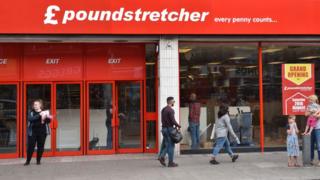
Poundstretcher is considering closing more than half of its UK stores as part of a survival plan.
Up to 253 shops are at risk of closure if landlords do not agree to rent cuts or holidays, the discount retailer said.
A spokesperson said that the talks form part of a wider restructuring plan aimed at “stemming losses” from underperforming stores.
It employs 5,500 people across 450 shops, its warehouse and head office.
Poundstretcher, which also owns the Bargain Buys chain, has launched a company voluntary arrangement (CVA), an insolvency process that allows companies to continue trading while pushing through closures and rent cuts.
How coronavirus will change the way we all shop
What shops are open?
It will be overseen by the accountancy firm KPMG.
Under the proposals, 253 stores will pay full rent for an initial period of six weeks, “after which continued trading will depend on the commercial merits of each store with the relevant landlords’ collaboration”, KPMG said in a statement.
The CVA also proposes slashing rents for another 84 shops by up to 40% for a period of three years.
A further 23 stores could also shut as Poundstretcher plans to put a subsidiary group that owns them into administration before the deadline for voting on the plans.
Retail woes
Several big brands have been struggling in recent weeks due to lockdown measures introduced in March to stop the spread of Covid-19.
Non-essential shops only reopened in England and Northern Ireland this week.
But Will Wright of KPMG said the problems weren’t entirely due to the virus: “Poundstretcher has suffered from significant impacts to profitability on several fronts over a sustained period, which were then further exacerbated by the impact of Covid-19 on footfall.”
“With the directors of the business having explored a number of options, this CVA seeks to safeguard the long-term future of the business, across a smaller, more sustainable store estate.”
Cath Kidston, Laura Ashley and the UK arm of Victoria’s Secret have all called in administrators. On Monday, the UK’s biggest building merchant Travis Perkins announced the closure of 165 stores.
Poundstretcher landlords and other creditors have until 2 July to vote on the CVA, which needs to be approved by at least 75% of its creditors.
Millions of people across the UK have had their working lives upended because of the coronavirus pandemic.
While many are working from home, others have been furloughed for weeks or even made redundant.
So who has been affected most to date by job losses? And which sectors have been worst hit?
Job losses
The UK unemployment rate held steady at 3.9% in the three months to April, according to the Office for National Statistics (ONS).
But separate figures from the ONS show that the number of workers on UK payrolls dropped by more than 600,000 between March and May.
Meanwhile, the number of people claiming work-related benefits jumped 23% in May to hit 2.8 million.
This figure doesn’t include everyone who is out of work, since not all can claim assistance, but it does provide a snapshot. It also captures some low-income workers.
These early estimates hint at the impact of lockdown measures in the UK, which has seen more than nine million workers furloughed under the government’s job retention scheme.
Some economists say the full impact on the jobs market won’t be felt until the furlough scheme ends in October.
Fewer hours worked
UK workers are clocking fewer hours as parts of the economy are at a standstill after lockdown measures were introduced on 23 March.
The total number of weekly hours worked recently saw its largest annual fall since records began in 1992.
The ONS said the total number of weekly hours worked in the three months to April had dropped to 959.9 million – down by a record 94.2 million, or 9%, on the previous year.
The drop in hours was “partly due” to the number of employees who have been furloughed, it added.
Job vacancies dip
The estimated number of vacancies in the UK fell sharply during the 2008 financial crisis.
Since 2012, they’ve generally been on the up, reaching a record high of 855,000 between November 2018 and January 2019.
But between March and May this year, there were an estimated 476,000 vacancies in the UK, 342,000 fewer than in the previous quarter.
Recent research by the IFS also suggests that workers across the board could have fewer options due to the coronavirus pandemic.
Having analysed jobs posted on the Department for Work and Pensions’ website in real-time, it found that they had started to drop off around mid-March.
By the time the lockdown was announced, firms had stopped posting new vacancies almost entirely.
‘I’ve applied for more than 100 jobs’
Young people hardest hit
Young workers seem to have been most impacted by lockdown measures so far.
Recent research by the Resolution Foundation think-tank suggests that 9% of those aged between 18 and 24 have lost their jobs altogether, the highest of any age group.
Meanwhile, a previous study by the Institute for Fiscal Studies (IFS) found that shutdown sectors employed nearly one-third of all workers under the age of 25, or 25% of young men and 36% of young women.
That compares to just one in eight workers aged 25 and over.
The IFS said that young people, women and the lowest earners will be most affected economically by the pandemic.
Sector shutdown
Many staff have been furloughed in sectors that have been forced to shut down during lockdown.
Those include retail, leisure and hospitality, where a high proportion of women work.
Although non-essential shops have since reopened in England and Northern Ireland, pubs and restaurants will not be allowed to open their doors until July at the earliest.
The largest proportion of the workforce being furloughed was recorded in accommodation and food service activities, which includes hotels, restaurants and cafes.
That was followed by those working in construction and manufacturing, according to one ONS survey.
North East sees most out of work
The coronavirus lockdown has caused severe disruption to business activity across the UK.
Some parts of the country will feel the negative effect on their local economies more than others.
The North East of England had the highest unemployment rate estimate for the three months to the end of April at 5.2%.
The largest rise in the unemployment rate on the previous quarter was seen in Scotland, where it went up by 1.1 percentage points, followed by the West Midlands, which saw a rise of 0.3 percentage points.
These figures can be volatile, and for now it is too early to say to what extent the jump in the estimate for Scotland is part of a longer term trend, the ONS said.
One report by the Centre for Cities found that the economic pain inflicted by Covid-19 will be felt unequally across the UK, with workers in more affluent areas such as the South East able to work from home, for example.
The coronavirus crisis risks widening regional inequalities, and frustrating government efforts to “level up” prosperity across the UK, it suggests.
Global workforce
Following the financial crisis, global unemployment increased by 22 million, according to the International Labour Organization.
A previous study by the group found that the majority of those job losses occurred across more developed economies.
But the coronavirus crisis has disrupted supply chains around the world in a way never seen before.
As some governments lift lockdown restrictions, it remains to be seen what the full impact on the jobs market will be.
In the United States, employers cut more than 21 million jobs in March and April, as lockdowns forced businesses to shut their doors.
In April, the unemployment rate hit 14.7%, the highest level since the Great Depression in the 1930s.
This fell slightly to 13.3% in May as the government released billions of dollars in emergency aid to businesses to cover wages for employees, encouraging them to rehire staff.
But more than 30 million people continue to collect unemployment benefits, according to the US Labor Department.
The Organisation for Economic Co-operation and Development (OECD) has said that for many, recession is “unavoidable”.
Greggs is to open about 800 shops for takeaways on Thursday after temporary closures during the coronavirus crisis.
The bakery chain, which has more than 2,050 outlets, said it planned to reopen all its remaining shops from early July.
Shops and businesses are beginning to to restart as coronavirus restrictions ease.
Also on Tuesday, Cineworld said it would reopen UK cinemas with social distancing measures from 10 July.
The UK government has been gradually easing lockdown measures, and Monday this week saw non-essential High Street shops reopening in England.
Lockdown measures in England are due to be eased further from 4 July, when pubs, restaurants, hairdressers, hotels and cinemas could reopen.
Fast food restaurants initially closed their doors during the coronavirus crisis, before some started to tentatively reopen.
In May McDonalds saw huge queues outside some of its restaurants as the fast food giant started to reopen some of its UK drive-throughs.
Rival KFC, meanwhile, had started to reopen restaurants for delivery in April.
Shoppers rush to the High Street as England stores reopen
What shops are open?
Greggs began to reopen shops during the coronavirus lockdown in May with a trial of 20 in the Newcastle area.
It will now reopen 800 outlets throughout the UK.
The bakery chain said there would be floor markings in the shops to help people maintain social distancing with protective screens at the counters, PPE equipment for staff, additional cleaning and more hand sanitiser. Customers would be encouraged to make contactless payments, it added.
Greggs chief executive Roger Whiteside said: “Looking forward, although great uncertainty remains, we are excited to be resuming our service for many customers this week.
“I want to thank all of our 25,000 colleagues for their support in getting us to this point.”
Greggs has temporarily suspended its new shop opening programme except for shops where it is legally committed or expects strong customer traffic. It said it would open about 60 shops and close about 50 this year.
It is approaching landlords to make rent reductions, and has speeded up plans for delivery and click and collect services, it said in a statement.
Image copyright Getty Images
UK cinema group Cineworld said on Tuesday that with “several blockbuster movies including Tenet and Mulan now confirmed for release in the coming weeks” it planned to reopen in the UK and the US from 10 July.
Its chief executive Mooky Greidinger said: “We are thrilled to be back and encouraged by recent surveys that show that many people have missed going to the movie theatre.”
He added that a “strong slate” had been confirmed for the coming weeks, including “A Quiet Place Part II, Wonder Women 1984, Black Widow, Bond, Soul, [and] Top Gun Maverick”.
Among other measures, Cineworld said it had “adapted our daily movie schedules to manage queues and avoid the build-up of crowds in our lobbies and enhanced our cleanliness and sanitation procedures across all of our sites.”
Rivals Vue Cinemas said in May that it hoped to reopen in mid-July.
The number of workers on UK payrolls dived more than 600,000 between March and May, official figures suggest.
The Office for National Statistics (ONS) said the number of job vacancies in May had also fallen to a record low.
The figures reflect the impact of around six weeks of lockdown in the UK, in which almost nine million workers have been furloughed.
But economists say the full impact on employment will not be felt until wage support schemes end in October.
Jonathan Athow, deputy national statistician for economic statistics at the ONS, said: “The slowdown in the economy is now visibly hitting the labour market, especially in terms of hours worked.
“Early indicators for May show that the number of employees on payrolls were down over 600,000 compared with March.”
He added that the number of people claiming work related benefits had climbed again, although “not all of these people are necessarily unemployed”.
This breaking news story is being updated and more details will be published shortly. Please refresh the page for the fullest version.
You can receive Breaking News on a smartphone or tablet via the BBC News App. You can also follow @BBCBreaking on Twitter to get the latest alerts.
The dust has settled after the first day of trading for non-essential shops in England since the coronavirus lockdown almost three months ago.
Bargain hunters and spendthrifts alike descended on the High Streets, with some retailers seeing long queues and others reporting a quiet start to trading.
So what was it like for the people staffing and running those shops?
Neeraj Chadda, who manages a Currys PC World megastore in London, says he loved being back.
He hadn’t put a suit on to turn up to work in weeks. “I was just happy doing that today,” he said.
And he wasn’t the only one who was pleased that the shop at Staples Corner was able to open its doors again.
Mr Chadda said people were queuing for about an hour to enter the store, which could only allow a maximum of 67 customers in at a time to facilitate social distancing rules.
Things have changed behind the scenes as well. He has had to implement a one-way system in the store’s warehouse and make sure there is enough protective gear for his 130 employees.
Compared with a typical Monday in June, Mr Chadda says the store saw at least four times the number of people walk through its doors when they reopened after almost three months in lockdown.
Some retail experts have predicted an initial sales surge from pent up demand, followed by a slump. But Mr Chadda, who has worked in the sector for a quarter of a century, is more optimistic.
“I think this week will be a good guide to what happens ahead,” he said. “People have been through the lockdown. At some point, all of us need something near normal. I still think people have that desire to have a look at the product.”
Image copyright Dege & Skinner
Things were a little slower at bespoke suit and shirt maker Dege & Skinner, situated on London’s historic tailoring street, Savile Row.
The 155-year-old business opened its doors for the first time in three months on Monday – but by appointment only.
Managing director William Skinner – a fifth-generation tailor – said he had seen two customers on Monday. And he expects the rest of the week to be similarly slow.
Normally, he would have about 75 appointments a month in the diary and then he would welcome walk-ins on top of that.
“But,” he said, “this is the first official week back. People have been waiting to do this and they’re quite excited to carry on the process of having their clothes made.”
He does not think demand will return to normal until people are able to fly more easily. “We need to travel a lot with our business,” said Mr Skinner, whose employees cross the world to meet clients, take measurements and fit suits. They also travel to see him.
“In the meantime, we’ll just have to rely on sending them patterns and them ordering clothes over the internet,” he said.
Image copyright David Edwards
David Edwards, senior interior designer at furniture store BoConcept, in Manchester, said his first day back to work was “busy” but enjoyable.
“We’ve changed the way we’re operating, so we’re just doing appointments only,” he said.
That typically means a couple seeking to spruce up their home in the midst of lockdown will have the entire shop to themselves for an hour, guided round by a shop assistant and provided with gloves, masks and hand sanitiser.
After each appointment, the showroom is cleaned, ready for the next visit. Obviously customers who have an hour to spare are mostly committed to making a purchase.
Mr Edwards says some of the people in the shop for the first day’s trading were looking at “full living-room projects”, involving new sofas, coffee tables, lamps and other accessories.
Some of these were being worked on during lockdown and are now close to completion, so the customers have come to see the final plans.
Others had more modest needs: “They moved into somewhere just before lockdown and just want a few key pieces,” he said.
He added: “We’ve had about 10 customers in today. We’ve asked them about it, and they feel it’s a relaxed, enjoyable shopping experience.”
Image copyright Alex Robertson
Alex Robertson owns the Head in the Clouds zero-waste shop in Bishop Auckland, County Durham. It sells a range of sustainable food and cleaning products, as well as plastic-free gifts.
“It was really nice to have everyone back,” she said. “Everyone was taking it seriously and being quite conscientious.”
Ms Robertson has introduced a one-way system in her shop and allows no more than two family groups in at a time. Anti-bacterial wipes and hand sanitiser are provided for customers.
“It was really busy. We sold quite a lot of things,” she said.
“We had one or two people that were just coming in to look, but most people were there for a purpose.”
Ms Robertson says she caters to people with a “shop local” ethos who want to know where their goods come from.
“In my business, especially, a lot of people don’t want to shop online,” she said, adding: “They know they can get what they want here in the city centre.”
Image caption
Many of Pret’s stores have already reopened with stores adapted for social distancing
Bosses at restaurant and food chains including Wagamama and Pizza Hut have warned the prime minister the sector faces mass job cuts without more help.
In a letter to Boris Johnson backed by 90 firms, they say that if social distancing remains they will need action on tax, rents and other support.
Without more help, the sector faces “grave damage”, the firms say.
Deliveroo organised the letter, signed by its partner restaurants including Itsu and Pret A Manger.
The companies, which together represent more than 1,000 outlets, praised government measures already introduced, but said more “swift action” was needed while two-metre separation requirements remained in place.
The government has commissioned a comprehensive review into the two-metre rule, which the prime minister’s official spokesman said on Monday would “look at evidence around transmission of the virus in different environments, incidence rates and international comparisons”. Ministers have said the review will be completed “in the coming weeks”.
In the letter, the bosses write: “Without government support to help restaurants to generate revenue and cover costs, tens of thousands of restaurants may be forced to permanently close their doors in the coming months.
“This crisis is far from over and the potential consequences are deeply concerning. A huge number of restaurants across the country are facing the prospect of bankruptcy.”
The firms own outlets across the UK, but are likely to reopen them at different times. In Northern Ireland, restaurants and cafes can reopen from 3 July, and in England the day after. The Scottish government has outlined a phased approach to pubs and restaurants reopening but there is no date. Nor is there a date for Wales.
Signatories include:
Julian Metcalfe, founder and chief executive of Itsu
Pano Christou, chief executive of Pret A Manger
Emma Woods and Nigel Sherwood, chief executive and chief operating officer of Wagamama’s
Neil Manhas, general manager for Pizza Hut UK.
The action called for includes slashing VAT on restaurant food and maintaining the Job Retention Scheme for restaurants while social distancing measures are in place.
Permanent closures
The chains also want “mortgage holidays” for landlords, so that this can be passed on in the form of lower rents, and an extension of the moratorium on evictions for as long as social distancing measures prevent restaurants from operating at full capacity.
A government spokesperson said: “We are working closely with the hospitality sector to develop safe ways for restaurants, bars and cafes to reopen as soon as we can from July.
“These businesses can continue to access our extensive package of support, including our job retention scheme which has been extended until October – meaning it will have been open for eight months and will continue to support businesses as the economy reopens and people return to work.”
The spokesperson also pointed out that this was in addition to 100% business rates holidays, loans and tax deferrals.
Image copyright Getty Images
Many restaurant chains were in trouble before the coronavirus lockdown, which has only exacerbated the pressures. Last week, the owner of Frankie and Benny’s, The Restaurant Group, became the latest big name to restructure, announcing 3,000 job cuts and 125 closures.
A recent survey by Deliveroo found more than half of small and independent restaurants said they would have to close within three months without further support.
“Without government support to help restaurants to generate revenue and cover costs, tens of thousands of restaurants may be forced to permanently close their doors in the coming months,” it said.
The signatories pointed out that last year, customers spent £40bn in restaurants, supporting one million employees.
Kate Nicholls, chief executive of industry trade body UK Hospitality, said: “Household name brands on every High Street have been closed and many will be operating at well below capacity once lockdown ends.
“As these proposals from Deliveroo and their partner restaurants show, restaurants need urgent support from the government so that they can help rebuild economies and give people some much-needed enjoyment. Without it, some will close permanently and people’s jobs will be lost.”