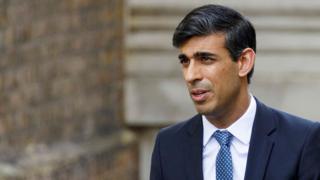
Diners will get a 50% discount off their restaurant bill during August under government plans to bolster the embattled hospitality sector.
Chancellor Rishi Sunak unveiled the “eat out to help out” discount as part of a series of measures to restart the economy amid the coronavirus pandemic.
The deal means people can get up to £10 off per head if they eat out between Monday and Wednesday.
Mr Sunak also said VAT on hospitality and tourism would drop to 5%.
The reduction, from 20%, will be in place for the next six months.
As he announced the discount, the chancellor said the UK was facing a “unique moment” because of Covid-19, adding: “We need to be creative.”
Pubs and restaurants reopened on Saturday after more than three months in lockdown. The discount will not apply to alcohol, but to food and soft drinks up to £10 per person.
Mr Sunak said the plan was aimed at getting “customers back into restaurants, cafes and pubs” and protecting “the 1.8 million people who work in them”.
Businesses that want to take part in the scheme will have to register through a website that opens on Monday 13 July.
Mr Sunak said: “Each week in August, businesses can then claim the money back, with the funds in their bank account within five working days.”
Fast fashion brand Boohoo has ordered an independent review of its UK supply chain following reports of poor working conditions at a factory in Leicester.
It comes after retailers Next and Asos dropped Boohoo goods from their stores amid claims workers were underpaid and not socially distancing.
Boohoo, which said it was “shocked and appalled” by the allegations, has asked a senior barrister to lead the review.
Shares in the firm have dropped by almost half this week.
It comes after a Sunday Times report claimed workers at a Leicester factory that supplied clothes to Boohoo were paid just £3.50 an hour, while being offered no protection from coronavirus.
Big problem at Leicester factories, say workers
Boohoo dropped by Next, Asos and Zalando
The factory was also said to be operating during a localised lockdown designed to stop a spike in Covid-19 cases in Leicester.
‘Deeply shocked’
Labour Behind the Label, a workers’ rights group, has separately claimed that some employees at factories in Leicester that supply the fast fashion firm were “forced to come into work while sick with Covid-19”.
Boohoo said it took “extremely seriously all allegations of malpractice, poor working conditions, and underpayment of workers”.
It said that Alison Levitt, a senior barrister who specialises in business crime, would lead an investigation looking into whether the company’s suppliers pay the minimum wage, and comply with coronavirus safety regulations, working hours rules and immigration law.
The company said it hoped to report the initial findings in September.
“We are deeply shocked by the recent allegations about the Leicester garment industry,” chief executive John Lyttle said on Wednesday after announcing the review.
Boohoo also said it would spend an initial £10m “to eradicate supply chain malpractice”, and was accelerating its independent third party supply chain review with ethical audit and compliance specialists, Verisio and Bureau Veritas.
Shares in the retailer fell a further 23% in early trading on Wednesday.
The company has grown rapidly since it was founded in Manchester in 2006 by Mahmud Kamani and Carol Kane.
Before the Sunday Times’ investigation the business was valued at about £5bn.
The future of Asia’s biggest budget airline, AirAsia, is in “significant doubt”, auditor Ernst & Young has said.
Shares in the Malaysian-based airline fell by more than 10% on Wednesday after being halted earlier in the day.
The airline’s founder and chief executive is tycoon Tony Fernandes, who also co-owns Queens Park Rangers (QPR) football club in the UK.
The world’s airlines have been hit hard by the sharp fall in passengers due to strict coronavirus travel restrictions.
Ernst & Young highlighted the airline’s huge debts in a statement to the Kuala Lumpur stock exchange late on Tuesday.
It said AirAsia’s current liabilities already exceeded its current assets by 1.84bn ringgit ($430m; £340m) at the end of 2019, before the start of the pandemic.
The Asian carrier’s financial performance and cash flow have been further hit by the grounding of its planes amid tight travel curbs and lockdowns.
This slump and AirAsia’s financial performance “indicate existence of material uncertainties that may cast significant doubt on the Group’s and the Company’s ability to continue as a going concern,” Ernst & Young said in its unqualified audit opinion statement.
On Monday, AirAsia reported a record quarterly loss of 803.8m ringgit. The budget airline started suspending flights in late March.
“This is by far the biggest challenge we have faced since we began in 2001,” Mr Fernandes said in a statement.
“Every crisis is an obstacle to overcome, and we have restructured the group into a leaner and tighter ship.”
“We are positive in the strides we have made in bringing cash expenses down by at least 50% this year, and this will make us even stronger as the leading low-cost carrier in the region,” he added.
AirAsia said it was in talks over joint ventures and collaborations that may result in additional investment. It has also applied for bank loans and is weighing proposals to raise additional capital.
Young people across the UK have had their work, studies and lives upended because of the coronavirus pandemic.
Many are working from home, while others have been furloughed or even made redundant.
There could be more than one million young workers who are without a job, if the overall UK level of unemployment goes up from the current 4% of workers to 10%, according to the Resolution Foundation think-tank.
On top of that, under-30s have been hardest hit by a fall in their income during lockdown as more of their money goes on essentials.
So is there anything the chancellor could announce in his speech on Wednesday to help them?
‘A grant for apprentices would be a start’
Emma-Jayne is an apprentice chef from Dorset, earning £5 per hour.
She is one of the many workers who were furloughed in the hospitality sector. The scheme was introduced by the government to minimise coronavirus-related job losses, and it pays 80% of staff salaries up to £2,500 a month.
Although restaurants in England have since been allowed to reopen, Emma-Jayne has only gone back to work on a part-time basis. All of the culinary courses she was due to go on have also been cancelled.
Sunak to give firms £1,000 cash bonus to hire trainees
UK firms slash more than 12,000 jobs in two days
And while part of her level one apprenticeship is based on online coursework, she hasn’t been able to make the relevant recipes as her furlough payments “don’t go as far they need to.”
“Over the last few months, I’ve barely made my rent and managed to pay my bills.
“I can’t help but feel let down by the government because there’s a big difference between being able to survive and being able to live when it comes to your pay cheque.”
“I think a grant for apprentices would be a start to make up for the lack of support,” she says.
‘Carers should be recognised’
Image copyright Nairn McDonald
Nairn McDonald, 24, is a full-time carer for his mum and 21-year-old brother. He says that during lockdown they’ve been shielding in place.
“Now they can’t get out, my role has changed. I’m also picking up prescriptions, doing more errands – so it’s a bit more labour intensive.”
Nairn says that costs have also been adding up. He relies on universal credit, the benefit for working-age people in the UK, which he says doesn’t “really go a long way.”
Although the standard allowance in universal credit has been temporarily increased for 2020-21, Nairn points out that his carer’s allowance of about £67 per week is deducted from that. He describes the rise as “minimal”.
Nairn says he’d like to see additional financial aid for carers, as well as support for those transitioning back into education or work.
“Some sort of job guarantee – whether it’s an apprenticeship, an internship or an interview – would be really helpful for young people like me.”
‘Help should be given to renters too’
Image copyright Razzia Gasur
Razzia Gafur, 24, moved to London after finishing her university studies two years ago.
But when lockdown started, she decided to isolate with her partner and his family just outside of Leeds.
“I only packed a weekend bag, and I’ve been here for three to four months now!”
She left behind the two-bedroom flat she shares with a housemate.
Razzia has since asked her estate agent if she could exit the tenancy agreement, as she’s spending £700 per month on rent and bills on a property she hasn’t been living in.
“They would only let me out of my tenancy if I found a replacement tenant,” Razzia says, adding that it was difficult to find anyone to take on the flat during lockdown.
She wants more to be done for tenants in the private rented sector. She points out that mortgage holidays started in March, allowing home owners to defer payments without affecting their credit rating.
“Having to pay for somewhere I don’t live – it’s made me question why I’m paying for somebody else’s mortgage.
“It’s definitely solidified the thought that I should be looking to buy my own property, as renting has put me in a more difficult situation.”
Furlough scheme extension for the arts
Image copyright Georgia Barks
Georgia Barks from Peterborough has also been furloughed. The theatre she works at has been closed since the pandemic took hold earlier this year.
While the government has announced a £1.57bn emergency support package to help protect the future of theatres, galleries and museums, “it should have been done sooner”, Georgia says.
“When we all looked for entertainment during lockdown, we turned to Netflix, we turned to TV, and to theatre live-streams – we all turned to the arts.”
Georgia believes that the chancellor should extend the furlough scheme, which is due to finish at the end of October., covering costs for theatres which have no confirmed reopening date as of yet.
“There are no shows for people to come see and there is a drop in future bookings because people are waiting to see if dates get moved again.
“It’s ridiculous to say they (theatres) must contribute when they have no income to do so,” she says.
PureGym is the UK’s biggest operator of fitness centres. Its UK sites have not yet been allowed to reopen, which is putting severe strain on the firm’s finances. But last year, PureGym diversified abroad by buying a chain of European fitness centres. It was a lucky move, because these have been allowed to reopen and are earning money while UK gyms stay closed.
Image caption
The chancellor will present the plans to Parliament on Wednesday
Chancellor Rishi Sunak will announce a £2bn “kickstart scheme” on Wednesday to create more jobs for young people.
The fund will subsidise six-month work placements for people on Universal Credit aged between 16 and 24, who are at risk of long-term unemployment.
The government said it would lead to “hundreds of thousands of new, high-quality government-subsidised jobs”.
Labour welcomed the move, but said the government had failed to “rise to the scale of the unemployment crisis”.
The pledge will form part of Mr Sunak’s speech, alongside a £3bn “green” fund and boosts for apprenticeships.
Changes to stamp duty are also expected, and VAT could be altered.
The Treasury said the “kickstart scheme” would be part of a “three-point plan for jobs… to help Britain bounce back from coronavirus”.
The CBI praised the first part of the plan as “a much-needed down payment in young people’s futures”.
The chancellor’s statement is expected at 12:30 BST (11:30 GMT), after Boris Johnson faces Sir Keir Starmer at Prime Minister’s Questions.
Mr Sunak announced he would deliver an economic update last week, after the prime minister set out his “new deal” to build after the coronavirus outbreak.
The chancellor has already outlined a number of measures in the build up, including:
Vouchers of up to £5,000 for energy-saving home improvements as part of a wider £3bn plan to cut emissions
A pledge to provide 30,000 new traineeships for young people in England, giving firms £1,000 for each new work experience place they offer
A £1.6bn package of loans and grants for the arts and heritage sector
The doubling of front line staff at job centres, as well as an extra £32m for recruiting extra careers advisors and £17m for work academies in England.
For each “kickstarter” job, the government will cover the cost of the National Minimum Wage – £4.55 for under 18s, £6.45 for 18 to 20-year-olds, and £8.20 for 21 to 24-year-olds – for 25 hours a week, and employers will be able to top up the figure.
The government said it would allow young people “the opportunity to build their skills in the workplace, and to gain experience that will improve their chances of going on to find long-term sustainable work”.
The scheme will open for applications in August, with the first jobs expected to start in the autumn, and run until December 2021 – with the option of being extended.
It will cover England, Scotland and Wales, and the government said it would provide additional funding to Northern Ireland for such a scheme.
The government is keenly aware that younger workers are more exposed to the devastating economic impact of coronavirus, and long-term unemployment for them inflicts long-term scars on the economy.
In some of the hardest hit sectors – such as retail, hospitality and leisure – one third of the workforce is aged between 16 and 24.
And these areas are fertile ground for young people to start their own businesses.
But they are also the sectors least likely to bounce back quickly, which is why the chancellor will announce plans to find new jobs to replace the old ones young people typically filled.
It’s estimated the “kickstart scheme” could translate into the support of more than 300,000 new jobs.
That may help offset the 500,000 job losses that hospitality UK are predicting this year, unless there is further support for the sector.
The government may listen to pressure from industry groups calling for targeted VAT cuts to boost confidence and profit margins in crippled sectors like hospitality and leisure.
What seems certain though is the government focus will shift on Wednesday from a mode of “protect and survive” for the jobs of the past to one of trying to create the jobs of the future.
Almost 500,000 people who are 24 or younger were signed up to Universal Credit in May – a rise of 250,000 since before lockdown started in March.
The chancellor has previously acknowledged young people could be the worst affected by the crisis when it comes to employment, and also be the most reliant age group on the government’s furlough scheme – which is set to end in October.
Speaking in the Commons on Wednesday, Mr Sunak is expected to say: “Young people bear the brunt of most economic crises, but they are at particular risk this time because they work in the sectors disproportionately hit by the pandemic.
“We also know that youth unemployment has a long-term impact on jobs and wages and we don’t want to see that happen to this generation.
“So we’ve got a bold plan to protect, support and create jobs – a plan for jobs.”
‘Move at speed’
Labour’s shadow chancellor, Anneliese Dodds, said the scheme “should help many young people to access work”.
But she called on the government to extended the furlough and self-employed schemes, and create “tailored support” for older people or those living in hard hit areas.
The director general of the CBI, Dame Carolyn Fairbairn, said the announcement could see the government “lessening the potential scarring impact of the pandemic for the next generation”.
But she called on businesses and the government to “work to deliver the kickstarter scheme simply and at speed”, adding: “There can be no time lost in preparing young people who are entering one of the toughest jobs markets we’ve seen in decades.”
The national chairman of the Federation of Small Businesses, Mike Cherry, said a focus on jobs was “absolutely essential to lift the country out of the economic hardship caused by the Covid crisis”.
But he appealed to the government to ensure smaller firms could benefit from the scheme, adding: “Small businesses must not be left waiting in line behind big corporates when they could get people to work now.”
Citizens Advice says it is now receiving calls seeking redundancy advice once every two minutes.
Its benefits advice web pages are also receiving record-breaking traffic – 4.4 million views since 23 March.
The charity says the surge in calls is indicative of an “escalating employment crisis” in the UK.
Citizens Advice is calling on the government to ensure people have “enough to make ends meet” if they lose their jobs.
Dame Gillian Guy, chief executive of Citizens Advice, said that weathering the employment crisis is now the “top concern” for millions of people.
“Investment in jobs and training will be critical for economic recovery, but any measures have to be underpinned by a strong safety net,” she said.
“At this incredibly worrying time, the government must ensure that the benefits system provides people with enough to make ends meet if they lose their job.”
Chancellor Rishi Sunak will be delivering his Summer Statement on Wednesday, which many hope will include further support to help restart the economy.
Rishi Sunak: We need help with rent, money and jobs
Coronavirus: UK firms slash more than 12,000 jobs in two days
Many British companies have slashed their workforces as a result of the coronavirus pandemic and the lockdown measures imposed by the government. And many small businesses fear they will not be able to survive if they are unable to reopen their premises soon.
Image copyright SOPA Images
Image caption
John Lewis is closing some stores, but has yet to confirm how many jobs will go
On Tuesday, Daily Mirror and Daily Express owner Reach announced that it will be cutting 12% of its workforce – 550 jobs – due to a 30% fall in revenues in the quarter to June.
About 2,200 jobs supplying Jaguar Land Rover manufacturing plants in the Midlands and North West are also at risk, trade union Unite reported on Tuesday.
Last week, multiple High Street retailers including the likes of John Lewis, Topshop owner Arcadia, Harrods and TM Lewin slashed more than 12,000 jobs in 48 hours.
WH Smith, Bensons for Beds, Wrights Pies, tableware-maker Steelite International, the Adelphi Hotel in Liverpool and Norwich Theatre Royal have also announced plans to reduce staff.
Over in the aviation sector, up to 12,000 jobs will go at British Airways, Airbus is cutting 1,700 jobs in the UK, while EasyJet will be making 1,300 crew and 727 pilots redundant.
The UK’s hospitality and tourism industry is now calling on the government to provide urgent support in order to avoid “widespread devastation” across its industry.
Although pubs, bars, cafes and restaurants were permitted to reopen on 4 July, Pret A Manger has cut 1,000 jobs, Café Rouge-owner Casual Dining Group is slashing 1,900 jobs, and up to 5,000 jobs will go at Upper Crust owner SSP Group.
Image caption
The news 4×4 Grenadier design was only revealed at the start of July
Plans to build a new 4×4 vehicle plant in Wales have been put on hold by the firm Ineos.
The company said it follows talks with Mercedes-Benz over the acquiring of their Hambach site in Moselle, France.
The Wales plant would have been built next to the current Ford engine plant at Bridgend, which is to shut this autumn with the loss of 1,700 jobs.
Economy Minister Ken Skates said it would be “a real blow if Ineos reneged on its very public commitment”.
“I have told the CEO that abandoning Bridgend at this late stage, after so much effort and money has been invested in preparing the site, would be a terrible decision for Wales and the UK,” said Mr Skates.
“We have impressed on the company in no uncertain terms the importance of honouring its commitment to Wales and to deliver on its promise to build a British icon here in Britain.”
The new factory was expected to create about 200 jobs initially to make the new all-terrain Grenadier vehicle.
It was hoped it could employ up to 500 people in the longer-term, and work to clear ground at the site had already begun.
Work on another site in Portugal has also been suspended.
Image copyright Ineos
Image caption
Ineos had said the new Bridgend plant would eventually employ 500 people and produce 25,000 cars a year
“Some new options, such as this one with the plant in Hambach, have opened up that were simply not available to us previously,” said Dirk Heilmann, the chief executive of Ineos Automotive.
“We are therefore having another look – and reviewing whether the addition of two new manufacturing facilities is the right thing to do in the current environment.”
Mercedes-Benz put the Daimler car assembly plant in France up for sale last week.
It was dedicated to its smart car, called the EQ fortwo, which has been recently developed and is a similar size to the Grenadier.
Ineos said it made the location “ideally suited” to the Grenadier.
The company said Covid-19 had also had an impact on its building schedule for the new plants.
“Safety is of course paramount, but we also have an obligation to do what is right for the business – and so need to assess these new opportunities in order to maintain or improve on our timelines,” said the Ineos Automotive chief.
What do people in Bridgend think?
Image caption
Elizabeth Davies, Leanne Rowlands and Steve Hone
“It’s a shame because there’s so many people out of work anyway,” said Elizabeth Davies. “It’s sad because we’re going to be in a bit of a mess.”
Steve Hone said he was “disappointed” at Ineos’s decision as its plans “would have been good for the area” with Ford closing its factory.
“We’ve seen a lot of places shut over the last 20 years with Sony closing and other factories on the estate, and Ford is the last big employer so Ineos was a chance for the future.”
Leanne Rowlands said the town was “struggling”.
“The shops are half empty, let alone the manufacturing businesses,” she said. “It’s very sad.”
Bridgend Member of the Senedd Carwyn Jones, the former first minister of Wales, said: “I don’t accept for one minute that this had anything to do with covid.
“This is a decision that they don’t want to invest in the UK – there’s nothing more to it in my opinion,” he told BBC Radio Cymru.
“I’ve heard a lot of things in politics over the years, but I’ve never seen this before, when a company say that they want to support the UK, but once the money’s on the table, that’s not what they do.
“I’m incredibly angry. There was an agreement and they’ve gone back on that.”
This is a huge blow for Bridgend.
It had been hoped that some of the workers losing their jobs at the nearby Ford plant could find work at Ineos.
A lot of work also has gone into preparing suppliers to ensure the Welsh automotive industry benefited.
The site is still being prepared for what would have been the Ineos plant.
Work is continuing and there is some hope that it could be put to good use by attracting other companies to Bridgend.
Even before this announcement there was interest from other businesses in moving to the area but those talks are at an early stage.
It is unclear how much demand there has been for the Ineos Grenadier.
Bridgend MP James Wallis said he was “disappointed” by the announcement, and said it was a “massive blow” to the local economy and the economy of Wales.
“I have already spoken to the Wales Office and I am seeking urgent clarification about the implications of the future plant in Bridgend from Ineos and what more can be done from both governments at either end of the M4,” he said.
“We need to do all we can to get the work back on track and secure this investment for workers and families in Bridgend.”
Image copyright InEOS
Image caption
A decision on where the new vehicle will be built will now be made “in the next few weeks”
The leader of Bridgend council Huw David said the decision was “disappointing”.
“The need for fresh investment into Bridgend county borough is now greater than ever, and we require urgent clarity not only over what Ineos intends to do, but on what action the Welsh government and the UK government will be taking in response to this latest development,” he added.
Plaid Cymru economy spokeswoman Helen Mary Jones MS said: “The fact that a site on mainland Europe appears to be favoured over a site in Wales may be a sign of what we risk, post-Brexit.
“It is very important that Welsh government seeks to understand the full picture from Ineos, engage with them and try to change their minds.”
Ineos said it expected to complete its review of building options “in the next few weeks”.
The chancellor is likely to announce changes to stamp duty on Wednesday to help cut costs for anyone buying a home.
Reports suggest that the level at which the tax is charged could be temporarily raised to £500,000 to boost the property market and help buyers struggling because of the coronavirus crisis.
What is stamp duty?
Stamp duty is a tax paid by people buying properties, although it varies slightly across the UK.
In England and Northern Ireland buyers pay Stamp Duty Land Tax.
In Scotland it is Land and Buildings Transaction Tax, while in Wales buyers pay Land Transaction Tax.
The amount handed to the government depends on where you are in the UK, the price of the property and whether you’re a first-time buyer.
Who pays stamp duty and how much?
In England and Northern Ireland stamp duty is paid on land or property sold for £125,000 or more.
However, first-time buyers pay no tax up to £300,000 and 5% on any portion between £300,000 and £500,000.
For people who have bought a home before, stamp duty rates are 2% on £125,001-£250,000, 5% on £250,001-£925,000, 10% on £925,001-£1.5m, and 12% on any value above £1.5m.
That means someone spending £248,000 – the average cost of a house – would currently pay £2,460 in stamp duty to move home.
Landlords pay an extra 3% of stamp duty when they purchase a buy-to-let property.
In Scotland and Wales, the rates are slightly different.
Image copyright Getty Images
What could change?
There is speculation that the government could increase the lower stamp duty threshold to either £300,000 for all buyers, or as high as £500,000.
That means any property purchases below the new level would not need to pay stamp duty.
The move would help buyers who have taken a financial hit because of the coronavirus crisis.
It is also aimed to boost a property market hit by lockdown. According to the Halifax, house prices have fallen for four months in a row.
When will the stamp duty holiday happen?
It is likely to be announced on Wednesday in the chancellor’s summer statement.
The increase will probably be temporary, though, perhaps lasting six months, which the government feels is long enough to help revive the flagging property market.
However, rumours that it may not begin until October, at the time of the autumn Budget, prompted critics to warn it could encourage people to delay their plans for buying a home, extending the current property market blues for another three months.
It could also encourage people planning to buy next year to accelerate their plans to take advantage of the tax break, leading to a potential property demand slump when the stamp duty holiday is over.
Image copyright PA Media
How much could a buyer save?
The more you pay – up to the possible new £500,000 threshold – the more you could save on stamp duty.
If you currently buy a house for £275,000, for instance, the Stamp Duty you’d have to pay would be £3,750.
That’s based on 0% duty on the first £125,000, 2% on the next £125,000 (£2,500), plus 5% on the final £25,000 (£1,250).
Meanwhile anyone buying a home in Bramhall, Stockport would save £13,603 in stamp duty, based on Rightmove estimates of an average asking price of £472,053.
How much does stamp duty raise?
The government’s annual take from stamp duty is around £12bn, according to the latest figures released by HM Revenue and Customs (HMRC).
That’s roughly equivalent to 2% of the Treasury’s total tax take.
The government has a stamp duty calculator here
You can work out how much stamp duty you currently have to pay here
Hundreds of thousands of homeowners will receive vouchers of up to £5,000 for energy-saving home improvements, with the poorest getting up to £10,000.
Chancellor Rishi Sunak is due to set out a £2bn grant scheme in England for projects such as insulation as part of a wider £3bn plan to cut emissions.
The Treasury said the grants could help to support more than 100,000 jobs.
Labour said renters appeared to be left out and called for a “broader and bigger” plan to cut carbon emissions.
Under the Green Homes Grant, the government will pay at least two-thirds of the cost of home improvements that save energy, the Treasury said.
For example, a homeowner of a semi-detached or end-of-terrace house could install cavity wall and floor insulation for about £4,000 – the homeowner would pay £1,320 while the government would contribute £2,680.
The scheme will launch in September, with online applications for recommended energy efficiency measures, along with details of accredited local suppliers.
Once one of these suppliers has provided a quote and the work is approved, the voucher is issued.
Speaking to BBC Breakfast, Business Secretary Alok Sharma added that the poorest households could receive up to £10,000 towards costs, and that double glazing would also be covered by the scheme.
He continued: “What [the scheme] ultimately means is lower bills for households, hundreds of pounds off energy bills every year, it’s supporting jobs and is very good news for the environment.”
The government said about half of the fund – which is due to be spent in one financial year – will go to the poorest homeowners, who will not have to contribute anything to the cost. Better insulation could save some people £600 a year on energy bills, the Treasury said.
Mr Sunak said the investment would also help to “kick-start our economy” by creating thousands of jobs and providing business for existing skilled workers, as the UK recovers from the economic shock of coronavirus.
“As Britain recovers from the outbreak, it’s vital we do everything in our power to support and protect livelihoods across the nation,” he said.
‘The jobs factor swayed the day’
Insulation gives a triple benefit. It saves on bills, cuts carbon emissions from heating, and – crucially, as the UK’s economy creaks – it creates thousands of jobs for trades people.
England can’t reach its climate targets without a major housing refit, but until now the Treasury has been reluctant to help – because it means transferring cash from the public purse to private bricks and mortar.
Now the jobs factor has swayed the day and some campaigners are delighted – the £2bn figure is more than they expected.
Labour approves of the investment, but says it does little to help people in cold, rented homes, and it warns the programme must be carried on year after year.
But huge questions remain over how the scheme will be set up before the start date of September, and how builders will be prevented from profiteering.
The grants are part of a wider £3bn “green investment” package due to be announced in the chancellor’s summer statement on Wednesday, to support efforts to rebuild the economy after the pandemic.
The plan aims to create tens of thousands of new jobs while helping the UK meet its 2050 target of achieving net zero carbon emissions.
It will involve improving insulation in public buildings such as schools and hospitals and retro-fitting low-carbon heating technology to social housing.
The Conservative manifesto had pledged £9.2bn for improving the energy efficiency of low income housing and public buildings.
Shadow business secretary Ed Miliband welcomed the plan but stressed that it was not “comprehensive”.
“It appears there is almost nothing for the people who rent the 8.5 million homes in the social rented sector and private rented sector, which has the worst energy efficiency standards. That means one-third of people are left out,” he said.
Image copyright Getty Images
Image caption
The Treasury says the £3bn investment plan will cut energy bills by an average of £200 for some of the UK’s poorest households
Mr Miliband said the government needed “a much broader and bigger-scale strategy” to meet its target to reduce carbon emissions to net zero, including investing in nature conservation, increasing renewable energy, supporting manufacturers to be greener and improving transport.
Meanwhile, Rosie Rogers, senior political advisor at Greenpeace UK, said the UK still wasn’t “playing in the same league” as other countries, such as Germany, which is investing €40bn (£36bn) in green jobs and energy efficiency, or France, which pledged €15bn to tackle the climate crisis in June.
The UK Treasury said the figures are not like-for-like.
COVID-19 TESTING: Has it gone wrong?
CORONAVIRUS NEWSCAST: The true impact of Covid-19 on travelling abroad
How will the home improvement grant scheme help you? Share your experiences by emailing .
Please include a contact number if you are willing to speak to a BBC journalist.
WhatsApp: +44 7756 165803
Tweet: @BBC_HaveYourSay
Please read our terms & conditions and privacy policy