Media captionPlans to reopen hair salons without the wider beauty industry in Wales are described as “ridiculous”
Plans to reopen hairdressers without the wider beauty industry in Wales have been described as “ridiculous” by some in the business.
The Welsh Government intends to allow hairdressers to restart a “very limited range” of services from 13 July.
But no date has been set for when others, like beauty salons, can reopen.
“The picture is going to be really confused for so many people,” said Sarah Bruton, from Captiva Spa in Caerphilly.
“Our business is 50% a hair salon and 50% a beauty salon.
“We are in the situation now where we’ll be bringing back half of our staff and telling them that it’s safe to work and telling the other half, who are equally qualified and experienced, that they are not safe to operate.
“That seems incredibly unfair to me.”
She added: “We find ourselves in the ridiculous situation where a barber is permitted to carry out services like brow shapes, like moustache trims, like hot towel shaves, for example, but a beautician can’t carry out a brow shape, a lip wax, a facial.
“There is surely no medical or virological reason to make that distinction.”
The Welsh Government said it would be publishing more industry guidance later this week.
Image caption
Sarah Bruton has invested in a temperature check gun and plastic screens to keep customers safe
Hair and beauty salons in Wales generate an estimated annual turnover of £275m, according to the National Hair and Beauty Federation.
Ms Bruton said she was concerned plans for different reopening dates could unfairly impact the beauty sector.
“As an industry, 15,000 people are involved in the hair and beauty sector in Wales and many of those jobs are being put at risk by those kinds of delays,” she said.
“We train apprentices, we take on graduates from college and higher education facilities, none of those students will have any workplace to go into at the end of this.
“It looks from the outside like businesses that favour male aspects such as pubs, such as football, such as barbers are allowed to operate but women’s experiences are not given the same kind of priority and that’s incredibly unfair.”
The National Hair and Beauty Federation, which represents both industries, said it had written to the Welsh Government asking it to “reconsider delaying the reopening of beauty businesses”.
It said it was also seeking “urgent clarification” on whether mobile hair services would be allowed to restart next week.
BBC Wales News found dozens of nail and beauty salons offering appointments from 13 July, having previously believed they were allowed to open alongside hairdressers.
Lyn Hancock, who runs Lynz Nails and Beauty in Torfaen, said she “cried” when she realised that was not going to be the case.
“We are not any more of a risk to people’s health than a hairdresser,” she said.
The businesses not allowed to reopen
Haircut wait nearly over as salons set to reopen
“I have full PPE ready for opening; masks, visors, gloves, aprons, disposable tools and nail files, disposable couch covers, hospital grade sanitiser and cleaning products, the works.
“I have already seen businesses closing permanently in both my industries due to Covid-19. I do not want to be simply another statistic.
“My salon is my safe space, my calm and I was so looking forward to opening it.”
A Welsh Government spokesperson said: “Subject to an assessment of the latest health situation in Wales on 9 July, hairdressers and barbers will be permitted to reopen from the 13 July.
“This would be strictly on an appointment only basis, and only for a very limited range of services.
“Their reopening would be a first step to easing the lockdown of close contact services in Wales, with a view of reopening other similar services soon.”
Japan’s household spending has slumped at a record pace as measures to slow the spread of the coronavirus kept people at home.
Government figures show household spending dropped by 16.2% in May from a year earlier.
The worse than expected fall was the fastest rate of decline since comparable data began in 2001.
The figures serve as another indication of how hard the pandemic has hit the world’s third largest economy.
The data showed big drops in spending on hotels, transport and eating out. Goods that saw an increase in spending included meat, alcohol and face masks.
Economists expect a recovery in spending to be slow and fragile as consumers remain reluctant to loosen the purse strings even after a nationwide state of emergency was lifted in May.
The outlook for household spending in the months ahead also remains weak as job losses are expected to rise.
Meanwhile, Japan’s real wages dropped at the fastest pace in nearly five years, in a sign of how the virus is impacting the jobs market.
Real wages, a gauge of household spending power, fell by 2.1% in May from a year earlier, the steepest pace of decline since June 2015.
“The impact from the coronavirus led to a reduction in overtime pay which caused real wages to fall a lot,” a labour ministry official said.
Overtime pay, which is seen as a key measure of the strength of business activity, fell by 25.8% from a year earlier.
It was the sharpest drop since comparable data became available in January 2013, and marked the ninth monthly decline in a row.
Both sets of data underline the major challenges facing Japan’s government and central bank as the country braces for its deepest recession since the end of World War Two.
Economists expect a contraction of more than 20% this year due to the impact of lockdown measures in response to the pandemic.
The Japanese is economy is also feeling the pressure of the fallout from the US-China trade war and a sales tax hike that came into effect at the start of October.
Policymakers are now faced with growing pressure to ramp up measures to restore business and consumer confidence.
Earlier this month official figures confirmed that Japan had fallen into recession for the first time in four and half years, after a 7.2% contraction between October and December.
Image caption
Amber Millar Chambers says being on the payroll at the Troxy would have meant she could be furloughed
Before lockdown, Amber Millar Chambers worked at two bar jobs to support her university studies. One furloughed her, the other didn’t.
She is among an unknown number of people in the UK who have lost out financially, because for more than three months, workers could not be part-furloughed. Workers not on a company’s payroll are also not eligible for the scheme.
The furlough scheme, brought in to mitigate the effects of coronavirus, allows employees to receive 80% of their monthly salary, up to £2,500.
More than a quarter of the UK workforce – 9.3 million people – are now being supported by it, but there are some that have not been eligible for help.
‘Legacy system’
Ms Millar Chambers says her employer didn’t give her a formal contract and that because she isn’t on a payroll, she has been excluded from being furloughed on one of her jobs, working at London’s Troxy music venue.
“They offered us a goodwill gesture,” she said, which amounted to about 40% of her pay during April and May, but nothing for March when the lockdown began, and nothing since.
“I can still put food on the table, but that’s only the result of my student loan,” she said, which has had to last since April. Her landlord has allowed her to pay only half of her rent, but she must move soon and will eventually have to pay back the rent that’s owed, putting her in debt.
Coronavirus: What does it mean if I’ve been furloughed by work?
Coronavirus: ‘My employer broke the furlough rules’
She works for another bar nearby, which pays more and which has put her on furlough of about £100 a month, but her rent is £750.
“It’s been stressful. It’s been very stressful.”
Troxy’s general manager Tom Sutton-Roberts told the BBC a “legacy system” was to blame for staff missing furlough, which arose “from the fact we were unable to offer any kind of regular hours and work in the early days of Troxy reopening as a venue”.
Image copyright Getty Images
Image caption
London’s Troxy music venue is popular for live events and film screenings
Ms Millar Chambers was paid £8.50 an hour, which she feels is low for central London, she says.
“The government is doing a lot for a lot of people,” she said, but she feels workers like her are being left out.
Mr Sutton-Roberts said the venue “would love” to pay the London Living Wage, “but with our future so incredibly uncertain, it’s not something we can commit to today”.
“We are consulting with the entire team with how they would like to be engaged in the future,” he said.
Image copyright Claudia Tabares
Image caption
“I don’t speak English and how do you defend yourself in a situation like this?” asks cleaner Claudia Tabares
Claudia Lorena Tabares, who works six part-time cleaning jobs and earns the statutory minimum of £8.72 per hour, is another worker who lost out on some government support money, because she was not able to be furloughed part-time.
On 18 March, she was told she’d lose a 12.5-hour-a-week contract. She couldn’t be furloughed because of five hours of work she does for her employer Cleanology at another site.
Living wage support
Cleanology’s chief executive Dominic Ponniah told the BBC his company tried to furlough as many staff as possible, and that of 100 cleaners it initially dismissed after the firm lost contracts, it has been able to hire most back and furlough them.
However, to reallocate the work “administratively and operationally, it would have been almost impossible to coordinate in the short amount of time we had,” he said.
The company’s client had paid Ms Tabares’ wages up until the end of the contract on 1 June, he said, although she didn’t receive the money until 10 June.
HMRC, which administers the furlough scheme, has allowed firms to part-furlough staff since 1 July.
However, this change will not cover work and earnings lost by many workers in March, April, May or June.
Image copyright Getty Images
Ms Tabares’ union, United Voices of the World (UVW), told the BBC that “the furlough scheme depends on the good will of employers”.
“In many cases where members work across multiple sites on part time contracts to make ends meet, the furlough scheme has failed them.”
Ms Tabares says added pressures, such as having to give Cleanology £25 for her uniform, don’t help. The company says this is a deposit, and that while it encourages its clients to support the UK and London Living Wages of £9.30 and £10.75, less than half do so.
Minimum wages: a guide
The national minimum wage is the minimum hourly pay covering under-25s. It is set by the government and is £8.20 for 21 to 24-year-olds, £6.45 for 18 to 20-year-olds, £4.55 for under-18s and £4.15 for apprentices.
The national living wage is the minimum hourly pay for over-25s. It is also set by the government and is £8.72.
The real living wage is £10.75 per hour for London and £9.30 per hour for the rest of the UK. It is voluntary and calculated by the Living Wage Foundation based on living costs.
Another London-based cleaner, who didn’t want to be named, tells a similar story.
Clients left her employer as their offices and restaurants closed and her hours were thus reduced. Her bills, however, have not been.
“I felt like an idiot in this situation,” she said. “I always felt like the company would protect me.”
After her union stepped in, she was offered fresh work, but much of it was too far away, she told the BBC in Spanish through an interpreter.
A HM Treasury spokesperson said: “Our job retention scheme has so far protected more than nine million jobs – and has been extended until the end of October.
“As the economy re-opens, we will continue to look at how to adjust our support in a way that ensures people can get back to work, protecting both the UK economy and the livelihoods of people across the country.”
For Ms Millar Chambers, she is hoping a deal can be struck with her employers.
“We are hoping to be brought in-house, which will entitle us to have holiday pay and more rights as workers for the venue and sick pay, which is important,” she says.
The Advisory, Conciliation and Arbitration Service (ACAS) is overseeing talks between Ms Millar Chambers and her fellow workers, with the Troxy, she added.
She stressed that she likes the flexibility, but would like at least a zero-hours contract, or one which would guarantee at least a few hours per week.
The UK’s biggest accountancy firms have been told to ring-fence their audit arms from their consultancy units by 2024 in a major shake-up of the sector.
The Financial Reporting Council (FRC) has told the “Big Four” they must submit separation plans by October.
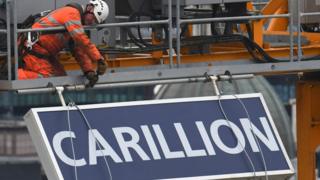
It follows the collapse of several high-profile companies that had been approved by auditors, such as government contractor Carillion.
The FRC said the changes would lead to better audits “in the public interest”.
It said separating accountancy firms’ audit departments from the rest of their operations would protect auditors “from influences from the rest of the firm that could divert their focus away from audit quality”.
The watchdog also said it would ensure “auditors act in the public interest and work for the benefit of shareholders of audited entities and wider society”.
Why are accountants getting their sums wrong?
The Big Four accountancy firms – KPMG, EY, PwC and Deloitte – came in for heavy criticism in the wake of Carillion’s collapse which cost 2,400 people their jobs and – according to the National Audit Office – left the taxpayer on the hook for £148m.
At the time, MPs said the failure Carillion exposed the UK’s audit market as a “cosy club incapable of providing the degree of independent challenge needed”.
Since then holiday company Thomas Cook, which was audited by PwC and subsequently EY, has gone bust.
More recently, the German payments firm Wirecard disclosed a €1.9bn (£1.7bn) hole in its accounts, and subsequently filed for insolvency. It was audited by EY.
Image copyright Reuters
Image caption
Wirecard revealed a huge black hole in its accounts before filing for insolvency
The FRC’s chief executive, Sir Jon Thompson, said: “Operational separation of audit practices is one element of the FRC’s strategy to improve the quality and effectiveness of corporate reporting and audit in the UK.”
Among the 22 principles for operational separation that accountancy firms should implement, audit practices should produce a separate profit and loss account.
Firms should also have a separate board to ensure “independent oversight of the audit practice”.
The EU says it will act “decisively” if the US goes ahead with a threat to put new tariffs on its goods.
It is latest twist in a long-running row with Washington over subsidies granted to the planemaker Airbus.
For more than a decade, the EU and US have accused each other of propping up their home aviation markets with tax breaks, research grants and other aid.
Last month, the US threatened duties on EU goods such as beer, gin and olives, escalating the row.
On Monday, Europe’s trade commissioner Phil Hogan said Washington had rejected moves to settle the dispute.
“I want to reassure people that we are ready to act decisively and strongly on the European Union side if we don’t get the type of outcome that we expect from the United States in relationship to finalising this 15-year-old dispute,” he told the European Parliament’s trade committee.
Image copyright Reuters
Image caption
European Trade Commissioner Phil Hogan said the EU will act “decisively and strongly”
The World Trade Organization (WTO) has already ruled that subsidies given by the EU to Airbus in 2004 were illegal.
However, it is also considering a parallel case involving illegal support for US aerospace firm Boeing, which could see the EU impose duties on Washington later this year.
In line with the WTO ruling, the US last year imposed tariffs of 15-25% on $7.5bn (£6bn) worth of European goods.
But in June, the US said it was considering new taxes on additional EU trade worth $3.1bn annually – a move described as excessive by Brussels.
US threatens tariffs on EU beer, gin and olives
Tariffs to increase on aircraft after subsidy row
On Monday, Mr Hogan also criticised recent national security investigations launched by the US against EU goods, suggesting they may also be a form of retaliation.
The investigations, known as 232 investigations, cover products from transformers and mobile cranes to steel nails.
“It’s not appreciated the number of 232 investigations that have been launched in recent weeks, perhaps this is political, perhaps it’s more real,” Mr Hogan said.
“This is totally unacceptable,” he said. “If these investigations go further, the European Union will have to stand together and act as well.”
The US is also involved in other trade spats with the EU.
Before last year’s tariffs over Airbus, the Trump administration had imposed duties on EU steel and aluminium – spurring Brussels to tax iconic US products such as denim jeans and motorcycles.
Mr Trump has also threatened duties on European cars, a particular concern to Germany.
The prestigious Cass Business School, in London, is changing its name because of its associations with Sir John Cass, a 17th Century merchant and proponent of slavery.
The school, part of City, University of London, was named after the figure in 2002, after a donation from the foundation that bears his name.
The foundation will also change its name as it is “no longer appropriate”.
Both organisations acknowledged the hurt caused by the association.
Sir John Cass’s Foundation was set up as an educational charity in 1748. It funds work across London, concentrating especially on projects for young people.
On the Foundation’s website Sir John Cass is described as “a merchant and politician, whose wealth posthumously was used to create the Foundation to deliver educational benefits to disadvantaged children”.
London slavery statue removed from outside museum
London slavery statue removed from outside museum
However, he was also a major figure in the early development of the slave trade and the Atlantic slave economy, directly dealing with slave agents in the African forts and in the Caribbean.
The university said on Monday that following broad consultations, its governing council had decided unanimously that continuing to use the name “was incompatible with City’s values of diversity and inclusion”.
For now, the business school will be be referred to as City’s Business School pending consultations about a new name.
Julia Palca, head of the City Council, said: “We acknowledge the great pain and hurt caused to members of our City and business school community and to many black people by the association of the wchool’s name with the slave trade.
“Any continued use of Sir John Cass’ name would be seen as condoning someone whose wealth in part derived from the exploitation of slavery. This is incompatible with our values of diversity and inclusivity. We have therefore taken the decision to remove the name.”
‘Hurt and anger’
The move comes amid intense debate about the honouring of people with links to the slave trade, which has included some successful demands for the removal of statues.
A statue of Edward Colston, a fellow slave trader, was also toppled in Bristol in the wake of international protests following the death of George Floyd in police custody in the US in May.
A spokesman for Sir John Cass’s Foundation said the charity was also now “committed to a name change”.
A spokesman said: “We also continued to celebrate Sir John Cass without explaining or acknowledging his connection to slavery and human exploitation or the hurt and anger this has caused amongst our beneficiaries and our community.
“We recognise, acknowledge, seek to understand, and apologise for the public hurt and anger. So let us be clear: we no longer consider the Sir John Cass name appropriate to represent us and the work that we do in this century or in the future.”
Fast fashion retailer Boohoo has said it will investigate one of its suppliers following reports that staff are earning less than the minimum wage amid unsafe working conditions.
The Sunday Times reported that workers at Jaswal Fashions in Leicester could expect to be paid £3.50 an hour.
It also saw little evidence of measures to stop the spread of coronavirus at a time when Leicester is in lockdown.
Boohoo said if the report was true, the conditions were “totally unacceptable”.
Leicester: A city fighting fast-fashion sweatshops
It comes as the National Crime Agency confirmed it was investigating Leicester’s textiles industry over allegations of exploitation, although it did not comment on Boohoo specifically.
An NCA spokesman said: “Within the last few days NCA officers, along with Leicestershire Police and other partner agencies, attended a number of business premises in the Leicester area to assess concerns of modern slavery and human trafficking.”
‘Immediate action’
Jaswal Fashions appears to make clothes for the Nasty Gal label, which is owned by Boohoo.
Boohoo said that Jaswal was not one of its declared suppliers and was no longer trading as a garment-maker.
It said it appeared that a different firm is using Jaswal’s former premises and “we are currently trying to establish the identity of this company”.
Boohoo said: “We are taking immediate action to thoroughly investigate how our garments were in their hands, will ensure that our suppliers immediately cease working with this company, and we will urgently review our relationship with any suppliers who have sub-contracted work to the manufacturer in question.”
Image copyright Boohoo
Image caption
Jaswal Fashions has made clothes for Nasty Gal, which is owned by Boohoo
An undercover reporter for the Sunday Times, who got a job at Jaswal Fashions, was told to expect pay of between £3.50 and £4.00 an hour.
The national minimum wage for people over 25 years-old is £8.72 an hour.
Few workers at the factory – which was operating during the localised lockdown in Leicester – were found to be wearing face masks to guard against the transmission of the coronavirus.
There was also no evidence that social distancing measures had been implemented.
‘Difficult issue’
Boohoo said that earlier this year it had begun a review of all its garment-makers, including “a full audit of all of our suppliers’ manufacturing facilities”.
But former MP Mary Creagh, who investigated the UK’s fast-fashion garment industry as chairwoman of the Commons’ environmental audit committee, said policing the sector was difficult.
“When you think there are 10,000 workers, there are hundreds of factories and the tendency is when one factory is shut down it just springs up again in a sort of phoenix factory approach,” she told the BBC’s Today programme.
“They are shut down by authorities on Friday and they start up in a different building with a different name on Monday morning and this is the problem. It is a really difficult issue to tackle, the problem is the system not just the enforcement.”
Boohoo’s share price tumbled by more than 16% on Monday following the expose.
The firm is already under fire after Labour Behind the Label, a workers’ rights group, claimed that some employees at factories in Leicester that supply the fast fashion firm were “being forced to come into work while sick with Covid-19”.
At the time Boohoo said it would “not tolerate any incidence of non-compliance especially in relation to the treatment of workers within our supply chain”.
Leicester restrictions
Leicester is currently under local lockdown following a spike in Covid-19 cases.
At the weekend, Health Secretary Matt Hancock said he was “very worried about the employment practices in some factories” in the city.
Sales at Boohoo, which trades exclusively online, has surged during the coronavirus lockdown with particular demand for loungewear and athleisure gear.
The company recently bought the online businesses of Oasis and Warehouse and earlier this year acquired MissPap, Karen Millen and Coast.
Prior to the Covid-19 outbreak, sales for the year to February rose by 44% to £1.2bn and pre-tax profits grew 54% to £92.2m.
Boohoo’s co-founders Mahmud Kamani and Carole Kane were both paid more than £1.3m each for the last financial year.
They could also share in a bonus of up to £150m if certain performance goals are met by 2023.
Café chain Pret A Manger is to close 30 outlets and is expected to cut at least 1,000 jobs at other shops as part of a post-pandemic restructuring.
The firm said the impact of coronavirus on trading meant it had to make a “difficult decision”.
Pret said it needed to reduce headcount across its UK shops to “reflect lower footfall, rental costs and new safety measures”.
It did not say how many jobs would go, but a source confirmed more than 1,000.
About 330 jobs will be lost with the closure of the 30 shops. Pret said 339 of its 410 shops have so far reopened following the easing of lockdown restrictions.
‘Sad day’
But trading remains slow, with sales down 74% year-on-year, the company said.
Pret chief executive Pano Christou said: “It’s a sad day for the whole Pret family, and I’m devastated that we will be losing so many employees. But we must make these changes to adapt to the new retail environment.
“Our goal now is to bring Pret to more people, through different channels and in new ways, enabling us to grow once more in the medium term.”
The company is in talks with landlords about reducing its rent bill.
Restaurants are ‘hurting’, says Deliveroo boss
Fears of job cuts at Pret a Manger as sales plunge
Pret is also trying to reduce its reliance on lunchtime office workers, launching a retail coffee initiative with Amazon and a delivery partnership with Deliveroo, Just Eat and Uber Eats. There are also click and collect trials in five shops in London.
Pret said sales across these digital channels have already grown 480% year-on-year, and now represent over 8% of total UK sales.
Pret owns 550 outlets globally employing 13,000 staff, including 8,000 in the UK.
Image caption
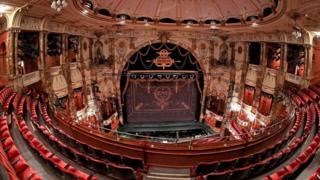
Theatres have been unable to open since the UK went into lockdown in March
The government has unveiled a £1.57bn support package to help protect the futures of UK theatres, galleries, museums and other cultural venues.
It follows several weeks of pressure, with industry leaders warning that many venues were on the brink of collapse.
Independent cinemas, heritage sites and music venues will also be eligible for the new emergency grants and loans.
Guidance for a phased return of the performing arts is expected to be published by the government shortly.
A string of theatres have announced plans to make staff redundant in recent weeks, after being closed since the coronavirus pandemic took hold earlier this year.
Adrian Vinken, the chief executive of the Theatre Royal in Plymouth told BBC Radio 4’s Today programme it was “impossible to say” if the announcement would be enough to prevent up to 100 job losses there until more detail is released.
The announcement of the new funding comes just two days after theatres across the UK were covered in colourful messages of support.
The rescue package has been warmly welcomed by many arts leaders, some of whom said they thought it to be at the upper end of what had been hoped for. The Culture Secretary, Oliver Dowden, who has been under pressure from the arts and heritage sector to deliver a meaningful funding solution to a crisis brought about by Covid-19, feels vindicated that his behind-closed-doors approach to negotiations with the Treasury has paid off.
As always, the devil will be in the detail. The government has not specified how the money will be divided between competing art forms or regions, nor how the application process will work. There will be winners and losers.
And then there’s the elephant in the auditorium: when will the rules around social distancing in performing arts venues be relaxed to allow the show to go on?
Many theatre producers are baffled by what they see as ‘one rule for them, and one rule for us’, approach by government, particularly when it comes to travel. Why is it OK for people to sit side-by-side on a train or plane for hours but not in a theatre, which they argue is a much more controllable environment? As far as they are concerned, that is the billion dollar question.
How will the money be spent?
Image caption
The Royal Exchange Theatre in Manchester was among those wrapped in messages of support
The £1.15bn support pot for cultural organisations in England is made up of £880m in grants and £270m of repayable loans. The government said the loans would be “issued on generous terms”.
Funding will also go to the devolved administrations – £33m to Northern Ireland, £97m to Scotland and £59m to Wales.
Closed theatres wrapped in messages of support
Theatres are ‘clinging on’ but face precarious future
A further £100m will be earmarked for national cultural institutions in England and the English Heritage Trust.
There will also be £120m to restart construction on cultural infrastructure and for heritage construction projects in England that were paused due to the pandemic.
The government said decisions on who will get the funding would be made “alongside expert independent figures from the sector”.
What else has the government said?
Image copyright EPA
Image caption
Prime Minister Boris Johnson pictured earlier this week in Downing Street
Prime Minister Boris Johnson said: “This money will help safeguard the sector for future generations, ensuring arts groups and venues across the UK can stay afloat and support their staff whilst their doors remain closed and curtains remain down.”
The government said the money “represents the biggest ever one-off investment in UK culture” and will help struggling institutions “stay afloat while their doors are closed”.
Mr Dowden described arts and culture as “the soul of our nation”. He said: “They make our country great and are the lynchpin of our world-beating and fast growing creative industries. I understand the grave challenges the arts face and we must protect and preserve all we can for future generations.”
However, the Conservative chairman of the House of Commons culture select committee, Julian Knight MP, said more action would be needed.
“This is the first step to help prevent some of our major cultural institutions from going under,” he said. “This money is welcome and should take some out of the danger zone, if only temporarily. But to secure their long-term future there needs to be a targeted sector deal, possibly involving more generous tax breaks.
“We know that 1m social distancing doesn’t work economically for most theatres and venues in the UK. We ultimately need to have a means by which these organisations can open safely and gain the confidence of the public. We’ll await further details in the guidance when it is published.”
Labour’s shadow culture secretary Jo Stevens said while she welcomed the “much-needed” package, it was “too little, too late” for many. She urged the government to act quickly to help organisations “currently teetering on the brink”.
What has the industry reaction been?
Image copyright Getty Images
Arts Council England, the Royal Opera House, the Music Venue Trust, the Society of London Theatre and UK Theatre were among those to welcome the funding.
Arts Council chairman Sir Nicholas Serota told BBC News the funding was “a very good result”.
He said: “Now it’s up to the arts organisations and the Arts Council to make best use of this money and bring the arts back into communities across the county. This announcement gives us the tools to help build a recovery.”
Music Venue Trust chief executive Mark Davyd said it “warmly welcomes this unprecedented intervention into Britain’s world class live music scene”.
He added: “This fund provides the opportunity to stabilise and protect our vibrant and vital network of venues and gives us the time we need to create a plan to safely reopen live music.”
Julian Bird, chief executive of the Society of London Theatre and UK Theatre, said it “hugely welcomed” the funding.
“Venues, producers and the huge workforce in the theatre sector look forward to clarity of how these funds will be allocated and invested, so that artists and organisations can get back to work as soon as possible,” he said.
The chief executives of the National Theatre, Rufus Norris and Lisa Burger, “emphatically” welcomed the plans, saying: “We feel very positive that this major investment will reach and sustain the vital talent and infrastructure – both organisations and freelancers – which make British theatre truly world-leading.”
Simon Rattle, director of the London Symphony Orchestra, also hailed the new fund.
“We hope it will be distributed as fast as possible… as so many institutions and individual artists have been staring into the abyss,” he said.
Philippa Childs, head of the Bectu union which supports workers across the media and entertainment industry, said the support package was overdue.
She added: “At long last the government have woken up to our warnings and those of the whole creative sector, that without support, we stood to lose a huge amount of our world-beating creative industries.
“We will now be scrutinising the details of this package to make sure it lives up to the real needs of our sector.”
Julia Fawcett, chief executive of the Lowry in Salford, said: “The announcement of £1.57bn of emergency investment in the UK’s culture sector is welcome news, but we are fast running out of time.
“This lifeline will come too late for some organisations who have already been forced to close their doors for good or made valued employees redundant.
GROUNDED WITH LOUIS THEROUX: Louis sits down with Chris O’Dowd
ILLEGAL LOCKDOWN RAVES: Annie Mac on Coronavirus Newscast
Follow us on Facebook, or on Twitter @BBCNewsEnts. If you have a story suggestion email .
Have you been affected by the issues raised in this story? Share your experiences by emailing .
Please include a contact number if you are willing to speak to a BBC journalist.
WhatsApp: +44 7756 165803
Tweet: @BBC_HaveYourSay
Please read our terms & conditions and privacy policy
“Urgent” support is needed to prevent “widespread devastation”, the hospitality sector has warned Prime Minister Boris Johnson.
Around 120 hospitality and tourism bosses have signed an open letter calling for aid and investment.
The industry wants to see VAT reduced, tax bills further deferred and some rent debt covered through grants.
Bosses say parts of the sector will not survive because some businesses remain closed, despite the easing of lockdown.
“Hospitality businesses operate with very high fixed costs and labour costs are the only flexible point to absorb this suppressed demand,” the letter said.
“Many parts of the late night and leisure economy, as well as activities such as events and conferencing in our hotels, have no provisional date for reopening and this is impacting confidence and undermining job security.”
Labour is calling for the government to create a £1.7bn “fightback fund” to prevent firms in the hospitality industry and on High Streets from going under.
It wants ministers to give councils more flexibility to tailor support for their local economies and better focus funds on struggling businesses, such as hotels and cafes in coastal communities, as well as conference centres and music venues in towns and cities.
The Treasury said the government’s job retention scheme had protected 9.2 million jobs, adding that the Chancellor, Rishi Sunak, had announced a business rates holiday specifically for businesses in the retail, hospitality and leisure sectors.
Bosses claim that the hospitality and tourism industry have been hardest hit by the crisis, compared to other sectors. They also argue that the impact is likely to last longer than in other sectors, due to social distancing rules, restrictions on business events and lower demand from international tourists.
Recovery help needed
“Sales across the sector are expected to be 56% lower than last year, reducing revenues by £73.4bn and half of businesses do not expect to reach break even until the end of next year,” the hospitality industry warned.
Image copyright Getty Images
Image caption
The hospitality industry says it is confident it can recover and operate safely and responsibly, but it needs help from the government to get there
Trade group UK Hospitality says it is “confident” that the industry can return to full strength and still be able to operate safely and responsibly, but it will require help from the government to enable businesses to “restart and begin to recover” over the remainder of 2020 and into 2021.
To that end, bosses have outlined a set of recommendations for the government, which include:
Automatically extending the deferral of all tax liabilities that are due in July
Providing a grant to cover a proportion of rent debt during closure, reopening and recovery
Temporarily reducing VAT to 5% for tourism services
Extending furlough for hospitality businesses to protect jobs
Doubling the employer National Insurance contributions threshold to protect a return to part-time work
Extending the hospitality business rates holiday to March 2022
The hospitality industry stressed in the letter that the sector has a record of creating new jobs following a crisis, and that it can be trusted to do it again, with help from the government.
“In the decade that followed the financial crisis hospitality consistently created around one in six new jobs thanks in part to the VAT cuts and investment in youth employment and training introduced in the immediate aftermath,” hospitality bosses wrote.
“We can do so again. Physical hospitality cannot be replicated digitally online, in the same way that some form of retail can be. We therefore urge you and your colleagues across government to work with us to stimulate demand and support the sector’s recovery.”