Category: Business News

  • Working from home: ‘I’m a bit brainier than he thought I was’

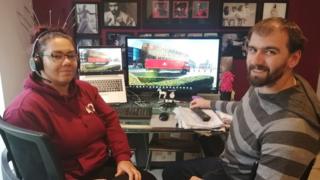
    Samar and Stephen Small

    Image copyright
    Samar Small

    Image caption

    Samar Small says her job isn’t what her family expected

    What is it you do again? Before the coronavirus lockdown a lot of us didn’t really know what our partner did at work. Our eyes have been opened.

    “I was just mum,” says Samar Small, looking back to life before lockdown. Her family didn’t give a second thought to what she did day to day.

    Samar is a manager at Royal Mail, responsible for a range of things, including communicating with bulk buyers of stamps (like the supermarkets), mail redirection services, and overseeing Santa Mail, planning for which commences in May.

    She usually works out of the Cardiff Mail Centre with colleagues hot-desking around her. Since March she has swapped that for the kitchen table in her three-bedroom semi, with her husband and two teenagers milling around, picking up snippets of conversations involving big projects and huge sums of money.

    “They hear the figures being bandied round: ‘What about that £2m?’ It’s not what they expected,” she says.

    Her husband Stephen goes into work at weekends, in a role at Royal Mail that she used to do herself, so she has a good grasp of what he’s doing. But it’s the first time he’s had much insight into what she does all day.

    “I’m probably a bit brainier than he thought I was – dare I say it!” she says.

    Image copyright
    Samar Small

    Image caption

    The kitchen is a “do not disturb” zone when Samar is on the phone

    “It’s been a bit of an eye-opener,” admits Stephen. There are the stacks of spreadsheets, all the financial accounting acronyms, and the hours and hours on the phone to everyone from suppliers to senior managers.

    He’s been “blown away”, he says, by just how professional she is all round, her confidence in challenging other people’s plans if she sees a flaw, and her eloquence and firmness in meetings.

    ‘No clue’

    “Most of us find that we get to know somebody perfectly well, and can love and live with them, and still not know what they do,” says psychologist and executive coach Sue Firth. “It’s quite revelatory to see what your other half does.”

    Discovering more will often reinforce mutual respect, she says, including when parents with jobs find out just how much work it takes to keep the house and children in order.

    The learning curve has been steeper for some than others. “Kirsty” from Sheffield estimates her police officer husband knew “pretty much zero” about her job as a financial consultant before lockdown. (She didn’t want us to use her real name because of her husband’s profession.)

    “He had no clue. He struggled to tell people what I did,” she says.

    More than anything, he’s staggered by the level of responsibility she has, and the sheer volume of work on her plate.

    “[Before lockdown] he never understood why I was working so late. He probably thought I was hanging out having a drink,” says Kirsty. Now her husband sees her working 12-hour days.

    As for her, she can’t help but get a lot more insight into his work, when every few minutes his police control centre radio is crackling into life.

    Having a husband who is in the police means she’s already a bit “hardened” to what she hears, but the call-outs for suspected suicides are still always awful to hear and much more frequent than she expected.

    He’s a detective constable, so has to collate files of evidence for the Crown Prosecution Service. That means sitting on a laptop and liaising with colleagues on video calls like the rest of us. There’s a lot of paperwork, but there’s the added pressure of dealing with people and events that are often shocking and unpleasant.

    Kirsty admires the way he remains professional no matter what, and feels she’s getting a more realistic idea of what it is like to work on the frontline. “People don’t realise how busy they are,” she says. “The stuff he has to see, to deal with day in, day out.”

    ‘Who even are you?’

    Working from home means we’re not just learning about what our other half does for a living, but how they go about it, and what their “work personalities” are like too.

    Image copyright
    Alison Hinchliffe

    Image caption

    Alison and Scott Hinchliffe have seen different sides of each other since working from home

    “I don’t think we ever know our ‘work version’ of our partners. Mine used the phrase ‘sense check’ the other day, I was like ‘who even are you?!’,” says Alison Hinchliffe from Mottram in Greater Manchester.

    Her husband Scott works for an American company, and she says she notices a lot of cross-cultural phrases on his Zoom calls.

    He’s also seen a different side to her.

    “I work in arrears recovery for a social landlord, and obviously have a lot of worried and distressed people on the phone,” says Alison. She says she’s “not a very sentimental person”, so when Scott hears her on the phone, “he laughs and says he never realised how much compassion I have”.

    Spouse ultimatums

    Working from home won’t always bring out the best in our partner though, says Sue Firth. If you find yourself living with the “sergeant major” version of your husband or wife it can cause friction.

    For example, she says several of the executives she coaches are struggling to cope without the fix of adrenaline they usually get from being in the office environment.

    “Some are getting frustrated and are difficult to live with because what matters to them is winning, competition, control,” she says. Some of their spouses have had to issue ultimatums – you work in your study, and when you come out you don’t bring your phone. Other executives she’s spoken to are tense and can’t relax, which isn’t easy for partners and kids either.

    Sheri Jacobson, founder of psychotherapy clinic Harley Therapy in London, says such revelations don’t have to undermine a relationship if dealt with well.

    “It’s perfectly possible a person is a tyrant at work and a gentle soul at home, and you see both parts when you’re working from home together,” she says. “But with the general rules of communication and empathy it can be worked through.”

    Yet even if you only discover very positive traits in your partner, there is the risk of jealousy arising, if you see them getting on a little too well with a colleague for example.

    “Your partner will be pretty attuned to notice if there’s any romantic spark or flirtation going,” Sheri warns.

    Image copyright
    Mattia Zambaldi

    Image caption

    Mattia Zambaldi likes structure to his day – unlike his partner

    But on a work level too, she says seeing your partner in super-efficient, super-connected mode can feel “a bit threatening to some people”.

    “It’s possible to feel outdone by your partner because they have better abilities than you were aware of.”

    Opposites attract?

    Fortunately, that couldn’t be further from the case for Mattia Zambaldi and Frankie de Tavora, who have been working alongside each other in their London flat.

    They’ve found plenty of things they don’t have in common. He works for stadium management at Arsenal FC, she doesn’t like football. He gets up punctually at 6:30am, she rolls up, interrupting his meetings, at 9:30. She’s “goofy by nature” and, working in hospitality, is used to an unstructured week. He wears a body brace to ensure a healthy posture and insists on set meal times.

    But they’re both gushing with admiration for the other’s abilities.

    Image copyright
    Frankie de Tavora

    Image caption

    Frankie is impressed by Mattia’s ability to be both professional and himself

    “She’s very sharp,” says Mattia. “She understands straight away topics that are not straight forward. When it comes down to being professional, sometimes I wonder why she’s not at the top of a big company.”

    “I’m super-impressed,” says Frankie. “His dedication is clear to me.”

    She says Mattia is able to be both professional and genuinely himself at the same time, and has a vast array of skills. She feels lucky that her future children will have a father with such knowledge.

    And if the hours working side-by-side have taught them one thing, it’s that they want to spend more time together, not less. So instead of going back to work, Frankie is considering returning to university. That way she can have weekends and evenings free.

    But for some, there are downsides to spending so much time with your partner in a work environment.

    “I’ve discovered a severe dislike of his music,” says Alison Hinchliffe. “Phil Collins is awful. I knew I didn’t like him before but I can’t stand him now!”


  • Traineeships to triple as unemployment fears mount

    Trainee mechanic

    Image copyright
    Getty Images

    The government is pledging to provide 30,000 new traineeships to get young people in England into work, as fears about mounting unemployment increase.

    Traineeships provide classroom-based lessons in maths, English and CV writing, as well as up to 90 hours of unpaid work experience.

    Under the £111m funding boost, firms in England will be given £1,000 for each work-experience place they offer.

    Scotland, Wales and Northern Ireland will receive £21m for similar schemes.

    The additional funding for traineeships is set to be announced by the Chancellor Rishi Sunak on Wednesday when he will unveil an economic plan to deal with the aftermath of the coronavirus crisis.

    • The struggle to contain Covid-19’s economic hit
    • UK businesses cut more than 12,000 jobs in two days

    Businesses have been hit hard since the UK went into lockdown on 23 March, and even though restrictions are gradually being eased, consumer demand remains depressed.

    As a result, companies with a presence across the UK have revealed thousands of staff cuts in the last week.

    “Young people’s employment prospects are expected to be disproportionately affected by the economic fallout of coronavirus,” the Treasury said in a statement announcing plans to expand the traineeship programme.

    Traineeships are intended to get people into their first job after education. They last from six weeks to six months and they are open to people aged between 16 and 24.

    “Expanding traineeships will be part of a wider package to support young people and to ensure they have the skills and training to go on to high quality, secure and fulfilling employment,” the Treasury said.

    It said that three quarters of young people who complete a traineeship moved on to employment or further study within a year. In contrast, three quarters of 18-24 year-olds who are not in education, employment or training for three months will continue to be out of work and out of education for a full 12 months, according to government figures.

    The expanded scheme will be in place in England from September 2020. Around 15,000 people took traineeships between 2018 and 2019.

  • Coronavirus: Is this the end of office working in Wales?

    A woman sits at a desk working from home

    Image copyright
    Getty Images

    Image caption

    Nearly half of working adults in the UK have been working from home due to the coronavirus outbreak

    For many of us, our spare bedrooms or kitchen tables have become makeshift workplaces and a full return to the office seems a strange prospect.

    However, some employers have not only come to accept their staff working from home but have found it beneficial.

    “The pandemic has forced businesses to do things differently – things will never go back to exactly how they were before,” said Alun Jones of Hugh James.

    So what does the future hold for office working in Wales?

    Nearly half of all working adults (49%) in the UK are working from home due to coronavirus, according to the latest figures. Before the pandemic, it was just 5%.

    If workers are to return to a central office, businesses are having to adapt to adhere to social distancing guidelines.

    Staggered shift patterns, re-organising workspaces, flexible hours, extra cleaning and even one-way systems and temperature checks are among the measures many of the biggest private companies in Wales are introducing.

    But some workers are unlikely to ever return.

    “It’s true some companies have said that they could allow their workforce to work from home forever,” said Aude Bicquelet-Lock, deputy head of policy and research at the Royal Town Planning Institute.

    “The CEO of Barclays said putting 7,000 people in the office might be a thing of the past.

    “The experience of going to the office in Aberystwyth isn’t the same as going to the office in London. The decline of office space will affect small, medium and large cities in different ways.”

    ‘Reducing climate change’

    For employees, the prospect of saving hours travelling to work every day has clear benefits for their wellbeing, work-life balance and wallets, as well as the climate.

    Principality Building Society said it would be a “long time” until its Cardiff headquarters was ever full again and has encouraged its 800 staff to work from home until September – and possibly beyond.

    Image copyright
    Google

    Image caption

    Not all of Principality’s 800 staff will return to work at the Cardiff headquarters

    Chief executive Julie-Ann Haines said the company has even seen benefits to home-working: “We have proven that people can be just as effective, if not more so, working from home.

    “The benefits including trading daily commute time for increased time at home, for exercise or for personal development, are helping colleagues to feel more satisfied, engaged and more productive.

    “Increased remote working will also have a positive impact on ensuring there is less traffic on the roads, supporting the improvements the globe is seeing in reduced carbon usage.”

    Image copyright
    Admiral

    Image caption

    Admiral is considering more “flexible” working for its 6,000 staff in Cardiff, Swansea and Newport

    Similarly, Hodge Bank is in “no rush” to return to its city centre head office.

    Staff have worked from home throughout lockdown and, in a recent wellbeing survey, told company bosses they would prefer to work from home more in the long term.

    ‘Staff wellbeing’

    “We have used this time to challenge ourselves as a business and ask – how do we want to work in the future?” said David Landen, interim chief executive.

    “Now we’ve invested in the technology which allows our staff to work from home, we will continue to support colleagues to make the choice which best suits their lifestyle.

    “For some, being in the office might be the right answer, while for others avoiding the commute and working around family commitments may work better.”

    Image copyright
    Hugh James

    Image caption

    Hugh James solicitors has introduced a one-way system within its head office

    Having invested in the technology to enable staff to work from home, many companies have said they can now offer greater flexibility.

    Hugh James Solicitors is adopting a “cautious” approach to reopening its workspaces with several measures to reduce numbers in its office.

    • Can my boss force me to go to work?
    • Our experts have answers

    “We’ve embraced new technology more than ever during this time. This will continue, even when the office is fully back up and running,” said Mr Jones.

    “Remote meetings are set to stay. This is how the world does business now.”

    Does anyone still want an office?

    Working from home can present challenges, as Prof Robert Kelly discovered during a now-famous live interview from his home for BBC News which was interrupted by his wife and small children, earning him the nickname BBC Dad.

    Others have missed the social interaction and creativity offered by working closer with colleagues.

    There is currently almost one million sq ft (93,000 sq m) of office space available in the Welsh capital.

    HMRC is due to move 3,600 staff into a new regional tax office centre, described as the largest office leasing deal ever completed in Wales.

    A spokeswoman said HMRC remained “committed” to moving into the £100m building in February 2021 and was “developing medium and long-term plans” as to how staff will provide the service.

    Image copyright
    Rightacres Property

    Image caption

    Cardiff’s Central Square project includes the new BBC Wales HQ and a transport interchange

    It is the latest phase in the Central Square development led by Rightacres.

    “City centre locations will remain attractive to employers because people always need to collaborate to learn, to create, to innovate,” said chief executive Paul McCarthy.

    “How do large companies create a culture or train new members of staff if they don’t come together?

    “I think people like being in offices because they enjoy being part of a team as well as the social interaction.

    “There had been a drive for people to work in smaller spaces. Computers are smaller so the desk space required is less and the density of people increased. That’s likely to change and we could start getting some space back.

    “So it will be interesting to see how different occupiers set different trends on how they use that space over the coming years.

    “We need people to come back to work to bring city centres back to life because there’s synergy between people working and cafes, sandwich bars, shops and pubs for socialising.”

    Image copyright
    Google

    Image caption

    90% of staff at Iceland’s headquarters in Flintshire have been working from home

    It is not just in the country’s capital that office working will look different.

    In Deeside, Flintshire, Iceland employs 700 people at its head office and anticipates there will be difficulties returning to full capacity.

    “We have enhanced cleaning and all applicable social distancing measures in place to ensure that we provide a safe working environment for those who are unable to work from home,” a spokesman said.

    Go Compare’s office in Newport employs 268 people and has been largely empty throughout lockdown.

    It will offer staff across the company “greater flexibility” over working patterns when they begin to return to the office.

    “We aren’t planning to rush back to the office and the business is not at a disadvantage as a result,” said Alex Currie, vice-president of people and talent at GoCo Group.

    “We will continue to monitor official guidance and, as always, put our employees’ health first.”

  • Coronavirus lockdown: People rush to town centres as pubs reopen

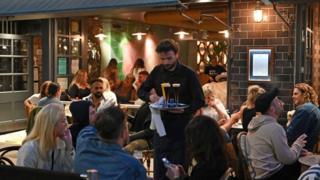
    A waiter serves drinks to diners at the Old Compton in the Soho area of London

    Image copyright
    AFP

    Image caption

    A waiter serves drinks to diners in the Soho area of London

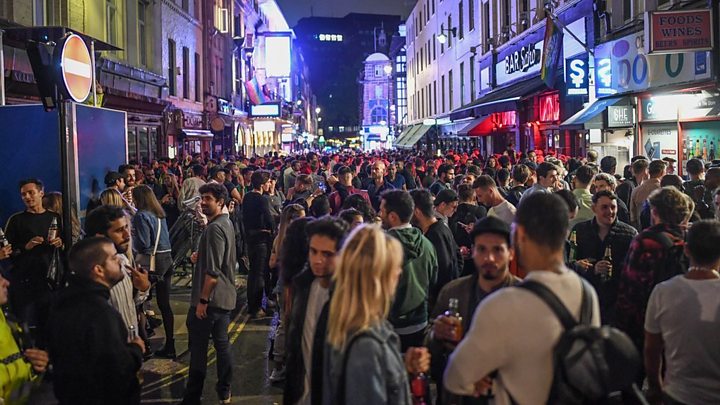
    The number of people visiting High Streets surged on “Super Saturday”, as hairdressers, pubs, bars, cafes and restaurants reopened in England after a three-month lockdown.

    Research firm Springboard said footfall was 19.7% higher than last week, rising sharply after 17:00 BST.

    Footfall in the evening rose 26% in central London, 29.4% in regional cities, and 21.9% in historic towns.

    It comes as police warned that drunk people are unable to socially distance.

    “Part of this is likely to be due to the reopening of hairdressers and barbers, the vast majority of which are located in High Streets, rather than shopping centres or retail parks,” said Diane Wehrle, marketing and insights director at Springboard.

    “And post 5pm, the rise in footfall in High Streets from the week before at 35.8%, was double that of retail destinations generally, due to the presence of pubs and bars.”

    In Scotland, footfall jumped by 69.7% from the previous Saturday, due to it being the first weekend of trading since the relaxation of the five-mile travel restriction.

    However, overall the numbers of visits to High Streets in England were down 56% year-on-year and remained 68.4% lower in Scotland.

    Image copyright
    Getty Images

    Image caption

    There were long queues over Saturday at barbers in Clapham

    Restaurants, hairdressers and cinemas were allowed to reopen in England just after midnight, with some hair salons welcoming clients in the early hours.

    There were long queues seen outside a barbers in south London for much of Saturday.

    But some 31% of bars, pubs and restaurants are not opening yet, according to the Night-Time Industries Association, amid fears for safety and warnings, while the Campaign for Real Ale (Camra) said as many as half of England’s pubs might stay shut this weekend.

    Streets were packed in London’s Soho district, with images showing revellers outside pubs into the early hours of Sunday.

    Media playback is unsupported on your device

    Media captionLarge crowds of people visited London’s Soho district to celebrate pubs reopening

    The Metropolitan Police said “a small number” of premises closed early following advice from officers due to crowding, but the force added that there were “no significant issues” in the capital.

    In north Nottinghamshire, four people were arrested and several pubs decided to close after alcohol related anti-social behaviour.

    In Northern Ireland, pubs reopened on Friday. In Wales, pubs and restaurants can open outdoors on 13 July, while in Scotland outdoor hospitality can open from 6 July and indoors from 15 July.

    People in England are still urged to stay 2m apart, but the new “one metre plus” guidance means they can get closer if they use “mitigation” measures, such as face coverings and not sitting face-to-face.

    Boris Johnson and government experts had urged people to stick to the rules to avoid creating a second wave of coronavirus, with chief medical officer for England Chris Whitty saying easing lockdown is not “risk-free”.

    The latest government figures, released on Sunday, showed a further 22 people had died in the UK after testing positive for coronavirus, bringing the death toll to 44,220.

  • Coronavirus: Ministers pledge to double staff in job centres

    Job Centre

    Image copyright
    PA Media

    The government is pledging to double the number of frontline staff at job centres in the wake of the Covid-19 crisis.

    Chancellor Rishi Sunak is expected to pledge £800m to recruit 13,500 extra staff as part of an economic recovery package announced on Wednesday.

    The Treasury says 4,500 of them will be in position by October, with more following later in the year.

    Labour has called for more targeted support to prevent job losses.

    The announcement comes after UK companies announced thousands of job cuts this week, with many firms cutting jobs now to reduce costs.

    Job centres are set for more face-to-face meetings with jobseekers from Monday, as lockdown restrictions are eased.

    The government says its furlough scheme, currently paying 80% of the wages of more than nine million workers, has already stemmed job losses from a sharp economic decline following the Covid-19 crisis.

    However, the scheme is due to be pared back from August, and is set to finish at the end of October.

    ‘Alternative opportunities’

    Shadow chancellor Anneliese Dodds said schemes to support jobs should be better tailored to individual sectors and tied to the easing of lockdown restrictions.

    “There’s a strong argument for continuing to provide support in areas where there would be viability for the future,” she told the BBC’s Andrew Marr show.

    “We want to make sure that people are in that kind of situation for as short a period as possible,” she said.

    “The problem is, we don’t have those alternative opportunities yet available, we don’t have the support packages there.”

    Ministers under pressure to act

    Analysis by Jonathan Blake, BBC political correspondent

    Higher unemployment is inevitable as a result of the coronavirus pandemic, that much the government admits.

    The impact of the crisis is already all too clear, with companies in various sectors announcing significant redundancies over the last few weeks.

    What is not yet clear is how far the chancellor is willing to go to limit the number of people losing their jobs.

    Labour criticise the government’s “one size fits all” economic approach and say current support should continue through local lockdowns.

    A further extension to the job retention scheme has been ruled out, beyond that Chancellor Rishi Sunak has promised “bold” action to restart the economy.

    With recession looming and further job cuts expected he will be under significant pressure to deliver on that.

    The Treasury is committing to increase the total number of mentors working in job centres in Great Britain to 27,000, double the current 13,500.

    A spokesperson added that the extra staff would provide “expert advice” to those seeking work to help jobseekers “make the most of their skills”.

    “Evidence shows that high-quality, work-focused, one-to-one adviser support, significantly reduces jobseekers’ barriers to work.”

    The chancellor is also expected to pledge an extra £32m for recruiting extra careers advisors, and £17m for work academies in England.

    ‘Reckless’

    PCS union general secretary Mark Serwotka said the recruitment of extra staff for job centres was welcome, but the announcement “falls well short of what is required”.

    He also accused the government of being “reckless” by sending job centre staff back to work “when Covid-19 is still a threat”.

    “Some job centres have no screens installed and we have reports that some are so flimsy they can easily be knocked over,” he said.

    “Risk assessments have not been agreed with the union and our members say PPE and hand santisers are in short supply.”

  • How mortgage holidays can affect your ability to borrow

    Sara Taylor

    Image copyright
    Sara Taylor

    Image caption

    Sara Taylor took a mortgage holiday as her revenue collapsed

    “At the start of the Covid-19 pandemic, my revenue stream evaporated in six days,” says Sara Taylor.

    Ms Taylor runs an events management company. It’s been voted the worst industry to be working in during 2020 by the website Reddit, because of the impact of the lockdown.

    She did not qualify for any of the government support for people who had lost their incomes during the pandemic, so she took a mortgage holiday – a payment deferral – to cut her outgoings as much as possible.

    Ms Taylor is far from alone. One in six mortgage holders, or nearly two million people, have suspended their payments during the pandemic.

    Now many of those borrowers are approaching the end of the three-month payment holiday and will have to decide whether to extend.

    Not expecting her industry to recover until next year, Ms Taylor says she will ask for an extension. “My need is as great the second time round as it was the first,” she says.

    ‘It will come back to bite you’

    Mortgage holidays were introduced in March, allowing people to defer payments, ostensibly without affecting their credit rating.

    However, what seemed like a quick and simple way to cut people’s outgoings immediately could have unintended consequences.

    Image copyright
    Getty Images

    Some borrowers who have taken mortgage holidays have now found they are being declined when applying for loans.

    Lisa Orme is the managing director of Keys Mortgages. She has been warning borrowers not to take them unless they have no other option.

    “We know, anecdotally, that people have used them to pay off credit cards, pay for holidays, pay for cars,” she says.

    “I’ve been saying to people, despite all these promises about how it won’t affect your credit file, I absolutely guarantee it will come back to bite you.”

    ‘I’ve now been told I can’t get a loan’

    Matt Pollen was just about to launch his start-up and was trying to raise funding from investors when the lockdown began. The launch had to be delayed, so he applied for a mortgage holiday as a security measure, in case the lockdown lasted a long time.

    “The only advice I saw was the general advice from the government that it wouldn’t affect any future credit history,” he says.

    Image copyright
    Matt Pollen

    Image caption

    Matt Pollen has been told he can’t get a loan because of his mortgage holiday

    But when Mr Pollen and his girlfriend tried to find out if they could take out a loan in the future to fund an extension, he was told he wouldn’t be accepted.

    “One of the first questions they asked was had we taken out a mortgage holiday – and when I said yes, they said a lot of the companies they work with aren’t lending to people on them at the moment.”

    How do people decide who can borrow money?

    The advice from the Financial Conduct Authority (FCA) is that a mortgage holiday will not affect your credit record, but that it could affect future lending decisions.

    Even though there is no mark left on your credit report when you take a mortgage holiday, when you try to borrow money, lenders look at thousands of pieces of data.

    Sarah Coles, personal finance analyst with Hargreaves Lansdown, explains: “Banks will look at your payment history. And if you’ve got a three-month gap around this period, they are going to know that has clearly come from a mortgage holiday.

    “If you’ve got a six-month gap, they are going to know you’ve had to extend it. And that will give them a really clear indication that you were having some financial issues at the time. So it will then make it harder to borrow.”

    In May, the FCA updated its guidance to clarify this: “Lenders may use sources other than credit files, such as bank account information, to take account of other factors in their lending decisions. These factors could include changes to income and expenditure.”

    Extending the holiday

    Lenders are currently writing to customers who are nearing the end of their three-month mortgage holidays to outline the details of their new monthly payment.

    Virgin Money Group says any payment holiday will not affect its future lending decisions – but that’s unusual.

    Lloyds Banking Group – which includes the Halifax – says it has approved 450,000 payment holidays for its customers.

    Tom Martin, remote mortgages director at the Halifax, explains that being on a mortgage holiday could affect your ability to borrow: “We base our decisions on a full understanding of a customer’s up-to-date circumstances,” he says.

    “We do take into consideration your latest financial position, but we recognise as well that these are unprecedented times and we will consider individual circumstances as part of that process.”

    He advises borrowers to wait three months after resuming payments before applying for more borrowing – and if people are able to resume their repayments, they should, as this stops extra interest being charged.

    NatWest said: “We will take customers’ circumstances into consideration when considering any borrowing requests. If a customer’s income is currently impacted by Covid and they are unable to afford their mortgage, we would consider this.”

    The bank also said that if customers resumed repayments after a payment holiday, the deferral would not be a factor in any lending decision.

    Joe Garner, chief executive of Nationwide, the country’s biggest building society, told the BBC in May that he thought a second mortgage holiday should be marked on a borrower’s record, although it is not doing so, in line with FCA guidance.

    A spokesperson for the Treasury said: “The Financial Conduct Authority has been clear that payment holidays should not have a long-term impact on people’s credit rating.”

    Mortgage holders have until 31 October to apply for a three-month mortgage holiday if their finances have been affected by the pandemic. The FCA has banned repossessions until the end of October.

  • Coronavirus: ‘We’ll be cutting hair from midnight’ post-lockdown

    Carole Rickaby

    Image copyright
    Carole Rickaby

    Image caption

    Carole Rickaby says some of her clients have had “horrific” DIY jobs during lockdown

    Hairdressers and barbers in England will be allowed to reopen from 4 July – and some don’t want to wait a moment longer.

    Carole Rickaby, who owns Tusk Hair in Camden, north London, will be opening the doors of her salon at the stroke of midnight.

    “It is just a fun thing to do [but] we’re busy anyway. We are completely booked up from 7:00 in the morning until about 8pm because we’re spreading our clients out as well, taking longer over each appointment.”

    Four stylists will work socially-distanced in the salon and allow up to 15 minutes between each client for cleaning. Cuts will be booked in in the morning, with colour treatments that take longer in the afternoon.

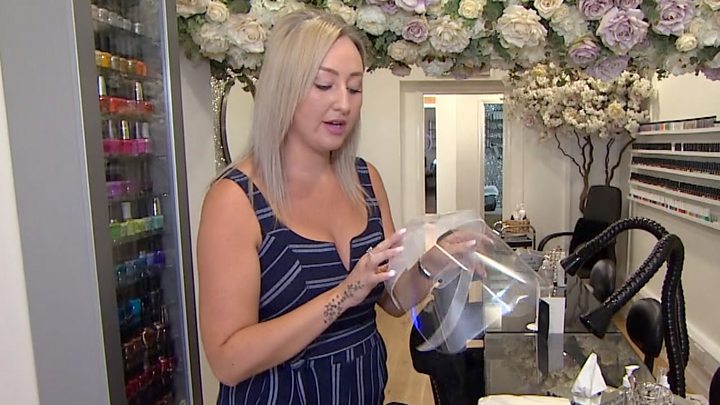
    Carole and all her staff will also wear visors, and will wash only one client’s hair at a time.

    Sandra Jacobs has been going to Carole for haircuts and colour for about 30 years. But the last time that she managed to get a haircut was in early March – just before lockdown measures were introduced in a bid to stop the spread of Covid-19.

    Image copyright
    Sandra Jacobs

    Image caption

    Sandra will be Carole’s first client at midnight

    “I’ve been doing what I can with products and rollers, but it’s not looking great,” she says. “I’m wearing a lot of hats these days!”

    She will be Carole’s first client once Tusk Hair is allowed to reopen at midnight on 4 July.

    “She’s fully booked for weeks after reopening, and I’m just not a morning person. So I thought why not? It’ll be a fun experience.”

    • What to expect when hairdressers reopen
    • ‘We’ve built a waiting list of over 2,000 people’

    Most of Carole’s customers on Saturday will be coming with long hair needing a cut or roots that need re-dyeing. But she has heard of some DIY hair horror stories,

    “I’ve got one client – it was horrific what she did. She had a really nice red bob and she thought she’d take the scissors to the hair… and she literally hacked it,” says Carole.

    “So she won’t be coming back to see me just yet because it still needs to grow out.”

    What are the new rules in salons and barbers?

    • Social distancing must be observed, with 2m between clients, or 1m with additional protection, such as a plastic screen
    • Clients must be seen by appointment only
    • A clear visor should be worn by the hairdresser
    • Clients should be given disposable gowns, or a separate one which is washed before and after each use
    • Equipment such as scissors or chairs should be cleaned between each client

    Source: The National Hair and Beauty Federation

    ‘Demand was mad’

    Image copyright
    Matt Hughes

    Image caption

    Matt Hughes and his team will all wear clear visors when they reopen

    Carole isn’t alone in opening at midnight for clients desperate for a haircut.

    “Demand was mad as soon as we posted on social media just to say the booking system was open,” says Matt Hughes, who owns Idris Barbering Company in Tottenham.

    With appointments booked for the coming weeks, Matt decided to open exclusively for a few regulars at midnight on 4 July.

    “It is a bit of fun and to be honest, we are all absolutely buzzing to get back in the shop. I never thought I’d want to get back to work so bad after three months off the tools,” he says.

    Media playback is unsupported on your device

    Media captionWhat salons will look like post-lockdown

    His team will be offering a stripped back service though, amid the pandemic: “We’re not going to offer any service where we have to come fully in front of the customer.

    “We will still trim down the sides of the beard – and we’ll do what we can because a lot of people will have pretty heavy growth on there.”

    He adds: “I have no doubt that what will probably start happening is you’ll find that higher-end, premium barber shops will adhere to [social distancing guidelines] for a little bit longer.”

    ‘I’m desperate!’

    Image copyright
    Levi Robbins

    Image caption

    Levi says he “definitely” needs a haircut

    Twenty-nine-year-old Levi Robbins has been one of Matt’s regular customers over the last year and is looking forward to a trim on Saturday.

    “Once you’ve got a hairdresser you know is amazing, you want to stick with them. When Matt said they’re offering midnight cuts, I thought, ‘Of course!’

    “I definitely need a haircut, it’s terrible at the moment,” Levi says, adding that his girlfriend was also roped in to give him a “very quick cut, which has grown out again – so I’m desperate!”

    Levi says that he will wear a face mask to attend his appointment, although he is “almost certain” that he got coronavirus around March.

    “It’s more disconcerting knowing you may be passing it on to other people unwittingly. So my partner and I are treating it as though it’s full lockdown.

    “Being safe at home has been enjoyable, but it will be nice to mark a break with lockdown.”

  • Coronavirus: ‘Refunds unlikely’ if travellers have to self-isolate

    Cala Aiguablava Beach near Girona in Spain

    Image copyright
    Reuters

    Image caption

    Resorts in Spain are preparing to welcome back British tourists

    Holidaymakers will be “bearing all the risk” when overseas getaways return as they face little chance of refunds if they go into self-isolation.

    Anyone who gets coronavirus symptoms at the time they are booked to go away is highly unlikely to get their money back when they cancel their holiday.

    Package holiday firms and travel insurance will probably not pay out.

    Alex Neill, of resolution service Resolver, said UK tourists needed to be aware they were “taking a risk”.

    “It is likely that new travel insurance policies won’t cover you if you develop symptoms before going on holiday – and if the flight or packaged holiday isn’t cancelled then you have no automatic right to compensation,” she said.

    “While it’s important to the economy to support the travel industry, at this time it’s the customer who is bearing all of the risk.”

    • Can I get travel insurance, or a holiday refund and what are my travel rights?

    From Saturday, blanket restrictions on non-essential overseas travel are to be relaxed in the UK.

    Travel companies said that holiday bookings “exploded” after ministers announced that restrictions would be eased.

    Image copyright
    Getty Images

    Image caption

    Overseas travel is expected to be permitted for a summer getaway

    Interest has been heightened by the announcement that dozens of countries will be exempt from travel quarantine requirements when holidaymakers return to England.

    That should mean English holidaymakers returning from lower-risk countries will not need to self-isolate for 14 days when they get home. Restrictions remain for people returning to the rest of the UK.

    Travel insurance gaps

    People going on overseas getaways are strongly advised to take out travel insurance, which will still cover them for accidents, injury, lost luggage and so on. A European Health Insurance Card will also give access to state healthcare in the EU.

    Some new travel insurance policies will now cover medical treatment for Covid-19 which has been caught while in a resort.

    However, people who need to cancel a holiday because they or a loved one develop symptoms before going away, or are told to self-isolate at home, are highly unlikely to be covered.

    Similarly, package holiday providers are unlikely to give a refund if a customer cancels in such circumstances. Some may allow rebooking, but that is not guaranteed.

    There is a risk that people with holidays booked may try to ignore symptoms, or discard advice from contact tracers to self-isolate. The government has said people have a “civic duty” to quarantine if they receive a call from test and trace advisers.

    “Most people would behave responsibly even if that meant losing their holiday, but I would also expect holiday and insurance companies to show a little compassion in these circumstances,” Ms Neill said.

    “Driving consumers to do the wrong thing can’t be an unintended consequence of opening back up from lockdown.”

    Insurance companies argue that coronavirus is no longer an unforeseen event, so may not be included in cover.

    The added protection usually available from booking via a credit card is also unlikely to be successful in such cases.

    When holidays may be protected

    There may be better news for people who already had a travel insurance policy bought or renewed prior to early March as they may still be able to make a claim for such a cancellation, but they should check their policy.

    If the UK, or a destination country, re-introduces restrictions on travel as a result of a fresh outbreak, then a package holiday company or airline should refund holidays or flights that they then need to cancel.

    However, refunds are unlikely if a 14-day quarantine rule is brought back in and a holidaymaker chooses to cancel as a result.

    People taking a holiday within the UK will have to look at terms and conditions when booking for information about their cancellation rights.

  • Freeze on car loan and pawn payments set to be extended

    A car loan application form

    Image copyright
    Getty Images

    People struggling with high-cost credit or car finance are to be given more time to pay, under proposals from the UK’s financial watchdog.

    The Financial Conduct Authority plans to extend the deadline to apply for a payment freeze until 31 October.

    People who have already applied for support will be able to ask for a further payment deferral.

    The proposals cover motor finance, buy-now pay-later, rent-to-own and pawnbroking schemes.

    “It is vital that people facing temporary payment difficulties because of the impact of coronavirus get the assistance they need,” said Christopher Woolard, interim chief executive at the FCA.

    “For those who have already taken a payment freeze and can afford to start making payments, even partially, it is in their best interest to do so, but for those that need help it will be there.”

    The FCA also plans to extend the ban on repossessions until 31 October for motor finance and rent-to-own customers still facing temporary payment difficulties and who need their vehicles or goods.

    The watchdog is asking for comments on the proposals by 5pm on 6 July 2020 and it expects to finalise the guidance shortly afterwards.

    Image copyright
    Getty Images

    Image caption

    The proposals also cover pawnbroking schemes

    The FCA, which brought in the initial protections in late April, said lending firms should contact their customers at the end of a first payment freeze to find out if they can resume payments.

    It pointed out that if customers can afford to return to making regular repayments it is in their best interest to do so.

    If customers can afford to restart repayments, lenders should agree a plan on how the missed payments could be repaid.

    Meanwhile anyone who continues to need help should still get help, the watchdog said, and firms should freeze or reduce payments to a level they can afford for a further three months.

    Customers who have not yet had a payment freeze would be able to request one up until 31 October 2020.

    The watchdog added that payment freezes should not have a negative impact on people’s credit files.

    Financial pressure

    Debt charity Step Change warned of the long-term dangers of payment freezes on struggling borrowers.

    “Financial pressure continues to build for many households and we need to start thinking about the help people will need the payment holiday periods end,” said Richard Lane, director of external affairs at the charity.

    “With more than four million people borrowing to make ends meet since the start of the pandemic, the FCA needs to address how to prevent long-term consequences for those forced into debt due to coronavirus.”

    • ‘My mortgage holiday means I can’t get a loan’
    • Families’ anger at car finance holiday ‘nightmare’

    Dame Gillian Guy, chief executive of Citizens Advice, said: “The extension throws into sharp relief the chasm between the protections for consumer credit and the protections on household bills like rent or council tax which end in August.

    “This means people could still be getting a payment holiday on their car or sofa, while being thrown out of their home or having their possessions seized for council tax arrears.

    “The government took bold action at the start of the pandemic to protect people struggling to pay essential household bills. They still have time to help the millions who’ve fallen behind on their council tax or their rent.”

    Adrian Dally, head of motor finance at the Finance & Leasing Association, said: “The breadth of today’s guidance from the FCA recognises the variety of different situations that customers will be in at this point.”

    He pointed out that with more parts of the economy reopening, many customers will be returning to work and will be able to resume full payments.

    “For those returning to part time work, partial payments are an option,” he said. “Customers who still need ongoing help will of course be supported.”

  • Flexible rail tickets urged as workers stop daily commute

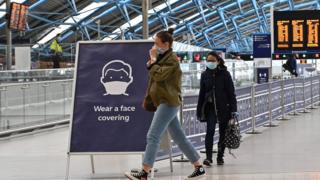
    A sign tells passengers to "wear a face covering" at Waterloo train station in central London

    Image copyright
    Getty Images

    Commuters should be offered flexible railcards as few are likely to head to the office every day following lockdown, an independent watchdog says.

    Transport Focus wants rail fares to be reformed to reflect recent changes in commuting habits.

    It has written to Transport Secretary Grant Shapps calling for the change.

    “Our ambition is delivering better journeys and value for money for passengers,” the Department for Transport said.

    Changing work patterns

    Transport Focus chief executive Anthony Smith said: “A new railway needs a 21st Century retail offer,”

    He said many people were unlikely to return to the typical Monday-Friday commute any time soon.

    That has been backed up by research from Transport Focus that suggests half of people expect to work from home more often in the future.

    Meanwhile more than a third think their job will be home-based with limited travel to work.

    • Face covering rule on transport begins in England
    • ‘Wearing a mask on a train feels weird’

    “Changing work patterns will increase demand for flexible season tickets,” Mr Smith said.

    “People working from home for two-three days a week will not want to pay for a traditional season ticket offer but will still expect some recognition that they are a regular, if less frequent, traveller.”

    He has asked the Transport Secretary to give consideration to the provision of flexible season-style tickets or carnets, which offer a discount for multiple journeys when bought upfront.

    “As well as improving the work life balance for passengers this could also help manage demand in the coming months when capacity is scarcer,” he added.

    ‘Kickstarting the economy’

    Transport Focus’ latest research has shown that rail passengers want a fares system that is simple to use, easy to understand and is flexible enough to cater to how people work and travel today.

    Mr Smith said: “Fares reform will be key to helping people get back on public transport and making rail an attractive commuting option.

    “Getting people moving is key to kickstarting the economy as the country emerges from travel restrictions in place due to Covid-19.”

    What passengers told Transport Focus:

    • “Changing work patterns will probably result in most of my job being based from home and trips to the office will be too infrequent to make a season ticket financially beneficial.” Monthly ticket, South Western Railway
    • “I want the plan for carnet type tickets to be brought forward with some urgency – not much point buying a season type ticket when we might be hotdesking or indeed working more from home.” Annual ticket, Southeastern
    • “Even when the office reopens I expect I will be going there fewer than two days a week. Unfortunately there’s no flexible ticket offering for regular part-time travellers.” Annual ticket, Northern
    • “Being able to buy a three days per week season ticket, rather than full-time, is important for me. I’d like more flexibility so I can work from home sometimes, or travel on different days of the week.” Annual season ticket holder

    Fare reform was expected to be a key part of the government-commissioned Rail Review, which had been due to be published last autumn.

    But it was delayed by December’s general election and this year’s coronavirus pandemic.

    A Department for Transport spokesman said: “While our top priority rightly is combatting the spread of coronavirus, we know long-term the outbreak will likely affect how we commute.

    “We are still working at pace with industry to examine how we can help make sure part-time and flexible commuters are provided with better value and more convenient options.

    “This builds on the plans announced earlier this year to trial new ticket types on some GTR services for flexible and part-time commuters.

    “Our ambition before this crisis was delivering better journeys and value for money for passengers, and that commitment is unwavering.”