Online retailer Boohoo has been criticised by MPs who say it has failed to address claims of exploitation at factories in Leicester.
Philip Dunne MP said he found it “incredible” Boohoo was surprised by allegations of poor working conditions.
Boohoo had said it was “shocked and appalled” by reports that workers had been paid as little as £3.50 per hour.
But Mr Dunne suggested the firm was already aware of the issues. Boohoo said it would respond “in due course”.
The firm’s co-founder, and then-chief executive, Carol Kane appeared in front of the Environmental Audit Committee (EAC) of MPs in 2018 over links Boohoo “may have to illegally low pay in Leicester garment factories”.
“It is incredible that over a year since the committee highlighted illegal working practices in its supply chain, Boohoo has publicly denied any knowledge of what has been happening for years,” Mr Dunne, who is chair of the EAC, wrote in a letter to the company.
“It is shameful that it took a pandemic and the ensuing outrage about working practices in their supply chain for Boohoo finally to be taken to task for turning a blind eye,” he said.
‘Turning a blind eye’
Last week, Boohoo – which also owns the Pretty Little Thing brand – faced a backlash after a Sunday Times report claimed workers at a Leicester factory that supplied clothes to Boohoo were paid just £3.50 an hour, while being offered no protection from coronavirus.
The national minimum wage for people over 25 years-old is £8.72 an hour.
Image copyright Prettylittlething
Image caption
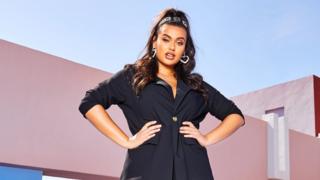
Boohoo also owns PrettyLittleThing, which has collaborated with celebrities like Little Mix
The fashion firm ordered an independent review of its UK supply chain as a result, which will by led by Alison Levitt QC, a barrister specialising in business crime and financial services.
The committee also asked what measures the online retailer had taken to protect the workers that make its clothes during the pandemic, and whether it would allow the establishment of formal trade unions.
The letter cited claims by Usdaw that workers had been told “not to speak with trade union representatives”.
Boohoo action on exploitation claims ‘inadequate’
Boohoo dropped by Next, Asos and Zalando over exploitation claims
Other fashion stores have distanced themselves from Boohoo over the recent reports.
Next, Asos and Zalando all announced that they had stopped selling Boohoo clothes on their websites in July.
The retailers said they were pausing relationships with Boohoo’s brands, pending the outcome of the company’s investigation.
Boohoo’s share price has plunged over the past month. It currently stands at 210p, after hovering around the 410p mark for most of June.
The way the UK reports unemployment may not reflect the “true scale of joblessness”, says a think tank.
Unemployment rose by 34,000 in April to reach 1.3 million, according to the Office for National Statistics (ONS).
But the Resolution Foundation argues that the 23% drop in average hours worked between early March and late April is a better indicator of unemployment.
The ONS said it publishes a large selection of analysis on employment.
Official numbers on how many people are out of work and claiming unemployment benefits will be published on Thursday.
Resolution Foundation chief economist Mike Brewer said: “Britain is in the midst of an unprecedented economic shock that is profoundly affecting millions of people’s jobs.
“Unemployment is forecast to hit 4 million for the first time ever. And yet our official data is failing to show the true extent of this jobs crisis.”
On Tuesday, the government’s budgetary watchdog, the Office for Budgetary Responsibility (OBR), projected that unemployment could reach 4 million people, if the UK’s economic recovery is poor, up from 1.3 million in 2019 in its latest analysis.
Meanwhile, data for people claiming benefits soared to 2.3 million for April.
But these figures could include some people who are eligible to claim support while still employed. The ONS said: “Enhancements to Universal Credit, as part of the UK government’s response to the coronavirus, mean that an increasing number of people became eligible for unemployment-related benefit support, although still employed.”
The Resolution Foundation says this data is not a good reflection of the true picture either because it includes furloughed workers who initially made a claim when the crisis first struck.
The think tank says it estimates that “fewer than half (700,000) of the 1.6 million increase in the claimant count between March and May is related to people who are newly out-of-work, and not receiving furlough pay or self-employed grants from the government”.
It urges the ONS to make more of its ability to count the number of workers who are employed and not temporarily without work, alongside the headline employment rate, as this would provide “a far more accurate picture of labour market activity”.
The ONS said it agreed that data on hours worked was an important component in understanding the unemployment picture in the UK.
“However, our detailed Labour Force Survey estimates are based on interviews with tens of thousands of people and provide vital detail not available from any other source,” it said in a statement.
“It is difficult to interpret claimant count figures, as we know these include some people in work.”
Separately, the British Chambers of Commerce is warning that almost a third of UK businesses (28%) they surveyed expect to cut jobs in the next three months.
The figure compares to last year, when only 7% expected to do so.
Some 7,400 firms took part in the BCC survey, which found more than a quarter of the firms (28%) said they had already shrunk their workforces since the pandemic began.
China’s economy grew 3.2% in the second quarter following a record slump.
The world’s second biggest economy saw a sharp decline in the first three months of the year during coronavirus lockdowns.
But figures released on Wednesday show China’s Gross Domestic Product (GDP) returned to growth during April to June.
The numbers are being closely watched around the world as China restarts its economy.
The figure is higher than experts were predicting and points towards a V-shaped recovery – that is, a sharp fall followed by a quick recovery.
It also means China avoids going into a technical recession – signified as two consecutive periods of negative growth.
The bounce-back follows a steep 6.8% slump in the first quarter of the year, which was the biggest contraction since quarterly GDP records began.
The country’s factories and businesses were shutdown for most of this period as China introduced strict measures to curb the spread of the virus
The government has been rolling out a raft of measures to help boost the economy, including tax breaks.
Is this a V-shaped recovery?
Analysis by Mariko Oi, BBC News, Singapore
The Chinese economy managed to grow stronger than expected as the economy emerged from the lockdown.
All the stimulus measures announced by the authorities seem to be working – with factories getting busier, evident in growth in the industrial production data.
But one sector that hasn’t recovered as quickly as they had hoped is retail sales.
They still fell in the second quarter – and getting people spending again will remain a challenge.
And just as the economy starts to recover, tensions with the US are flaring up – especially over Hong Kong.
That is why some economists are reluctant to call it a V-shaped recovery just yet.
A research note from Deutsche Bank said the “V-shaped recovery” was “largely completed”.
“Consumer spending is still below its pre-Covid path, but the remaining gap is largely concentrated in a few sectors – travel, dining, leisure services– where rapid recovery is unlikely,” it added.
In May, China announced it would not set an economic growth goal for 2020 as it dealt with the fallout from the coronavirus pandemic.
It is the first time Beijing has not had a gross domestic product (GDP) target since 1990 when records began.
For the first six months of the year, China’s economy fell 1.6%, its National Bureau of Statistics said.
A £4bn cut in VAT has come into force, allowing firms in the food, drink and hospitality sectors to slash prices.
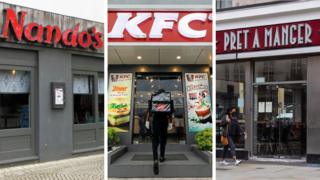
Nando’s, Pret A Manger and McDonald’s are among firms to promise reductions after the chancellor ordered a temporary VAT cut from 20% to 5%.
The Treasury estimates households could save £160 a year on average, but not all firms will pass on the benefit.
Many companies are expected to use the windfall to shore up finances hit by the lockdown rather than cut prices.
The VAT reduction will stay until 12 January next year, Chancellor Rishi Sunak announced last week. It was part of a package of measures to help firms recover and get consumers spending.
VAT – Value Added Tax – is paid on everyday goods and services, but the tax is usually included in the price most consumers see.
Visitors may not see the thrill of VAT cut
Summer Statement: Key points at a glance
Nando’s said it would pass on “100% of the benefits” from the tax cut to its customers, helping to reduce the price of a quarter chicken by 55p.
Pret A Manger said the price of its coffee would be cut from Wednesday following the VAT change, with the price of hot food to be cut from Friday.
The High Street chain said the price of a takeaway latte would fall 35p to £2.40, thanks to the tax break.
Pret is one of a number of chains to announce hundreds of job cuts after the coronavirus crisis hit its operations.
Fast food chain KFC said it would reduce the price of sharing buckets by £1 and slash the cost of certain “fan favourites” by 50p.
McDonald’s also said it had recommended that its franchisees cut prices on an array of products, including popular lines such as the Big Mac and Quarter Pounder. There will also be price cuts on coffee.
In the UK, the vast majority of the 1,350 McDonald’s outlets are owned and operated by individual business men and women, with each franchisee running an average of six restaurants each.
But Paul Pomroy, McDonald’s chief executive for UK and Ireland, said that only four outlets across the UK were currently open for dine-in customers, with the remainder offering takeaway service.
Mr Pomroy said he hoped the price cuts being introduced were a sensible balance between boosting consumer demand and supporting franchisees in getting staff back to work.
On Tuesday, Starbucks said it had made the decision to pass on the full 15% discount on coffee served in company-operated stores. Other shops and venues with Starbucks licences will be left to pass on whatever reductions suit their business.
What is VAT?
Value Added Tax, or VAT, is the tax you have to pay when you buy goods or services.
The standard rate of VAT in the UK is 20%, with about half the items households spend money on subject to this rate.
There is a reduced rate of 5% which applies to some things such as children’s car seats and home energy.
When you see a price for something in a shop, any VAT will already have been added.
There are also various items for which you do not have to pay any VAT, such as most supermarket food, children’s clothing, newspapers and magazines.
Read more about VAT
It is clear that many businesses will not be passing on the reduction. Malcolm Bell, chief executive of Visit Britain, said the chancellor’s move was to support business, not help holidaymakers.
He said some firms had reported tourists calling them to ask for 15% off their holiday booking. “My message to customers is this is to help the businesses, not to reduce the cost of their holiday. It is only a temporary relaxation up to January.”
Many attractions such as museums, parks and zoos, might also not pass on the reduction.
Bernard Donoghue, director of the Association of Leading Visitor Attractions (Alva), said he expected the VAT cut would go towards helping venues “repair their finances as opposed to being passed on to customers”.
Alva members were seeing a spike in demand after three months of lockdown, with attractions that offer pre-booked visits “vastly oversubscribed”, he said.
Pub chain Wetherspoon said it would reduce prices on meals, coffee and soft drinks.
It said it would use the tax break to help fund lower prices on some of its most popular beers.
However, this move drew criticism from Tom Stainer, chief executive of the Campaign for Real Ale (Camra), and James Calder, chief executive of the Society for Independent Brewers (Siba).
“Like all pubs, Wetherspoon will not be able to benefit from a VAT reduction on beer sales and it is disappointing to see them potentially mislead customers into believing cheaper beer prices are as a direct result of the chancellor’s measures,” he said.
Wetherspoon has produced promotional posters to advertise food price cuts, including one called Sunak’s Specials and another called Dishi Rishi.
Its chairman, Tim Martin, has campaigned for tax equality between pubs, restaurants and supermarkets for many years. He said: “Supermarkets pay no VAT on food sales and pubs pay 20%. Supermarkets pay about 2p per pint of business rates and pubs pay about 20p.
“A VAT reduction will help pubs and restaurants reverse this trend – creating more jobs, helping high streets and eventually generating more tax income for the government.”
But he said that not every hospitality business would be able to reduce prices immediately.
“Some will need to retain the benefit of lower VAT just to stay in business. Others may need to invest in upgrading their premises.
“However, lower VAT and tax equality will eventually lead to lower prices, more employment, busier High Streets and more taxes for the government.”
Seventeen-year-old women are most likely to have been put on furlough during the coronavirus crisis, official data shows.
Some 61% of jobs done by these young women had wages paid by the state, HM Revenue and Customs (HMRC) said.
Young men of the same age were also more likely than not to have been furloughed, hitting 58% of their jobs.
Men aged in their 40s and women aged 41 to 58 were least likely to have been put on the scheme.
Anne Willmot, age campaign director at Business in the Community, said: “Young people are being locked out of employment at the start of their careers – a key time for them to gain experience, learning and development in the workplace.”
More than nine million workers who are unable to do their job because of the coronavirus outbreak have had their wages paid by the government.
What happens when the furlough scheme ends?
The furlough scheme was designed to help people put on leave because of the outbreak, and prevent mass redundancies. Firms start paying towards the scheme from August. It will close in October.
Detailed data has been published by HMRC which shows where the scheme was used until the end of June, by which point it had cost the Treasury £26.5bn.
People working for smaller companies are more likely to have been furloughed than those employed by bigger businesses.
Some 57% of jobs at businesses with between five and nine employees had been furloughed, compared with 19% at companies with 250 or more employees.
A handful of larger companies have been repaying furlough money claimed from the Treasury.
By sector, those working in accommodation and food services had the highest proportion of employers furloughing at least some staff (87%) and the highest proportion of total employments furloughed at 73%.
The local authority with the highest proportion of jobs furloughed was South Lakeland at 40% and the lowest was Boston in Lincolnshire at 20%.
Support for the self-employed
Three-quarters of those eligible for support grants to help the self-employed through the coronavirus crisis had made a claim by the end of June, further data from HMRC shows.
What help are self-employed getting from government?
Women were less likely to have made a claim, with 70% having done so, compared to 78% of men who were eligible and had claimed a grant.
The amount paid depends on previous income from their trade, and the figures show that the average claim for women was also lower, at £2,300, compared to the average claim for men of £3,200.
The highest proportion of claims by profession was in the construction sector.
Have you been affected by the issues raised in this story? Share your experiences by emailing .
Please include a contact number if you are willing to speak to a BBC journalist.
WhatsApp: +44 7756 165803
Tweet: @BBC_HaveYourSay
Please read our terms & conditions and privacy policy
Apple has been told it will not have to pay Ireland €13bn (£11.6bn) in back taxes after winning an appeal at the European Union’s second highest court.
It follows a record ruling by the European Commission against the US tech giant in 2016.
The EU’s General Court said it had annulled that decision because the Commission had not proven Apple had broken competition rules.
It is a blow for the EU which wants to crack down on alleged tax avoidance.
However, it has the right to appeal the decision to Europe’s highest court, the European Court of Justice.
“This case was not about how much tax we pay, but where we are required to pay it,” Apple said in a statement. “We’re proud to be the largest taxpayer in the world as we know the important role tax payments play in society.”
Irish EU court appeal on Apple tax ruling
The Irish government – which had also appealed against the ruling – said it had “always been clear” Apple received no special treatment.
“The correct amount of Irish tax was charged… in line with normal Irish taxation rules.”
EU Competition Commissioner Margrethe Vestager, who brought the case, said she would “study the judgment and reflect on possible next steps”.
The European Commission brought the action after claiming Ireland had allowed Apple to attribute nearly all its EU earnings to an Irish head office that existed only on paper, thereby avoiding paying tax on EU revenues,
Image copyright Getty Images
Image caption
Margrethe Vestager has been trying to crack down on tax avoidance
The commission said this constituted illegal aid given to Apple by the Irish state.
However, the Irish government argued that Apple should not have to repay the taxes, deeming that its loss was worth it to make the country an attractive home for large companies.
Ireland – which has one of the lowest corporate tax rates in the EU – is Apple’s base for Europe, the Middle East and Africa.
In Wednesday’s ruling, the Luxembourg-based General Court sided with that position, saying there was not enough evidence to show Apple was given preferential treatment.
Pressure to continue
The ruling could spell bad news for EU efforts to crack down on other cases of alleged corporate tax avoidance.
Ms Vestager has spent much of her time in office campaigning against tax schemes she argued were anti-competitive. However, last year she lost a case against Starbucks which was accused of owing €30m in back taxes to the Netherlands.
Rulings over Ikea and Nike’s tax arrangements in that country are also due soon.
Jason Collins, partner and head of tax at law firm Pinsent Masons, said: “Apple’s victory shows that European courts are unwilling to call beneficial tax regimes state aid, even when designed to attract foreign investment – provided they apply the rules consistently.
“This will be a very welcome outcome for other multi-nationals who have been watching this case closely.”
However, he said Brussels was likely to appeal and EU efforts to tackle tax avoidance would continue.
“We expect the EU to continue applying pressure in this area,” he said.
The UK’s inflation rate rose to 0.6% in June as the coronavirus lockdown began to ease.
The Consumer Prices Index (CPI) picked up slightly from May’s four-year low of 0.5%, the Office for National Statistics (ONS) said.
Food and alcohol prices fell, but prices for clothing and games rose, the ONS said.
Despite the slight increase in the rate, inflation remains below the Bank of England’s 2% target.
Jonathan Athow, deputy national statistician for economic statistics at the ONS, said: “The inflation rate has increased for the first time this year, but remains low by historical standards.
“Due to the impact of the coronavirus, clothing prices have not followed the usual seasonal pattern this year, with the normal falls due to the start of the summer sales failing to materialise.
“Prices for computer games and consoles have risen, but food prices, particularly vegetables, have fallen.”
Inflation has fallen sharply during the coronavirus crisis as consumer demand has slumped.
In June, men’s clothing in particular rose in price, with increases coming “across almost the full range”, the ONS said.
Women’s clothing showed “a more mixed picture across the different products”, but with the overall effect still upward.
Games, toys and hobbies, particularly computer games and computer games consoles, made the biggest contribution to the inflation rise, the ONS said.
“It is possible that prices have been influenced by the coronavirus (Covid-19) lockdown changing the timing of demand and the availability of some items, particularly consoles,” the ONS added.
What is inflation?
Inflation is the rate at which the prices for goods and services increase.
It’s one of the key measures of financial wellbeing because it affects what consumers can buy for their money. If there is inflation, money doesn’t go as far.
It’s expressed as a percentage increase or decrease in prices over time. For example, if the inflation rate for the cost of a litre of petrol is 2% a year, motorists need to spend 2% more at the pump than 12 months earlier.
And if wages don’t keep up with inflation, purchasing power and the standard of living falls.
What is the inflation rate?
Since many areas of the economy were completely shut down in June, the ONS said it had to estimate or “impute” some of the data.
Jeremy Thomson-Cook, chief economist at financial services firm Equals, said the slight increase in the inflation rate was “a positive sign”, but added that the outlook remained “messy”.
“Food prices are falling from lockdown levels, clothing demand is out of kilter with typical seasonal patterns, demand for entertainment during lockdown provided a pronounced bump in prices, and the ONS has only been able to log 84% of the normal price quotes due to unavailability,” he said.
“For now, however, inflation remains low, and both consumers and the Bank of England will be happy with that.”
Paul Dales, chief UK economist at Capital Economics, said the small rise in inflation was unlikely to be sustained and that deflation was “around the corner”.
“In fact, by July or August, CPI inflation may have fallen below zero,” he said.
Discounting from retailers and the impact of Chancellor Rishi Sunak’s “eat out to help out” scheme would push inflation down, he said.
Mr Dales said any bout of deflation would last just a few months, but added: “It will be a few years before the economy is strong enough to raise inflation to the 2% target.”
China’s ambassador to the UK has called Britain’s decision to ban telecoms giant Huawei from its 5G network “disappointing and wrong”.
The UK government has ordered companies to strip equipment from Huawei out of the system by 2027.
It follows sanctions imposed by the US, which claims the Chinese firm poses a national security threat – something Huawei denies.
US President Trump welcomed the UK decision, calling Huawei “unsafe”.
“We convinced many countries, many countries – and I did this myself for the most part – not to use Huawei because we think it’s an unsafe security risk, it’s a big security risk,” he said.
Mr Trump made the comments as he attempted to increase pressure on Beijing by announcing an executive order ending preferential treatment for Hong Kong in response to a new security law brought in by China.
In response to the 5G network ban, Chinese ambassador Liu Xiaoming questioned whether the UK can provide a “fair” business environment for foreign firms.
“Disappointing and wrong decision by the UK on Huawei,” he tweeted.
“It has become questionable whether the UK can provide an open, fair and non-discriminatory business environment for companies from other countries.”
Huawei’s UK communications director Ed Brewster told BBC’s Newsnight the ban had been announced “because of the pressure from the US”.
“I think this is clear this is not about security this is about trade. This is a US campaign focused on attacking our business and attacking the technology and that is because the US is behind on the technology,” he said.
“Today’s decision is as much driven by trade and US trade policy, US concerns around falling behind in technology. We are in a long-term … trade dispute escalation from the US around how it wants to retain technology leadership.”
Mr Brewster also moved to distance the company from the perception that it is an arm of the Chinese state, adding: “That’s the perception but it’s incorrect. We’re a private technology company. The trust we’ve built up around the world is with our customers (and) the telecoms networks.
“We don’t work for governments, we work for the telecoms networks.”
Huawei has repeatedly said it would not cause harm to any country.
Image copyright Reuters
Image caption
Donald Trump labelled Huawei a “big security risk”
What does the ban involve?
The UK’s mobile providers are being banned from buying new Huawei 5G equipment after 31 December, and they must also remove all the Chinese firm’s 5G kit from their networks by 2027.
The decision came after the UK’s National Cyber Security Centre (NCSC) warned that highly restrictive US sanctions meant the security of Huawei’s equipment could not be guaranteed.
Why is Huawei being banned from the UK’s 5G network?
Trudeau rejects calls to release Huawei executive
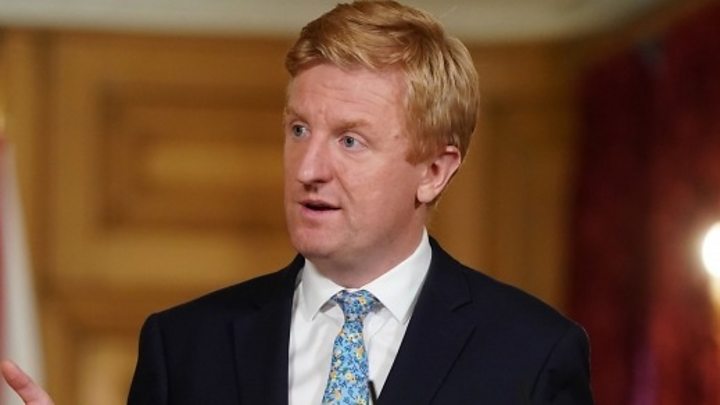
Announcing the ban to the House of Commons on Tuesday, Digital Secretary Oliver Dowden said it had not been an easy decision but was the right one for UK telecoms networks, national security and the UK economy.
He said the move would delay the country’s 5G rollout by a year and the cumulative cost, when coupled with earlier restrictions announced against Huawei, would be up to £2bn.
Media playback is unsupported on your device
Media captionWatch: The digital secretary says providers must remove Huawei’s 5G kit by 2027
5G technology promises faster internet speeds and the capacity to support more wireless devices, which should be a boon to everything from mobile gaming to higher-quality video streams. 5G connections are already available in dozens of UK cities and towns, but coverage can be sparse.
The UK last reviewed Huawei’s role in its telecoms infrastructure in January, when it was decided to let the company remain a supplier but introduced a cap on its market share.
But in May the US introduced new sanctions designed to disrupt Huawei’s ability to get its own chips manufactured.
The Trump administration claims that Huawei provides a gateway for China to spy on and potentially attack countries that use its equipment, suggestions the company strongly rejects.
The US has called for members of the Five Eyes alliance – which also includes the UK, Canada, Australia and New Zealand – to avoid Huawei kit.
US President Donald Trump has signed an order to end preferential treatment for Hong Kong, as his administration adopts an increasingly tough stance on China.
“Hong Kong will now be treated the same as mainland China,” the president told reporters at the White House.
Mr Trump said he had also signed bipartisan legislation to impose sanctions on Chinese officials who crack down on rights in Hong Kong.
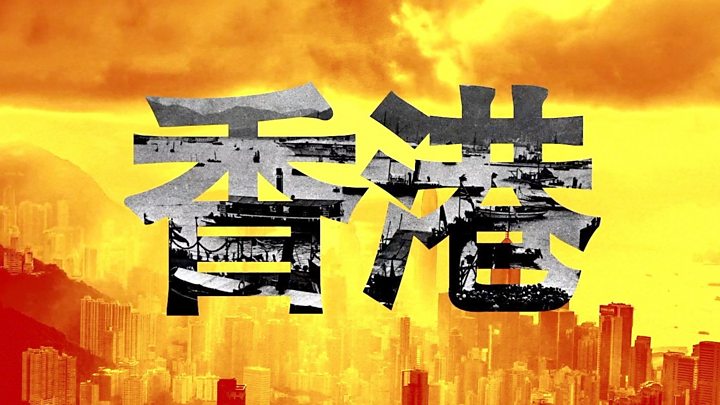
The ex-British colony enjoys unique freedoms not seen in mainland China.
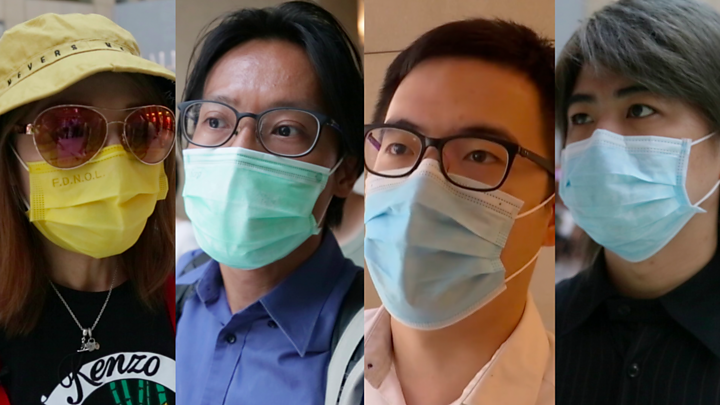
But many people in the territory fear a new security law imposed by Beijing will bring an end to Hong Kong’s special status, agreed under a 1984 pact between China and the UK.
Media playback is unsupported on your device
Media captionTea, drugs and war: Hong Kong’s British history explained
The legislation – which outlaws criticism of China’s government – is the most sweeping change to the political landscape of Hong Kong since it was handed back to China by the UK in 1997.
What did President Trump say?
Speaking in the Rose Garden, Mr Trump said his executive order would end preferential treatment for Hong Kong.
“No special privileges, no special economic treatment and no export of sensitive technologies,” said the president, who first announced in May that his administration would begin paring back the territory’s special status.
He also told reporters he had signed the Hong Kong Autonomy Act, which passed unanimously in Congress earlier this month.
“This law gives my administration powerful new tools to hold responsible the individuals and the entities involved in extinguishing Hong Kong’s freedom,” Mr Trump told the news conference.
The president said when asked by a journalist that he had no plans to speak to Chinese President Xi Jinping.
He told reporters that “we hold China fully responsible for concealing the virus and unleashing it upon the world”.
Mr Trump’s own administration is under scrutiny for its response to the coronavirus pandemic – the US has 3.4 million recorded cases, the highest in the world.
The president’s policy address digressed into a lengthy political attack on his Democratic presidential challenger, Joe Biden, ranging from trade and immigration to policing and climate change.
“So Joe Biden and President Obama freely allowed China to pillage our factories, plunder our communities and steal our most precious secrets,” the president said.
Media playback is unsupported on your device
Media captionMany Hong Kong residents are worried the new security law means the ‘one country, two systems’ principle no longer exists
Perception is reality
It wasn’t a matter of if, but when.
Scrapping Hong Kong’s special status will mean companies based there now will have to evaluate what this means for them.
Hong Kong is a re-exporting hub, which means that goods that go through Hong Kong to the US but have come from somewhere else – like China for instance – have avoided the tariffs the US has slapped on China.
Now that Hong Kong’s special status is gone – mainland Chinese companies may look for another place to send their goods – which would see Hong Kong’s port and logistics businesses suffer.
And how much of an impact will this have on American and multinational companies using Hong Kong as a regional hub?
Well, as one business consultant told me – the structural reasons for why a company would use Hong Kong as a hub are still there – low tax rates, good geographic location, convertibility of currency.
But perception is reality – and if the perception is that doing business in Hong Kong has become so much more onerous – why not decamp to China or Singapore instead.
Hong Kong’s new security law
What is going on with US-China relations?
Washington-Beijing ties have become increasingly frayed in recent months.
With Mr Trump facing an uphill battle for re-election this November, he and his Democratic challenger, Joe Biden, have accused each other of being weak on China.
On Monday, the administration rejected China’s military build-up in the South China Sea, accusing it of bullying neighbours.
Last Friday, Mr Trump told reporters on Air Force One that a “phase two” trade deal with China was in doubt because of its handling of coronavirus.
Media playback is unsupported on your device
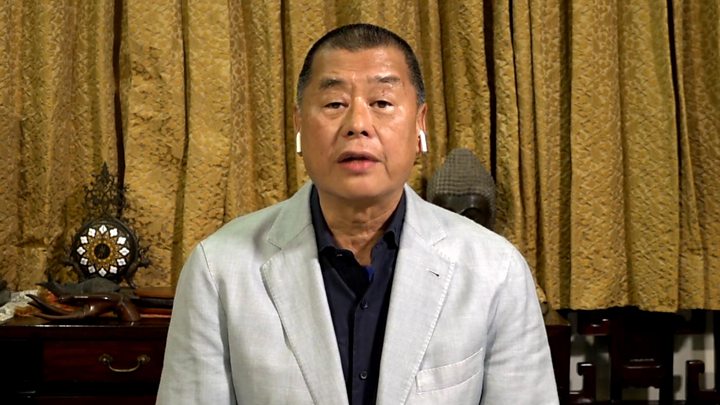
Media captionJimmy Lai: China’s security law ‘spells the death knell for Hong Kong’
“The relationship with China has been severely damaged,” he said. “They could have stopped the plague, they could have stopped it, they didn’t stop it.”
The US also officially withdrew last week from the World Health Organization, which Mr Trump had accused of being beholden to China.
Last week, too, the Trump administration announced sanctions against Chinese politicians who it says are responsible for human rights violations against Muslim minorities in Xinjiang.
Image caption
Competition among milk and milk alternative brands
Oatly, the Swedish company credited with convincing the masses of oat milk’s merit, has proven its value to the investment world as well.
The firm on Tuesday said a group including investment giant Blackstone Group and celebrities Oprah Winfrey, Jay-Z and Natalie Portman bought a stake in the company for $200m (£160m).
The move is a sign of growing interest in milk made with plant alternatives.
Oatly said the money would be used to expand and build new production plants.
Founded in the 1990s, Oatly entered the US market four years ago and the product proved so popular it created shortages.
Oatly announced its first factory in the US in 2018 and plans to open a second this year, part of a wider effort to add plants close to its customers. The firm’s products are available at 50,000 locations across 20 countries.
“We chose to partner with Blackstone Group because of their tremendous resources and unique reach,” said chief executive Toni Petersson. “Our new partners’ commitment to supporting us and furthering our mission is a clear indication of where the world is heading, which is in a new, more sustainable direction.”
Media playback is unsupported on your device
Media caption“If you’re going to be ethical, you need to back it up”
Sales of oat milk are expected to increase rapidly in coming years, as increased dairy allergies and concerns about dairy’s environmental impact push shoppers to look for alternatives.
About 41% of US households purchased vegan milk last year, according to a report by the Good Food Institute and Plant Based Food Association.
The $200m investment announced on Tuesday represents about a 10% stake Oatly, putting the firm’s value at about $2bn, the Wall Street Journal reported. Other investors in the group include former Starbucks chief Howard Schultz.
Prior Oatly investors include Belgium-based Verlinvest and China Resources, a state-owned company.
In the announcement, Jon Korngold, global head of Blackstone Growth, called Oatly “a premier global brand… with significant runway for continued growth to meet consumer demand”. Blackstone has also emphasised its interest in sustainable investments.
‘Quarter of Britons’ drinking plant-based milks
Which vegan milks are best for the planet?
Oatly reportedly had about $200m in sales last year and hopes to double that by 2021. It has expanded its products from milk, to ice cream and yogurt and is eyeing growth in China.
But the company faces increased competition, as firms such as PepsiCo’s Quaker Oats and dairy giant HP Hood launch their own brands. New milk alternatives, made from products like peas, have also gained in popularity among consumers.
In the US, dairy companies, which have lost ground to the alternatives, have also attacked plant-based rivals over the sector’s nutritional claims.