China’s cinemas are reopening after being closed for six months to help slow the spread of the coronavirus.
The China Film Administration said screens in “low-risk” areas could open their doors again from today.
As most of the country is now classified as low risk it is expected to be essentially a nationwide reopening.
China’s cinemas were hit hard by the shutdown that started in January, with many already forced out of business.
Cinemas that reopen will be subject to a strict set of rules, including screenings being limited to 30% capacity and the number of movies shown at a venue capped at 50% of its previous volume.
Customers’ temperatures will be taken, and masks will have to be worn at all times by both cinema goers and staff.
Tickets must be purchased online and separate groups of customers will have to sit at least a metre apart.
Under the restrictions no food or drinks will be allowed to be served in cinemas. This will be a particularly major new blow as it has long been a significant part of the industry’s revenues.
China, which was the first epicentre of the pandemic, is the world’s second largest market for movies, with the country’s box offices taking in $9.2bn (£7.4bn) in 2019.
But that figures is, unsurprisingly, expected to fall sharply due to cinema closures and domestic and Hollywood film releases being cancelled or moved online.
Earlier this month China’s largest cinema owner, Wanda Film, warned that it would swing to a loss for the first six months of the year.
The company, which has more than 600 cinemas across the country, said it expected a loss of up to 1.6bn yuan (£182m), compared to a 524m yuan profit for the same time last year.
Image caption
Jon O’Brien and Amy Wiltshire were ahead of the curve for booking midweek weddings
The 2020 wedding season has been decimated by coronavirus, forcing most couples to postpone.
But with the race for 2021 dates already fiercely contested, it is likely that more people will have to make compromises to make sure they get a date in the diary. After all, when you’ve already cancelled once, why wait any longer?
And, with couples still hoping that 2021 will provide their dream wedding, midweek may be the way forward.
Jon O’Brien and his fiancée Amy Wiltshire from Burscough in Lancashire were already ahead of this trend, having planned a Thursday wedding for August this year but they decided to postpone when coronavirus took hold.
“Our venue were confident that things would be okay to go ahead but we didn’t want to risk it,” explains Jon. “We didn’t want people to feel uncomfortable or to have to social distance.
“While we’re obviously gutted to have to postpone, we are lucky in the fact that our venue and suppliers could all easily switch to the new date.”
That new Thursday date is in May 2021. “It was cheaper to book a weekday and it was available,” Jon says. “It meant it was easy to postpone and reschedule so we could have the day we wanted.”
Wedding hangovers at work
Kelly Mortimer, wedding expert of more than 20 years, expects this trend to continue and predicts a bumper year in 2021 which could provide a huge boost to the industry.
Image copyright Kelly Mortimer
Image caption
Kelly Mortimer believes demand for dates may mean venues run out of days to offer in 2021
“The ritual of two people coming together to celebrate their love in front of all their friends and family has been going since time began,” she says. “Coronavirus won’t stop big parties and celebrations.
“If businesses can weather the storm this year and keep afloat, 2021 will be epic. People should expect weddings on any day of the week – and going into the office the next day with a hangover.”
While government guidance currently limits weddings in England to a maximum of 30 people, Kelly is unconvinced that fewer numbers will become the norm.
“Once we can party, everyone is going to let loose. Guest lists will probably increase as a result.”
Dave Bevan, founder of Alive Network, a live entertainment booking agency, is also hopeful that a hectic 2021 is around the corner for the struggling artists on his books.
“I’m trying to offer reassurances that there will be a surge next year where people who have put off their plans start booking days of the week they would not have usually gone for,” he says.
“There will probably be government restrictions in place until the end of the year but I’m confident that next year this’ll be behind us.”
UK destination weddings
Image copyright Treseren
Image caption
Treseren is licensed to hold ceremonies for up to 22 people as in this wedding from September 2019
Emma Caddis owns the exclusive wedding venue Treseren in Newquay, Cornwall. “We have seen a huge increase in enquiries for 2021 – and people are being really flexible in thinking about weekday weddings as well as weekends,” she says. “There’s definitely been an upturn in midweek enquiries.”
In the short term, smaller venues such as Treseren, which is licensed for ceremonies of up to 22 people, could benefit from the current restrictions on numbers.
“Part of our appeal is the chance to take away the 30 people who mean the most and get married in an elegant and intimate way. It can be a destination wedding, in the UK, for people to scale back and have a more personal experience with their guests,” says Ms Caddis.
‘We just want to get married’
Image copyright Bec Burrows
Image caption
Bec Burrows and Rich Gale have limited numbers so they can get married this year
Not all couples are willing to wait until next year though to tie the knot.
Rich Gale and Bec Burrows from Crosby, Merseyside have already cancelled their wedding day twice but have slashed their guest list by 80% so they can get married on a Saturday, this August, in their garden.
“It’s always been about the marriage,” says Rich. “I’m desperate for Bec to become Mrs Gale and then we can think about starting a family.”
With numbers limited and rules in place over hand washing and social distancing, Bec says: “It feels like these are very strict given I can go out shopping all day, go for a meal in a restaurant then a drink in a pub.
“It won’t stop us celebrating and we will make the most of the day while sticking to the guidance as much as we can. We’ll be outside as much as possible to reduce the risks.”
“Our original guests have been really sympathetic,” says Rich. “We’ll have a big party sometime next year which everyone can attend.”
Outdoor weddings?
For Emma Hla, founder of Coco Wedding Venues search directory, the numbers during coronavirus indicate some shifting habits among couples with a desire to strip back being among the biggest changes. “2020 has seen some unusual increases in search traffic,” she says. “‘Simple’ is up 272% on 2019, with elopement searches also raised by 73%.”
A further trend that is certain to grow post-lockdown is the desire for outdoor celebrations. “Most notably, our ‘Garden’ filter has increased by 9,000% on 2019,” says Ms Hla.
Image copyright Treseren
Image caption
More outdoor celebrations may well be on the cards (picture from September 2019)
“We’re in a very interesting phase right now. Venues are crying out for clarity from the government and looking really carefully at outdoor areas.
“They will need to change the law so couples can get married outside though.”
As things stand, those wanting to marry outdoors in England need to do the legal part in a registry office beforehand to make it official as current law states marriages can only be solemnised in a permanent structure under a roof.
In 2019, the Law Commission began a two-year review into marriage law with part of their remit being to address existing red tape around outdoor weddings.
If the law were to change, the 2021 wedding season could be characterised by huge parties, outdoors on balmy Tuesday evenings.
Image caption
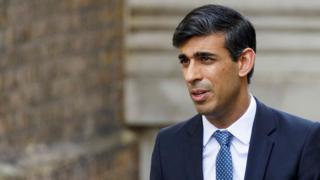
Chancellor Rishi Sunak unveiled the bonus scheme earlier in July
Property website Rightmove and catering giant Compass have said they will reject the offer of millions of pounds in payouts from the government’s job retention bonus scheme.
They follow Primark and John Lewis in shunning the bonus, which pays firms £1,000 for each furloughed worker they keep on past January.
It is meant to help stop a spike in joblessness when wage support programmes end in October.
But some firms say they do not need it.
It comes as MPs and economists warn that job retention bonus money could be claimed for staff that would have been returned from furlough anyway.
‘Fortunate position’
Rightmove, which furloughed 160 employees after the coronavirus crisis hit, would have been eligible to claim £160,000 in bonus payments had it applied.
However, it said: “Now that the housing market has reopened across all parts of the UK we’re in a fortunate position that by the end of July all of our furloughed employees will be back at work, and therefore we will not need to make use of the furlough bonus scheme.”
Some 21,000 Compass staff are currently on furlough – around half of its workforce – meaning it could have claimed up to £21m.
Earlier this month, fashion retailer Primark promised to sacrifice a £30m payout after saying the bonus was unnecessary under “current circumstances”.
Fashion retailer Asos, holiday park operator Center Parcs and retailer John Lewis are among others to have said they will not use the scheme.
Value for money?
Some 9.4 million workers are currently having 80% of their wages, up to £2,500 a month, paid under the government’s furlough scheme. However, there are fears unemployment could top 11% after the programme is wound down.
Earlier in July, Chancellor Rishi Sunak announced the bonus scheme as part a package of measures designed to prevent this outcome. However, if every furloughed worker returned to their jobs, it could cost the public purse more than £9bn in bonus payments – something that has fuelled scrutiny of the policy.
The most senior civil servant at HM Revenue and Customs, Jim Harra, wrote to Mr Sunak this month, raising doubts over whether the policy offered value for money.
And MPs on the Treasury select committee last week echoed warnings from economists that the scheme could risk funnelling money to already-rich companies.
Mr Sunak rejected the criticisms, saying he believed the bonus would “serve as a significant incentive” to preserve jobs amid the pandemic.
A Treasury spokesman told the BBC: “It’s great to see employers getting their staff back to work and protecting jobs without needing to draw on the extra support the job retention bonus offers, and we welcome the decision of businesses to do so.
“For those who do need further support, the £1,000 bonus will represent a significant benefit to them and make a difference to those people in the nine million jobs currently furloughed who can be brought back to their jobs.”
Image caption
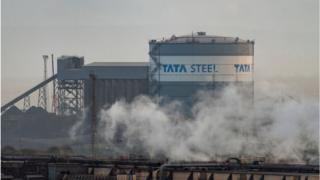
There are just over 4,000 people employed at Tata in Port Talbot
There are fears “thousands and thousands” of jobs could be at risk at Tata Steel in Port Talbot.
Aberavon MP Stephen Kinnock said reported plans to shut two blast furnaces and replace them with electric arc furnaces raised “massive questions” about the future of the steel industry.
The Community Union said it was seeking urgent clarification from the company, and the workforce had not been consulted.
The Tata group was asked to comment.
Image caption
Labour MP Stephen Kinnock has raised concerns over the plans
Mr Kinnock said he had found out through newspaper reports that Tata Steel had reportedly pitched the plan to the UK government.
“They should not be making those kinds of proposals without discussing this first with the workforce and the trade unions,” he said.
“What I would also say is the blast furnaces at the Port Talbot steelworks are an absolutely vital part of primary steel making in Wales and in the UK, and if you don’t have those blast furnaces you’re not able – with an electric arc furnace model – to produce anything like the same quality and variations of steel.
“So this proposal raises massive questions and the future of the industry – thousands and thousands of jobs are on the line.”
Production fears
A spokesman for Community, the steelworkers’ union, said it was an “absolute disgrace” if these plans had been developed because it said there had been no consultation.
“We are seeking urgent clarification from Tata but rest assured the unions will not accept the end of blast furnace steel production at Port Talbot, which would leave the UK unable to make a range of specialist steels.
“Steel production accounts for half the jobs at Port Talbot and this plan would devastate the town and the community.
“If necessary we will be prepared to fight to protect our members livelihoods and the future of our industry.”
It comes weeks after Tata Steel confirmed it was seeking government support amid reports it is close to securing a bailout worth hundreds of millions of pounds.
The steel industry was suffering before the pandemic but demand has now dived.
The BBC has contacted Tata UK for comment but has not yet received a response.
TikTok’s plan to base its international HQ in the UK has been thrown into doubt following pressure by Washington over the Chinese firm’s future in the US.
ByteDance, owner of the video sharing app, has had talks with the government about basing its HQ in London.
But the US is considering banning TikTok and may only allow it to keep operating if it splits from China and becomes an American company.
“We remain fully committed to investing in London,” said a ByteDance spokesman.
A spokeswoman for the Department for International Trade said: “ByteDance’s decision on the location of their global HQ is a commercial decision for the company.”
It comes as tensions mount between the UK and China over the government’s recent decision to order the removal of Huawei’s 5G equipment from Britain’s mobile networks by 2027.
There are fears it could prompt a tit-for-tat economic war between the two countries.
Chinese ambassador to the UK, Liu Xiaoming, told The Andrew Marr Show: “We are still evaluating the consequences. This is a very bad decision.”
Asked whether China would punish UK companies operating in China, Mr Liu said: “We do not want to politicise the economy. That is wrong.”
But he said: “It is wrong for the United Kingdom to discriminate [against a] Chinese company because of pressure from the United States.”
‘In the crosshairs’
The US has already implemented a number of sanctions against China’s Huawei.
The Trump administration claims that the Chinese telecoms firm provides a gateway for the state to spy on and potentially attack countries that use its equipment.
Huawei strongly denies the claims.
George Magnus, research associate at University of Oxford China Centre, said it was “hard to predict” how the Chinese government would retaliate for the Huawei decision.
“But we expect British companies will be in the crosshairs of all of this,” he said.
China is an important market for British business.
Jaguar Land Rover, which is owned by India’s Tata Motors, sells its vehicles to China. Last month it borrowed £560m from five Chinese banks after sales dried up because of the coronavirus.
China is also a major investor in the UK, in particular the nuclear industry. China General Nuclear Power Corporation has invested around £3.6bn in the UK, including the Hinkley Point nuclear power project in Somerset.
Josh Hardie, deputy director general of the Confederation of British Industry, said: “Post-Covid, promoting trade will be an important plank of our recovery, so we must think carefully about a future relationship that balances UK global competitiveness with wider interests. “
“We do not want to politicise the economy,” Chinese ambassador Liu Xiaoming claimed to the BBC about potential repercussions for UK businesses based in China after the government U-turn on Huawei.
But given how trade is being used as a political weapon by both sides, it’s impossible to see how this could not be the case.
China has form in targeting companies as a proxy for the countries that it is rowing with.
Take Australia, which has blocked Huawei from its national infrastructure since 2012.
China has recently banned some of its beef businesses and put tariffs on barley, designed to hit the country’s important agricultural sector.
On the other hand, China is sinking vast sums of money into major infrastructure in the UK, such as nuclear power plants.
Huawei alone is investing £1bn in developing chips in a new facility in Cambridge.
These projects are just part of the deep economic interdependence between the UK and China – which could just still prove to be the glue holding an ever frostier relationship together.
As Emily Taylor of Chatham House’s International Security Programme argues: “Mutual dependence creates stability and if that’s hacked away at, global stability will suffer.”
TikTok currently employs around 1,000 people outside of China, with the majority of those based in the UK and Ireland.
The Sunday Times reported that a decision by TikTok to build its headquarters in the UK has the potential to create 3,000 jobs.
The Chinese video-sharing platform is hugely popular and the app has been downloaded two billion times.
US Secretary of State Mike Pompeo – who is visiting the UK this week – has previously said Washington is considering banning TikTok.
Image copyright AFP
Image caption
TikTok has already been banned in India
But last week President Trump’s chief economic adviser Larry Kudlow appeared to change course and said: “As has been reported in some places I think TikTok is going to pull out of the holding company which is China-run and operate as an independent American company.
“That’s a much better solution than banning [or] pushing away.”
Mr Pompeo claims that America’s TikTok users are at risk of their data ending up “in the hands of the Chinese Communist Party”.
A spokesperson for TikTok said: “We have never provided user data to the Chinese government, nor would we do so if asked.”
India has already blocked TikTok as well as other Chinese apps. Australia, which has already banned Huawei and telecom equipment-maker ZTE, is also considering banning TikTok.
Vodafone wants the government to cancel an auction in which mobile operators bid for “space” on the 5G spectrum.
It follows the decision to strip Huawei kit from mobile networks and economic uncertainty from the Covid-19 crisis.
And Vodafone says radio frequencies for 5G mobile services should instead be evenly distributed for a set price.
The auction had been scheduled to start in the spring but was delayed because of the coronavirus. It is now expected at some point in the next year.
‘New way’
But the process has been fraught with delays, with EE and Three launching legal challenges in an earlier auction over Ofcom’s decision to impose a 37% limit on how much each individual operator could bid for, and O2 challenging the forthcoming auction of 700MHz and 3.6-3.8GHz bands.
And this week, the government ruled Huawei’s 5G kit must be removed from the mobile networks by 2027, noting this could delay the UK’s 5G rollout by several years and cost up to £2bn.
Ofcom rejected Vodafone’s suggestion in April.
But on Thursday, Vodafone chief executive Nick Jeffery told BBC News: “Now is the time to consider a new way to manage these auctions.
“Return on investment in telecoms in the UK is amongst the lowest in the world.
“With additional money being taken out of the mobile industry from yesterday’s decision on Huawei, now is the time to focus on ensuring operators can still afford to invest in the network this country deserves.
“There is little point in operators owning spectrum if we don’t have the money to use it.
“History teaches us that from the 3G auctions.”
The 3G auction cost operators £20bn.
Telecoms analyst Mathew Howett, from Assembly Research, said: “There is very clearly a cost to the industry in terms of replacing Huawei earlier than operators might have done naturally.
“Government can’t expect the industry to speed up deployment of networks if they pile on additional cost and slow down that rollout.”
But he added: “The last time the government directed Ofcom with regards to spectrum – the liberalisation of bands for 4G and associated annual licence fees – legal challenges went on for a decade.”
‘Cost burden’
Any changes to the way spectrum was distributed would also need the agreement of all four operators.
But, according to Vodafone, others are “keen”.
BT, which owns EE, told BBC News it was “less concerned about the mechanism to allocate new spectrum, be it auction or administrative decision, than the importance of awarding spectrum quickly and fairly… to avoid the UK’s 5G ambitions being slowed down or even put in reverse”.
And it was talking to Ofcom and the government about “ways to reduce the industry’s cost burden”.
Three and O2 have not responded to requests for comment.
Image caption
Manjit Jaswal said he was called by a friend who told him his former business was in the news
A businessman has spoken of his “shock and horror” at his ex-company’s name being linked with sweatshop working conditions.
Manjit Jaswal’s factory, which closed in 2018, was said by the Sunday Times to be exploiting workers in lockdown.
Mr Jaswal said that until operations ceased the firm had complied with all employee legislation.
The newspaper has agreed a settlement which Mr Jaswal said he will donate to charity.
His family business Jaswal Fashions ran for 30 years. He said it never failed any Health and Safety Executive checks and paid staff the correct wages.
The company ceased trading in November 2018 but was mistakenly identified in the newspaper’s story due to an old sign that remained on an exterior factory wall.
The article actually related to a completely unrelated firm, one of several operating from the premises.
Image caption
There are a large number of businesses run from various buildings in the area
Mr Jaswal said: “It was shock and horror. My friend rang me up to say ‘Mate, you are splashed all over the Sunday Times, what is going on?’.
“We have been out of the industry for two years, only to be dragged back in and see our name taken through the dirt.
“It does hurts that it is being slated left right and centre but clearly exploitation and the links to that, that I condemn.”
Image copyright PA Media
Image caption
Leicester faced renewed lockdown measures after seeing a spike in cases
The Sunday Times later printed a correction about its article.
Mr Jaswal said he was “relieved” to reach a settlement, but said the main reason was to come out with “an unblemished reputation, as it was before”.
The article highlighted working conditions in some Leicester garment factories.
Fashion brand Boohoo has faced intense criticism over the conditions in some of its suppliers and has launched an independent review.
Workers’ rights group Labour Behind the Label said some staff were “being forced to come into work while sick with Covid-19”.
Follow BBC East Midlands on Facebook, Twitter, or Instagram. Send your story ideas to .
Image caption
A boy wearing a cowboy hat sings about cow flatulence in a new Burger King ad
Fast food chain Burger King has released an advertisement encouraging US farmers to change cow diets in order to reduce greenhouse gas emissions.
The controversial video ad features children in cowboy hats singing about the impact methane gas emitted due to cow flatulence has on global warming.
Burger King claims adding lemongrass to cow diets could ease digestion and dramatically reduce methane emissions.
But farm leaders say the ad is “condescending and hypocritical”.
The ad has been trending on YouTube. It has so far been watched by more than 2 million people and drawn thousands of comments – some mocking the firm’s “yodelling boy” marketing gambit, with others swearing to cut ties with the chain.
Some scientists also criticised Burger King’s message and its focus on cow flatulence, instead of belching.
Prof Frank Mitloehner of University of California Davis (UC Davis)’s Department of Animal Science wrote on Twitter that it was disappointing to see the company “drop the ball” by promoting a study that was still ongoing and focusing on farts, when belching is the bigger problem.
“It’s not the cow farts,” he wrote. “Nearly all enteric methane from cattle is from belching. Suggesting otherwise turns this serious climate topic into a joke.”
Skip Twitter post by @GHGGuru
IT’S. NOT. THE. COW. FARTS.
Nearly all enteric methane from cattle is from belching. Suggesting otherwise turns this serious climate topic into a joke.
Reducing methane is a HUGE opportunity. That should be a goal. But we shouldn’t trivialize it for trendy marketing. #COWSMENU https://t.co/BjZMsWACUb
— Frank Mitloehner (@GHGGuru) July 14, 2020
End of Twitter post by @GHGGuru
The National Cattlemen’s Beef Association, a lobby group, has also spoken out about the belching issue, saying that Burger King was trying to “score easy points with consumers by launching a misleading public relations campaign”.
Burger King said it wanted to “shine a light on an issue that is important to the business and industry” and defended the effort, saying it had provided data on a potential solution.
“[The campaign] ‘Cows Menu’ is not something that will solve the climate change problem in the short term, but it is a scalable finding that may allow change in the future,” the fast food chain said in a statement.
“The majority of conversation around this announcement has been overwhelmingly positive.”
Focus on climate change
The ad was released as part of an announcement by Burger King owner Restaurant Brands International (RBI).
Burger King has been under pressure over the last year, as consumers increasingly look to reduce their beef consumption due to concerns about their health and climate impact.
Media playback is unsupported on your device
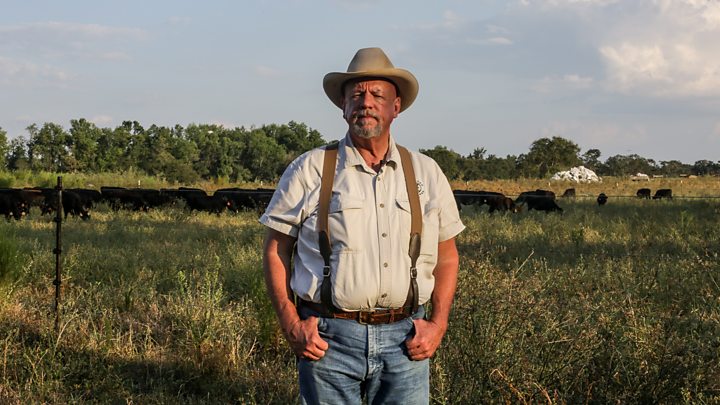
Media captionMethane emissions from cattle contribute to climate change – but Will Harris says he has a solution.
The fast food chain said it had been trying to find “scalable solutions to tackle the climate impact” of the food it produces.
Working together with scientists from Universidad Nacional Autonoma de Mexico and UC Davis to develop a new diet for cattle, RBI said research showed that feeding cows 100g of dried lemongrass over three to four months was able to reduce methane emissions by up to 33% on average.
Burgers made from cows on the diet will be available at Burger King restaurants in certain US cities this month.
Fast food giants under fire on climate and water usage
Burger King: New plant-based burger ‘not for vegans’
Cattle farmer and influencer Michelle Miller, who goes by Farm Babe on social media, called on her followers to boycott the fast food chain.
“Why are you putting me down?” she asked. “If it wasn’t for people like me, you wouldn’t even have a company.”
UC Davis Professor Ermias Kebreab, who has been involved with the lemongrass research, told the BBC the results so far have been promising, but the study is still ongoing.
He said he was shocked by the tone of the video and concerned that it would alienate farmers.
“The scientific basis of the study actually is sound, but the video that accompanied it is why a lot of people, especially in the farming community were not happy,” he said.
“They’re just using some cliche connotations of farming to get clickbait.”
Livestock account for about 14.5% of greenhouse gas emissions caused by humans, with cattle representing the largest share, according to the Food and Agriculture Organization of the United Nations.
Image copyright Getty Images
Image caption
Livestock account for about 14.5% of greenhouse gas emissions
Ms Miller said farmers are committed to doing their part to reduce emissions, but cattle are being used as a scapegoat for bigger problems.
She criticised the gas masks worn by the children in the video as a form of “fear-mongering” .
For a company whose business is selling burgers, she added, the concerns seemed out of place.
“That is so hypocritical,” she said. “If you really care about the planet, why don’t you focus on reducing food waste, why don’t you focus on reducing plastics and how about all the cars at your drive throughs?”
Ms Miller said the firm should focus on promoting the research in other ways and take down video.
“They act like we’re just a bunch of bumbling hicks and they’re not appreciating what we do,” she said. “Bring us up, don’t put us down.”
There’s been a sharp rise in the number of people signing up to sell Avon beauty products during lockdown.
Between late March and early June, the number of new UK sales representatives was double that in the same period last year.
The company appears to have benefitted from more people finding themselves at home with time on their hands, or in need of work.
Tracy Powers of Avon UK says people see it as a good source of income.
“The majority of people who are joining the business at the moment are those who’ve been affected by the global pandemic and are either being furloughed or are worried about their jobs,” she says.
Although for most of Avon’s 130-year history the company relied on door-to-door sales of its cosmetics and perfume range, recently the firm has sold far more products online, a shift that was accelerated during the pandemic.
In the past few months, dozens of new social media accounts have sprung up advertising Avon’s products, each page controlled by individual sellers and linked to their own online shopping portals.
Across the wider beauty sector, online sales have been surprisingly resilient throughout lockdown, as some consumers shifted to online retailers for the first time and others sought foundations and skincare products since popular facial treatments were unavailable.
In the first six months of 2020, digital transactions were three times higher than in the first half of 2019.
Image copyright JADE COBHAM
Image caption
Jade Cobham started selling Avon products when the Next store where she worked closed down
Jade Cobham had a part-time job at Next until her branch in south London closed permanently during lockdown. Since joining Avon in May, she’s earned around £300 in sales.
“I distributed brochures to all my neighbours but a lot of them weren’t interested,” she says. Jade had better luck selling to people who work with her family members, and using social media.
“Once you get customers, they stay as regulars,” she says.
Ms Cobham says she hasn’t had any overhead costs because she received the £15 product starter pack for free during a recent Avon recruitment drive.
Saturday job
Usually, Avon only pays commission once sales reps sell £90 of goods, but during the crisis the company lowered that threshold to £1.
She recently graduated with a degree in bioscience, but she plans to continue selling Avon products while studying for her Masters.
“I find since you do it at your own pace and you can do it from home, you can juggle school work as well,” she says. But she doesn’t expect to earn enough income from Avon alone.
“I think it will increase but as of right now I don’t think it will be sufficient. I’ll see how this goes and look for a Saturday job,” she says.
Image copyright SIAN ERITH
Image caption
Hairdresser Sian Erith needed to earn an income during lockdown
Norfolk-based Hairdresser Sian Erith found herself with no income at all for the first few months of lockdown, until she received a government grant in June.
She started selling Avon products in May and earned £600 in her first three weeks.
“I was quite surprised. I didn’t put in too much time to get that,” she says.
She said sales came from keeping her social media pages up to date and keeping customers interested in offers or new products.
Following mum’s footsteps
“It’s not really too much hard work to be honest, it’s just keeping your customers happy.”
Ms Erith has now become a team leader, who recruits other sellers and earns commission from their sales.
“My mum used to do Avon when I was really little, and just researching Avon, the products and prices were suited to the estate where I live,” she says.
“I thought it might be nice to get my own team.”
Image copyright DALIA VAITKUTE
Image caption
Dalia Vaitkute turned to Avon when work as an artist dried up during lockdown
But not everyone is sure they’re going to continue selling Avon products once the pandemic is over.
Dalia Vaitkute is an artist based in Dromore, Northern Ireland. Normally, she sells customised watercolour paintings through her online Etsy store, but as the UK went into lockdown, orders for her portraits dried up.
“I would usually be doing custom work – weddings, anniversaries and big celebrations, then everything stopped,” she says.
Ms Vaitkute went from earning up to £400 a week doing 3-4 paintings, to next to nothing.
“I had no work. I was also working as a private house cleaner and ironing and that stopped as well, so I thought maybe it’s a good time to try Avon because they were doing product deliveries to homes,” she says.
Dalia says she sold to around 10 customers doing lockdown, but she didn’t spend much time trying to build up sales. She much preferred styling photographs of the products for Instagram.
“For me I was earning very very little, about £50 a month, but I wasn’t doing any work,” she says.
“It kept me busy – it wasn’t for money. I did a giveaway on Facebook.”
Recently her painting business has been picking up again.
“I will keep Avon as a hobby if I have enough time,” she says.