Worries over tensions between the US and North Korea together with a raft of firms going ex-dividend weighed on the UK stock market.
The benchmark FTSE 100 index fell 45.69 points to 7,452.37 in early trade.
BT Group, Anglo American and Diageo were all among the biggest fallers as their shares began trading without the right to the latest shareholder payout.
But soft drink bottler Coca-Cola HBC jumped 8.5% after it said first-half sales had been boosted by hot weather.
Revenues in the first six months of the year rose 5.6% to 3.21bn euros (£2.9bn), helped by June’s hot weather, and operating profits jumped nearly 21% to 266.4m euros.
In the FTSE 250, shares in Cineworld rose 3% after the cinema chain reported surging sales and profits.
Blockbusters such as Beauty And The Beast, Guardians Of The Galaxy Vol. 2 and The Fate Of The Furious helped the company to report a 17.8% rise in half-year revenues to £420.2m, with pre-tax profit jumping 57.5% to £48.2m.
Shares in DFS Furniture fell 6% after the retailer warned that its full-year earnings would be at the low end of estimates.
The sofa chain said revenues in the second half of its financial year had dropped 4% after “significant declines in store footfall and customer orders” from April to June.
It now expects underlying earnings to be at the “low end of the £82m-£87m range previously given”.
On the currency markets, the pound fell 0.3% against the dollar to $1.2966 and was unchanged against the euro at 1.1060 euros.
The Co-operative Bank has said it lost about 25,000 current accounts during the first half of the year amid the uncertainty over its future.
It also saw £400m of instant access savings cash being withdrawn in a period that saw it being put up for sale before a rescue deal was agreed.
However, half-year losses narrowed to £135.2m from £177m last year.
In June, the Co-operative Bank agreed a £700m rescue package to stop itself from being wound up.
The bank said that the deal was progressing to plan and was “on track” to be completed by September.
Trading ‘resilient’
The Co-op Bank was rescued from the brink of collapse by a group of hedge funds in 2013, after bad property loans contributed to a £1.5bn hole in its finances.
In February this year, the bank was put up for sale after it was unable to reach a strong enough financial footing to satisfy Bank of England regulations.
However, the sale plan was dropped after its existing investors agreed to a rescue deal, which will see them swap their debt for a stake in the bank. The Co-op Group’s stake in the bank will fall from 20% to about 1%.
Chief executive Liam Coleman said the completion of the restructuring would “secure the future of the Co-operative Bank as a viable stand-alone entity”.
He also said that trading in the first half of the year had been “resilient”, given the backdrop of the talks over the bank’s future.
Although the bank had lost current accounts, the fall was less than 2% of its total, and it still had 1.4 million current account customers.
“The vast majority of customers have remained very loyal as we have progressed the sale and capital raise process and I am extremely grateful for their ongoing support,” Mr Coleman said.
“Of course there is more hard work ahead, and, like other banks, we recognise there are risks to the UK economy, but this is a great bank and we are positive about the future.”
We all want to be productive, right? But productivity is difficult to maintain without focus. Any day of the week, there is no shortage of distractions. They come in the form of texts, Facebook notifications and emails. Even meetings — though they may aim to keep us productive — often take us out of “the zone” and off-task.
You may have found that the times that you get the most accomplished are when you don’t even notice time passing. This is the optimal state of focus, known as “flow,” a term coined by Hungarian psychologist Mihaly Csikszentmihalyi. It’s like being on autopilot. In this state, we find ourselves so engrossed in a task that all outside distractions disappear. We are aware only of the task at hand.
To reach these levels, we need to keep our mental energy up. Mental energy is the fuel for our focus, and we have a finite amount of it. We need to avoid things that deplete that energy, like constant decision-making, changing tasks and yes, Facebook clickbait.
Here are some of the tools/strategies I use to keep myself on autopilot:
1. Apps, to stay organized
Planning your day reduces the number of decisions you have to make throughout the day. This is handy, since all those micro-decisions have been shown to wear down your mental energy, leading to worse decisions. That’s why CEOs like Mark Zuckerberg and Steve Jobs wear the same thing every day — just one less decision to make!
Apps can make planning easier. There are a lot of tools out there, but here are some that really help me:
Asana(for teamwork). As the manager of a team, I am often jumping back and forth among my team’s tasks. Asana’s interface divides these views wonderfully. You can easily focus on your tasks, and switch over to see what your team is working on.
Pro Tip: Have a weekly meeting with your team (I like to call them my “weekly whip”), where each member walks everyone through his or her Asana list/calendar. This shows what everybody’s working on, allowing you to spot any missing tasks and strengthen the habit of using this tool.
Trello(for personal). I like Trello for personal tasks; the interface is incredibly simple. It’s like having a bunch of point-form “to-do” lists that you can easily rearrange as needed. My personal tasks don’t usually require much more than a simple one-liner (e.g., “Buy dog food”). And the interface doesn’t change much from desktop to mobile, so it’s great for when you’re on the go.
Pro Tip: I like to have three cards set up and move items between them as necessary:
“Upcoming” — Where I throw everything I can think of that needs to be done eventually
“Today” — Where I put tasks that I gotta do today
“Done” — Where I put items I’ve completed
These apps will help keep you organized and remove decision fatigue, since you’ll know exactly what you need to do without having to think about it. Once you write it down, you can free up your mental energy to focus on work.
2. The Pomodora Technique, to minimize task-switching
Switching back and forth among different tasks is another mental energy suck. Checking Facebook is task-switching, checking your phone is task-switching; and, yes, checking your email is task-switching, too.
Every time you change gears, it takes a while for your brain to get into the productive “flow” state. Interrupting flow can be bad for productivity.
The Pomodoro techniquewas developed by Francesco Cirillo in the late 1980s. I’m a fan. It was named after the tomato-shaped timer he used while in college. The idea is, choose a task. Then:
Set a timer (usually 25 minutes)
Work on the task until the timer rings. (If you get distracted by something, make a note and come back to it later.)
Take a short break (3 to 5 minutes)
Repeat steps 1 to 3. After 4, “Pomodoros” take a longer break (15 to 30 minutes)
You can adjust this to suit your needs, but the important thing is that you pick a task and stay on it for whatever the time interval may be. While you are working, block out all unnecessary distractions. Avoid meetings, and don’t check your phone until the timer rings.
I try to answer emails between Pomodoros. Some emails are more demanding; you can tackle these in their own Pomodoro. If you’re looking for technical help, try the Strick Workflow extension for Chrome: it blocks certain sites during your Pomodoro, to keep you from cheating.
Pro Tip: If you’re managing a team, have everyone start the Pomodoro at the same time, and do breaks at the same time. Do this for a few weeks until the habit is formed. I did this with my team, and productivity jumped!
3. Music, to get into the right state of mind
Music is a great way to get in the zone. Noises and conversations around the office can be distracting, so plug in some headphones and turn up your productivity!
Research shows that listening to music you enjoy actually helps improve your connection to an area of the brain called the default mode network, which is tied to our ability to switch between self-related thoughts and our awareness of what’s going on around us.
I personally like my music to be a sort of soundtrack to my life. When I need a jolt of energizing music I like to search YouTube for “epic soundtracks.” Instrumental movie or video game soundtracks really keep me stimulated. But you can also find good results from “study music.”
There are also some services that provide great music for focus sessions, like Brain.fm, which uses algorithm-generated music that sets a deeply focused mood with no distractions. Or FocusAtWill, which has some great classical music, and they say classical makes you smarter.
Pro Tip: On YouTube, look for results with long durations, and no ads, since those can be jarring. You can go for playlists of shorter videos, but there you’ll have a greater chance of ads interrupting your flow. And beware YouTube clickbait and endless cat videos! Save those for your break.
4. Leaving it until “the last minute”
Now, here’s a controversial one. While I’m not advocating procrastination, this too can have some benefits for the right kind of person. I identify as an active procrastinator, which is to say that the rush of doing something last minute gets my adrenaline pumping and can really keep me focused.
When there are consequences for not completing a task, like preparing a deck the day before the big presentation, it’s sink or swim; so there’s no room for distractions. While doing things last minute can definitely take its toll on your mental energy, you can also get large tasks done in less time, since your time is limited.
5. Priming the mind
There are a number of things you can do to keep your mental energy up on a daily basis. One of the most important is sleep. Don’t underestimate its importance! Sleeping helps us absorb new information, and otherwise keeps our brains functioning efficiently. Think of it like defragging your harddrive; data is reorganized so it’s easily accessible. Plus, exhaustion makes us more susceptible to our emotions, which can be very distracting.
Another helpful practice is meditation. There are a lot of ways to do this, but most involve being mindful of your breath and calming your thoughts. Learning to do this is a great way to train yourself to tune out distractions and focus. Think of focus as a muscle that grows stronger the more you flex it.
Ultimately, listen to your brain. If your thoughts are all over the place, maybe you need to take a break to slow them down. Keep your mental energy up so you can give tasks your undivided attention. You may surprise yourself how much you can get done in 25 minutes of flow.
Find out how to optimize your website to give your customers experiences that will have the biggest ROI for your business. Register Now »
The following excerpt is from Dan S. Kennedy and Dustin Mathews’ book No BS Guide to Powerful Presentations. Buy it now from Amazon | Barnes & Noble | iTunes
Although we do a lot of presentation follow-up by mail, email, retargeting with social media, newsletters and other means, I find nothing trumps a one-to-one phone conversation with a friendly, competent person conducting the call. We’ve developed a very effective template for these calls. With some adjustments, it would be a good template for you, too. I don’t want you to undervalue this. If you hired a sales script writer to develop this kind of thing for you, it could easily cost you $5,000 to $10,000.
When you add this process, you are, with those not buying at your presentation, using that fact and the presentation as a very good excuse or reason for the post-presentation phone conversation. Anytime you can have a conversation with a qualified prospect, that’s a good thing, but as you certainly know, there’s a high level of resistance to telemarketing calls. In these cases, the calls don’t have to be perceived as telemarketing, and there’s a relationship of sorts in place in advance of the call. This is a very different dynamic than a typical telemarketing call.
It is definitely best to get every sale you can at your presentation — nothing beats now. But if you have a list of people who didn’t purchase your next-step products or services, here are 10 follow-up questions:
1. We appreciate your having attended Dave’s presentation. Thank you. Could I ask you a few questions about your thoughts about the presentation?
We ask this question to get people into the Yes State that’s important for closing a sale. It’s an easy way to start and sounds like the call is more of a survey call than a sales call.
2. What were some of the things you liked most or found most interesting about Dave’s presentation?
We ask this to put them back into the time when they were excited. You should notice that the question is framed to encourage a positive response.
3. Dave is very particular about who he works with. He likes working with people doing something important, so please tell me how your business positively impacts people and might even change the world?
People tend to enter sales conversations trying to sell. We take an interview approach instead. With a question like this, we turn the tables and get the prospect to sell us rather than us selling them. This question also gives the prospect an opportunity to talk about his business in glowing terms.
4. What’s your “bigger reason” for being in your business and doing what you do? Do you have a legacy in mind to create?
This lets people know we’re not just there to sell; we truly want to help people build a legacy for themselves and have their business and life mean something. We’ve learned that buying and price resistance goes down when people are focused on “deeper meanings.” This also challenges people to think bigger.
5. What’s your greatest challenge?
This starts a movement toward offering our assistance. Depending on the answer, we have two immediate follow-up questions: What about that is your biggest problem? And: What is it costing you? These are pain-inducing questions to establish a disease we can cure.
6. Do you have a budget to solve this problem?
This raises the issue of money so you can try to understand where the person is financially. In our business, we have different versions of our services that we can prescribe, at different prices, so getting a sense of the person’s ideas about acceptable price is very useful. An alternative or follow-up question is: What do you think it could be worth for you to solve this problem?
7. Based on Dave’s presentation and what you know about Speaking Empire, how do you think what we do might help you the most?
This is a key question. Given answers to questions 5 and 6, most salespeople would jump ahead to selling a solution. We prefer to get the prospect to tell us how they think we can help them — essentially selling themselves. This reduces the stress of the conversation. It also allows less skilled salespeople to conduct these conversations.
8. Would it be OK if I continue with that, and share how I think we can help you?
This returns control to us, in a friendly way. It’s at this point that I’m going to lay out a few (at most three) options for working with our company on a project, leading to…
9. Which option works best for you?
Because we structured an either/or alternate choice instead of a yes/no, most people who’ve gone this far will pick one of the options or at least pick one to ask additional questions about. After answering any such questions and getting a choice made, we usually offer a post-event discount or bonus or both…
10. The good news is that we have a post-event special offer for this . . .
From here, we move into getting the order written.
Now, a confession of sorts. In our business, at most of our multiday events, we actually use this template — slightly tweaked — to sit down with prospects right then and there and close our sales immediately. This is how our on-site salespeople carry on their conversations with each person in attendance. We want to fully capitalize on the excitement and energy of the moment. But, as I’ve shown here, the very same template can be used for post-event or post-presentation follow-up on phone calls.
Have you ever wondered why some people tend to be more successful investors? If so, it really isn’t that difficult to break through — most people just don’t put in the work it requires to be a good investor because they don’t know how to get started.
In this video, Entrepreneur Network partner Brittney Castro explains three simple things you can do to improve your financial literacy and become a more successful investor. Step one? Read investment books. Shocking, right? Even if it seems obvious, many people don’t do it. If you want to make money in the market, though, you should.
Entrepreneur Network is a premium video network providing entertainment, education and inspiration from successful entrepreneurs and thought leaders. We provide expertise and opportunities to accelerate brand growth and effectively monetize video and audio content distributed across all digital platforms for the business genre.
EN is partnered with hundreds of top YouTube channels in the business vertical. Watch video from our network partners on demand on Amazon Fire, Roku, Apple TV and the Entrepreneur App available on iOS and Android devices.
Click here to become a part of this growing video network.
Toshiba has met a deadline to report its long-awaited earnings results, reducing the risk that the firm will be delisted from the Tokyo Stock Exchange.
The embattled electronics firm posted a loss of $8.8bn (£6.7bn) for the last fiscal year.
Auditor PricewaterhouseCoopers Aarata gave a “qualified opinion” on the financial statements, meaning it broadly endorsed the results.
Toshiba has struggled to recover from a 2015 accounting scandal.
Image caption
Ed Whitby’s vans sell ice cream in 60 countries
For many of us, the distinctive chimes of an ice cream van conjure up happy childhood memories of British summers and dripping ice lollies.
But the number of ice cream vans has been falling for years, leading some to believe that those bells may mean nothing to future generations of children.
A crop of small, family-run businesses is determined to keep the industry alive however.
These ice cream entrepreneurs have found business models that enable them to thrive in a market dominated by large retailers. And some have even dipped their toes in the export market.
On such success story is Londoner John Bonar, 53, who started selling ice cream when he was just 11.
Image copyright Max Ramsay
Image caption
Making the most of the sun in St James’s Park, Central London
“We would get on a lorry in the East End, fill barrows full of ice cream, get dropped off around Hyde Park or Madame Tussauds and just sell ice cream,” he tells me.
He launched his own business at the age of 21, selling ice cream from a van with a hole in the floor and windscreen wipers that didn’t work.
Changing consumer habits
Today his firm Piccadilly Whip operates 20 ice cream vans in London and Essex, and has fixed stands at Tower Bridge.
Despite these achievements, Mr Bonar says that conditions have got much tougher for ice cream vans since they first became popular in the UK in the 1950s.
“When I was a kid, there was four or five ice cream vans who would come round our streets and they would all earn a living.
Image copyright Max Ramsay
Image caption
An ice cream van keeps selling despite the rain on Clapham Common, South London
“But there are less and less over the years, because people can buy ice cream cheaply in supermarkets and everybody has got a freezer in their house.”
Britain’s ice cream market is worth about £1bn each year, according to trade group the Ice Cream Alliance, but there is no concrete data on the number of ice cream vans in operation.
Changing tastes may have led to less work for vans on the streets, but there has been a rise in opportunities at festivals, weddings and corporate events.
Image copyright Max Ramsay
Image caption
The standard price for a “99” cone with a flake is £1.50, although it can be higher at events
This has become a key source of revenue for Piccadilly Whip, whose vans will sometimes be at seven events at the same time.
Piccadilly Whip’s vans are made by Whitby Morrison, a Crewe-based firm employing 50 staff, fronted by operations director Ed Whitby.
Local roots
His grandfather Bryan started the business in 1962, taking on vehicle conversions that “everyone else said were impossible” and succeeding, Ed says with pride.
The firm became the “market leader” in the 1980s after its main competitor went bust, and today sells around 100 new vans each year, exporting about 20% of them.
Image copyright Laura Mott Photography
Image caption
Katy Alston, left, runs Pinks Vintage Ice Cream with her daughter Georgia
Its vans sell ice cream in more than 60 countries, including Kazakhstan, Malawi and Guyana – although despite its global ambitions, Whitby Morrison still prides itself on its local roots.
“We look to take people on from school, put them through their apprenticeships, suffer all the girlfriend problems, the first mortgage, the first child,” Mr Whitby says over the phone. “We’re founded on real family values.”
More stories from the BBC’s Business Brain series looking at quirky or unusual business topics from around the world:
Mobile ice cream vans have not always had a good reputation, with some arguing that they promote obesity and create pollution.
Glasgow’s “Ice Cream Wars” of the early 1980s, in which rival gangs sold drugs and stolen goods from ice cream vans, didn’t help either.
Katy Alston, the founder of Pinks Vintage Ice Cream, adds that a high level of competition has made it a tough market for newcomers.
“When I started 15 years ago, there were a couple of other ice cream van operators who didn’t seem to be particularly fond of someone new, someone who was female.”
She struggled as a result and “had to become stronger”, but says that operators like herself have become a modernising force in the industry.
Image copyright Claire Macintyre
Image caption
Natasha Laws launched Ice Baby 11 years ago
Mrs Alston launched her business after her husband gave her an ice cream van as a surprise present – although at first she was disappointed by the gift.
“People see the vans now and they think ‘oh you were so lucky, they’re lovely’, but that first van was an absolute heap.”
Pinks Vintage Ice Cream, based in Bognor Regis, has since grown to two vans and a vintage-style ice cream tricycle.
Mrs Alston’s daughter Georgia has also dropped out of university to join the business, despite her mother’s initial reservations.
“I had to do a whole business plan, it was 20 pages long. It was like Dragons’ Den but to your mum,” Georgia says.
Harnessing social media
For the last 11 years, Natasha Laws has been selling ice cream around Hertfordshire from her van Ice Baby, named after the rap song by Vanilla Ice.
However, her route into the industry owes something to luck.
She had been prepared to pay £1,000 for the van on eBay, but someone outbid her. However, with encouragement from a colleague she put on a £1,050 bid at the last moment and won the auction.
Like Mrs Alston, the 42-year-old faced some intimidation from old-school Mr Whippy men when she first started.
But she has gone on to build a thriving business, partly by using social media to publicise Ice Baby. She has some 26,000 followers on Instagram where she posts pictures of her ice creams.
These days nostalgia is an important trend in the industry, and Ice Baby and Pinks Vintage both see it as a crucial part of their brands.
But will nostalgia be enough to provide a secure future for mobile ice cream sellers on our streets?
Mrs Alston is optimistic: “I think there is a future for mobile ice cream vans. Direct contact with the community is really important.”
Mr Bonar agrees. “It’s a British institution and our vans are the best in the world. They’ll always have a place.”
The Ultimate Fighting Championship (UFC) is the world’s biggest name in the combat sport of mixed martial arts and it’s finally returning to Asia, the birthplace of martial arts.
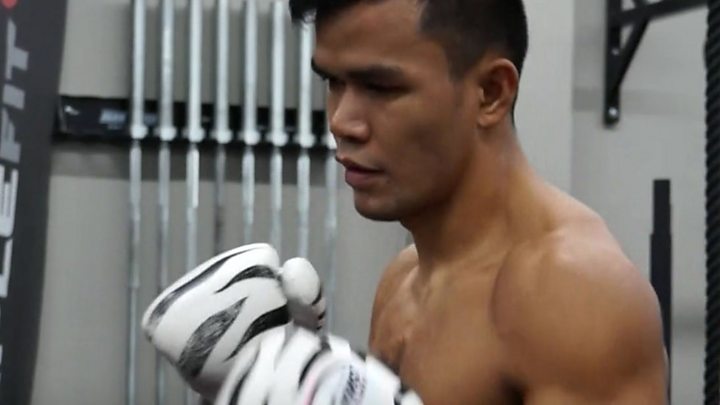
It’s on the lookout for Asian champions and Filipino contender, Rolando Dy, wants to be the region’s first.
Image caption
A fierce battle is heating up for the UFC in Asia and it’s not just in the cage
There was blood, there was sweat and, if not tears, plenty of cheers.
Ultimate Fighting Championship (UFC) has been one of sport’s most high-profile successes of recent years – thrilling television audiences and drawing crowds to fight nights with its combination of wrestling, boxing, jiu-jitsu and kick boxing.
The mixed martial arts (MMA) brand has made household names of Irish fighter Conor McGregor and female champions Ronda Rousey and Holly Holm.
But when the UFC jamboree came to Singapore, it was just the latest effort by the brand to try and replicate the success it has in the US in Asia, after years of setbacks and struggles.
The league wants to make this wealthy South-East Asian city state an annual stopover on its international tour – along with the likes of Macau, Manila, Tokyo and Seoul.
With a 12-bout fight card, its event drew a crowd of more 8,000 spectators, doubling its debut showing in 2014.
‘Big names’
And for local fans of the controversial combat sport, it was a rare opportunity to experience fight night in the flesh.
“Since most of the shows are in the US, it’s great to be able to watch such a big event live here in Singapore with such big names coming here,” one fan told me.
Media playback is unsupported on your device
Media captionFilipino boxer aiming for UFC glory
Of course, growing popularity goes hand-in-hand with growing profits.
UFC expects income of about $50m (£38.8m) from the region this year. That would be about 6% to 8% of its global revenues.
“Soccer is always going to be on top, but UFC is the fastest-growing sports organisation in the world,” says Joe Carr, UFC’s senior vice president of international and content.
“There’s no reason why UFC can’t be up there with other sporting heavyweights like the National Basketball Association or the National Football League in this market.”
Cracking China
For most other sports though, cracking Asia involves cracking China.
Critics note UFC’s big push to enter the Chinese market back in 2014. Within a year, it was forced to shut its Beijing operations without a fight being held, and relocate to Singapore.
Image copyright AFP
Image caption
UFC is gunning for a place among the world’s greatest sporting leagues
Not deterred, the league is trying again with its first bout in mainland China, scheduled for November in Shanghai.
China does have a growing MMA market, one dominated by rival leagues, including the local Kulun Fight tournament.
“It will be an absolute uphill battle because they don’t bring their A-game to Asian cities. Their events in Asia are typically smaller shows,” said Marc Raimondi, assistant editor at MMAFighting.com.
“The UFC makes the bulk of its money in the US and Canada. So from a business perspective, it makes sense for them to put their biggest stars on those cards.
“But they really need bigger stars and bigger shows in Asia. They just don’t have the kind of Asian talent to compensate and draw a ton of interest in the local markets.”
Local heroes
Most in the sport agree that developing local heroes is a sure fire way of creating local fans.
But will UFC be able to produce an Asian star to compare with the likes of McGregor, Rousey and Holm?
“An Asian world champion, a man or woman who becomes a world UFC champion, will be the catalyst to Asia going mainstream, just like Europe did with Conor McGregor,” says UFC’s chief executive, Dana White.
Image copyright Reuters
Image caption
Conor McGregor, the reigning UFC Lightweight Champion
“Women all over the world got into this sport through Ronda Rousey. If we can find a talented man or woman from Asia, and they become a world champion, the market will explode.”
But the league currently only has 40 Asian fighters on its roster.
The hopes of finding the next superstar rest on the likes of aspiring champion, Rolando Dy from the Philippines – the son of a former world champion boxer.
He made his UFC debut in Singapore, and despite a defeat, cannot be accused of lacking confidence.
“I am a Filipino fighter, and you don’t underestimate fighters from the Philippines,” he said, referring to the achievements of his father, Rolando Naverette, as well as boxing legend, Manny Pacquiao.
Image copyright AFP
Image caption
UFC sent its champion Holly Holm to headline its return to Singapore
“It’s my time. I believe I am one of the best in the world, and just have to prove it so that people will also believe in me.”
Rolando Dy will get his next shot at proving himself when he fights in Japan in September.
UFC estimates that a third of its fanbase is based in Asia. This is, after all, the region where most martial arts – on which this sport is based – began.
But with its other regional rivals having already spent years nurturing home-grown talent, the battle for commercial success will have to be fiercely fought.
Image caption
Campaigners from Avaaz protested in London ahead of Culture Secretary Karen Bradley’s remarks in June
Approval of 21st Century Fox’s proposed takeover of Sky is likely to come in the first half of 2018, the company said on Wednesday, in a sign it is gearing up for wider review of the merger.
Fox had hoped to close the deal in 2017 but it has been delayed by regulators.
It follows concerns a deal would give the family of businessman Rupert Murdoch too much sway over UK news.
US-based Fox already has a minority stake in Sky.
Both Sky and Fox are controlled by Mr Murdoch, who also owns the Times and the Sun newspapers. Fox is seeking to buy the 61% of Sky it doesn’t own.
Culture Secretary Karen Bradley in June said she was “minded” to refer the almost £12bn (£9bn) deal to the Competition and Markets Authority (CMA) for wider review, based on the risks to media plurality.
Image copyright Getty Images
Image caption
James Murdoch said he remained confident the deal would be approved
This week, she asked Ofcom for clarification about parts of its investigation of the proposal, extending the timeline for her decision to the end of August.
The request came after a lawsuit was filed in the US, alleging false quotes had been inserted into a Fox News story that was coordinated with the White House. Fox, which later retracted the story, has disputed the allegations.
Fox told investors on Wednesday that setting aside money for the deal remains a priority, noting that the company has already received necessary approvals in Europe.
A wider review could push back approval to the end of June 2018, the firm said.
Sales rising
“We remain confident our transaction will be approved, but more likely in the first half of 2018 than before the end of this calendar year,” said James Murdoch, chief executive of 21st Century Fox.
Mr Murdoch made the comments to analysts as the company released its latest earnings. He is also chairman of Sky News.
Over the 12 months to the end of June, Fox made $3bn in profit for shareholders, with revenues growing by 4% to $28.5bn.
The firm’s revenue in the fourth quarter increased 1.5% to $6.7bn, powered by growth in its cable division, which includes Fox News and FX channel.
Adapting to media changes
But profits in the quarter contracted, as the company struggled to keep audiences at its broadcast television division and for its movies.
The firm reported $476m in shareholder profits for the quarter, down more than 12%.
Fox, like other media companies, is grappling with the way the internet and on-demand video has changed media consumption, with growing audiences turning online.
Disney on Tuesday said it would invest in its own streaming sites and end a distribution deal with Netflix.
Fox said the changes are reinforcing its focus on news and sports, which are more likely to be watched in real time. The firm is also exploring new distribution options. It has announced an ad-free offering with Comcast, expanded its partnership with Hulu and is exploring its own apps.
 Image copyright