Category: Business News

  • Customers ‘furious’ with TNT after cyber-attack meltdown

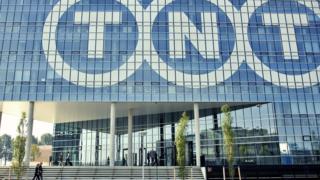
    TNT officeImage copyright
    TNT

    Image caption

    TNT has many operations in Ukraine, which is where the NotPetya cyber-attack struck hardest

    When Leah Charpentier ordered a vintage coffee table, on 8 June – a birthday present for her brother – she didn’t think it would take more than six weeks to be delivered.

    She also didn’t expect for the furniture to arrive with one of its casters broken off.

    This particular coffee table was just one of hundreds of thousands of items caught up in an extraordinary meltdown at courier TNT, which was badly affected by the NotPetya cyber-attack that hit many companies around the world on 28 June.

    Businesses in Ukraine were hit hardest, and since many TNT operations and communications are based in the country, a significant proportion of its systems were infiltrated and data encrypted – locking employees out – as a result.

    “Manual processes” are still being used to put packages through the system, and TNT says it is “reasonably possible” that some information will never be fully recovered.

    The BBC has spoken to several customers who have had exasperating experiences with the courier, which is owned by FedEx.

    Small businesses have been affected too – some say they have lost thousands of pounds because of missing or waylaid shipments.

    And a source close to FedEx and TNT operations in Europe has told the BBC that depots have been pushed to their limit while both companies continue to try to get the backlog of packages under control.

    ‘Furious’

    Ms Charpentier’s table faced the disruption of the cyber-attack after its initial delivery had been delayed because of its size.

    But when it arrived late to its destination in London following the extended delay, her brother was not expecting the delivery and so was out at the time. The furniture was shipped back to Rome and then sent out again via another courier, DHL.

    Ms Charpentier still doesn’t know who is responsible for the broken leg, but because of the confusion and the fact that the table was sent back to Italy without TNT contacting her first, she says: “I’m still furious at TNT.”

    Total shipping costs were 150 euros (£135), and Ms Charpentier says she might have to spend a further 180 euros to get the furniture repaired.

    Image copyright
    Leah Charpentier

    Image caption

    Leah Charpentier’s birthday present for her brother was delivered several weeks late – and with a broken leg

    Since the cyber-attack, FedEx itself has been processing large volumes of orders as a contingency, but the BBC understands that this has put a huge strain on the company’s infrastructure.

    A source with knowledge of operations in Europe says that until very recently some depots were finishing the day with tens of thousands of packages still waiting to be processed, instead of just a handful as usual.

    “They didn’t have enough loading units to face this,” the source says. “It was crazy.”

    The source adds that some physical hardware – such as conveyor belts – was having to be fixed much more frequently than usual because of the stress caused by increased volumes.

    And at one point, staff had to use WhatsApp Messenger for internal communications as company email was inaccessible, the source adds.

    ‘Medical supplies delayed’

    The sheer range of customers affected by the breakdown in operations at TNT is staggering – some were left distraught as critical supplies were held up in transit.

    “We have urgent air freight stuck at Stansted [airport],” wrote one woman on the courier’s Facebook page, “medical equipment required in theatres.”

    In another case, TNT narrowly missed depriving a bride of her dress on her wedding day, according to the staff at Dolly Blue Bridal Studios in Shrewsbury.

    “It was just a complete nightmare,” says Adele Nortcliffe.

    After many calls to trace missing deliveries, TNT eventually sent an overnight courier to deliver the dress.

    “We got a dress on the Thursday and the wedding was on the Saturday,” Ms Nortcliffe adds.

    Image copyright
    Getty Images

    Image caption

    One bride’s wedding dress almost missed the big day – but arrived just in time

    Others haven’t been so lucky.

    Mark Hammersley runs Staffordshire Wrought Iron, a small business that makes gates and other metal fittings.

    “We lost £900 on Monday,” he says, describing how customers who are unable to track orders – a side-effect of the IT issues – have been able to claim refunds via PayPal but also keep their items if they do arrive.

    Despite having used TNT for six years, Mr Hammersley says he is now planning to switch couriers.

    The list of cases goes on. One student told the BBC that after their computer had broken they ordered new memory to fix it so they could finish an assignment on time.

    When it was delayed, they had had to borrow a friend’s laptop to meet the deadline.

    And one man waited a month for a shower screen that was supposed to arrive within five days – it materialised only after a series of poorly co-ordinated delivery attempts.

    “[I’m] still waiting for a full explanation of how they got it all so wrong,” he says.

    Image copyright
    TNT

    Image caption

    FedEx depots have had to process TNT packages at unusually high volumes, according to one source

    It’s nearly a month and a half since NotPetya struck, but TNT has still not recovered operations.

    The last update from the company was published on 17 July. It said all TNT depots, hubs and facilities were operational, but added: “Customers are still experiencing widespread service and invoicing delays, and manual processes are being used to facilitate a significant portion of TNT operations and customer service functions.

    “We cannot estimate when TNT services will be fully restored.”

    A spokesman for an online cycling retailer told the BBC it was shipping freight beyond Europe via another courier, as TNT had said only deliveries within the EU could be processed.

    After the BBC contacted TNT for comment on 7 August, the company sent through some lines copied almost verbatim from its 17 July notice, adding: “We cannot express strongly enough how much we appreciate our customers’ patience and understanding through this period.”
  • G4S slides as FTSE 100 tumbles

    Traders in LondonImage copyright
    AFP

    Security group G4S was the biggest faller on the FTSE 100 in Wednesday morning trading despite reporting a 7.6% rise in first-half profit.

    The firm saw its shares slide 5.3% after chief executive Ashley Almanza said it would sell off more underperforming assets this year.

    Overall, the 100-share index was down 52.77 points or 0.7% at 7,489.96.

    Meanwhile, the pound rose 0.05% against the dollar to exactly $1.30 and was up 0.26% against the euro to 1.1084 euros.

    Among the top gainers was payment processing firm Worldpay, which added 0.2% after agreeing to merge with US rival Vantiv.

    Biggest winners were mining firms Fresnillo and Randgold Resources, which gained 3% and 2.4% respectively.

    On Tuesday, the FTSE 100 narrowly failed to hit a record closing high after a late rally stalled just short of the magic mark.

  • The Vietnam War Is History But Teaches a Lesson Every Leader Must Still Learn

    For decades, the American people have tried to ignore the Vietnam War. It was an uncomfortable period of distrust, angst, cultural conflict and protests. Politicians fled from its failures, and the American people seemed content to let its lessons and stories fade unceremoniously into the rearview mirror. It now appears, however, that we might be ready to face Vietnam’s pain, and, more importantly, examine the lessons to be learned from this uncomfortable episode in American history. For example, in September, acclaimed filmmakers Ken Burns and Lynn Novick will release an 18-hour documentary on PBS that will showcase this tumultuous period in vivid HD.

    My own journey with the Vietnam War began when I read Dereliction of Duty: Johnson, McNamara, the Joint Chiefs of Staff, and the Lies that Led to Vietnam (1997) by Lieutenant General H.R. McMaster. McMaster is President Trump’s National Security Advisor. I was curious to find out what makes him tick. His book is a chilling account of leadership gone awry, and it led me to seek out other books on the subject. I read A Bright Shining Lie: John Paul Vann and America in Vietnam, by Neil Sheehan (1988). Sheehan’s book won the Pulitzer prize in 1989 for general nonfiction and is a masterful account of the Vietnam War. Without diving too deep into the details, both books highlighted several instances were leadership failed, even at the highest levels.

    The primary breakdown occurred because a clear majority of those in charge failed to fully comprehend what was happening in Vietnam. Instead of responding to reality, which, incidentally, they were fully qualified to handle, they chose instead to build plans based on hunches and self-aggrandizing plans. Instead of finding and responding to reality, they believed they could manage and shape it to meet their needs.

    Related: 4 Leadership Lessons You Won’t Learn in Business School

    The second major problem was that these same leaders had a nebulous relationship with the truth. For some, they didn’t want to see the truth because it was politically difficult. This was certainly the case for President Johnson. In the case of others, personal ambitions clouded their judgment and created biases that led them to provide answers their superiors wanted. Ego was also a huge part of the problem. While many of these leaders were immensely talented, they believed they were infallible. Furthermore, they mistakenly believed that success in one area naturally meant success would follow in an unrelated area of expertise. This is precisely what happened with Secretary McNamara.

    For some of the military advisors, institutional biases and beliefs, which had been forged for years, meant they were conditioned to view the world from only one point of view (an American angle), but not from other perspectives. Finally, to top it all off, certain individuals were more concerned about being liked and admired, and for this reason they were unwilling to challenge the status quo or provide the unvarnished truth. In sum, Vietnam was a perfect storm of leadership dysfunction. Very few were willing to face the hard realities head-on.

    In his book 1776 (2005), the distinguished historian, David McCullough, makes a key observation about General George Washington that offers a refreshing alternative to what occurred in Vietnam. In writing about Washington’s reaction to a difficult period during the Revolutionary War, McCullough noted, “In truth, the situation was worse than they realized, and no one perceived this as clearly as Washington. Seeing things as they were, and not as he would wish them to be, was one of his salient strengths.” 

    This concept of seeing things as they really are, instead of what we hope or want them to be, is the key lesson from Vietnam and represents a mission-critical skill for any successful leader. By the way, the second most important lesson from Vietnam is an easy one — don’t lie to others, and don’t lie to those you lead.

    Ironically, we still see the same issue today. A recent advisor to President Trump was ridiculed when she coined the term “alternative facts.” For most of us, it was easy to see the folly in such a statement. Facts are facts, right? Yet, Vietnam taught me that even well-meaning and talented leaders can have a hard time finding their way to the real facts amidst the alternative ones.

    In today’s modern business world, the challenge is fundamentally the same but rooted in a different cause. It’s not about a lack of information; it’s about too much information. Information overload obscures the critical path. While software companies promise to give you dashboards that help you see everything that might be happening in your business, those programs are useful only if they help you see what is relevant. Charts and graphs that visualize data relationships that don’t really matter do nothing more than hide what might be festering underneath the pretty bar charts and the upward trending graphs.  

    Related: 11 Modern Leadership Lessons from History’s Masters

    There’s another danger, too. Because quantitative data is more available than ever, it’s easy to quickly find information that supports your initial conclusions (i.e., confirmation bias), and then inquiry screeches to a stop. Once we see something that confirms what we believe, or what we want to believe, we often stop looking to see if there is additional information or data that refutes our findings. Data can always be manipulated to support the case you want by excluding information to the contrary. Excluding problematic data from the decision-making process was pandemic in Vietnam, and ultimately fatal — both figuratively and literally.  

    So, what can a leader do to ensure they see things as they really are and not as they want them to be? First, leaders must be vigilant about creating a culture where honesty and candor are valued. Leaders need to teach and demonstrate that honest business intelligence and candid advice is to be rewarded, not suppressed. Vietnam has taught me that I would rather have accurate information even more than creative thinking, because creative thinking is useless if it is formulated from bad information.

    Second, leaders can create a culture of feedback. I am not talking about suggestions boxes, nor am I suggesting that leaders should address every complaint. But, your organization should develop methods to gather meaningful feedback. For example, every organization should conduct an annual climate or employee engagement survey. Performance reviews, whether ongoing or annual, should be conducted at least annually and supported by senior leadership. New and innovative software tools give leaders ways to measure employee sentiment. Other applications provide solutions that allow managers to give immediate feedback and for employees to request feedback on a more regular basis. In addition, when resources permit, every manager and executive leader within an organization should be given a regularly-scheduled 360-degree feedback assessment so they can get a candid assessment of what others think about their abilities and behaviors.

    Third, independent executive coaches can be an invaluable resource to help leaders gather differing viewpoints. Ideally, an executive coach is more likely to provide candid advice because they can afford to lose a one-time coaching contract as opposed to an employee who might be afraid to lose their full-time job. Moreover, good coaches readily respond to an executive who demands candor and seeks to establish honest feedback as core component of the coaching relationship. If a leader chooses to invest in a coach — which is a wise investment —  then they should demand complete forthrightness from the coach, and, in my opinion, it’s malpractice for a coach to tell a client only what the client wants to hear as opposed to telling them what they need to hear.

    Fourth, while some are skeptical about the value consultants bring to the table, they often add real value when used correctly. Leaders should consider using outside consultants on a regular basis to help them understand if they are seeing things as they really are. My suggestion is to use them regularly in an information audit role. Thus, care should be taken to ensure outside consultants maintain independence from your people and organization.

    Related: Company Culture Comes From Good Leadership

    While these various tools are useful, they do not mitigate a leader’s personal responsibility to ensure they are seeing things correctly. Every leader, whether a line manager or the CEO, should constantly be asking themselves the following questions:

    • Am I seeing what is really happening with my customers, my team, my department or my organization?
    • Have I created incentives for my employees to distort the truth? (I am talking to you, Wells Fargo!)
    • Have I created a culture that values and rewards candor and honesty?
    • What am I doing to counteract the power of groupthink?

    Regardless of your industry or organization, leading is hard. Let’s not make it harder by relying on alternative facts. Washington succeeded because it was more important to know the truth than it was to be viewed favorably. We all need to follow his example a bit more.

  • Mazda hails more efficient petrol engine

    Mazda company logoImage copyright
    Getty Images

    Japanese carmaker Mazda has developed a more efficient petrol engine at a time when the industry steers toward electric vehicles.

    It said the compression ignition engine was up to 30% more fuel-efficient than its current engines.

    It plans to sell cars with the new engine from 2019.

    Last week, Mazda said it would work with Toyota to develop electric vehicle technology and build a $1.6bn plant in the US.

    Mazda research and development head Kiyoshi Fujiwara said it was imperative for the company to pursue the “ideal internal combustion engine”.

    “Electrification is necessary but… the internal combustion engine should come first,” he said.

    Mazda said the Skyactiv-X, as it is known, would be the world’s first commercial petrol engine to use compression ignition.

    The technology breakthrough puts the firm ahead of rivals including Daimler and General Motors that have worked on compression ignition for decades.

    According to Mazda, the fuel-air mixture ignites spontaneously when compressed by the piston in the new engine.

    The carmaker said the Skyactiv-X combined the advantages of petrol and diesel engines to improve efficiency.

    It has no plans to supply the engine to other carmakers.

    Electric ambitions

    The move comes as the car industry pours massive investment into electric technology in response to stricter emissions standards around the world.

    The UK will ban the sale of new petrol and diesel cars by 2040 in a bid to reduce air pollution.

    In July, Volvo said all new models will have an electric motor from 2019. The Chinese-owned firm aims to sell one million electric cars by 2025.

    Mazda also plans to introduce electric technology in its cars from 2019.

  • Why I Never Meet Someone for Coffee

    First off, I need to make clear that I am not against meeting people for coffee or even drinking coffee. My issue is that I’ve learned that the offer to go get coffee usually means that somebody wants something from me. Whether it is time, money or to help them make a connection, an offer to grab a drink almost always has some ulterior motive behind it. You might think that I flat out don’t want to help others, but the real issue is the other opportunities that I have in front of me. I have a lot on my plate, so dedicating the time to a “quick” coffee meeting does not make much sense.

    Related: How Productive Are You? Here Are 8 Ways to Find Out.

    Say no to getting coffee.

    Hours spent in the office doing business are not the time to sit back, relax or socialize. I try to be as efficient, effective and statistically successful as possible during work hours (and beyond). The conventional offer of “getting coffee” is, in my opinion, one of the most frustrating offers that can be made. I rarely take anyone up on the offer to “do lunch” during work hours. Just consider the amount of time that it takes to get to and from a coffee or lunch meeting, and how much business could be done in that same time. Then, think about the inefficiencies of utilizing that time for things such as small talk, even before you get to the critical business issue.

    Related: Do You Drink More Coffee Than Elon Musk, Mark Zuckerberg and Other Creative Leaders?

    Have an objective in mind.

    I have the objective to try and keep every phone call to a maximum of five minutes. When it comes to in-person meetings, I prefer them to take place at my office or overlapping other meetings I have outside the office, which I call “holding court.” Even then, I try to keep those meetings to 20 minutes long. This allows me to fit in as many meetings or calls as possible. So many people make the excuse that they are “doing business” and then leave the office to do unimportant things, or overlap their meetings around errands. Make no mistake, I’m not advising against meeting people in person. I’m saying take control of the business opportunity and have them come to you, or meet them somewhere convenient when you are outside of the office.

    Related: The 7 Biggest Time-Wasters in a New Entrepreneur’s Day

    No coffee, just grind.

    The majority of lunch and coffee meetings that take place are nothing but an inefficient use of time. I would suggest not only rejecting such meetings during work hours, but to also stop asking for coffee meetings unless they’re absolutely necessary. How do you determine whether or not a meeting is necessary? Take a look at the reasons and impacts the meeting can have. If these outweigh the potential drawbacks of an in-person meeting, then it is acceptable to ask. Make sure that you focus on making efficiency a key principle when chasing your objectives. Stay focused in on critical business issues and you will find that focus will provide you with everything you desire in business and life.

  • Worldpay seals £9bn merger with US rival Vantiv

    payment processingImage copyright
    Worldpay

    US payment processing giant Vantiv has agreed to merge with Worldpay in a deal which values its UK rival at £9.3bn ($12.1bn; 10.3bn euros).

    It comes after the firms announced an initial agreement last month.

    Vantiv shareholders will own a majority 57% of the combined group, while Worldpay investors hold the other 43%.

    “The combination of scale and presence the merger will bring is an exciting step in the creation of a truly global leader in payments,” said Worldpay.

    Worldpay processes millions of payments a day in stores, online and on mobile phones.

    It operates worldwide, but with strength in the UK and US markets.

    Vantiv is largely focused on the US, helping merchants, banks and credit unions accept card payments, as well as gift cards and online payments.

    Executive jobs

    The combined company’s global and corporate headquarters will be in Cincinnati, Ohio, and London will become its “international headquarters”.

    Vantiv will pay 397p for each share in Worldpay, or £8bn, plus £1.3bn to cover debts.

    The combined company will be led by Charles Drucker as executive chairman and joint chief executive.

    Reporting to Mr Drucker will be Philip Jansen as co-chief executive and Stephanie Ferris as chief finance officer.

    Additional members of the new executive team will be announced at a later date.

    The UK company’s chairman Sir Michael Rake and his counterpart at Vantiv, Jeffrey Stiefler, will remain on the board as non-executive directors.

    The board will consist of four Worldpay and seven Vantiv directors.

  • Scientists Say These Are the 2 Most Important Hours of Your Day. Are You Making the Most of Them?

    In this video, Entrepreneur Network partner Ben Angel explains how one study found that people are often the most productive in the first two hours after they wake up — typically between 9 a.m. and 11 a.m. That’s why it’s important to keep yourself from scrolling through social media feeds or getting caught up in email when you start your day — you should reserve that time for working on whatever’s most pressing and important, because that’s when you’re at your best.

    Wait until later in the morning or lunch to check your emails, and you’ll find you already have a head start on your day.

    Click play to learn more.

    Related: How Too Much Coffee Ruined My Health and Nearly Destroyed My Business

    Entrepreneur Network is a premium video network providing entertainment, education and inspiration from successful entrepreneurs and thought leaders. We provide expertise and opportunities to accelerate brand growth and effectively monetize video and audio content distributed across all digital platforms for the business genre.

    EN is partnered with hundreds of top YouTube channels in the business vertical. Watch video from our network partners on demand on Amazon FireRokuApple TV and the Entrepreneur App available on iOS and Android devices.

    Click here to become a part of this growing video network.

  • Cars for cheese – why a free trade deal may not be free

    cheese blocksImage copyright
    Getty Images

    Image caption

    The proposed free trade deal between the EU and Japan has been described as a “cars for cheese” deal

    Ahead of its exit from the European Union, the UK is currently negotiating to secure free trade agreements with several countries, but what does this kind of deal actually mean?

    When two countries agree to a free trade agreement, that does not normally mean the complete free movement of goods and services between their economies, with no taxes, quotas or barriers of any kind.

    If you think about it that is pretty obvious, for instance in agriculture countries have subsidies for farmers, environmental rules, food standards and a dozen other policies.

    To ensure free trade of agricultural products all those policies would have to be coordinated, if not exactly the same.

    Image copyright
    PA

    Image caption

    The issue of chlorinated chicken is currently proving a sticking point between the US and the UK

    This is why the issue of chlorinated chicken is suddenly in the headlines; we don’t allow it, the Americans do.

    It is a barrier to free trade and if we cannot agree on a compromise then any free trade deal between the US and UK will not fully cover trade in chickens.

    The same can be said about genetically-modified (GM) crops, where America thinks the EU approvals process is far too complicated.

    Image copyright
    Getty Images

    Image caption

    Economic arguments over free trade date back to the 19th Century

    And what about agricultural subsidies for farmers?

    You can be pretty sure farmers on both sides of any free trade deal will argue about whether the other side subsidises its farmers unfairly, well, until the cows come home.

    It is not just agriculture that is affected, removing tariffs on manufactured goods is normally considered the easy part of any trade deal, but what about chemical regulations, car safety and drug testing, to name just three examples?

    The reason that free trade deals involve years of talks, dozens of expert negotiators, and endless meetings on technical details is because such issues are very complicated and involve a host of issues.

    In the end they tend to come down to a trade off.

    Image copyright
    Getty Images

    The proposed free trade deal between the EU and Japan has, for example, been described as a “cars for cheese” deal.

    It’s an over simplification, but the fact is a major part of the deal is that the EU will allow cars made in Japan to be sold in the EU more easily, and the Japanese will reduce tariffs on European cheeses (and other dairy products).

    That doesn’t sound like much but it is important. Many Japanese carmakers have plants in Europe precisely because it used to be difficult for them to sell Japanese built cars there, as they had to pay a 10% tariff.

    Meanwhile, the Japanese government has had some of the highest agricultural subsides, tariffs and other barriers, because it has long sought to protect its inefficient farmers.

    Both sides will win easier access to each others markets, but it is still not totally free trade.

    For instance some cheeses will be covered by quotas (a limit on how much can be exported to Japan), and car tariffs will take years to totally come down.

    Image copyright
    Getty Images

    Image caption

    Free trade has been a cornerstone of the post-war world


    Global Trade

    More from the BBC’s series taking an international perspective on trade:

    Is time up for plain vanilla flavour ice creams?

    What makes this Kate Spade bag unusual?

    Where’s hot? This summer’s most popular holiday spots

    Read more global trade series here.


    Also non-tariff barriers are still an important factor in limiting trade.

    So Japan and the UK, for instance, have different legal systems, educational qualifications, insurance rules, banking regulation and a thousand other differences.

    As you will have spotted, many of the differences are not to do with manufactured goods, which can be relatively easy to sell in other markets and changed if necessary to comply with local rules, but they do hinder free trade in services.

    Image copyright
    Getty Images

    Image caption

    Financial services such as share trading often take place across borders

    In the UK services make up 80% of the economy so agreeing a free trade deal on services is very important.

    It is however rather difficult for it to be total.

    British lawyers are just not going to be allowed to work in Brazilian courts if they haven’t passed local exams and speak Portuguese, for example. Things such as insurance contracts have to abide by local laws and rules, while British plumbers may not get much work in China if their qualifications are not recognised.

    But on top of that there are nearly always politically important sectors which can lobby national governments to continue to protect them.

    Image copyright
    AFP

    Image caption

    India has protections in place to safeguard small retailers from overseas competitors

    India’s army of small retailers are well protected by politicians from foreign competition, or governments can demand the politically impossible.

    As part of a future free trade deal, India would probably want the UK to open up immigration from India especially for students; something the government is unlikely to do as reducing immigration is one of its principle post Brexit policies.

    It all means that free trade agreements do not necessarily cover everything.

    Also although many economists believe such agreements encourage and increase trade between countries, improve efficiency and investment and help economies grow; others think they have serious downsides including driving out smaller local companies, reducing tax revenue and undercutting working conditions.

    Whoever is right free trade agreements do not do what they say on the tin.

    They do not make all trade free and frictionless; maybe they should be called “freer trade agreements”?

  • Craft beer brewer aiming to be top of the hops

    Jaega Wise used her chemical engineering background to start her own microbrewery in East London.

    Despite the pub industry struggling in recent years, from the increases in business rates and people drinking less, the craft beer sector is booming.

    Jaega runs Wild Card Brewery with three friends, and has turned her hobby into a business exporting to Russia.

    Film produced by Joanna Hall and Tracey Langford.

  • Ugandan gold rush stopped by authorities

    Media playback is unsupported on your device

    Media captionThe Ugandan gold rush stopped by authorities

    For many Ugandans, the gold found deep underground in the hills of Mubende District was a lifeline.

    Over the past five years, an estimated 70,000 people have left their homes and moved to the gold fields, seeking – if not their fortunes – a way of feeding their families.

    When I visited Mubende a few weeks ago the dusty hillside was crawling with activity, as if an imaginary film director had shouted “action” on the set of an old Western movie.

    Everywhere you looked, people were busy.

    Young men with muddy faces climbed out of pits 150 metres deep, hauling huge sacks of rubble; others were busy breaking down clumps of rock, loading up trucks or panning for gold.

    Women stood in dark puddles, swishing water around plastic tubs, closely watching for a flash of yellow.

    Image caption

    The hillside was a hive of activity

    “In our culture it’s taboo for women to go down the pit,” the mine chairman told me. “They believe when they go down there, the gold disappears.”

    Instead, several women were working in the many restaurants and shops that had sprung up in the nearby camp. They were stalls selling bananas, chicken and yoghurt.

    There was also a medical clinic, some churches and a mosque on site.

    The houses were made of blue plastic sheeting, wood and corrugated iron – the typical shanty houses that I’ve seen elsewhere in Africa. I visit the local bar, where music is playing – until the power goes off.

    Men worked in the mines 24 hours a day, but it was clear the operation was completely unregulated. There wasn’t a helmet to be seen, and some of the workers weren’t wearing any shoes. But no one I met seemed worried by the long hours or poor conditions.

    Image copyright
    Emmanuel Kibirige

    Image caption

    Gold discovered at a mine in Mubende District

    Florence Nampijja, who used to sell second-hand clothes, said her life had changed considerably since she joined the gold rush.

    “With good panning, I’m able to look after my four children and my extended family,” she said. “I hope to buy land and put up a good house for my children, feed them well, and send them to better schools.”

    Pit owner Ivan Kauma Male enthusiastically showed me around the site. He had bigger dreams.

    “When I find gold most of my wishes will be completed,” he told me. “Like driving a Porsche car, putting up good houses, and sending my children to good schools.”

    “This is something I’ve invested in for two and a half years. So I want to get my money out of it.”

    Image caption

    Bags of rubble were checked for signs of gold

    But those dreams have been put on hold.

    A few days ago Ugandan soldiers armed with tear gas shut down the Mubende mines. They were acting on the instructions of the country’s government. The miners and their families were told they had just hours to evacuate the area.

    Many are still looking for a way to get home. The mines are a four-hour drive from the capital Kampala, and the only road in is a bumpy dirt track.

    “People are stranded on the road with mattresses, jerry cans, saucepans and children,” Ivan told me, speaking on the phone from a nearby village.

    The Ugandan government issued a statement blaming the shutdown on unsafe mining practices, and the presence of foreigners in the camps. The miners say the vast majority of people living in the camps are Ugandan. But they acknowledge the mining was illegal. No one had a license.

    Image caption

    It was hard, but potentially lucrative work

    Mark Asaph Jjombwe heads up the Artisinal and Small Scale Miners Association.

    “The association tried to get a license, although they’ve not yet replied to us,” he says.

    The miners say Uganda’s President Yoweri Museveni knew about the illegal mining, but chose to ignore it.

    Mark explains: “He knows we cannot dig the big gold. So he says, ‘You can have those petty, petty ones. My people, you go and try your luck’.”

    But that appears to be over for now at least.

    A statement from Uganda’s Ministry of Energy and Mineral Development said the miners will be registered over the next three months, and the industry will be regulated.

    Image caption

    The men put in backbreaking amounts of work in their hunt for gold

    But the miners are sceptical.

    “The government believes the investors are going to bring a pack of money, more than the artisans who can actually generate some income for their children,” says Ivan.

    “In Uganda we are jobless. I hold a degree in electrical engineering. It’s not because I don’t want to do my work, but they cannot pay me.”

    The watchdog Global Witness recently criticised the Ugandan mining industry, describing it as “infested with corruption from bottom to top”.

    The group accused a former government minister of processing and exporting hundreds of millions of dollars’ worth of gold.

    The mines in Mubende District had meant the country’s riches weren’t just in the hands of the elite.

    Now, thousands of Ugandans are jobless again.