Category: Business News

  • Fed warns US faces ‘long road’ to recovery

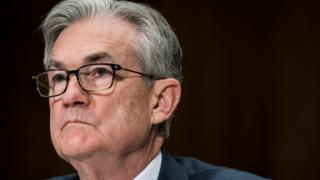
    Fed chair Jerome Powell

    Image copyright
    Getty Images

    The head of America’s central bank has pledged to continue support for the US economy for “as long as it takes”.

    Warning that the US faces a “long road” to recovery, Federal Reserve Chair Jerome Powell said the bank would keep interest rates near zero for the foreseeable future.

    A policymaker forecast released by the Fed showed rates remaining low until the end of 2022.

    “This is going to take some time,” Mr Powell said.

    In December, Fed policymakers said they expected the US economy to grow about 2% this year and the unemployment rate to remain around 3.5%.

    But the pandemic has dramatically rewritten that outlook, prompting the loss of more than 20 million jobs in March and April in the US alone.

    • US recession: What can the 2008 recession teach us about this one?
    • Pandemic pushes US into official recession

    The OECD on Wednesday said the pandemic had triggered the most severe recession in a century and warned that the global economy could contract 7.6% this year, should a second outbreak hit.

    Predictions released by the Fed on Wednesday show policymakers expect the US economy to shrink 6.5% this year and the unemployment rate to be 9.3%, before falling to 6.5% in 2021.

    That would still be a big increase from the 3.5% rate recorded in February.

    ‘Aggressive action’

    The Federal Reserve slashed interest rates toward zero at the onset of the pandemic and has pledged to maintain low rates until the economy is back on track.

    It has pumped trillions of dollars into the financial system, buying up US Treasuries and other assets to encourage banks to keep lending and prevent a market collapse.

    It has also stepped in with new programmes to lend to small and medium-sized firms and buy corporate and municipal debt.

    The swift action has won widespread praise in Washington. In a hearing about the pandemic response on Wednesday, Republican Senator John Kennedy called Mr Powell a “rock star”.

    Neil Birrell, chief investment officer at Premier Miton, said the Fed’s statement on Wednesday was “affirmation of central banks everywhere doing what they need to do”.

    Analysts credit the Fed’s aggressive response with helping to drive a rally in financial markets, which have rebounded sharply from their lows.

    Mr Powell on Wednesday said financial conditions had improved, thanks to the Fed’s efforts to keep markets from freezing up.

    He defended the bank’s plan to continue asset purchases at the current levels, despite criticisms that such moves primarily help wealthy investors.

    “We don’t take those gains for granted,” Mr Powell said.

    No change in interest rates at this meeting, and it seems most of the Fed’s policy makers expect no change before 2023.

    One of the documents released alongside the policy statements is a summary of the expectations of the Fed’s policy makers.

    It doesn’t identify individuals, but it does give us some indication of what they’re thinking, if not exactly who is thinking it.

    None expect rates to rise this year or next. There is at least one who thinks there will be a rise of a full percentage point in 2022. But the majority think that won’t happen.

    On growth the most optimistic thinks this year will see a contraction of 4.2%. One expects a pretty hideous figure of 10%.

    Most expect a return to growth next year. But if you take the median – the one in the middle if you rank them – it will be 2022 before this year’s losses are fully recovered.

    The cumulative picture for that projection is an economy 1.6% larger in that year than it was last year.

    That suggests, for that period, more than two years of lost growth, at the rate they think is likely over the long term.

  • Coronavirus: Goldman Sachs turns away lockdown savers

    Piggy bank

    Image copyright
    Getty Images

    Image caption

    Savers have found themselves starved of good rates of return

    Goldman Sachs is turning away savers who have spent lockdown putting money aside and looking to reorganise their finances.

    The US banking giant has closed its UK easy-access savings account – Marcus – to new customers after a surge in interest from savers.

    The move was prompted by deposits to the digital account reaching close to the limit allowed under regulations.

    Marcus has been paying close to market-leading rates to savers.

    The retail savings arm of the investment bank, named after the bank’s founder, Marcus Goldman, was launched in the UK nearly two years ago with some fanfare owing to its competitive rates of interest.

    Offering rates of just over 1%, versus an industry average of just 0.3%, it has attracted more than 500,000 savers.

    But bosses have had to step in to control its growth, due to UK rules demanding that retail deposits of more than £25bn should be ring-fenced to protect the banking system – something that would require Marcus to become a separate legal entity, driving up its costs.

    Lockdown saving

    The coronavirus impact has meant some households are saving more owing to the leisure and hospitality sector being closed. Existing savers have also taken the opportunity to get on top of their finances.

    “We’ve really seen our growth accelerate under lockdown as people hold off on discretionary spending and take time to reorganise their finances and get the best deal for their money,” said Des McDaid, head of Marcus UK.

    • Six money-saving ideas for lockdown and beyond
    • Why a timely nudge might help us save money

    Commentators said the move was another blow for savers.

    Financial information service Moneyfacts has warned consumers to brace for a “race to the bottom” on savings rates and products after average rates on easy-access accounts hit record lows.

    It follows the Bank of England’s decision to slash the base rate to 0.1% to support the economy during the pandemic.

    Sarah Coles, from investment firm Hargreaves Lansdown, said: “The savings market has been engulfed by waves of cuts over the past few months, and Marcus’s easy-access account has been washed ashore.

    “These waves are self-perpetuating. The most competitive account attracts too much money, so the bank cuts back.”

    Marcus said it hoped to reopen the account to new customers again later in the year.

  • Coronavirus: Zoos and safari parks set to reopen from 15 June – PM

    Giraffe at London Zoo

    Image copyright
    PA Media

    Image caption

    London Zoo had said it faced an “uncertain future”

    Zoos, safari parks and drive-in cinemas are set to reopen in England from Monday, the PM is due to announce.

    Boris Johnson is expected to outline the latest step in the easing of the coronavirus lockdown at Wednesday’s daily briefing.

    He will say the outdoor attractions can reopen as long as they follow social distancing rules.

    Some zoos, including Chester Zoo and London Zoo, have reported financial struggles during the pandemic.

    A number of Tory MPs and the PM’s father, Stanley Johnson, have been calling for zoos to reopen to ensure they survive the crisis.

    The move will pave the way for zoos to reopen in England alongside non-essential shops, which can also open from 15 June.

    But Mr Johnson faced criticism from the Labour leader at Prime Minister’s Questions, after the plan for the reopening of all primary schools in England by the summer was ditched by the government.

    Sir Keir Starmer said the government’s plan for getting children back to school in England was “in tatters”, blaming the situation on a lack of leadership from Mr Johnson.

    “Plenty of other comparable countries are getting their children back to school,” Sir Keir said.

    ‘Extremely cautious’

    Mr Johnson said Sir Keir had previously said school reopenings were happening too quickly and accused him of trying to have it both ways.

    He said his government was “being extremely cautious” about opening schools, but added parents were keen to see their kids back in school.

    The BBC’s assistant political editor, Norman Smith, said there was an “awkward juxtaposition” between the announcement on zoos and safari parks, and the concern about when schools will reopen.

    He said there was a “real anxiety” among those in the education sector and MPs from all sides about “the lack of priority and lack of oomph being given to opening schools”.

    The chair of the education select committee, Robert Halfon said he was “happy” zoos would open.

    But the Tory MP tweeted a call for Boris Johnson to “set out a national plan on how we get schools opening again and a catch up programme for left-behind pupils whose life chances are being damaged by being off school for 40% of school year”.

    ‘Supported by science’

    Earlier this week Chester Zoo – which has been closed since 21 March – said its future was “on a knife edge”, despite a government pledge to provide financial support.

    And last month London Zoo – closed since 20 March – said it faced an “uncertain future” without immediate support.

    Media playback is unsupported on your device

    Media captionA large zoo says it needs government grants as it has no visitors or income

    On Wednesday, the prime minister is expected to announce that outdoor attractions where visitors remain in their cars can reopen because the risk of spreading the disease is lower outside.

    However, zoos will be told that they must not reopen indoor exhibitions, such as reptile houses, and must ensure amenities including cafes are take-away only.

    • All shops in England can reopen on Monday if safe
    • Many primary pupils not back until September

    A Downing Street official said: “People are continuing to make huge sacrifices to reduce the spread of coronavirus and avoid a second spike, but we know it is tough and where we can safely open up more attractions, and it is supported by the science, we will do so.

    “This is by necessity a careful process, but we hope the reopening of safari parks and zoos will help provide families with more options to spend time outdoors while supporting the industry caring for these incredible animals.”

    Downing Street continues to emphasise that the UK government wants to move forward carefully in further easing the lockdown.

    Wednesday’s announcement on zoos reflects the belief the risk of transmission is lower outdoors and is based on social distancing rules being followed.

    We also know non-essential shops in England and Northern Ireland will reopen in the coming days (though we don’t know when this will happen in Scotland and Wales). Small parts of normal life are returning, even if they will likely feel quite different.

    But while steps to reopen the economy are being taken, the slow progress on schools shows that coming out of lockdown is not always easy and not always in the hands of ministers.

    The delay in getting primary school pupils back to classrooms in England is a reminder that practicalities – and in some cases public reluctance – are important too.

    The government says it has already provided a £14m support fund for zoos.

    They have also been eligible to apply for a “range of support schemes”, including business rate relief, during the pandemic.

    Writing in the Sun on Tuesday, Stanley Johnson said: “Running a zoo is an incredibly expensive enterprise, with vet fees, food and staff needing to be paid.

    “Those bills don’t stop just because the customers aren’t passing through the turnstiles.”

    He said there was “fear” many zoos could go out of business “if they can’t open up to paying customers once more”.

    Andrew Hall, spokesperson for Biaza – British and Irish Association for Zoos and Aquariums – said he was “delighted” with the announcement, but added the sector was “not out of the woods”.

    “Aquariums are still closed, and zoos and safari parks have taken a real hit,” he said.

    “For some zoos, particularly those reliant on tourism, reopening isn’t going to be financially viable for them.”

    He said the announcement was “not the full answer” and government support would still be required, especially with limited entry.

    He added: “Zoos and aquariums in Wales, Scotland and Northern Ireland will still be facing significant challenges and we will be working hard to achieve positive outcomes in these nations.”

  • Coronavirus: UK economy could be worst hit among leading nations, says OECD

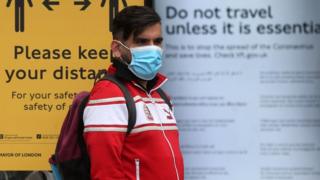
    Man standing in a London bus stop wearing a face mask

    Image copyright
    Getty Images

    The UK is likely to be the hardest-hit by Covid-19 among major economies, a leading agency has warned.

    Britain’s economy is likely to slump by 11.5% in 2020, outstripping falls in other developed economics of Germany, France, Spain and Italy, it said.

    If there were a second peak in the pandemic, the UK economy could contract by 14%.

    The Organisation for Economic Co-operation and Development described the impact as “dire” everywhere.

    In its latest assessment, the OECD found that the trade, tourism, and hospitality sectors, which make up large parts of the UK’s service-based economy, have suffered under lockdown restrictions introduced by the government.

    Coronavirus crisis

    In response to the think-tank’s report, Chancellor Rishi Sunak said the UK was not the only one to suffer: “In common with many other economies around the world, we’re seeing the significant impact of coronavirus on our country and our economy.

    “The unprecedented action we’ve taken to provide lifelines that help people and businesses through the economic disruption will ensure our economic recovery is as strong and as swift as possible.”

    Global impact

    The Paris-based organisation says that five years or more of income growth could be lost in many countries as a result of the pandemic.

    The OECD has looked at two scenarios for how the pandemic might unfold.

    In the more severe case, the global economy could shrink by 7.6% over this year.

    Although the report says that the pandemic has started to recede in many countries, and activity has begun to pick up, it does not expect a convincing recovery. It sees the outlook for public health as extremely uncertain and that is reflected in the decision to assess two alternative scenarios.

    In the more moderate scenario, the virus continues to gradually recede. In the alternative, there is a second wave of contagion which erupts later in 2020.

    The report describes both outlooks as sobering. In neither can economic activity return to normal within the period the OECD considers. The deep recession now underway will be followed by a slow recovery.

    In the gloomier of the two possibilities, the decline this year could be very severe.

    In that scenario two countries – France and Spain – would suffer even deeper declines in economic activity than the UK this year

    That 7.6% global forecast is significantly worse than what was foreseen by other agencies – such as the International Monetary Fund and the World Bank – who have warned about the high level of uncertainty attached to their forecasts.

    By the end of 2021, the report says that five or more years of income growth could be lost in many countries. It says the impact on livelihoods will be especially severe among the most vulnerable groups.

    The OECD also says the pandemic has accelerated the shift from what it calls “great integration” to “great fragmentation”. That is essentially a setback for globalisation, reflected in additional trade and investment restrictions and many borders that are closed at least while the health crisis persists.

  • Frankie and Benny’s owner to cut up to 3,000 jobs

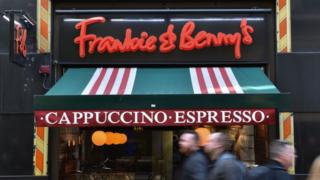
    Frankie & Benny's restaurant in London

    Image copyright
    Getty Images

    The coronavirus pandemic has claimed another 3,000 UK jobs after the Restaurant Group confirmed plans to shut 125 of its outlets.

    The firm said the axe would fall mainly on its Frankie and Benny’s restaurants, but other chains such as Garfunkel’s and Chiquito will also be affected.

    Meanwhile, fashion group Monsoon Accessorize has announced 545 job losses and the closure of 35 shops.

    The firm said its current structure was “unviable” following the lockdown.

    Monsoon Accessorize assets have been put into administration and sold to a business controlled by Peter Simon, the founder and owner of the chain.

    It will now attempt to renegotiate the terms of its remaining 162 shops with its landlords and aims to safeguard up to 2,300 jobs.

    On Wednesday, fashion chain Quiz Plc also announced it would place its stores in administration, putting jobs at risk.

    It said its loss-making shops were not currently “financially viable”.

    ‘Very challenging’ conditions

    The Restaurant Group is restructuring part of its business through an insolvency procedure known as a company voluntary arrangement (CVA).

    As well as the closures of some of its eateries, the company said it would attempt to renegotiate rents and terms on a further 85 sites.

    • Jobs go as Debenhams shuts more stores
    • Job losses ‘just the tip of the iceberg’

    The Restaurant Group’s chief executive, Andy Hornby, said: “The proposed CVA will deliver an appropriately-sized estate for our Leisure business to ensure we are well positioned despite the very challenging market conditions facing the casual dining sector.”

    The Restaurant Group also owns the Wagamama restaurant chain, but this will not be affected by the restructuring.

    Image copyright
    Monsoon Accessorize

    Image caption

    Monsoon Accessorize will try to renegotiate rental terms on 162 of its remaining shops

    Quiz said it would put its 82 outlets in the UK and Ireland into administration before buying them back so it can negotiate better rental terms with its landlords.

    It said some 822 employees out of a total of 915 would transfer to the new company.

    Quiz’s chief executive, Tarak Ramzan, said the company’s shops were already facing challenges before the coronavirus outbreak as fewer people were shopping in store.

    However, he said that “the significant economic uncertainty we now face as consumers and businesses emerge from the COVID-19 pandemic” meant that the group had to be restructured.

    The coronavirus outbreak and the subsequent lockdown has prompted thousands of job cuts across the UK economy.

    On Tuesday, Debenhams said a further 300 jobs would go and in recent weeks Rolls-Royce, British Airways, EasyJet and car dealership Lookers have announced extensive cuts.


    Are you a Frankie and Benny’s employee? Share your experiences by emailing

    Please include a contact number if you are willing to speak to a BBC journalist.

    • WhatsApp: +44 7756 165803
    • Tweet: @BBC_HaveYourSay
    • Please read our terms & conditions and privacy policy

  • CrossFit CEO Greg Glassman out after joke about George Floyd

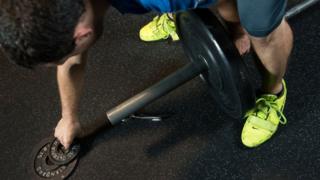
    An unidentifiable man working out at a CrossFit gym

    Image copyright
    Getty Images

    Image caption

    The CrossFit fitness plan was developed by Greg Glassman

    The chief executive of CrossFit has quit after causing offence with remarks about the death of George Floyd and the resulting protests.

    Greg Glassman stepped down after athletes, gyms and sportswear firms cut ties with his $4bn (£3.1bn) brand.

    Mr Glassman acknowledged having caused a “rift” in the CrossFit community.

    His exit came on the day of Floyd’s funeral in Texas. The unarmed black man died last month after a policeman in Minneapolis knelt on his neck.

    • Calls for racial justice at George Floyd’s funeral

    What was the controversy?

    In reply to a public health body saying racism was a public health issue, Greg Glassman tweeted on Saturday night: “It’s FLOYD-19”, an apparent reference to Covid-19.

    He followed it up with a second tweet saying: “Your failed model quarantined us and now you’re going to model a solution to racism? George Floyd’s brutal murder sparked riots nationally.”

    He also called an affiliate “delusional” for questioning why CrossFit had been silent on the killing in Minneapolis.

    According to Buzzfeed, hours before posting the fateful tweets, Mr Glassman had told gym owners on a private Zoom call: “We’re not mourning for George Floyd – I don’t think me or any of my staff are.

    “Can you tell me why I should mourn for him? Other than that it’s the white thing to do.”

    How did Glassman resign?

    In a statement on Tuesday, Mr Glassman said: “I’m stepping down as CEO of CrossFit, Inc, and I have decided to retire.

    “On Saturday I created a rift in the CrossFit community and unintentionally hurt many of its members.”

    He added: “I cannot let my behaviour stand in the way of HQ’s or affiliates’ missions. They are too important to jeopardise.”

    Media playback is unsupported on your device

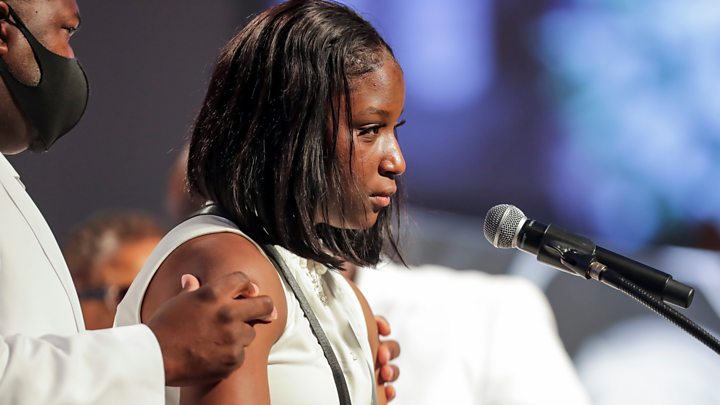
    Media captionGeorge Floyd’s niece: ‘This is not just murder, but a hate crime’

    His statement was followed by another from Dave Castro, his successor at the helm of the company.

    The incoming CEO said: “CrossFit is a community – one that is global, diverse, and tough.”

    He added: “Our community is hurt, though. Our shared bond brings together millions of people with differing opinions, viewpoints, and experiences.”

    Mr Glassman conceived the company as a high school gymnast in his parents’ garage in California. It is now affiliated with an estimated 13,000 gyms worldwide.

    More on George Floyd’s death

    What was the response to his remarks?

    Hundreds of affiliate gyms have removed CrossFit from their branding.

    One of these gyms, Petworth Fitness in Washington DC – formerly CrossFit Petworth – wrote on Instagram: “For a brand that has preached about being ‘for all’, the deafening silence on current and past issues of racism tells us all we need to know.”

    It added that it would donate its annual affiliate fee – $3,000 – to the Black Lives Matter DC and Know Your Rights anti-racist campaign groups.

    Adidas AG, which owns Reebok, also issued a statement confirming it was ending its relationship with CrossFit.

    “Recently, we have been in discussions regarding a new agreement, however, in light of recent events, we have made the decision to end our partnership with CrossFit HQ,” the company said in a statement to AFP news agency.

    Several CrossFit athletes also criticised the company.

    Four-time CrossFit Games champion Matthew Fraser praised a colleague for disaffiliating from the company, while Olympian and three-time CrossFit Games champion Tia-Clair Toomey said she was “incredibly saddened, disappointed and frustrated” with Mr Glassman’s comments.

    Icelandic CrossFit athlete Katrin Tanja Davidsdottir also posted screenshots of Mr Glassman’s tweet and email, and said she was “ashamed, disappointed and angry”.

  • George Floyd: Twitter to make Juneteenth a company holiday

    Twitter CEO and co-founder Jack Dorsey gestures while interacting with students at the Indian Institute of Technology, New Delhi.

    Image copyright
    Getty Images

    The boss of Twitter and Square has said that both firms will honour Juneteenth as a company holiday in America.

    Jack Dorsey also said Twitter was working to identify which days it made most sense to recognise the end of slavery in other countries.

    Juneteenth is observed by many African-Americans on 19 June every year to mark the emancipation from slavery in the US.

    It comes as companies respond to Black Lives Matter protests around the world.

    The roots of Juneteenth, which is also known as Freedom Day and Jubilee Day, date back to 1865, when Union Army General Gordon Granger arrived in Texas to spread news that the American Civil War had ended and slavery along with it.

    More than two years earlier President Abraham Lincoln had signed the Emancipation Proclamation to abolish slavery, but the practice continued in parts of the country after the end of the war.

    The day is traditionally celebrated by local events which often include readings of the Emancipation Proclamation, traditional songs and the reading of works by noted African-American writers.

    Mr Dorsey made the announcement in a series of tweets, saying it would be a “day for celebration, education, and connection”.

    Last week Mr Dorsey tweeted that he was making a $3m (£2.4m) donation to former NFL player Colin Kaepernick’s Know Your Rights Camp to “advance the liberation and well-being” of minority communities.

    Mr Kaepernick is best known for kneeling during the US national anthem when he was a player for the San Francisco 49ers to protest against police killings of African-Americans.

    His protests were heavily criticised by conservative figures including US President Donald Trump.

    The announcement comes as other major US companies have voiced their support for the Black Lives Matter protests for racial justice after the death in police custody of African-American man George Floyd.

    Also last week, tobacco giant Altria said it would celebrate Juneteenth as a corporate holiday to give employees time for “personal reflection and healing” and said that it would donate $5m to organisations that address racial inequality.

    Some technology firms – including Google owner Alphabet, Uber and Intel – have also pledged millions of dollars in donations to organisations working on racial justice.

    Several large Silicon Valley companies have faced criticism in recent years for the lack of racial and ethnic diversity in both their staff and leadership.

    Meanwhile, Japan’s SoftBank has launched a $100m fund that will invest in companies led by “people of colour”.

  • Coronavirus: What we spent on lockdown toys and games

    Boy playing swingball

    Image copyright
    Getty Images

    Image caption

    Swingball has been one of the biggest sellers

    Stuck at home, irritable, and a little bit bored during lockdown – and that’s just the parents. Many have felt the need to buy big Lego sets and 1,000-piece jigsaw puzzles to keep themselves entertained.

    Their children, on the other hand, have had a whale of a time playing outside in the glorious weather.

    Retro stationary tennis game Swingball has bounced into the top 10 toy bestsellers during the coronavirus restrictions.

    While many families do not have the luxury of outdoor space at home, one psychologist says the experience of playing games together may be one good outcome from the national crisis.

    Bored of board games?

    Lockdown has proved to be a mixed blessing for the UK toy sector.

    Toy retailers, like the rest of the High Street, have been shut and struggling. Gary Grant, boss of one of the biggest toy sellers in the UK, The Entertainer, says that the business would have folded without the government’s financial support, and is still fighting for survival.

    Yet the value of UK toy sales rose by 17% in the two months from the beginning of lockdown compared with the same period last year, according to analysts NPD.

    That’s because parents and children in the UK have actually been buying fewer toys, but spending more on those they have bought during lockdown.

    The average amount spent on a toy or game has risen from £8.07 to £9.65, NPD data shows.

    Initially, the big sellers were games and puzzles “to keep the kids occupied while parents were working”, according to Frederique Tutt, global toy industry expert at NPD. They remain the biggest success story, with sales up 43% in value in the first half of this year compared with the first six months of 2019.

    Monopoly and Dobble are among the 10 biggest-selling toys and games during lockdown.

    Image copyright
    Getty Images

    Image caption

    Waterslides have been popular in the sunny weather

    Then the month of May – the sunniest calendar month on record in the UK – prompted demand for outdoor toys, which recorded a 31% increase over the same period.

    Sand and waterslides flew off the virtual shelves.

    It was a different story in continental Europe where, despite similarly good weather, tighter restrictions and less of an online market meant parents saved their toy spending until the shops reopened.

    In the UK, children – unable to visit the toy shop – have kept their pocket money tucked away too. The amount spent on collectable toys, the big hit of recent years, has collapsed by nearly a third (29%) since the start of the year.

    Impulse buying evaporated, and that was bad news for Gary Grant, long-time advocate of the physical toy shop. Even the sale of 300 tonnes of play sand in eight weeks could not make up for lost revenue.

    He describes the last three months as “traumatic”. The vast majority of his 2,000 members of staff have been furloughed and he had to overhaul the business’s online operation and warehouses within days.

    All attention is now on the shops reopening in England on Monday and later in other parts of the UK, and making them a safe place to visit.

    “We want children to run around our shops. They are toy shops. But at the moment, they can’t, because it has to be safe for customers and staff,” he says.

    Image copyright
    The Entertainer

    Image caption

    Gary Grant, founder of The Entertainer, says it has been tough for retailers

    Reopening has to work for the future of town centres, he says. The government lifelines of providing state-paid wages, business rate breaks, and support loans will end eventually.

    “We cannot afford to have a second wave [of the virus],” he says. “We might not survive that.”

    For now, he is appealing to the public to visit shops again, but sensibly.

    “Do not turn your back on the High Street, otherwise the High Street will be dead. Retailers like the food shops stepped up [during lockdown], we need to back them up,” he says.

    • When will shops open and what will the rules be?
    • How will coronavirus change the way we live?

    The analysts’ predictions will not all make happy reading for him.

    Consumer surveys by NPD suggest shoppers are cautious about heading back to stores. Four out of five of those asked said they would research toys online before buying them. Click and collect, free delivery, and in-store fast lanes at tills are all high on consumers’ wish lists.

    The silver lining for shops is that, despite the inevitable economic pain ahead, Christmas in the toy sector has usually been resilient to stretched household budgets.

    The last thing to sacrifice, it seems, is the kids’ presents, especially when grandparents are able to step in to help pay for them.

    Quality time

    The sector can also comfort itself in the knowledge that, according to one psychologist, play has helped families get through the anxieties created by the coronavirus outbreak.

    “Playing is a great distraction, and families communicate better when they are doing something together,” says Dr Amanda Gummer, founder of the Good Play Guide.

    She says that there are inequalities over space at home, and how much money can be spent, but play is a great leveller.

    “You can still make a great den with pillows and a duvet,” she says.

    The long-term effects of lockdown may also be positive.

    Children have had to learn about boredom and how to entertain themselves, to know when to be energetic or quiet, she says.

    That might not mirror every parent’s experience, but she says they too may have recognised the benefits of a slower pace of life, taking time to smell the roses or do a scavenger hunt with their children.

    If all that fails, they could just go back to that unfinished jigsaw.

  • Amazon removes T-shirt showing George Floyd death

    Amazon listing

    Image copyright
    Amazon

    Image caption

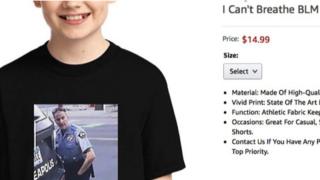
    The t-shirt featured a photo of former Minneapolis Police Department officer Derek Chauvin kneeling on the neck of George Floyd

    Amazon has removed a children’s T-shirt which used an image of a policeman kneeling on the neck of George Floyd from its US store.

    The garment, available on the US Amazon store for $14.99 (£11.70), was listed by a third-party reseller.

    In a statement to the BBC, Amazon said that the account was being “investigated”.

    The online retailer’s guidelines prohibit products that depict crime scene photos.

    The item was on sale alongside other clothing promoted by the same vendor that was targeted at supporters of the Black Lives Matter movement.

    It was flagged to the BBC by an Amazon employee who questioned how tasteful such an item of clothing was.

    While the original listing is now offline, other examples of t-shirts and baseball caps featuring the same photo above the slogan “against violent law enforcement” can still be found on Amazon’s US site. They are however marked as being out of stock.

    In a statement to the BBC, Amazon said: “All sellers must follow our selling guidelines and those who do not will be subject to action including potential removal of their account.”

    “The product in question is no longer available.”

    The death of George Floyd – the African American killed in police custody in Minneapolis last month – has sparked protests around the world. Four police officers involved have been sacked and charged over his death.

    More on George Floyd’s death

  • Coronavirus lockdown: All shops can open on Monday in England

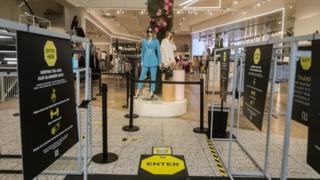
    Signage reminding shoppers of social distancing rules in a River Island store in Liverpool, as shops make preparations to reopen following the introduction of measures to bring England out of lockdown.

    Image copyright
    PA Media

    Image caption

    Signs remind shoppers of social distancing rules in a River Island store in Liverpool

    All non-essential shops will be allowed to reopen in England on Monday, the business secretary has confirmed.

    Alok Sharma said “we continue to meet” the government’s five tests for lifting coronavirus lockdown restrictions.

    He said retailers can open as long as they follow safety guidelines, or they could face enforcement notices.

    But asked about the possibility of reducing the 2m social distancing rule, Mr Sharma said “we keep these matters under review” but did not give a date.

    He also said pubs, bars, restaurants and hairdressers will not be able to reopen until 4 July “at the earliest”.

    In Northern Ireland, all shops are allowed to open from Friday. No dates have been set for the reopening of non-essential shops in Scotland and Wales, although each country has set out its planned stages for lifting lockdown.

    It comes as the number of people who have died after testing positive for coronavirus increased by 286 to a total of 40,883, official government figures on Tuesday show.

    The previous day, the UK had recorded its lowest daily rise in deaths – 55 – since before the lockdown on 23 March. There tends to be fewer deaths reported on Mondays, due to a reporting lag over the weekend.

    The number of new confirmed cases in the UK has also increased by 1,387.

    • Deaths linked to coronavirus continue to fall

    Prime Minister Boris Johnson signalled in May that all non-essential shops would be allowed to reopen in England on 15 June.

    Confirming that it was still going ahead at the daily Downing Street briefing on Tuesday, Mr Sharma said the change would allow the High Street to “spring back to life”.

    He said businesses must follow the government’s social distancing and hygiene guidelines published last month, and all retailers that open must complete a coronavirus risk assessment.

    Enforcement notices can be issued if shops reopen without the safety steps in place, Mr Sharma added.

    Image copyright
    Getty Images

    Image caption

    A member of staff at a south London furniture store tests a customer’s temperature

    Image copyright
    EPA

    Image caption

    Open air markets were among the businesses allowed to open at the start of June

    Some retailers have already said they will open their stores in England gradually from 15 June.

    Department store John Lewis will only open 13 branches initially, while Next will only open 25 of its 500 stores at first.

    Some shops, such as supermarkets, corner shops, banks, pharmacies and petrol stations have been able to remain open during the coronavirus lockdown.

    And others – including furniture stores, open-air markets and car showrooms – were allowed to reopen at the start of June.

    How will shopping be different?

    Media playback is unsupported on your device

    Media captionShopping will look different when stores reopen in England – here are some tips on staying safe

    Perspex screens at the tills and floor markings to keep shoppers 2m (6ft 5ins ) apart have already become a regular fixture in supermarkets. And those measures are also likely to feature in other shops.

    But some more unfamiliar measures are also expected to be put in place to try to reduce the spread of the virus.

    Shoe shop Kurt Geiger will put footwear aside for 24 hours after a customer has tried them on, and Waterstones has said it will quarantine books for 72 hours after people have touched them.

    Stores have been asked to encourage people to shop alone, if they can, and talk to local authorities about providing extra parking and bike racks where possible, to stop people using public transport.

    Read more about shops reopening.

    Pubs and restaurants

    Mr Sharma said other businesses such as restaurants, pubs, bars and hairdressers will remain closed until 4 July at the earliest, as per the government’s “road map”.

    Pub companies have called on the government to halve the 2m rule, saying many pubs would struggle to operate.

    The trade body UK Hospitality estimated that, with a 2m rule still in place, outlets would be able to make about 30% of normal revenues, whereas 1m would mean about 60-75%.

    Asked about the distance, Mr Sharma said: “We, of course, take advice from our scientists and of course when it is safe to do so we will see whether you can move to a shorter distance but ultimately we keep all of these things under review.”

    He acknowledged that other countries had moved to shorter distances but said “they are further along in terms of their road map, in terms of opening up businesses”.

    It comes as the government dropped its plan to get all of England’s primary schoolchildren back for a month before the summer holidays begin in July.

    Labour’s Rebecca Long-Bailey expressed “dismay” at how the plans for bringing back pupils had been handled, while head teachers’ leaders said the plan was never practical.

    In other developments:

    • People in Wales have been asked to wear face coverings on public transport and other places where social distancing is not possible
    • Holiday firms are being warned they face court action if they refuse to give refunds to customers who had trips cancelled because of the pandemic
    • Less than one fifth of UK deaths in the last week of May were linked to coronavirus, according to new figures which show the number of weekly deaths continue to fall
    • The League One and League Two football seasons have ended early and both tables will be settled on points per game