Category: Business News

  • Debenhams to close more stores with the loss of 300 jobs

    Debenhams

    Image copyright
    Getty Images

    Debenhams is closing another three stores as the retailer grapples with falling High Street sales made worse by the coronavirus lockdown.

    Stores at Milton Keynes, Watford and the Metrocentre, Gateshead, will not re-open after lockdown restrictions are eased, meaning about 300 job losses.

    Debenhams said it had failed to agree new rental terms with landlord Intu, itself in financial trouble.

    It means 20 Debenhams outlets will now be closed permanently.

    Last week, the retailer set out plans to re-open more than 50 shops in England and Northern Ireland with the easing of the lockdown. As part of a restructuring, Debenhams has struck deals with landlords to keep 120 stores open.

    The group collapsed into administration for the second time in a year in April after coronavirus heaped pressure on the business.

    A spokesperson said on Tuesday: “Sadly we have been unable to agree terms with the landlord. As a result these stores will not be re-opening in line with the rest of the chain next week. We greatly regret the effect on our colleagues, who have served our customers with commitment and dedication.”

    • Debenhams to close five more stores when lockdown ends
    • Shopping centre giant warns of debt default risk

    In addition to store closures, Debenhams has been cutting jobs at its head office and closing the majority of its store cafes in a bid to cut costs.

    More than 4,000 jobs will be lost as a result of the restructuring. Debenhams collapsed into what is described as a “light touch” administration, where the current management remains in place while the business cuts costs and finds fresh investment.

    Image copyright
    AFP

    Debenhams’ bank lenders are said to remain supportive, according to the BBC’s business correspondent, Emma Simpson. They took control of the chain when it fell into administration last year, after struggling for years to keep up with the competition.

    Much of the High Street was in bad shape even before the lockdown. Several big names had already either shut for good or restructured, and retail analysts predict more closures over the next few months.

    Many retailers and restaurants have been trying to renegotiate lower rents as part of their survival plans, putting financial pressure on landlords.

    Last month, Intu, whose assets also include Manchester’s Trafford Centre, warned that it risks defaulting on its debts unless its lenders give the firm significant breathing space.

    The BBC has contacted Intu for comment on Debenhams’ closures.
  • PG and Yorkshire Tea tell anti-racism opponents ‘don’t buy our tea’

    Yorkshire Tea

    Image copyright
    PA

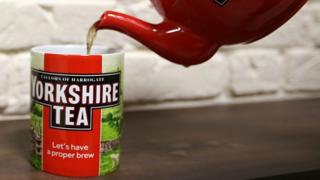
    Tea brands Yorkshire Tea and PG Tips have come out in support of the Black Lives Matter movement (BLM) following boycott threats from rightwing critics.

    It began when Laura Towler, a right-wing vlogger based in Yorkshire, praised her local brand for not having voiced support for the movement.

    Yorkshire Tea said it had not yet commented on the BLM protests as it had been “taking time to educate” itself.

    It tweeted: “Please don’t buy our tea again.”

    In recent days, brands across the world have shown their support for Black Lives Matter following the death of George Floyd – the black man who died while being restrained by a Minnesota police officer.

    Yorkshire Tea said: “We stand against racism.”

    PG Tips, which is owned by consumer goods giant Unilever, soon lent its support to its rival as right-wing commentators urged a boycott on Twitter.

    “If you are boycotting teas that stand against racism, you’re going to have to find two new brands now #blacklivesmatter #solidaritea,” the brand tweeted .

    It prompted a flurry of support online, with some saying the brands had made them feel proud to be British.

    There were also calls for other big tea brands, such as Twinings and Tetley, to show their support of BLM.

    Some however accused Yorkshire Tea of “virtue signalling”, noting the tea industry’s historical associations with colonialism and slavery.

    Others accused it of supporting riots, while Ms Towler changed her Twitter profile to read: “Disavowed by Yorkshire Tea.”

    On Monday, Amazon boss Jeff Bezos shared an email exchange with a customer who had criticised his firm’s support of the movement.

    In a statement on his Instagram page, Mr Bezos said: “This sort of hate shouldn’t be allowed to hide in the shadows. You’re the kind of customer I’m happy to lose.”

  • Coronavirus: Holiday firm reverses no-refund policy

    Booking a hotel

    Image copyright
    Getty Images

    The holiday firm behind Hoseasons and Cottages.com has agreed to give customers refunds for trips which have been cancelled because of the coronavirus crisis.

    The Competition and Markets Authority said Vacation Rentals had changed its policy after action by the regulator.

    The CMA said a “significant proportion” of complaints it received about holiday lettings were about Vacation Rentals.

    However, the firm said it had been offering refunds since 30 April.

    This date is when the CMA published guidance to travel firms on consumer rights and refunds, a Vacation Rentals spokesman said.

    “We believe we have acted fairly and responsibly at all times,” the spokesman said. “We responded and adapted to the evolving issues caused by the Covid-19 pandemic whenever new guidelines from the government were made available.”

    The regulator said Vacation Rentals voluntarily changed its policy after originally failing to offer refunds to all customers whose trips were cancelled.

    The company has now given a formal commitment that customers will have the option of a full refund if a booking has been cancelled because of restrictions associated with the coronavirus outbreak, the CMA said.

    • Airlines warned over passenger refund rights
    • Coronavirus: Can I get a holiday refund?

    In a statement, the CMA said: “The CMA’s Covid-19 Taskforce has so far received around 4,500 reports about UK holiday rental companies, with complaints about Vacation Rentals making up a significant proportion of those reports.”

    However, Vacation Rentals maintains it had been offering refunds for some time.

    A spokesman said: “Following the CMA’s statement on 30 April clarifying its view on the law on cancellations of consumer contracts during the Covid-19 pandemic, we acted immediately and expanded the options available to any customers who were due to travel during the government imposed lockdown period to include a full cash refund.

    “By the time the CMA’s investigation into our business commenced, we were already acting in line with the CMA’s guidance.”

    The CMA is hoping that by trumpeting its success with one holiday let provider, it can push the others into paying full refunds.

    There are plenty of others which have been reluctant to pay full refunds, in some cases arguing that they are simply the agents and should not be liable.

    It is important that people who have been fobbed off with vouchers can now go back and demand their money, even if they accepted them.

    Companies may now decide there is no point in holding out against the CMA if they are going to have to re-open previous cases as well.

    Other lettings firms would face now face “further scrutiny”, said the CMA. Despite consumer law on refunds being clear, the regulator said other holiday lets firms had not yet agreed to do the same as Vacation Rentals.

    Andrea Coscelli, chief executive of the CMA, said: “Our Covid-19 Taskforce is working hard to ensure that consumers get what they are entitled to, so it’s good news that Vacation Rentals has agreed to offer people the refunds they are due. We welcome this step and other holiday lets firms must now follow suit.”

    He acknowledged that some firms faced financial challenges, “but it’s not right that people are being left hundreds or even thousands of pounds out of pocket – on top of having to sacrifice their holidays.

    “Consumer protection law exists for a reason; businesses must observe the law or face the possibility of enforcement action.”

    The CMA said that common complaints it had received included companies refusing to provide full refunds at all or offering only vouchers instead of cash refunds.

  • Coronavirus: Cathay Pacific gets $5bn state-backed bailout

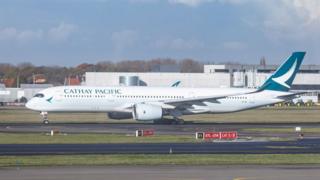
    Cathay Pacific Airbus A350-900 aircraft as seen departing from Brussels National Airport.

    Image copyright
    Getty Images

    Cathay Pacific has said it will get a HK$39bn (£4bn; $5bn) Hong Kong government-backed bailout, as it struggles in the face of the coronavirus pandemic.

    As part of the restructuring plan the company said it will also implement another round of executive pay cuts.

    Cathay’s shares were suspended earlier today before the announcement.

    It comes as airlines around the world are struggling to survive due to global travel restrictions.

    Cathay has grounded most of its flights due to coronavirus-related travel curbs. It has been flying only cargo and a cut back passenger schedule to major destinations such as Beijing, Los Angeles, Singapore, Sydney, Tokyo and Vancouver.

    “Cathay Pacific has explored available options and believes that a recapitalisation is required to ensure it has sufficient liquidity to weather this current crisis,” the company said in a statement to the city’s stock exchange.

    The carrier has furloughed some pilots at overseas bases and cut cabin crew roles in the US and Canada since the start of the coronavirus pandemic, but has not announced major permanent job cuts.

    Last month the company announced a HK$4.5bn loss at its airlines Cathay and Dragon during the January to April period and warned of a “very bleak” outlook.

    The airline also sold six Boeing 777-300ER jets and associated equipment for more than $700m (£551m) in March.

    Shares in Cathay and major shareholders Swire Pacific and Air China halted trading on Tuesday morning pending an announcement.

    Swire has a 45% stake in Cathay, while Air China owns 30%.

  • UK to start post-Brexit trade talks with Japan

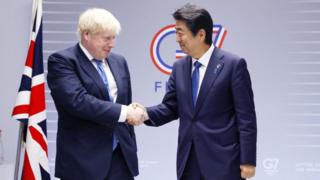
    British Prime Minister Boris Johnson and Japanese Prime Minister Shinzo Abe shake hands during their bilateral meeting on the sidelines of the G7 Summit.

    Image copyright
    Getty Images

    Image caption

    Prime Ministers Boris Johnson and Shinzo Abe at the 2019 G7 Summit

    The UK and Japan are set to begin talks on Tuesday aimed at reaching agreement on a post-Brexit trade deal.

    The negotiations come as London and Tokyo work towards replacing the agreement Britain currently has with Japan through the European Union.

    Without a new deal by 1 January 2021 the two countries will default to World Trade Organization trading terms.

    That would mean tariffs and obstacles to commerce between the UK and its fourth-largest non-EU trading partner.

    After decades of sharing its trade policy with the European Union, Britain is now embarking on free trade negotiations with countries around the world.

    Last month the UK launched formal talks with the United States and is also hoping to reach a trade agreement with the EU by the end of this year.

    Discussions with Brussels have proved to be particularly difficult, with no agreement so far on even the basic structure of what will be negotiated.

    Discussions with Japan will initially be held via video link and be between the UK’s International Trade Secretary Liz Truss and Japan’s Minister for Foreign Affairs  Toshimitsu Motegi.

    Ms Truss said that she hopes to build on the existing pact between Tokyo and Brussels: “We aim to strike a comprehensive free trade agreement that goes further than the deal previously agreed with the EU, setting ambitious standards in areas such as digital trade and services.”

    “This deal will provide more opportunities for businesses and individuals across every region and nation of the UK and help boost our economies following the unprecedented economic challenges posed by coronavirus,” Ms Truss added.

    According to British government figures, trade between the two countries totalled £31.4bn last year, with 9,500 UK-based businesses exporting goods to Japan.

    The UK hopes that a free trade agreement with Japan will help it to eventually join the Comprehensive and Progressive Agreement for Trans-Pacific Partnership (CPTPP).

    Membership of the 11-member CPTPP, a trade agreement that stretches from Australia to Chile, would significantly improve access for UK businesses to markets across the Asia-Pacific region.

  • Coronavirus: May ‘another month of struggle for retail’

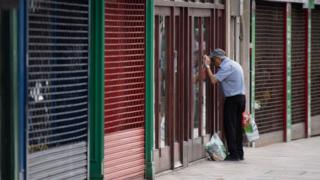
    A man looks into the window of a closed coffee shop in Cardiff

    Image copyright
    Getty Images

    May was another tough month for retail as coronavirus lockdown measures continued, a trade body says.

    Total UK sales fell by 5.9% compared with the previous year, dragged down by temporary shop closures, the British Retail Consortium (BRC) said.

    Online sales growth rose fifteenfold to 60.2%, but failed to offset this drop.

    Separately, Barclaycard figures suggested a further boost in supermarket sales as people made the most of warm weather.

    May was “yet another month of struggle for retailers across the country”, the BRC’s chief executive Helen Dickinson said.

    The BRC and KPMG survey suggested a decline in sales that was the second worst on record, after a huge drop in April.

    “For those shops whose doors remain shuttered, it was once again a tough month and even those who stayed open suffered reduced footfall and huge costs implementing social distancing measures,” she added.

    “While the month showed record growth in online sales, many retailers will be anxious to see whether demand returns to our High Streets when non-essential shops reopen from 15 June.”

    Online sales accounted for almost 62% of all retail sales in May, the survey said.

    In April, online sales accounted for about 70% of all sales, but previously it was 43.5% in March, 31% in February. And prior to February, online sales had only accounted for around 20% of all sales.

    Picnic peak

    Despite the overall drop in total retail sales, food sales rose strongly in May by 8.7% like-for-like, “with consumers taking to their local parks for beers, barbeques and picnics,” Ms Dickinson said.

    Image copyright
    Getty Images

    Image caption

    Food sales rose in May ‘as consumers went to parks for picnics’ says BRC

    Computing and office supplies sales also did well, as did fitness equipment, continuing a lockdown trend, the BRC said. Toys and baby equipment rose too, it said.

    However, sales of health and beauty products, furniture, clothing, footwear and jewellery all fell.

    “The disparity between different types of retailers and categories continues, with clear divides between essential and online versus non-essential and physical,” said Paul Martin, the UK head of retail at KPMG.

    “Many non-essential categories – especially fashion – continued to attract limited demand, which will increase the pressure on them in the coming months.”

    He added that although stores would be opening again from 15 June onwards, it would be “gradual” with safety the most prominent concern, and some shops might not open at all

    “Stores may soon have the greenlight to re-open but it will be a gradual affair with safety front of mind, and some doors may not reopen at all.

    “Covid-19 has acted as an accelerant in the shift towards having less of a physical presence, not least due to the obvious need to radically reduce costs for survival,” he added.

    Over the longer term, the temporary closures of many High Street shops have had a huge effect on non-food in store sales, the BRC figures suggested.

    Over the three months to May, non-food in store sales dropped 50.3% on a total basis.

    Supermarket sweep

    The data from Barclaycard indicates that supermarket spending rose by 24.5% in May.

    This increased to 27% in the week preceding the Victory in Europe (VE) Day weekend “as Brits made the most of the sunny bank holiday,” it said.

    Continuing another lockdown trend, consumers “remained loyal to local specialist food and drink outlets, such as greengrocers and independent convenience stores, with the category seeing a growth of 42.5% – the highest increase since restrictions were introduced,” Barclaycard said.

    The higher spending in supermarkets helped offset a 49.7% drop in spending on fuel, Barclaycard said. Roads were much quieter in May as lockdown measures continued.

  • Pandemic pushes US into official recession

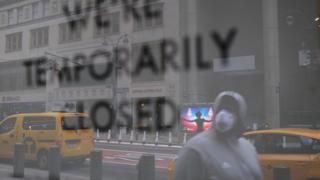
    A business closed sign in NYC

    Image copyright
    Getty Images

    The economic downturn in the US triggered by the pandemic has been officially declared a recession.

    The National Bureau of Economic Research made the designation on Tuesday, citing the scale and severity of the current contraction.

    It said activity and employment hit a “clear” and “well-defined” peak in February, before falling.

    The ruling puts a formal end to what had been more than a decade of economic expansion – the longest in US history.

    Meanwhile, US markets rose by more than 1% on Monday, as investors remained optimistic that the downturn will be short-lived.

    A recession was expected after the US economy contracted 5% in the first three months of the year.

    Employers also reported cutting roughly 22 million jobs in March and April, as restrictions on activity intended to help control the virus forced many businesses to close.

    Some economists are hopeful that the job losses have now stopped, and a rebound has begun. In May, US employers added 2.5 million jobs.

    The National Bureau of Economic Research, a private research organisation, said it viewed the scale of the decline that started in February as more significant than its duration.

    “The unprecedented magnitude of the decline in employment and production, and its broad reach across the entire economy, warrants the designation of this episode as a recession, even if it turns out to be briefer than earlier contractions,” it said.

    The bureau typically defines a recession as an economic contraction that lasts “more than a few months”.

    It has declared 12 recessions since 1948, the longest of which was the Great Recession, which lasted 18 months, from December 2007 to June 2009.

    Markets recover

    US financial markets, which tumbled in February amid signs of the economic collapse, have been on the upswing since March, due to investor hopes that the downturn will prove short-lived.

    The Nasdaq index closed at a new high on Monday, gaining 1.1% to top its pre-pandemic record.

    Image copyright
    Getty Images

    Image caption

    Employees screened by healthcare workers before entering the New York Stock Exchange, which partially reopened in late May

    The S&P 500 and Dow Jones Industrial Average also gained more than 1%. The two indexes are now less than 10% lower than their pre-pandemic peaks.

    US President Donald Trump has celebrated the rebound.

    “Big day for Stock Market. Smart money, and the World, know that we are heading in the right direction. Jobs are coming back FAST. Next year will be our greatest ever,” he wrote on Twitter on Monday.

    Many economists have warned that the economic pain is likely to linger, even if the worst has passed.

    The World Bank on Monday said it expected the global economy to shrink by 5.2% this year, in the deepest recession since the second world war.

    It forecast a 6.1% contraction in the US and said the Euro area could shrink 9.1%.

    While global growth of 4.2% is expected to return next year, the bank warned that the outlook is “highly uncertain and downside risks are predominant, including the possibility of a more protracted pandemic, financial upheaval and retreat from global trade and supply linkages”.

  • Coronavirus: Mulberry plans to axe a quarter of its workforce

    Image copyright
    Mulberry

    Mulberry says it plans to cut 25% of its worldwide workforce, the vast majority of which work in the UK.

    The high-end fashion brand, which is best known for its leather goods, employs 1,400 people, including 1,140 in the UK.

    The company said in a statement it would start reopening UK stores from 15 June.

    But it said social distancing measures and reduced tourist and footfall levels would continue to affect its income.

    Mulberry was founded in Somerset in 1971, where its two factories are still in production.

    As well as luggage and handbags – some of which carry a price tag of more than £1,000 – it also makes footwear, jewellery and eyewear.

    Thierry Andretta, Mulberry’s chief executive, said the temporary closure of its physical stores would continue to have a marked effect on business.

    Mulberry said it had been able to re-open stores in China and South Korea and, more recently, some stores in Europe and Canada.

    It has 120 stores in 25 countries, but also ships to 190 countries around the world.

    But it said that although the digital sales performance had been good, it could not fully offset the fall in demand caused by store closures.

    The company said: “Even once stores reopen, social distancing measures, reduced tourist and footfall levels will continue to impact our revenue. As a result of this, we must manage our operations and cost base accordingly to ensure the company is the correct size and structure to reflect market conditions.”

    The consultation process will last 45 days and affected staff are being contacted.

    Mulberry is one of the leading fashion brands that switched production from luxury goods to making medical equipment.

    Last month it said it had set its handbag factory in Somerset to making 8,000 gowns for NHS workers in Bristol.

    Earlier this year, Mike Ashley’s Frasers Group retail business bought a 12.5% stake in Mulberry.

    Mulberry has concession outlets within House of Fraser and also throughout John Lewis’s department stores.

  • BP to cut 10,000 jobs as virus hits demand for oil

    BP logo

    Image copyright
    Getty Images

    BP has announced plans to cut 10,000 jobs amid following a global slump in demand for oil because of the coronavirus crisis.

    The oil giant had paused redundancies during the peak of the pandemic but told staff on Monday that around 15% will leave by the end of the year.

    BP has not said how many jobs will be lost in the UK but it is thought the figure could be close to 2,000.

    Chief executive Bernard Looney blamed a drop in the oil price for the cuts.

    Losing millions

    In an email to staff, he said: “The oil price has plunged well below the level we need to turn a profit.

    “We are spending much, much more than we make – I am talking millions of dollars, every day.”

    Countries across the globe have ordered people to stay indoors and not travel, which has caused a slump in demand for oil. As a result, the cost of oil fell to less than $20 a barrel at the peak of the crisis, less than a third of the $66 it cost at the start of the year. It has since partly recovered to around $42 a barrel.

    That has taken a toll on the industry, sparking warnings that 30,000 UK jobs could be lost as a result of the crisis.

    BP employs around 15,000 people in the UK. The firm’s office-based workers are expected to bear the brunt of the redundancies, which will not affect any of its retail staff.

    “It was always part of the plan to make BP a leaner, faster-moving and lower carbon company,” Mr Looney – who took over as the boss of BP in February – said in his email to staff on Monday.

    Image copyright
    Getty Images

    “Then the COVID-19 pandemic took hold,” he said. “You are already aware that, beyond the clear human tragedy, there has been widespread economic fallout, along with consequences for our industry and our company.”

    In April, BP said it planned to pay a $0.11 per share dividend to shareholders and in an announcement on Monday, the company said it would still make that payment later this month.

    Energy expert Professor David Elmes from Warwick Business School said other firms would question how much they can hand out to shareholders as a result of the crisis.

    “The job losses at BP are symptomatic of the wider challenges facing the industry,” he said. “Coronavirus has reduced oil demand and the price per barrel has plummeted, but that has happened in a wider context of short-term and long-term decline.”

    “All firms in the sector will all be looking at how they can cut costs, shift their activities to the lowest cost field, trim investment, and thinking hard about what dividend they can pay.”

  • Pubs may re-open this month in ‘save summer’ move

    people at pub

    Image copyright
    Getty Images

    Pubs and restaurants could re-open earlier than planned after warnings the sector faces a wave of job losses.

    Firms were preparing to start serving customers outdoors from 4 July, but 22 June is now being considered by ministers backing a “save summer” move.

    The Cabinet is expected to discuss the issue on Tuesday, along with possibly relaxing the two-metre distancing rule.

    Trade body UK Hospitality said opening earlier would be welcomed, but easing social distancing was more important.

    Business Secretary Alok Sharma has reportedly warned Prime Minister Boris Johnson that 3.5 million jobs are at risk in the hospitality sector because of the coronavirus lockdown

    A group of ministers, dubbed the “save summer six” and including Chancellor Rishi Sunak, are said to be keen to get the hospitality sector’s key summer season underway earlier than planned.

    Pubs, restaurants and cafes would be able to serve customers in gardens, terraces, marquees, and similar outdoors areas.

    But it comes amid growing concern about whether the government is easing the lockdown too early, risking a resurgence of infections.

    Kate Nicholls, chief executive of UK Hospitality, said re-opening sooner was welcome, but she questioned if two weeks would make much difference to a sector that has been in deep freeze for weeks.

    “The significance is that it does at least give us momentum – allowing businesses to plan and customers to book. July 4 had always only been an aspirational date to start re-opening,” she said.

    “This gives some certainty about direction of travel. Some businesses have not opened since last November, because they are seasonal. It is important to start as soon as they can.”

    Not enough

    But re-opening could not be done overnight, she said. Businesses had to re-stock and bring back staff from furlough, for example. “It takes time, so the fact that there are talks about a specific date is helpful.”

    However, more helpful would be a relaxation of the two-metre separation rule, something pubs and restaurants say could be impossible to police. Ministers are thought to have spoken to counterparts in Denmark about the success of that country’s one-metre rules.

    UK Hospitality has estimated that, with a two-metre rule, outlets would be able to make about 30% of normal revenues, whereas one-metre would mean about 60-75%.

    The issue will be on the agenda at Tuesday’s Cabinet meeting, which is also expected to discuss a relaxation of planning rules to make it easier for pubs and restaurants to use outdoor spaces.

    Ms Nicholls pointed out that for many outlets, especially those in cities, the only outdoor spaces were pavements.

    And she emphasised that just being able to serve customers outdoors would not be enough to save the sector from closures and job losses. Without tourists or the usual supply of customers from offices and shops, many pubs and restaurants would not survive, she said.