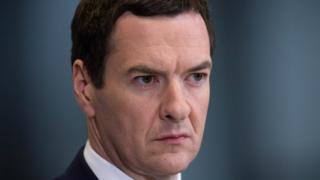
Former chancellor of the exchequer George Osborne is to stand down from his role as editor of London’s Evening Standard newspaper.
Osborne took on the job in March 2017, after having held the nation’s purse-strings from 2010-2016.
His replacement is Emily Sheffield, a columnist on the newspaper, BBC Media Editor Amol Rajan confirmed.
Osborne is moving to the more managerial role of the newspaper’s editor-in-chief.
Image copyright Getty Images
Image caption
Emily Sheffield [L] is the sister of Samantha Cameron, the wife of ex-prime minister David
Rajan said the print title will continue for now but is in “desperate financial trouble”.
In response, the incoming editor tweeted that the newspaper “remains a core element to this outstanding legacy news organisation.
“It has survived this crisis and it will survive many more,” added Sheffield.
Amol Rajan: Why saving the (print) Standard will be tough
The newspaper’s owner, Evgeny Lebedev, said he was “delighted” Sheffield was taking the helm at the newspaper and was “very pleased” Osborne would be editor-in-chief.
Osborne thanked his colleagues at the newspaper and said of his replacement: “She will bring creativity, commitment and experience to the job – and take the Standard, online and in print, through the next exciting chapter in its long history.”
Osborne is also chair of the Northern Powerhouse Partnership and holds a £650,000-a-year post advising the investment fund BlackRock.
Last year he was made chairman of a panel of advisers to Exor, which owns the Italian football club Juventus and has major stakes in Ferrari and Fiat Chrysler cars.
Osborne left government in 2016 after the Brexit referendum and he stood down as MP for Tatton in Cheshire in 2017.
According to The Guardian, prior to the Covid-19 lockdown, the Evening Standard’s circulation was about 800,000 daily copies in the capital, but it was struggling due to an industry-wide decline in advertising revenues.
Due to its reliance on readers using public transport, the Evening Standard was reported to have distributed just over 423,000 copies a day in April, after the nation went into lockdown.
Image copyright Getty Images
Osborne’s replacement, Sheffield, will remain director of a female news brand she launched called This Much I Know, and will be “tasked with making it a digital first operation” added Rajan.
“That’s a extremely difficult challenge for a title so heavily dependent on print for its income,” he tweeted.
“As an ad-funded title reliant on footfall, the Standard has been devastated by the pandemic.”
Last month the industry’s auditor said newspapers will no longer have their sales figures automatically published.
The Audit Bureau of Circulations (ABC), which records and audits sales, usually publishes figures every month.
But ABC said publishers were growing concerned about a “negative narrative of decline” in newspaper sales.
Follow us on Facebook or on Twitter @BBCNewsEnts. If you have a story suggestion email
Image caption
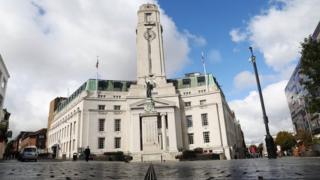
Recent analysis found Luton was in the top 10 in the UK for places where jobs are most at risk of furloughing
The UK economy shrank by a record 20.4% in April as England spent its first full month in lockdown because of the coronavirus pandemic. What does this number mean for a town such as Luton, which largely relies on the movement of people?
‘I can’t wait to get back to normality’
Image copyright Nakotey Jackson Odjidja
Image caption
Nakotey Jackson Odjidja is looking for work in the Luton area
Nakotey Jackson Odjidja was made redundant from a footwear company when lockdown began.
“For me personally I’m losing my spirit a little bit with not working and being forced to stay home,” the 39-year-old, from Luton, said. “I can’t wait to get back to normality.”
Mr Odjidja has signed up with a recruitment agency to help him find work, but he lives in a town that his council says is one of the most vulnerable to the financial impact of coronavirus.
“Most people here work in warehouses or factories in the town. When I moved here from London in 2012 I was shocked just how many of the people here work in those kind of jobs.
“Things are gradually starting to open up in the town and there are a few shops open in The Mall [shopping centre] now, so the mood is starting to pick up but I think there will be a lot of suffering after all of this.”
What is the jobs market like in Luton?
Image copyright Getty Images
Image caption
EasyJet, which has its headquarters in Luton, has announced major job cuts
In normal circumstances, April would have seen countless holidaymakers flock to the town as a gateway to their Easter break destination of choice.
Luton Airport is the UK’s fifth busiest airport – with more than 18 million users in 2019 – and any loss of travellers inevitably causes ripples to be felt in the local economy.
About 40% of the area’s employment relies on a fully functioning airport, says Luton Borough Council.
Travel firm Tui, which has a base in Luton, has warned 8,000 jobs would go as it tries to cut costs by 30% in a major restructuring.
The airline EasyJet has its headquarters in the town, and has said it will cut up to 30% of its workforce – about 4,500 jobs – as it struggles with a collapse in air travel caused by the virus pandemic.
Image copyright Getty Images
Image caption
Luton Airport is a major part of the town’s economy
An employee for the airline, who was furloughed at the start of lockdown, said it had been a “difficult time” with “reduced pay on furlough and then redundancies”.
“Friends and colleagues are affected and we are all going through some pain,” he said.
The employee said despite the situation, EasyJet have been “very good” and “tried to support as much as they can through furlough top up payments and enhanced voluntary redundancy options”.
In 2017, Luton lost another big employer when the airline Monarch collapsed. Last year the airline’s engineering arm, which was based at London Luton Airport, went into administration – leading to the loss of 408 jobs.
Image copyright MAEL
Image caption
Monarch Aircraft Engineering Limited was established in 1967 and was based at London Luton Airport
The EasyJet worker, who wanted to remain anonymous, said: “We lost Monarch recently and whilst I am confident EasyJet and Tui will survive there will be some short term damage to people.
“I hope the desire to sit on a beach and go on holiday helps the industry to recover quickly, although projections are not as optimistic.”
Suresh Pulandaran works for the airport in security and operations “making sure the whole airport runs smoothly”.
Image copyright Suresh Pulandaran
Image caption
Suresh Pulandaran has worked for the airport since October 2014
The 51-year-old said that his team have gone down from having 50-70 staff on each shift to a “skeletal staff” of about 20.
He has also seen jobs within the airport being lost including baggage handlers, aircraft cleaners and check-in staff.
Mr Pulandaran said the whole situation has left him feeling “very, very sad” and he likened it to when planes were grounded in 2010 because of a volcanic eruption in Iceland.
“I’ve been in love with the airline industry since a young age.
“The industry taking a hit like this is very surreal, looking up to the sky and not hearing a plane flying or taking off from Luton was very unreal.”
In what could be seen as a further blow to the airline economy, from Monday, people travelling to the UK have faced a fine of up to £1,000 if they do not quarantine for 14 days.
Airlines British Airways, EasyJet and Ryanair have launched legal action against what they call a “flawed” policy, claiming it would have a “devastating effect on British tourism and the wider economy”.
What has been the wider impact?
Image copyright South Beds News Agency
Image caption
A Luton Borough Council finance member said cuts were “not going to be pleasant”
Recent analysis by the Centre for Cities found that Luton, with a population of more than 200,000, was in the top 10 in the UK for places where jobs are most at risk of furloughing.
Government figures show that more than 25,000 people in Luton have been placed on the furlough scheme.
And it is not just those in the airline business that have been affected.
Vehicle company Vauxhall halted production at its Luton plant – which employs 1,600 – for about two months before restrictions imposed to tackle the coronavirus pandemic were loosened.
The Recruitment and Employment Confederation has also found the number of active job postings in Luton has been decreasing steadily for the past few weeks, by about 1-2% per week.
What will happen next?
Image copyright Reuters
Image caption
Luton, which is also known for its hat-making industry, has a football club that play in the Championship
To help fund its local services, Luton Borough Council uses profits from the airport, which it owns, but has projected a £37m drop in airport revenue amid a “catastrophic” drop in passenger numbers.
That has contributed to what the council calls a “massive” £49m shortfall in its finances, leaving it needing to make £22m in cuts in an emergency budget.
Finance portfolio holder Andy Malcolm called the position “stark” and acknowledged the cuts were “not going to be pleasant”.
The council’s Labour leader, Hazel Simmons MBE, has said the authority have lobbied the government “relentlessly to understand the dire situation” the town is in.
She pleaded with government to “give us the support we need to avert catastrophe in Luton”.
A Ministry of Housing, Communities and Local Government spokesman said: “Luton Council has received £11.26m of emergency funding to tackle the pressures they have told us they’re facing while their core spending power rose by over £8.9m this financial year even before the additional funding was announced.
“We recognise some councils with strategic investments, such as airports, are put in an exceptional position by this crisis.
“We’ll continue to work closely with Luton Council to help them navigate through this difficult situation, so they can continue to serve their local community.”
On Monday, non-essential shops in England will be allowed to reopen for the first time since the coronavirus lockdown was imposed.
This includes retailers offering clothes, toys, books, furniture and electronics.
For many people stuck indoors for weeks, it will be a welcome change of scene.
But with hundreds of thousands of confirmed cases of coronavirus in the UK, shopping will not be like it was before 23 March.
Here are five ways it will be different from next week.
1. Shops will look very different
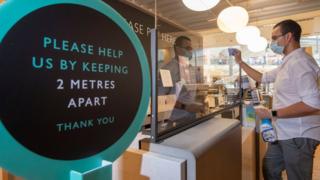
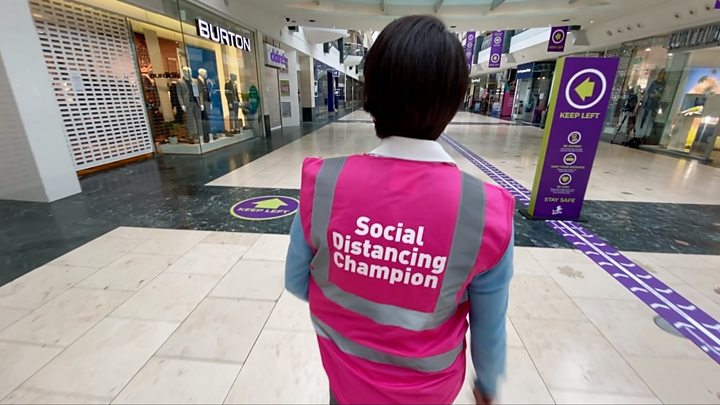
We’ve all seen the 2m markings and arrows on the floor in supermarkets showing customers how far apart they need to stay and which way to walk, and this will now be the case in other non-essential stores too.
Media playback is unsupported on your device
Media captionBluewater shopping centre prepares to reopen
People will also be asked to keep a set distance between each other on escalators. At John Lewis, for example, shoppers will be required to stand eight steps behind each other.
And only one person at a time will be allowed to use a lift at the department store, unless they are from the same household.
At Primark, two people can use a lift but only if they stand on designated spots.
When will shops open and what will the rules be?
There will be hand sanitising stations throughout shops and people will be encouraged to use hand gel when they enter a shop.
Image copyright Next
Image caption
People will be encouraged to use hand sanitiser when they enter shops
Shop assistants will look different as well. At Next, employees will wear a protective visor and have the option of wearing an additional mouth and nose mask.
Many retailers are also fitting plastic screens at tills.
And there will be a lot more cleaning going on – of shopping baskets, door handles, counters and escalator rails.
Selfridges is one of the few retailers that will allow people to try clothes on but each fitting room will be sanitised by steaming and antibacterial cleaning after each customer use.
2. Shopping will be a solo sport
Government guidelines recommend people should shop alone where possible so hopes of hitting the stores with friends will have to wait.
Some retailers, such as Primark, will allow a group of people into their shops from Monday but they must be from the same household. They will also have to follow social distancing rules once they are inside the branch.
Image copyright Getty Images
Image caption
People are being encouraged to go shopping on their own
Dan Simms, co-head of the UK retail agency team at Colliers International, reckons “the younger demographic will take advantage of the lifting of restrictions to socialise and visit retail destinations”.
But that is not expected to happen immediately from Monday as at the moment six people from different households are only allowed to meet outside.
And some shopping malls, such as Manchester’s Trafford Centre and others owned by Intu, have removed indoor seating areas to “support social distancing” and “to discourage people from gathering”.
Meanwhile, stopping for a coffee with a friend or sitting down for a bite to eat will be limited because some stores will not reopen their in-house cafes or restaurants.
Media playback is unsupported on your device
Media captionShopping will look different when stores reopen in England – here are some tips on staying safe
3. To touch or not to touch?
The British Retail Consortium’s guidance is that customers should be discouraged from handling products that they’re not going to buy. But the policy very much varies from retailer to retailer.
At Selfridges, shoppers can try on shoes and the footwear will be sanitised afterwards.
Kurt Geiger will also allow people to try on shoes – provided they use anti-bacterial hand gel first as well as a pop sock – but then the footwear will be placed in quarantine for 12 hours. But at H&M, people will not be allowed to try on footwear at all.
Image copyright Getty Images
Image caption
UK High Streets are unlikely to return to crowded scenes like this for some time
It is the same for clothing. At Next, for example, customers can handle clothes but at Selfridges, shoppers will be asked not to touch items unless they intend to buy them. If they do, the garment will be quarantined for 72 hours.
This is based on government guidance that the risk of infection from coronavirus on a surface is likely to be “reduced significantly” after a three-day period.
The majority of retailers will close their changing rooms and goods returned will be quarantined for 72 hours.
Some shops will also offer contactless returns.
At Primark, customers will present the item they want to return to a staff member at a till, complete with their receipt which will be scanned. People will receive their refund and take their item to a returns section where it will be held for 72 hours before going back on the shop floor.
At Waterstone’s, that three-day rule will also apply to books that customers browse through in store, which will allow them to “self-heal”, according to chief executive James Daunt.
Perhaps unsurprisingly, people will not be allowed to handle makeup or sniff a perfume bottle.
Image copyright Getty Images
Image caption
Hands off: Shoppers will not be allowed to pick up products such as perfume
But picking things up in a shop might be a hard habit to break for some, says consumer psychologist Kate Nightingale.
“There will be this almost automatic behaviour of your muscles where you want to touch something,” she says. “But then you’re in the middle of the flow of your hand to the counter [and] you will remind yourself, ‘No, I can’t.’”
And this can create other problems.
4. People might be grumpy
Conventional wisdom suggests everyone will be delighted to get out of the house and treat themselves to a day’s shopping from Monday.
Not quite, says Ms Nightingale.
Restrictions in shops, such as not touching items or being told which direction to walk in is likely to frustrate people already experiencing anxiety since lockdown was enforced on 23 March.
Image copyright Primark
Image caption
Many shops, like Primark, have installed plastic barriers at the tills
“We are basically living in a constant state of fear and anxiety – don’t leave the house, don’t touch anyone, don’t do exactly what you were doing before – this is not a normal way of human behaviour,” says Ms Nightingale.
That means people will be going back to shops after more than three months “with a pre-existing huge ball of negativity in our head, whether we want it or not”.
Even the smallest things can cause grumpiness. At HMV, which has already reopened stores in Canada and the US, shoppers are asked to sanitise their hands before handling any merchandise.
“There are confrontations in stores about it,” Doug Putman, the owner of HMV, told the BBC. “For some customers, they are very comfortable, for [others], they are a little less comfortable. And I think it just comes down to your personality type.”
On the whole, though, he expects people will do their bit. “What you’ve got is an overall public sentiment that even if you don’t believe that you should have to sanitise and this and that, you’re going to do it because it is the right thing.”
5. Be prepared to wait
Much like supermarkets, retailers will ask shoppers to queue to prevent overcrowding in stores and allow people to maintain 2m social distancing.
To relieve the tedium, some department store Selfridges will employ DJs to help make it a more “joyful experience”.
Image copyright Getty Images
Image caption
Selfridges hopes live DJs will bring some joy to queuing customers
It may also take longer to pay for your shopping as some retailers will close every other cashier to prevent people being in close proximity to each other.
People may also have to wait for their favourite shop to even open in the first place. While retailers like Primark will open 153 stores in England on Monday, John Lewis is initially only reopening two sites, at Poole and Kingston-upon-Thames.
It intends to reopen 11 more stores the following week. Stores are being chosen on the proviso they are easily accessible by car, “therefore reducing the reliance on public transport for partners and customers”.
Image caption
Most BA aircraft have been grounded since the lockdown
British Airways’ treatment of staff during the coronavirus crisis “is a national disgrace”, MPs have claimed.
A Transport Select Committee report accuses the airline of a “calculated attempt to take advantage” of the pandemic by cutting thousands of jobs and downgrading terms and conditions.
BA said it was doing all it could to keep “the maximum number of jobs”.
But the MPs said the airline’s actions fell “well below the standards we would expect from any employer”.
The aviation industry has been one of the hardest-hit since the pandemic forced a lockdown. Airlines including EasyJet, Ryanair, and Virgin Atlantic, and suppliers Rolls-Royce and Airbus, have announced thousands of job cuts.
BA plans a major restructuring, which could mean up to 12,000 redundancies and changes to the terms and conditions of remaining staff.
The airline warned unions that if it could not reach an agreement over the proposals it would push through the issue by giving staff notice and offering them new contracts.
That outraged the unions.
Unite and the GMB are not engaging in talks with BA. Pilots’ union Balpa has had discussions with the airline over the possibility of voluntary redundancies but said consultations were “hanging by a thread”.
‘Fire and rehire’
The MPs acknowledged that job losses in the sector “may sadly be inevitable” due to the collapse in air travel. But it urged UK-based employers not to “proceed hastily” by making large numbers of people redundant while the government’s furlough scheme was in place.
Unions told the committee that BA was operating a “fire and rehire” approach by giving redundancy notices to most of its 42,000 workers with the intention of offering jobs to a proportion of them under diminished terms and conditions.
British Airways: A breakdown in trust?
Airlines begin legal fight over quarantine plans
The Transport Committee found that BA had received nearly £35m from the government as of 14 May by furloughing 22,000 staff. The MPs also noted that at the end of 2019, the airline recorded profits after tax of £1.1bn and had cash reserves of £2.6bn.
The committee’s report said: “The behaviour of British Airways and its parent company towards its employees is a national disgrace. It falls well below the standards we would expect from any employer, especially in [the] light of the scale of taxpayer subsidy, at this time of national crisis.”
Image copyright Getty Images
Image caption
BA insists it will do all it can to protect jobs but says the airline industry is in a “new reality”.
There have been calls from MPs and unions for BA to be stripped of some of its lucrative take-off and landing slots at Heathrow Airport as punishment for the treatment of its staff.
Tory MP Huw Merriman, who chairs the committee, said: “We will continue to bring pressure where we can, including the airport slot allocation process. This wanton destruction of a loyal workforce cannot appear to go without sanction by government, parliamentarians or paying passengers, who may choose differently in future. We view it as a national disgrace.”
‘Deep crisis’
Balpa said the committee was “absolutely right” about BA. Brian Strutton, the union’s general secretary, said: “Any company using the cover of Covid to slash jobs and terms and conditions like they have needs to be called out.
“I have described consultation talks between Balpa and BA as hanging by a thread due to BA’s decision to issue a ‘fire and rehire’ threat. That remains the case.”
BA warns of job cuts in ‘survival’ letter to staff
Lufthansa plans to cut 22,000 jobs
The airline said in a statement: “We find ourselves in the deepest crisis ever faced by the airline industry – a crisis not of our making but one which we must address.
“We will do everything in our power to ensure that British Airways can survive and sustain the maximum number of jobs consistent with the new reality of a changed airline industry in a severely weakened global economy.”
BA is already embroiled in a bitter fight with its unions and a row with the government. Now MPs have weighed in against the company as well.
Its a remarkable situation for BA. It was once seen as a flag carrier for British values, a national champion, with the closest of links to the government – and a place where staff were delighted to work.
So what’s gone wrong? The Covid-19 crisis has scythed through the airline industry, leaving previously strong companies teetering. Carriers around the world are shedding jobs, as they prepare for a bleak few years.
BA is far from unique in wanting to make deep cuts. But there’s more too it than that. BA has spent the past decade trying to streamline its business, in order to compete with low-cast upstarts like Ryanair and EasyJet.
That has sometimes caused conflict with its employees – and seemingly created a legacy of mistrust and resentment, in particular among cabin crew.
Now, during a crisis, those feelings are bubbling up. At times, the company looks as though it is under siege.
The MPs’ report also urged the government to abandon its 14-day quarantine rule at the end of June.
It called for a “more targeted and nuanced border control policy”, allowing people travelling from countries where the infection rate of Covid-19 is relatively low to enter the UK on a less restrictive basis.
On Friday, BA, EasyJet and Ryanair launched legal action against the “flawed” quarantine policy. The airlines are asking for a judicial review to be heard “as soon as possible”, claiming the measures introduced this week will have a “devastating effect on British tourism and the wider economy”.
They said they have seen no evidence of when proposed “air bridges” between the UK and other countries will be implemented. Instead, they want the government to re-adopt the policy it introduced on 10 March, which required passengers from countries deemed at high risk of coronavirus infection to self-isolate on arrival in the UK.
But Home Secretary Priti Patel has insisted that the policy can “help stop a devastating second wave” of the disease.
Image caption
“I work in an industry that is mostly single white males,” says 3D illustrator Hashmukh Kerai
Employees at Ovo Energy were confused to find their company had taken part in #blackouttuesday on 2 June.
The normally bright green branding on the Bristol based firm’s Instagram posts, had changed to a black square, alongside millions of others that day, in solidarity with the Black Lives Matter movement.
An accompanying post, made by Ovo Energy’s chief executive, Stephen Fitzpatrick, said: “The events in America this past week have appalled all of us,” and then he pledged to improve diversity at the firm.
But at work, nothing had been said internally before employees saw it online.
Staff members recalled forums about diversity and inclusion being held a year ago, but no action plan or report ever emerged.
Several wondered if it might have been hypocritical for the boss to say on social media that “starting right now, we will commit to review our hiring practices to increase our representation of black and ethnic minority colleagues”.
Image copyright Ovo Energy
Image caption
Ovo Energy’s Instagram post: The reaction of some staff was sceptical
One employee said on an internal communications channel: “Thank you for showing solidarity with the blacklivesmatter movement. Forums with employees were held about this last year, and we are yet to get [any] updates?“
Another employee commented: “Oh, missed this. Would have been nice if this message had gone out to staff as well…”
Ovo Energy says that it wants to plan something “meaningful and substantive” in order to improve diversity numbers at the firm. And it intends to update people on the process.
The company also says it did provide details on the company’s intranet alongside Mr Fitzpatrick’s statement, but adds that it was sorry that some employees missed this.
Ovo Energy employees are not alone in their feelings of scepticism, and in some cases anger, towards their employer.
Image copyright Reuters
Image caption
The killing of George Floyd has reverberated not just in the USA, but in the UK too
Sweeping company statements made about the Black Lives Matter movement have been badly received by workers in various industries, for lacking communication and measurable change on an issue about which that they feel strongly.
Two black radio presenters at the UK’s biggest hip hop music radio station, Capital Xtra, said they were “embarrassed” by statements on race issued by parent company Global Radio.
When women’s lifestyle site Refinery29 blacked out its homepage for Black Out Tuesday last week, one former employee accused it of hypocrisy, while others described a “toxic company culture”. The editor-in-chief later resigned.
The editor of US food magazine Bon Appetit also resigned this week after a “brownface” photo scandal, and amid staff allegations of a culture of racism at the magazine.
Many people have taken to social media to call out perceived hypocrisy in their sector.
Hashmukh Kerai, a 3D illustrator in the advertising industry in London, posted on LinkedIn: “I’ve seen a lot of creative directors, agencies and studios supporting the current Black Lives Matters events. But, if you want real change, starting looking at what’s happening on your doorstep.”
Image copyright Hashmukh Kerai
In seven years Mr Kerai says he is yet to “walk into an agency when I am not the only person of colour working with the team”.
It is easier for him to work as a freelancer, he tells the BBC, dipping in and out of teams rather than having to fit into a culture where he feels he would never belong.
“I work in an industry that is mostly single white males. It’s still a bit like Mad Men – full of people who do not represent me,” he says.
Corey Gaskin worked as a tech reporter for Digital Trends in New York for nine months but says he was overwhelmed by what he felt was a toxic environment for women, LGTBQ people and people of colour.
He left after he was disciplined for calling a company video racist.
Image copyright Dan Baker
Image caption
Corey Gaskin says he was overwhelmed by “a toxic environment” for women, LGTBQ people and people of colour.
“Publicly accusing your co-workers of being racist is not okay,” he was told by Jeremy Kaplan, the editor-in-chief at Digital Trends in a message seen by the BBC.
Last week, when Digital Trends joined the #blackouttuesday campaign, Mr Gaskin tweeted, in response, a picture of the company’s chief operating officer, Chris Carlson, dressed as a racial stereotype at a “Gin and Juice” party the company threw in its offices two years ago.
Mr Gaskin’s remarks on Twitter unleashed a storm of current and former employees giving their own accounts about racism and sexism in the company.
The firm held a three-hour Zoom call on Wednesday to address them.
Digital Trends has released a statement with an apology accompanied by a seven-step process, which includes a new zero tolerance for racism and harassment, and commitments to equitable pay and transparency.
Because the action list has deadlines, a representative from the company said there would be repercussions if they were not met but was unclear what those repercussions might be.
Image copyright Getty Images
Image caption
Nike’s “swoosh” is one of the world’s most recognisable logos
D’Wayne Edwards also posted a LinkedIn response to a Nike post to talk about the shoe company, where he used to work as the lead designer of Air Jordan.
Nike spends billions of dollars in endorsements on black athletes and entertainers but could support their black consumers better by investing in black communities and hiring more black talent to work at Nike, he said in his post.
When he made his start at footwear company LA Gear, Mr Edwards says he was the only black person in the building.
Today, he says there are still only about 175 African American footwear designers in the industry.
Mr Edwards says one of the reasons he left his top position at Nike was because the industry targeted African American kids as consumers and as brand ambassadors but did not recruit them as employees.
“It’s hypocritical because our industry is sending a really twisted mixed message to the world. It says we care. They do care, but not enough to change what the internal workforce looks like,” says Mr Edwards.
He likes the promises brands have made on social media because they are opportunities to hold the firms accountable in future.
“You were public enough to say something,” says Mr Edwards, “Now, I want you to tell me every month, how are you doing on those actions that you presented to the world?”
This has been the very centre of the conversations he has had this week with executives from Nike, Air Jordan and Adidas.
The most common question he has received was: “What do you honestly feel we should do that is authentic?”
Image copyright Getty Images
Image caption
Michael Jordan says he will donate $100m to groups fighting for racial equality and social justice
This week Nike’s Jordan brand said it would donate $100m (£78m) over the next 10 years to African American communities in addition to a $40m commitment announced by Nike.
Mr Edwards believes educational programmes in black communities is where money should go, and has set up his own programme called Pensole, to mentor and train young black shoe designers.
“I’m tired of conversation. Let’s get some stuff done. We’ve been waiting a long time. It’s time to get some stuff done.”
Dennis the Menace will soon be teaching children about debt, spending and how supply and demand affects prices.
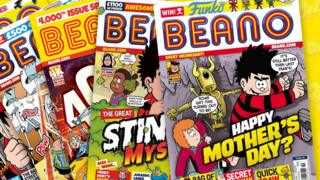
The Beano rascal and several comic book friends have teamed up with the Bank of England for a 12-lesson course about financial literacy.
Money and Me is aimed at children aged 5-11, and will be launched for schools in England, Scotland and Wales in July.
Bank Governor Andrew Bailey said he hoped it would help teachers instil confidence about using money.
The initiative, also backed by Tes, the former Times Educational Supplement, will be included in PSHE (personal, social, health and economic) curriculums.
Mr Bailey said financial literacy was “essential for everyone”.
“The Bank’s education programme is central to our role in equipping the public with sufficient financial and economic knowledge for their daily lives.
“It will support teachers in giving young people a strong sense of the importance of economic and financial decisions from an early age.”
The Money and Me primary school material will include lesson plans, videos, games and worksheets.
There have been growing calls for schools to teach personal finance and money management amid concerns about the pressures on young people to spend.
The Bank has already launched a money resource for secondary schools, EconoMe, which has been downloaded by almost 2,000 schools.
Beano Studios, the company that owns the Beano comic, already runs online courses for children on reading, emotional literacy and resilience.
Chief executive Emma Scott said: “Beano has been engaging children for more than 80 years, and we love bringing that experience to the classroom.
“Our Beano for Schools programme translates complex topics into entertaining and engaging content for both kids and teachers and we’ve had fun producing these unique financial literacy lessons so kids can enjoy learning about money and gain necessary life skills.”
US shares have opened higher, joining in European markets’ partial recovery from their heavy losses on Thursday.
The Dow Jones index was up 3.24% at 25,942 points, London’s FTSE 100 rose 1.74% to 6,182. France’s Cac 40 was up almost 2% and Germany’s Dax 1.25%.
The gains were prompted in part by a positive US consumer confidence survey.
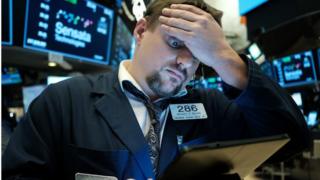
Thursday’s torrid trading left the Dow down 7% and Europe 5% lower. Despite the gains the Dow is still 1,000 points below Thursday’s opening level.
Thursday’s sell-off was prompted by a bleak view of the US economy from its central bank, the Federal Reserve, and reports of rising coronavirus cases from some US states.
On Friday, data from the University of Michigan showed a surprisingly big jump in confidence among consumers.
Markets remain volatile as investors struggle to assess the economic damage of coronavirus.
Ryan Giannotto, director of research at GraniteShares ETFs in New York, said there was no strong reason for the pick up in values: “People are just taking a breather after the outright selling yesterday,.
“There’s always going to be more headlines about coronavirus cases increasing, more tests increasing. That’s just something that markets, investors and companies are going to have to learn to deal with.”
In the UK, David Madden, analyst at CMC Markets, also said there were no strong reasons for either days’ moves:”The landscape hasn’t changed in the past 24 hours as there is still a possibility of a second wave of Covid-19 cases as countries reopen their economies.
“It is possible that yesterday’s move was just a knee-jerk reaction to the reports of rising cases, as traders have become accustomed to falling infection rates. “
He highlighted the fact that stocks were still down since Wednesday’s close.
Earlier, Asian markets reflected the downbeat trend overnight but were far less affected. IG said this highlighted the feeling that a potential second wave of coronavirus was more likely in the US or Europe.
Japan’s Nikkei ended down 0.75% at 22,305, while Hong Kong’s Hang Seng index fell 0.7% to 24,301.
Thursday’s falls on Wall Street followed a weeks-long rally that had helped shares recover some ground from the lows seen in March.
This rally was triggered by hopes that the US economy would rebound as authorities loosened restrictions put in place to try to slow the spread of the virus.
Last week’s surprise report showing US employers had restarted hiring in May helped to push the tech-heavy Nasdaq share index to new highs.
But the recovery remains tentative. On Thursday, the US Labor Department reported that another 1.5 million people had filed new unemployment claims last week. More than 30 million continue to collect the benefits, it said.
US Federal Reserve policymakers said on Wednesday that the unemployment rate could remain above 9% at the end of the year – close to the worst level of the financial crisis,
Several US states that have moved to ease lockdown restrictions, including Arizona and South Carolina, have seen an uptick in Covid-19 cases in recent days.
Toilet roll was not the only thing to disappear from supermarket shelves at the start of lockdown. Buy-one-get-one-free deals were pulled too.
There was a 15% fall in the frequency of promotions during the first month of lockdown, research by the Institute for Fiscal Studies has found.
This, in part, led to a 2.4% rise in the price of groceries in one month.
Researchers said this was the equivalent of price increases expected for a whole year.
There was also an 8% fall in the variety of grocery products on the shelves during lockdown, according to the research funded by the Nuffield Foundation, which campaigns on social policy.
“This, independently of price rises, will have a negative impact on consumers,” the authors of the report said.
‘Panic’ buying
Shoppers bulk bought various essentials just prior to, and at the start of, lockdown.
It prompted a number of retailers to put limits on the number of items being bought, ranging from individual products such as toilet roll and pasta to the entire basket of items available via supermarket websites.
Image copyright Getty Images
Image caption
Major supermarkets introduced limits on the number of in-demand items people could buy, such as toilet paper
The IFS research tracked price data of groceries such as food, drink, toiletries, cleaning products and pet food.
It found prices were 2.4% higher in the first month of lockdown, a rate more than 10 times higher than in preceding months and unprecedented in recent years.
Since then, prices had fallen slightly, but they still remained more than 2% higher than before lockdown, the report said.
“There was more grocery inflation in one month than we often see in a year,” said Martin O’Connell, co-author of the report.
“Higher prices and reduced variety have persisted in the following weeks. At a time when many households are subject to reductions in their income, higher prices for food, drinks and household goods will further feed into squeezed household budgets.”
Half of this increase was the result of fewer promotions, a factor which the IFS said was not recorded in official inflation figures, to be updated next week.
What is the UK’s inflation rate?
Could you have to pay your bank to save money?
The fall in promotions was different to during last recession, when consumers bought more goods that were on sale as their own finances were squeezed.
This time, almost all households saw their grocery bills increase.
The researchers also said that investors would have expected the coronavirus crisis to lead to prices falling, rather than rising.
“At a time when financial markets expect the Covid-19 pandemic to be a disinflationary shock, this increase in the price of groceries, which was experienced by almost all households and in almost all product categories, suggests policymakers nonetheless should remain vigilant about the prospect of higher inflation, at least for some goods and services,” said co-author Xavier Jaravel.
Image caption
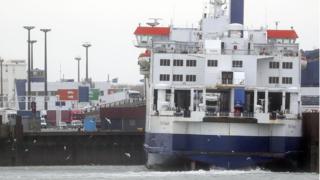
The new rules will apply to goods coming into the UK from the European Union
The government is expected to apply much less rigorous EU border checks on imports than it initially had planned, after the Brexit transition period finishes at the end of this year.
The Financial Times reports ministers have abandoned plans to introduce full checks after pressure from businesses.
A government source told the BBC it would take a “pragmatic and flexible approach” due to coronavirus.
The UK had committed to introduce import controls on EU goods in January.
But the source said ministers recognised the impact the virus was having on businesses, and so pragmatism and flexibility on imports made sense – “to help business adjust to the changes” that were now imminent.
The UK left the European Union at the end of January, but is in a transition period until the end of this year.
The government is expected to formally confirm soon it will not ask for an extension to the transition period – despite the coronavirus crisis.
However, there will be an about turn, in the short term at least, on the checks carried out on imports.
In February, Cabinet Office minister Michael Gove said import controls were “necessary” to keep the country’s borders “safe and secure” and to collect the appropriate taxes.
Now a “temporary light-touch regime” is planned at UK ports such as Dover, regardless of whether a deal is done with the EU or not, according to the Financial Times.
The proposal applies only to rules on imports, which the UK will set. Checks on exports to the EU will be determined by Brussels.
‘A lighter touch’
Brexit might have gone quiet, but it has not gone away.
Sorting out all the kit and staff to have full import controls in place by January was a big ask before the pandemic.
Doing it during one, with businesses clamouring that they are already being hammered by the virus, wasn’t practical.
So, an about turn in the short term – and a lighter touch.
Not our old friend the U-turn, sources insist, because this isn’t the long-term plan, but will help with the adjustments businesses will soon have to make.
If you thought you had heard the last of Brexit, think again.
Prime Minister Boris Johnson will meet the presidents of the European Commission, Council and Parliament remotely on Monday, as negotiations step up to attempt to secure a trade deal with the EU.
Negotiating teams in the UK and the EU have also agreed to “an intensified timetable” for July, with possible discussions in person if public health guidelines enable them during the pandemic, a Downing Street spokesman said.
No 10 said the pace of talks would be scaled up so negotiators will meet in each of the five weeks between 29 June and 27 July.
The new details came after the fourth round of negotiations failed to reach a breakthrough last week.
Speaking in Brussels, EU chief negotiator Michel Barnier accused the UK of “backtracking” on the agreed political declaration, and said there had been “no significant areas of progress”.
Mr Barnier’s counterpart in Downing Street, David Frost, said they would have to “intensify and accelerate” the process if there was to be any chance of an agreement.
Both sides also said the remote meetings had reached their limit and that face-to-face meetings would be needed in order to progress.
The UK has until the end of June to ask for the “transition period” – during which the country stays in the single market and customs union – to be extended into next year. But the prime minister has repeatedly ruled this out.
The two sides will discuss later on Friday how the terms of the UK’s exit from the EU are being implemented.
Mr Gove will speak to European Commission Vice-President Maroš Šefčovič, by videoconference, about the enforcement of the Withdrawal Agreement in areas such as citizens’ rights.
Last month, Mr Gove raised concerns that the EU was not sticking to commitments it had made to uphold the rights of UK expatriates who wished to continue living on the continent.
The UK’s economy shrank by 20.4% in April – the largest monthly contraction on record – as the full impact of lockdown was felt.
The monthly decline was outlined in figures reported by the Office for National Statistics (ONS).
The fall is three times greater than the decline seen during the whole of the 2008 to 2009 economic downturn.
The ONS also published figures for the three months from February to April, which showed a decline of 10.4%.
“April’s fall in GDP is the biggest the UK has ever seen, more than three times larger than last month and almost 10 times larger than the steepest pre-Covid-19 fall,” said Jonathan Athow, deputy national statistician for economic statistics at the ONS,
“In April, the economy was around 25% smaller than in February.
“Virtually all areas of the economy were hit, with pubs, education, health and car sales all giving the biggest contributions to this historic fall.
“Manufacturing and construction also saw significant falls, with manufacture of cars and housebuilding particularly badly affected.
“The UK’s trade with the rest of the world was also badly affected by the pandemic, with large falls in both the import and export of cars, fuels, works of art and clothing.”