UK house prices have recorded their fourth quarterly fall in a row for the first time since 2012, according to the Halifax.
The mortgage lender said that property prices between May and July were 0.2% lower than the previous quarter.
The figures, based on Halifax’s own mortgage data, showed annual house price growth had slowed to 2.1%.
A number of surveys have suggested a cooling or relatively stagnant UK housing market.
“House prices continue to remain broadly flat, as they have since the start of the year,” said Russell Galley, of the Halifax.
The Halifax said the cost of the average home rose by 0.4% between June and July, with the average property valued at £219,266.
First-time buyers will be given some cheer from the figures, which indicate that house prices are not accelerating out of reach at a pace seen previously.
A year ago, house prices were growing at an annual rate of 8.4%, but the pace has since slowed.
The Halifax says demand is weaker owing to a cocktail of weak wage growth, a rise in prices in the shops, and affordability concerns. It echoes its rival, the Nationwide, in pointing to a continuing shortage of houses on the market as a reason why prices are still rising, albeit at a slower rate, rather than having fallen.
Mark Harris, chief executive of mortgage broker SPF Private Clients, said: “Mortgage rates are staying extremely low. This state of affairs has been supporting the housing market to an extent and is likely to continue to do so with no immediate interest rate rise on the horizon.
“One of the big issues facing prospective buyers is not so much getting the mortgage they need but finding a property they wish to buy. Until supply improves, this will continue to be the case.”
Shares in Paddy Power Betfair fell by more than 5% after the bookmaker said that chief executive Breon Corcoran was standing down.
Mr Corcoran is being replaced by Worldpay chief executive Peter Jackson.
Paddy Power Betfair also said its half-year results, due on Tuesday, will report revenue growth of 9% and a 21% increase in underlying earnings.
It added that it expected underlying earnings for 2017 as a whole to be between £445m and £465m.
Paddy Power Betfair was the biggest faller on the FTSE 100 in early trade, but the index was up 18.82 points at 7,530.53.
The index was boosted by mining companies, which saw their shares rise on the back of higher prices for metals. Shares in Glencore, Anglo American and BHP Billiton were all up by about 1.6%.
In the FTSE 250, shares in QinetiQ rose nearly 6% after Goldman Sachs raised its rating on the defence technology company to “neutral” from “sell”.
On the currency markets, the pound was little changed against the dollar at $1.3041, and was also flat against the euro at 1.1075 euros.
South Korean prosecutors are seeking a 12-year jail sentence for Samsung Electronics vice chairman Lee Jae-yong.
Mr Lee is facing charges over his role in a bribery scandal which led to the ousting of the ex-President Park Guen-hye.
It is alleged he made a large donation in exchange for government support of a merger of two Samsung subsidiaries.
He has been in prison since February over the scandal, but denies any wrongdoing.
‘Closely tied to power’
At the final hearing, prosecutors called him the “ultimate beneficiary” of crimes committed in the scandal.
Prosecutors have accused Mr Lee and four other executives of bribing Ms Park’s close confidante Ms Choi Soon-sil with millions of dollars in an attempt to win presidential favours.
They are seeking terms ranging from seven to 10 years for his co-accused.
“The defendants were closely tied to power and sought personal gains,” the prosecutors said.
The prosecutors alleged the bribes were aimed at winning government support for a major restructuring of Samsung.
They said the restructuring would help to cement the leadership of Mr Lee, who was standing in as chairman for his ill father, Lee Kun-hee.
Mr Lee’s lawyers said the allegations were unjustified and the defendants never sought anything in return for the donations.
A lower court ruling is expected by 27 August, when Mr Lee’s current detention period ends.
There are still “huge gaps” in living standards between different ethnicities living in Britain, research suggests.
A typical Bangladeshi household earns £8,900 less than that of a white British household, while a Pakistani household earns £8,700 less, according to the Resolution Foundation.
The think tank said a typical black African family also earned £5,600 less than that of a white household.
But it said incomes for these ethnic groups were now beginning to grow.
According to the Resolution Foundation’s research, Bangladeshi households income grew 38% between 2001-03 and 2014-16, almost three times as fast as the 13% growth seen by white households over the same period.
Pakistani households saw their income grow by 28%, it found.
Male Pakistani and Bangladeshi workers saw median pay increase by 28% since 2001, compared to just 1% for men of other ethnicities, said the report.
The think tank said the large gap in living standards between white households and those of ethnic groups in Britain was partly down to differences in female employment within the families.
In white households 72% of women were employed, but in Pakistani and Bangladeshi households the rate was almost half this at 37% and 35% respectively.
Nonetheless, the report found that the rate of female employment within these ethnic groups had increased significantly since 2001.
It found male employment for Pakistani, Bangladeshi and Black men had also “increased substantially” over the same period.
Resolution Foundation senior economic analyst Adam Corlett said these “impressive employment gains” had helped their overall incomes grow at a faster rate than that of white households.
But he said the gap in living standards between ethnic groups and white British households remained “significant and persistent”.
“Differences in living standards between ethnicities in Britain too often go ignored,” he added.
Image caption
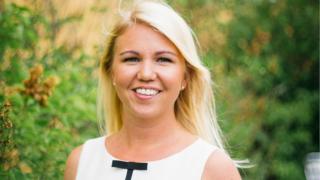
Elina Berglund Scherwitzl, co-founder of Natural Cycles
Inventing the first app in the world to be approved as a contraceptive started as a hobby project for Elina Berglund Scherwitzl.
The nuclear physicist, who’d been working on the team that discovered the Higgs boson, was tired of using hormonal contraception but wasn’t ready to have a baby.
So the Swede set about using her data skills to find an alternative.
“Like many women I had tried many different contraception options since my teenage years and hadn’t really found a solution that fit me,” she explains.
“It was in my quest for an effective natural alternative that I discovered that you can see when you’re fertile by your temperature, and for me that was really a revelation.”
Image copyright Natural Cycles
Image caption
The Natural Cycles app tells users when they are ovulating
Using complex mathematics and data analysis, Mrs Berglund Scherwitzl began developing an algorithm designed to be so precise it could pinpoint exactly when in her cycle she would ovulate.
This enabled her to map out the days when she would need to use protection, to a much higher degree of certainty than similar “rhythm” or natural planning methods.
Close monitoring
She was so pleased with the results that, together with her Austrian husband, fellow physicist Raoul Scherwitzl, she set about founding her own business called Natural Cycles.
It offers an app designed to help women around the world with their fertility and contraception needs, by allowing them to collect their own temperature data sets and closely monitor their cycle trends.
Image copyright Getty Images
Image caption
Mrs Berglund Scherwitzl was tired of using birth control but not ready to have baby
Launched in 2014, it now has some 300,000 users, who pay a monthly or annual fee for the service. In the UK a yearly deal costs £50, which includes the cost of a thermometer.
The company has attracted $8m ($6.1m) in investment and has so far made sales of more than $6m.
However, if it wasn’t for the timing of another large scientific discovery, the project may not have got off the ground so quickly.
Mrs Berglund Scherwitzl, who was raised in Malmo in southern Sweden, had been working at Cern, the Geneva-based European Organization for Nuclear Research. In 2012, after decades of research, the team she was part of finally found the Higgs boson particle, crucial to our understanding of how the universe works.
Image copyright Natural Cycles
Image caption
Mrs Berglund Scherwitzl founded the business with her husband Raoul
“A lot is about coincidence and also timing. We had just got married. The experiment was shutting down for a couple of years and I was thinking, ‘If I would ever try something outside of physics, now would be the time’.
“My husband had always wanted to become an entrepreneur, so he suggested, ‘Okay let’s leave physics and make this algorithm into an app’.”
Following several medical trials, their app became the first tech-based device on the planet to be formally certified for use as contraception, in February 2017.
It gained approval for use across the EU after getting the green light from the German inspection and certification organisation Tuv Sud.
More The Boss features, which every week profile a different business leader from around the world:
Yet the journey from launch to European certification was “a rollercoaster”, she says.
An initial approval from the Swedish Medicinal Products Agency was revoked in 2015, amid headlines about the app encouraging risky behaviour among young women in her home country, where the couple had returned to develop their business.
‘So naive’
The company was banned from marketing the app for 18 months, resulting in “a big bump in the road” for the growth of the firm.
“Since I came from the scientific angle I thought that if I just create a product that’s really good, it will sell itself and everyone will trust it. I realise that that’s not at all the case,” she admits.
Image copyright Natural Cycles
Image caption
The entrepreneur wants to support women with their health issues
“But it was maybe good that I was so naive, because if I would have known all the challenges ahead, maybe I wouldn’t have dared to do it.”
The start-up now markets itself as being “as effective as the pill”, following one of the largest clinical studies in contraception involving more than 4,000 women, published in the peer-reviewed European Journal of Contraception and Reproductive Health Care.
The researchers – which included the co-founding couple – found that 7% of women who used the app in a “typical” way (allowing for some human error) got pregnant, compared to 9% taking the pill and less than 1% using IUD coils.
Against this background, Mrs Berglund Scherwitzl accepts that her product relies on women sticking closely to the app’s instructions and therefore might not be for everyone, not least because it also fails to protect its users from sexually transmitted diseases.
Image copyright Getty Images
Image caption
The firm now wants to help women with family planning
“Just like the pill we need some effort from the user on a daily basis. But we really hope to be the default alternative if you don’t want to use hormonal contraception or IUDs,” she argues.
While the product is only currently certified in the EU, where its users are concentrated in the UK and the Nordics, it is available worldwide and, despite its earlier controversies has attracted users in some 160 countries.
Mrs Berglund Scherwitzl says that global sales have already shot up since its EU certification was confirmed in February, with the firm already more than doubling last year’s turnover of $2m.
Alongside expanding its subscription base of women seeking to avoid getting pregnant, the company is also trying to attract more customers using the app from a family planning perspective – to work out when is the best time to conceive.
Visionary couple
Continuing to build their company – which now has 30 employees based in Stockholm – while also caring for a young child has not been easy, she says. However it has guaranteed they spend plenty of time together.
“It’s our passion and our hobby. At night when we come home and have a glass of wine we talk about our goals and we become a bit more visionary than we have time to do during the work day.”
That vision involves raising awareness of how technology can be used to tackle issues linked to women’s health, something which she says has been “largely ignored because researchers are often men”.
The pair also hope to increase the number of the app’s users in developing countries and nations where religion is a barrier to contraception.
“We’ve come even further than I first hoped, and that’s an amazing feeling. But I feel like we should not stop here, she says.
“Now is really the time to grow and reach all these women in the world… Every pregnancy should bring happiness.”
Late in 1876, so the story goes, a young man named John Warne Gates built a wire-fence pen in the middle of San Antonio, Texas.
He rounded up some of the toughest and wildest longhorns in all of Texas. That’s how he described them.
Others say the cattle were a docile bunch. And there are those who wonder whether this particular story is true at all. But never mind.
John Warne Gates – who would become known as “Bet A Million Gates” – took bets from onlookers as to whether the powerful beasts could break through the fragile-seeming wire. They couldn’t.
Image copyright Alamy
Image caption
John Warne Gates was quick to see the potential of barbed wire in redefining the US landscape
Even when Gates’s sidekick, a Mexican cowboy, charged at the cattle howling Spanish curses and waving a burning brand in each hand, the wire held.
Bet-A-Million Gates was selling a new kind of fence, and the orders soon came rolling in.
Transformative
The advertisements of the time touted it as “The Greatest Discovery Of The Age”, patented by Joseph Glidden, of De Kalb Illinois. Gates described it more poetically: “lighter than air, stronger than whiskey, cheaper than dust”.
Calling it the greatest discovery of the age might seem hyperbolic, even allowing for the fact that the advertisers didn’t know Alexander Graham Bell was about to be awarded a patent for the telephone.
But while we accept the telephone as transformative, barbed wire wrought huge changes on the American West, and much more quickly.
Joseph Glidden’s design for barbed wire wasn’t the first, but it was the best.
Image copyright Alamy
Image caption
Joseph Glidden’s barbed wire would make his fortune
Glidden’s design is recognisably modern.
The wicked barb is twisted around a strand of smooth wire, then a second strand of smooth wire is twisted together with the first to stop the barbs from sliding around. American farmers snapped it up.
There was a reason they were so hungry for it.
A few years earlier, President Abraham Lincoln had signed the Homestead Act of 1862.
Uncharted territory
The act specified that any honest citizen – including women, and freed slaves – could lay claim to up to 160 acres (0.6 sq km) of land in America’s western territories. All they had to do was build a home there and work the land for five years.
Image copyright Chris Dorney / Alamy Stock Photo
Image caption
The 1862 Homestead Act set out the rules on who could own land in the western territories
It sounds simple.
But the prairie was a vast and uncharted expanse of tall, tough grasses, a land suitable for nomads, not settlers. It had long been the territory of the Native Americans.
After Europeans arrived and pushed west, the cowboys roamed free, herding cattle over the boundless plains.
But settlers needed fences, not least to keep those free-roaming cattle from trampling their crops. And there wasn’t a lot of wood – certainly none to spare for fencing in mile after mile of what was often called “The American Desert”.
Farmers tried growing thorn-bush hedges, but they were slow-growing and inflexible. Smooth wire fences didn’t work either – the cattle simply pushed through them.
Barbed wire changed what the Homestead Act could not.
Image copyright Alamy
Image caption
By the end of the Civil War, in 1865, 15,000 homestead claims had been established
Until it was developed, the prairie was an unbounded space, more like an ocean than a stretch of arable land.
Private ownership of land wasn’t common because it wasn’t feasible.
‘The devil’s rope’
Barbed wire also sparked ferocious disagreements.
The homesteading farmers were trying to stake out their property – property that had once been the territory of various Native American tribes. No wonder those tribes called barbed wire “the devil’s rope”.
The old-time cowboys also lived on the principle that cattle could graze freely across the plains – this was the law of the open range. The cowboys hated the wire: cattle would get nasty wounds and infections.
When the blizzards came, the cattle would try to head south. Sometimes they got stuck against the wire and died in their thousands.
Other cowmen adopted barbed wire, using it to fence off private ranches. And while barbed wire could enforce legal boundaries, many fences were illegal – attempts to commandeer common land for private purposes.
As the wire’s dominion spread, fights started to break out.
Image copyright Alamy
Image caption
The settlers’ barbed wire fences inflamed tensions with Native Americans
In the “fence-cutting wars”, masked gangs such as the Blue Devils and the Javelinas cut the wires and left dire threats warning fence-owners not to rebuild. There were shootouts and some deaths.
Eventually, the authorities clamped down. The fence-cutting wars ended, The barbed wire remained.
“It makes me sick,” said one trail driver in 1883, “when I think of onions and Irish potatoes growing where mustang ponies should be exercising and where four-year-old steers should be getting ripe for market.”
And if the cowboys were outraged, the Native Americans suffered much more.
These ferocious arguments on the frontier were reflected in a philosophical debate.
The English 17th Century philosopher John Locke – a great influence on the founding fathers of the United States – puzzled over the problem of how anybody might legally come to own land. Once upon a time, nobody owned anything.
Image copyright Hulton Archive
Image caption
Philosopher John Locke had a great influence on the founding fathers of the United States
Locke argued that we all own our own labour. And if you mix your labour with the land that nature provides – for example, by ploughing the soil – then you’ve blended something you definitely own with something that nobody owns. By working the land, you’ve come to own it.
Nonsense, said Jean-Jacques Rousseau, an 18th Century philosopher from Geneva who protested against the evils of enclosure.
In his Discourse on Inequality, he lamented “the first man who, having enclosed a piece of ground, bethought himself of saying, ‘This is mine,’ and found people simple enough to believe him.” This man, said Rousseau, “was the real founder of civil society”.
The importance of ownership
He did not intend that as a compliment.
But it’s certainly true that modern economies are built on the legal fact that most things – including land and property – have an owner, usually a person or a corporation.
The ability to own private property also gives people an incentive to invest in and improve what they own – whether that’s a patch of land in the American Midwest, or an apartment in the Indian city of Kolkata (Calcutta), or even a piece of intellectual property such as the rights to Mickey Mouse.
It’s a powerful argument – and it was ruthlessly and cynically deployed by those who wanted to argue that Native Americans didn’t really have a right to their own territory, because they weren’t actively developing it in the style that Europeans saw fit.
So the story of how barbed wire changed the West is also the story of how property rights changed the world.
And it’s also the story of how, even in a sophisticated economy, what the law says sometimes matters less than matters of simple practicality.
The 1862 Homestead Act laid out the rules on who owned what in the western territories. But those rules didn’t mean much before they were reinforced by barbed wire.
Meanwhile, the barbed wire barons Gates and Glidden became rich – as did many others.
The year that Glidden secured his barbed wire patent, 32 miles (51km) of wire were produced.
Six years later, in 1880, the factory in De Kalb turned out 263,000 miles (423,000km) of wire, enough to circle the world 10 times over.
Tributes have been paid to Dame Helen Alexander, the first female president of the Confederation of British Industry (CBI), who has died aged 60.
Dame Helen led the business lobby group in the immediate aftermath of the financial crisis between 2009 and 2011.
The CBI’s current president Paul Drechsler said she was “a brilliant leader” who was “widely respected”.
The Economist Group, of which she was chief executive from 1997-2008, said business had “no better ambassador”.
Dame Helen, who was married with three children, had been battling cancer for several years.
‘World-class networker’
She began her career in publishing at Faber & Faber, before moving to the Economist Group in 1985, where she became managing director in 1993 before taking the helm in 1997.
Her career also included boardroom roles at Rolls-Royce, Centrica and Northern Foods.
The number of high-profile city and business roles she had during her career meant Dame Helen was seen as a trailblazer for women in business.
Image copyright PA
Image caption
Helen Alexander, then CBI president, speaking in 2011
She was also co-chair of the Hampton-Alexander review – a government commissioned review into increasing the number of women in senior business roles.
Announcing her death, the Economist said she was “self-effacing but a world-class networker”.
It paid tribute to her leadership style, which “lacked fireworks and did not seek fame but deserved more recognition, for both its humanity and effectiveness”.
The CBI’s Mr Drechsler added: “People will remember Helen for being a great listener with a thoughtful sense of humour. She will be greatly missed by me and by everyone who knew her, both in the UK and beyond.”
Lisa Kikuchi is CEO of SenSprout which is building soil moisture sensors to help Japan’s farmers.
As part of the BBC’s Jumpstarting Japan series – meeting the Asian giant’s young entrepreneurs – Lisa says she is now developing software to automatically control crop watering.
UK consumer spending fell for the third month in a row in July, according to research from credit card firm Visa.
Compared with the same month a year ago, spending fell by 0.8%, slightly faster than the 0.2% decline in June.
Spending has now dropped for the past three months, marking the longest falling streak in over four years.
Transport and communications spending, which dropped by 6.1% year-on-year, and clothing and footwear, which fell by 5.2%, saw the biggest decreases.
Food and drink spending was down by 0.5% annually, while spending on household goods fell by 4%.
Household goods spending has either fallen or stagnated each month since last December, Visa said.
Bucking the downward trend, spending in hotels, restaurants and bars rose 6% year-on-year.
‘Some bright spots’
Visa UK & Ireland managing director Kevin Jenkins said the increase suggested “an early surge in summer staycations, as the weak pound made holidaying at home more attractive.”
But overall, he said the June figures were further evidence that households are feeling the squeeze from rising prices and stagnant wage growth.
“The drop in spending was felt across a broader range of retail sectors last month, with clothing, household goods, food and transport among the worst hit,” he added.
As well as hotels, restaurants and bars category, recreation and culture also saw a return to growth (+1.3%) after a slight fall in June.
How often have you beaten yourself up over making a mistake?
Maybe it was small, or maybe it was big, but did it really serve you and your bigger goal to get down on yourself? If you’re being honest, the answer is likely “no.”
That’s because everyone makes a lot of mistakes in their lifetimes, and those mistakes often turn out to be our biggest teachers.
But they can’t teach us anything if we shame ourselves when we make mistakes.
Instead, I invite you to practice gratitude for each mistake, see it as an opportunity to learn and let it add fuel to your fire to become better.
Sharing my thoughts on this in 5 Minute Friday, Episode 516.
 Image copyright