Category: Business News

  • No reverse on 6.1% student interest rate

    Graduates

    Image caption

    Students starting in September will face £5,800 in interest charges before they graduate, says the IFS

    The government is not shifting on plans to increase interest charges on student loans in England – which will rise to up to 6.1% from the autumn term.

    There had been speculation about a rethink over interest charges because of fears of excessive levels of debt.

    But on Tuesday the Department for Education and the Student Loans Company confirmed the proposed increase.

    The Department for Education said “borrowers will only ever pay back what they can afford”.

    Labour’s shadow education secretary Angela Rayner said young people faced a government which saw “education as something to be sold and their aspirations as something to be taxed”.

    The announcement rules out suggestions that the government was considering limiting interest rate increases for student loans on tuition fees and maintenance costs from September 2017 to August 2018.

    But there has so far been no announcement on whether the government will push ahead with another increase in tuition fees for 2018, which would put fees over £9,500 per year.

    University places

    Hundreds of thousands of young people will hear about their A-level results and university places this week – and those taking up courses this autumn will be charged 6.1% on loans as soon as they arrive.

    Image copyright
    Getty Images

    Image caption

    Jo Johnson says record numbers of poorer students are now getting university places

    With fees increasing to £9,250, the Institute for Fiscal Studies has calculated that students will have accumulated £5,800 in interest charges before they have even graduated.

    The increase from 4.6% to 6.1% in interest charges will also apply to other former students who have studied since fees were increased to £9,000 in 2012.

    The interest rate is based on the inflation rate, using the retail prices index in March, plus an additional 3%.

    During the general election, Labour campaigned for scrapping tuition fees – and in the wake of the election there was renewed debate about whether tuition fees and interest charges were unacceptably high.

    Former Labour education minister Lord Adonis has called the level of interest charges “indefensible”, and the head of the Russell Group of universities has called for a reassessment of interest rates.

    The amount of debt owed by students this year went past the £100bn level, having more than doubled in six years.

    Labour’s Angela Rayner accused the government of “sneaking these changes through without allowing MPs to vote on them”.

    “Graduate debt is already skyrocketing, and too many students fear a lifetime of debt,” she said.

    Universities Minister Jo Johnson has argued that the fee system represents a fair distribution of costs between students and taxpayers and that this provides financial sustainability for universities.

    He says that this has allowed a record number of students from poorer backgrounds to enter university.

    A Department for Education spokeswoman said: “As has always been the case, borrowers will only ever pay back what they can afford so no-one will see monthly repayments rise and only the highest earners will pay the top rate of interest.”

    The department says that the loans give “protections other lenders don’t offer”, such as not requiring repayments if income falls below a threshold of £21,000 and that any unpaid debts are paid off after 30 years.

    Get news from the BBC in your inbox, each weekday morning

  • India partition: ‘We had to start from zero once again’

    The partition of India in 1947 triggered one of the largest mass movements of people ever – Hindus moving to independent India, and Muslims moving to newly formed Pakistan. Among the millions affected, were people with businesses they had run for decades.

    Re-establishing themselves in a new homeland was painful and challenging. Yogita Limaye spoke to one business owner in Mumbai.

    Filmed by Jaltson AC, edited by Vishnu Vardhan

  • Bill Gates reduces Microsoft stake with $4.6bn donation

    Microsoft co-founder Bill GatesImage copyright
    Getty Images

    Image caption

    Bill Gates has given away $4.6bn to charity but continues to be the richest person in the world

    Bill Gates has given away $4.6bn (£3.6bn) to charity in his largest donation since 2000.

    He remains the world’s richest person, despite giving away 64 million shares in Microsoft.

    The shares are equivalent to 5% of his total fortune, currently estimated to be $89.9bn.

    Since 1994 Mr Gates, 61, and his wife Melinda have given away a total of $35bn in cash and stocks to a range of charitable causes.

    The donation was made in June but became public on Monday following the filing of a document with the US Securities and Exchange Commission.

    Mr Gates’ share in Microsoft is now just 1.3%. Prior to this, Mr Gates gave away $16bn in Microsoft shares in 1999 and $5.1bn in 2000.

    New money

    The majority of all previous donations have been made to the Bill & Melinda Gates Foundation, which is primarily focused on reducing world poverty, combating infectious diseases and providing universal access to computers.

    It is not known who the recipient of this latest donation is, however when federal documents are filed, it usually means new money is being given to a foundation, the Chronicle of Philanthropy reports.

    In 2010, Mr and Mrs Gates and the well-known investor and philanthropist Warren Buffett created the Giving Pledge, and as of May 2017, 158 individuals or couples have agreed to contribute at least half of their wealth to charity.

    This latest donation is the biggest charitable gift to have been made anywhere in the world so far this year.

    The second largest was made by Mr Buffett, who donated almost $3.2bn to the Bill & Melinda Gates Foundation last month.

    And the third biggest came from Dell Computer Corporation founder Michael Dell and his wife Susan.

    In May the couple gave more than $1bn to their foundation, which focuses on children’s issues and community initiatives.

  • Grenfell Tower profit warning sends Mears shares down

    Mears man and vanImage copyright
    Mears

    Image caption

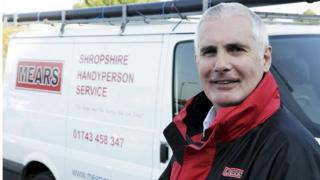
    Mears works on buildings all around the UK but had no involvement with the Grenfell Tower

    Shares in housing contractor Mears Group were down 8% at noon, having initially lost 11%, after it warned revenues and profits would be hit as a result of the Grenfell Tower fire.

    Mears said the fire meant its social housing clients would be making sure properties were safe and compliant with rules, delaying plans for work orders.

    It said this would cut the revenue it had expected to make this year from housing by £30m, to £800m.

    Half year profits were flat at £12.7m.

    Mears, which provides services in every region in the UK, told the BBC it had had no involvement with the Grenfell Tower, nor, indeed with any properties run by Kensington and Chelsea Council.

    Nonetheless, it said the “tragic events at Grenfell Tower will impact the housing division later this year as clients review the commissioning and safety practices at their properties”.

    It said this would inevitably affect the timing of its planned workloads as clients’ attentions were being diverted towards making sure their housing portfolios were safe and fully compliant.

    David Miles, chief executive, of Mears, said: “Whilst the likely revenue shortfall for the full year is frustrating, it is entirely understandable in the circumstances and the group will be working closely with its partners and clients at this time to address their immediate priorities.”

    However, Mr Miles added that its order book remained strong and the board also remained confident in its future prospects.

    Mears employs more than 13,000 people on maintenance and repair of social housing.

    It also has a smaller care division providing support to older and disabled people who live in their own homes.

  • Unite union claims RBS plans 900 IT job cuts

    RBS LogoImage copyright
    Getty Images

    The Unite union has said Royal Bank of Scotland (RBS) is planning 900 technology job cuts at its London office by 2020 to reduce costs.

    It alleged that RBS intends to cut 40% of its permanent IT staff, or 650 jobs, as well as 230 contractors.

    The bank said no individual job was at risk and no figures had been finalised.

    An RBS spokesperson said: “We have not consulted on any headcount reduction, instead sharing a direction of travel with Unite which is subject to change.”

    Rob MacGregor, Unite national officer, said: “Royal Bank of Scotland is continuing with its savage jobs culling program with today’s announcement of a 40% in IT staff, totalling nearly 900 staff.

    “The decade of slashing jobs has done nothing to boost morale, increase consumer confidence or improve the bank’s performance.”

    RBS, which is 73% owned by the government, has been restructuring ever since it was bailed out in the financial crisis.

    Its global workforce has shrunk from 226,000 in 2007 to about 77,000. It has not made a full-year profit in a decade.

    In May, it announced it was shedding nearly 250 IT posts as part of an overhaul of its back-office operations.

    In London in 2016, RBS employed 2,200 full-time and contract IT staff. By 2020, Unite claims, there will be just 950 full-time staff.

    Simpler, smaller bank

    RBS said in a statement: “Inevitably as RBS becomes a simpler, smaller bank focused on the UK and Ireland, our technology function will undergo reorganisation and will reduce over time.

    “Our proposed plans are designed to reduce the number of contractors we employ and strengthen our permanent workforce and while we are downsizing in London, we are reinvesting in other UK hubs.”

    RBS has a bad track record with IT, suffering problems as recently as April. On the day it announced its first quarterly profit since 2015, its subsidiary NatWest was beset by complaints about glitches in its online banking system.

    In June 2015, hundreds of thousands of payments failed to reach the accounts of RBS customers.

    In 2012, more than six million customers had their wages, payments and other transactions disrupted when a software update was corrupted. The bank was fined £56m by the Financial Conduct Authority.

    Mr MacGregor said: “Unite is angry that the massive scale of IT job losses will sap morale, productivity and faith in the company.

    “RBS’s fixation with cutting employee numbers, restructuring and offshoring work that could reasonably be done by displaced staff within the RBS IT community is unacceptable,”

  • IMF warns on China’s credit boom

    Image copyright
    EPA

    The International Monetary Fund has warned that China’s credit growth is on a “dangerous trajectory”.

    In a new report, the IMF says there is an increasing risk of a “disruptive adjustment ” and/or a marked slowdown in economic growth”.

    The agency calls for decisive action to deflate the credit boom smoothly.

    Without the boom, the report suggests, China’s recent economic expansion would have been significantly slower.

  • ‘Tiffany’ rings cost Costco $19.4m

    Tiffany diamond ring and braceletImage copyright
    AFP

    US wholesaler Costco is facing a $19.4m (£15m) bill for damages after jewellery chain Tiffany sued it for infringing its trademark by selling “Tiffany” engagement rings.

    The ruling by a US district judge is the latest twist in a long-running legal battle going back to 2013.

    Costco, which is to appeal against the decision, argues that “Tiffany” is now a generic term for the rings.

    But it has now been told it must call them “Tiffany-style” instead.

    The dispute centres on the sale of solitaire-style rings, comprising a diamond mounted on a single band with six prongs.

    Costco, which had sold 2,500 of them, put them on display with the label “Tiffany”, although they were not in fact made by the jeweller.

    An earlier court ruling in October 2016 ordered Costco to pay $5.5m in compensatory damages and $8.25m in punitive damages.

    But in a further court decision on Monday, the compensation was increased to $11.1m, while the amount of punitive damages still stands.

    Kate Swaine, a partner at law firm Gowling WLG, said: “This damages award may seem excessive given that only 2,500 products were sold, but if it can be argued that an infringement is blatant and where it relates to such a well-known brand, the claimant is entitled to seek punitive damages.

    “Brand owners will welcome this decision as an indication of the risk that third parties run in trying to make associations with famous brands.”

  • BT to scrap half of the UK’s remaining telephone boxes

    A red telephone box in a Cornish village

    Image caption

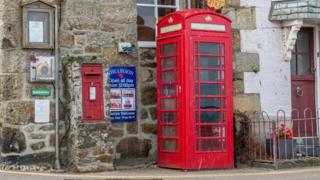
    BT is to phase out over half of the UK’s remaining telephone boxes because some are not being used at all

    BT is to scrap half of the UK’s remaining 40,000 telephone boxes and focus on the ones in locations where people are more likely to use them.

    In 1992 at its peak before mobile phones became popular, there were 92,000 phone boxes in the UK.

    Telephone boxes still handle 33,000 calls a day, but one third of kiosks are never used to make a call.

    BT said many phone boxes had become a burden and were expensive to repair and maintain.

    £6m to maintain

    “BT is committed to providing a public payphone service, but with usage declining by over 90% in the last decade, we continue to review and remove payphones which are no longer used,” a BT spokesperson told the BBC.

    BT intends to scrap the 20,000 telephone boxes over the next five years.

    Out of the 40,000 phone booths still working, 7,000 are the traditional red phone boxes designed in 1935 to commemorate the silver jubilee of King George V.

    More than half of phone boxes lose money and the number of calls is declining by more than 20% per year.

    The cost of maintaining telephone boxes annually is about £6m. BT is responsible for repairing damage to the kiosks, including replacing glass panes and broken receivers, as well as removing graffiti, rubbish and human waste.

    ‘Local veto’

    It is estimated that 93% of all people in the UK now own a mobile phone, and 98% of the UK has 3G or 4G mobile internet coverage.

    However, phone booths are still used by children, the elderly, people who can’t afford mobile phones, and in emergencies when smartphone batteries go flat.

    If there are two kiosks within 400m walking distance of a site, BT is allowed to remove one, as long as there is one left.

    But if the telecoms provider seeks to remove the only phone booth on the site, Ofcom rules state BT must inform the public and consult with the local authorities. The authority then has 90 days to object, which is known as a “local veto”.

    “Payphone removals are carried out in strict adherence to Ofcom guidelines and, where appropriate, with the consent of local authorities. Where we receive objections from the local authority, we won’t remove the payphone,” said BT.

    Adopt a kiosk

    In areas where telephone boxes are not being used, many local communities have transformed and preserved phone booths by buying them for £1 from BT under the Adopt a Kiosk scheme.

    So far, more than 4,000 kiosks have been repurposed as mini-libraries and art galleries or to house defibrillation machines, information centres, shops and exhibitions.

    Image copyright
    BT

    Image caption

    BT is replacing phone boxes with kiosks offering high-speed Wi-Fi internet, free UK calls and smartphone charging ports

    BT is also replacing phone booths with high-tech InLinkUK kiosks that come with ultra-fast 1Gbps Wi-Fi hotspots, a touchscreen offering information and directions, free UK landline and mobile phone calls, and two USB smartphone charging ports.

    Over 750 InLinkUK kiosks are being installed in London and other cities across the UK.

  • Revolution Bars rebuffs merger offer from Deltic

    Getty ImagesImage copyright
    Getty Images

    Revolution Bars has rejected a merger proposal from nightclub operator Deltic Group, whose brands include Pryzm and Steinbeck & Shaw.

    Deltic said the two firms together would create a “powerhouse group”, listed under the Revolution name.

    But Revolution said Deltic’s offer was “not in the best interests of shareholders at this time”.

    It is continuing talks about a £200m takeover by Slug and Lettuce owner Stonegate.

    However, Deltic said Stonegate’s bid was “opportunistic” after Revolution’s share price dropped due to a profit warning earlier this year.

    ‘Expand and consolidate’

    Revolution, which owns more than 60 High Street bars, suffered a sharp drop in its share price in May after it said it was facing “well published sector cost headwinds”.

    It said profits had been hit by the Living Wage, new apprenticeship levy and above-inflation increases in business rates.

    In July, it said terror attacks in Manchester and London also briefly hit night time trade.

    Deltic, which has 57 clubs including the Pryzm, Bar & Beyond, Steinbeck & Shaw, Atik, and Fiction brands, said teaming up with Revolution would allow the enlarged group to “both expand and consolidate the market”.

    But Revolution said after meeting representatives from Deltic, the board had “concerns over both the value and deliverability of the combination and did not see any merit in progressing their proposal”.

    It said it would continue in talks with Stonegate which has offered 200p per share and has until 28 August to make a formal bid for the company.

    Stonegate’s deal values Revolution at the same price it achieved when it joined the stock exchange in 2015.

  • Air Berlin files for insolvency but flights continue

    Air Berlin planesImage copyright
    Reuters

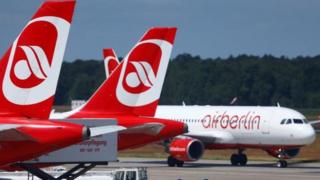
    Air Berlin, Germany’s second-largest carrier, has filed for insolvency, after its main shareholder Etihad declared it would not be providing further financial support.

    The airline, which has accumulated debt for almost a decade, reported a record loss of 782m euros (£713m) in 2016.

    Flights will continue to operate thanks to a transitional loan of 150m euros from the German government.

    Its main rival, Lufthansa, is in talks to buy part of the Air Berlin Group.

    Air Berlin’s passenger numbers have been in freefall: in July, the airline lost a quarter of its customers compared with the previous year.

    The carrier has also been plagued by delays and cancellations, for which it has been forced to pay millions of euros in compensation.

    At a news conference, Germany’s Economy Minister, Brigitte Zypries, said the government’s emergency loan should allow flights at the airline to continue for three months.

    Flights at Air Berlin’s low-cost subsidiary airline Niki are also continuing as normal.

    Ms Zypries said discussions between Air Berlin and Lufthansa were going well, and a deal whereby Lufthansa takes over part of the insolvent airline should be struck in the next few months.