Category: Business News

  • UK toys celebrated on Royal Mail stamps

    toy stamps from the Royal MailImage copyright
    PA

    Image caption

    All the toys in the new set of stamps were made in the UK.

    The UK’s favourite toys from the past 100 years are being celebrated in a new set of stamps from the Royal Mail.

    Characters in the set include the Sindy doll and Action Man, as well as brands like Spirograph, Stickle Bricks and Fuzzy Felt.

    Meccano, the Merrythought bear, W Britain toy figures, Space Hopper and Hornby Dublo trains also feature.

    The series of 10 toys – all made in the UK – will be released on Tuesday at 7,000 post offices and to buy online.

    Royal Mail spokesman Philip Parker said: “British toymakers enjoyed a reputation for quality and innovation.

    “These nostalgic stamps celebrate 10 wonderful toys that have endured through the decades.”

    Here are pictures of the 10 stamps of the series:

    Image copyright
    PA

    Image caption

    Stickle Bricks were invented by Denys Fisher in 1969

    Image copyright
    PA

    Image caption

    The inventor of Fuzzy-Felt, Lois Allan, manufactured felt gaskets for sealing tank components during World War Two

    Image copyright
    PA

    Image caption

    Merrythought is the last remaining British teddy bear factory to still make its products in the UK

    Image copyright
    PA

    Image caption

    The original Action Man figures came with a range of hair colours: Blonde, Auburn, Brown and Black

    Image copyright
    PA

    Image caption

    The word “Meccano” is thought to have been derived from the phrase “make and know”

    Image copyright
    PA

    Image caption

    Space Hoppers can be seen being used in the background of one scene in the original Star Trek series

    Image copyright
    PA

    Image caption

    William Britain Jr invented the process of hollow casting in lead in 1893

    Image copyright
    PA

    Image caption

    The first clockwork train from Hornby was produced in 1920

    Image copyright
    PA

    Image caption

    The mathematician Bruno Abakanowicz invented the Spirograph for calculating an area delimited by curves

    Image copyright
    PA

    Image caption

    The name “Sindy” was chosen after a street poll where young girls were shown a photo of the doll and asked to choose their favourite name

  • Ford announces £2,000 scrappage scheme for pre-2010 cars

    cars at scrappage yardImage copyright
    Getty Images

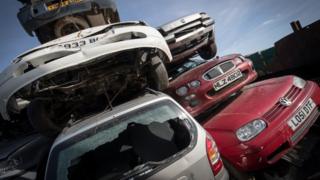
    Ford is the latest car company to launch an incentive for UK consumers to trade-in cars over seven years old, by offering £2,000 off a new model.

    Unlike schemes by BMW and Mercedes, which are only for diesels, Ford will also accept petrol cars.

    All of the part-exchanged vehicles will be scrapped, Ford said, which would have an “immediate positive effect on air quality”.

    Old cars, from any manufacturer, can be exchanged until the end of December.

    “Ford shares society’s concerns over air quality,” said Andy Barratt, chairman and managing director of Ford of Britain.

    “Removing generations of the most polluting vehicles will have the most immediate positive effect on air quality, and this Ford scrappage scheme aims to do just that.”

    Waking up

    Consumers will be given £2,000 off new Ford models ranging in price from around £12,000 to more than £20,000. Ford said by combining the scrappage incentive with other standard offers, customers could receive up to £4,000 off a car or £7,000 off the cost of a van.

    The cars that can be traded in include any built to emissions standards that applied before 2010.

    Vauxhall ran a similar scrappage scheme earlier this year, as well as in 2015 and 2016.

    Image copyright
    Getty Images


    Analysis

    By Richard Westcott, BBC transport correspondent

    Despite growing public concern about the air pollution caused by vehicles, car makers have dragged their heels even as governments across Europe tighten emissions laws.

    Although only Volkswagen was found to have cheated air pollution tests, other car makers produced vehicles that could pass lab tests but be far more polluting when driven in the real world. They stuck to the rules – but their cars were still dirtier than most of us realised.

    Is the tide now turning? Volvo says all its new cars will be hybrid or electric within two years. Others, such as Vauxhall and now Ford, are offering scrappage schemes to get older diesels off the roads. VW is likely to be the next car maker to follow suit.

    However, these schemes will also boost new car sales, which have been slipping in the UK for the past four months.


    Environmental lawyers’ campaign group ClientEarth welcomed Ford’s announcement.

    “It seems the motor industry is finally waking up to the damage dirty diesels are doing to our lungs as well as their own reputation,” said ClientEarth lawyer Anna Heslop.

    “What we need is a thought-through, coherent strategy from government to help people to move to cleaner and more sustainable technology.

    “At the moment, there are pockets of small, short-term actions here and there, but nothing like the joined-up thinking we need to solve this problem.”

    The UK government has come under pressure to announce a vehicle scrappage scheme for diesel cars, after it was found that air quality thresholds in cities were repeatedly being breached.

    However the government’s clean air strategy announced in July did not include a scrappage scheme, calling previous ones “poor value” for money. Instead it said new diesel and petrol cars would be banned from 2040.

  • Johnson & Johnson face $420m payout in latest talc case

    J&J baby powderImage copyright
    Getty Images

    Image caption

    Johnson & Johnson said the safety of talc was supported by decades of scientific evidence

    Johnson & Johnson has been ordered to pay $417m (£323.4m) to a woman who says she developed ovarian cancer after using products such as baby powder.

    The California jury’s decision marks the largest award yet in a string of lawsuits that claim the firm did not adequately warn about cancer risks from talc-based products.

    A spokeswoman for Johnson & Johnson defended the products’ safety.

    The firm plans to appeal, as it has in previous cases.

    “We will appeal today’s verdict because we are guided by the science,” Carol Goodrich, spokesperson for Johnson & Johnson Consumer Inc, said in a statement.

    The evidence around any link between talc use and cancer is inconclusive.

    Johnson & Johnson, headquartered in New Jersey, faces thousands of claims from women who say they developed cancer due to using the firm’s products to address concerns about vaginal odour and moisture.

    Johnson & Johnson has lost four of five previous cases tried before juries in Missouri, which has led to more than $300m in penalties.

    Analysis: James Gallagher, health editor, BBC news website

    Is talc safe?

    There have been concerns for years that using talcum powder, particularly on the genitals, may increase the risk of ovarian cancer.

    But the evidence is not conclusive. The International Agency for Research on Cancer classifies talc used on the genitals as “possibly carcinogenic” because of the mixed evidence.

    Why is there any debate?

    The mineral talc in its natural form does contain asbestos and does cause cancer, however, asbestos-free talc has been used in baby powder and other cosmetics since the 1970s. But the studies on asbestos-free talc give contradictory results.

    It has been linked to a cancer risk in some studies, but there are concerns that the research may be biased as they often rely on people remembering how much talc they used years ago. Other studies have argued there is no link at all and there is no link between talc in contraceptives such as diaphragms and condoms (which would be close to the ovaries) and cancer.

    Also there does not seem to be a “dose-response” for talc, unlike with known carcinogens like tobacco where the more you smoke, the greater the risk of lung cancer.

    What should women do?

    The charity Ovacome says there is no definitive evidence and that the worst-case scenario is that using talc increases the risk of cancer by a third.

    But it adds: “Ovarian cancer is a rare disease, and increasing a small risk by a third still gives a small risk. So even if talc does increase the risk slightly, very few women who use talc will ever get ovarian cancer.”

  • Would you live in a home the size of a Tube carriage?

    Leicester micro-homeImage copyright
    Zoopla

    Image caption

    Flats measuring 22 sq m – smaller than the average Travelodge hotel room – are on sale in Leicester

    The UK has seen a sharp rise in homes little bigger than a budget hotel room, according to consumer group Which?.

    The number of newly built micro-homes, which are smaller than 37 sq m – the size of a Tube carriage – rose 40% in the UK last year, the group found.

    They are often cheaper than traditional homes, but Which? warned that buyers could struggle to get a mortgage.

    Industry experts put the growth down to the housing shortage and the difficulties facing first-time buyers.

    Which? found examples of micro-homes of less than 28 sq m – the size of an average Travelodge hotel room – on sale in London for as much as £450,000.

    The smallest apartment it found was in Brent, measuring just 8 sq m – only 1 sq m larger than a prison cell.

    Image copyright
    Getty Images

    Image caption

    Prison cells like this must be at least 7 sq m in the UK – only slightly smaller than the studio flat in Brent

    David Blake, principal mortgage adviser at Which? Mortgage Advisers, said: “With the average London micro-property selling for £279,000, smaller homes can represent a more realistic opportunity for many – but can also be harder to mortgage.”

    Which? found that Nationwide and RBS would not lend on properties with floor areas smaller than 30 sq m.

    Mr Blake said: “Smaller properties can put lenders off due to concerns around the future value of the investment. However, there are mortgage lenders who are receptive to properties of this nature, if demand is high enough and sustainable.”

    Properties smaller than 37 sq m rose in value by 6.9% in the last three years, compared with 8.7% for homes larger than that, Which? found.

    ‘Find the space’

    About 7,800 micro-homes were built last year, up from 5,605 in 2015, helped by changes introduced in 2013 that allowed developers to convert city centre office blocks into flats.

    Two thirds of the properties Which? looked at were in London – including Barnet House, which offers flats as small as 16 sq m.

    Image copyright
    Which?

    Image caption

    Barnet House is offering flats less than half the size of the minimum guidance for a studio flat

    But micro-homes are not only a feature of the crowded London housing market.

    Hundreds have been built in cities like Leicester, Liverpool and Birmingham in the past three years. Which? found flats in Leicester measuring 22 sq m that were on sale for £70,000.

    The UK already has some of the smallest homes in Europe, at an average of 76 sq m. By comparison, the average size of a property in Denmark is 137 sq m, according to research published in 2014 by Find Me A Floor.

    A micro-home has no hard-and-fast definition, but is typically smaller than 37 sq m – the minimum size for a studio under government standards.

    John O’Brien, a director at housing charity BRE, said micro-homes could be “part of the solution” to the housing shortage.

    “We’ve got to build two million more homes so have got to find the space somewhere,” he said.

    One option that BRE has explored are Zedpods – flats that can be built above car park spaces – for key workers and single-person households.

    Image copyright
    Zedpods

    Image caption

    A Zedpods flat is the size of two parking spaces

    Alistair Smyth, head of policy at the National Housing Federation, also said smaller homes could deal with the lack of housing, particularly for first-time buyers.

    “For many, buying a home has become an aspiration impossible to fulfil,” Mr Smyth said.

    “This is a problem that is decades in the making; as a nation we are simply not building enough homes.”

    The government has said it will review space standards to “ensure greater local housing choice, while ensuring we avoid a race to the bottom in the size of homes on offer”.


    Where can I afford to live?

  • Cambridge University Press reverses China censorship move

    Part of CambridgeImage copyright
    PA

    The world’s oldest publishing house, the Cambridge University Press, has reversed a decision to censor its content in China.

    The publishers had agreed to suppress access to hundreds of its own articles that dealt with subjects sensitive to the Chinese authorities, such as those about the Tiananmen Square massacre.

    The Chinese had said that if it did not censor content, it would not be able to publish other material in China.

    It changed its mind after protests.

    In a petition published on Monday, academics from around the world spoke out against what they called China’s attempts to “export its censorship on topics that do not fit its preferred narrative”.

    The Chinese had told the CUP to block access to more than 300 articles from its own China Quarterly journal as a price for being allowed to publish other material.

    It said at the time of the initial announcement on Friday: “We can confirm that we received an instruction from a Chinese import agency to block individual articles from The China Quarterly within China.

    “We complied with this initial request to remove individual articles, to ensure that other academic and educational materials we publish remain available to researchers and educators in this market.”

  • China’s Great Wall eyes Fiat Chrysler bid

    Jeep logoImage copyright
    Reuters

    China’s Great Wall Motor is sizing up Fiat Chrysler, the Italian-American carmaker that also owns Jeep.

    A Great Wall official told Reuters it had “an intention to acquire” some or all of the world’s seventh-largest car maker.

    However, Fiat Chrysler said it was yet to receive an approach from Great Wall – China’s biggest SUV maker.

    Earlier reports said the Chinese firm had asked to meet Fiat executives to discuss buying the Jeep brand.

    Jeep, which celebrated its 75th birthday last year, is considered FCA’s most valuable asset.

    Its reputation dates back to World War Two, when Jeeps were used extensively by the US military.

    Global ambitions

    Shares in Fiat Chrysler Automobiles jumped 2.8% in Milan on Monday following the news.

    Image copyright
    Getty Images

    Image caption

    Sergio Marchionne is chief executive of Fiat Chrysler

    Yale Zhang, head of Shanghai-based consultancy Automotive Foresight, said: “Jeep is the most logical choice, since [Great Wall] wants to be the largest SUV maker in the world.

    “The Jeep brand is recognised globally. I think Great Wall Motor is eyeing a global strategy, not just the United States.”


    Great Wall Motor

    • Set up in 1984, it is China’s largest SUV and pick-up truck producer
    • Great Wall is vying with Geely to become the first Chinese carmaker to go global
    • Any bid could prove unpopular with US President Donald Trump, who is investigating Chinese trade practices and wants to protect US car manufacturing jobs
    • FCA already manufacturers some of its Jeeps in China, with local partner Guangzhou Automobile Group Co
    • The FCA’s $19bn (£14.74bn) equity value could be a big ask for Great Wall, but it does have state investors
    • Great Wall’s president, Wang Fengying, is listed as the 7th most powerful woman in the Asia-Pacific by Fortune Magazine

    Earlier this year, it officially launched a new premium SUV brand called Wei, which potentially could tap into the US market.

    Fiat Chrysler chief executive Sergio Marchionne is seeking a partner or buyer to help it manage rising costs, emissions regulations and the development of electric and self-driving cars.

    FCA also owns Alfa Romeo, Maserati and RAM trucks.

  • Mining stocks rise but FTSE 100 dips

    Trader watching monitorImage copyright
    AFP

    Mining giant BHP Billiton was the FTSE 100’s star performer as investors awaited the company’s annual results due on Tuesday.

    BHP added 1.4% in early Monday trading, heading a top five winners’ list entirely made up of miners.

    Rio Tinto, Anglo American, Glencore and Antofagasta also notched up share price gains.

    However, the sector failed to lift the benchmark 100-share index, which fell 10.39 points or 0.14% to 7,313.59.

    Banks RBS and Barclays were among the biggest losers, dropping 1.4% and 1.2% respectively.

    On the currency markets, the pound was down 0.09% against the dollar at $1.2863, but up 0.06% against the euro at 1.0956 euros.

  • Company bosses ‘lack cyber-attack training’

    A sample of ransomware on a laptopImage copyright
    EPA

    Image caption

    The ransomware that attacked NHS computers is among the threats businesses face

    More than two thirds of companies say their directors have no training in responding to cyber-attacks, according to a government survey.

    Of 105 businesses in the FTSE 350 questioned, one in 10 revealed they have no plan to cope with hacking.

    Digital Minister Matthew Hancock said May’s NHS attack showed the “devastating effect” of breaches.

    He urged companies to take advice and training from the National Cyber Security Centre.

    The Cyber Governance Health Check – an annual survey – found that 54% of company boards said computer hacking was one of the main threats to their business.

    But 68% of them had no specific training to deal with a hacking incident.

    The survey found some progress, however, with 31% of boards receiving comprehensive information about computer security risks, compared to 21% in 2015-16.

    Mr Hancock said: “We have a long way to go until all our organisations are adopting best practice.”

  • FTSE chief executives’ median pay ‘down almost 20%’

    Sir Martin SorrellImage copyright
    Getty Images

    Image caption

    Sir Martin Sorrell, chief executive of advertising agency WPP, has often been the target of shareholder criticism over his pay packet

    The median pay for chief executives of FTSE 100 companies has fallen by almost 20% over the past year, according to accountancy firm Deloitte.

    Median pay – a figure representing the pay rate half way between the lowest and highest paid executive – dropped from £4.3m in 2016 to £3.5m this year.

    Deloitte said policies introduced to limit bosses’ pay appeared to be working.

    This year’s annual general meetings were “calmer than expected” it said.

    “The fall in executive pay demonstrates that remuneration committees are making a real effort to address shareholder concerns,” said Stephen Cahill, vice chairman at Deloitte.

    “This is the first cycle where the legislation introduced in 2013 and primarily voted on during the 2014 AGMs will have taken effect.

    “It seems the current legislation is working.”

    ‘One off’

    The accountancy firm’s remuneration report also said there had been a reduction in bosses’ bonuses and pension allowances for new appointees.

    The report tallies with recently published research from the High Pay Centre which suggested the average pay of FTSE bosses had fallen 17% this year.

    But the director of the High Pay Centre, Stefan Stern, suggested public pressure had led to what may turn out to be a “one off” fall in pay, and that this year average executive pay had been skewed by high-profile pay cuts for one or two individuals.

    New rules in 2013 obliged firms to provide greater transparency over the pay of their top executives in relation to other employees and to hold a binding shareholder vote on pay every three years.

    However, discontent over high executive pay has continued.

    Prime Minister Theresa May has promised further reforms to policies governing remuneration, to tackle what she called an “irrational, unhealthy and growing gap” between what bosses and workers are paid.

    This year the High Pay Centre said the average pay ratio between FTSE 100 bosses and the average pay package of their employees has fallen to 129:1 – meaning that for every £1 the average employee is paid, their chief executive gets £129.

    In 2015 the ratio was 148:1.

    Investor criticism at AGMs this spring was more muted than expected.

    Deloitte’s vice chairman said he did not believe further intervention was necessary.

    “With many companies renewing their policies this year we are seeing further moves to incorporate the best practice provisions shareholders now expect,” said Mr Cahill.

    “The current framework is working well and we do not believe further regulation is needed to move things forward.”

  • US to review China intellectual property policies

    Counterfeit items seized in 2008 (file picture)Image copyright
    Getty Images

    Image caption

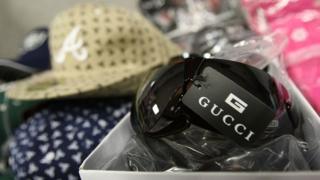
    Intellectual property theft is estimated to cost the US up to $600bn a year

    The US has formally launched an investigation into China’s policies regarding intellectual property.

    The top US trade official, Robert Lighthizer, said his office had “determined that these critical issues merit a thorough investigation”.

    The move was expected after President Donald Trump asked Mr Lighthizer to review China’s practices.

    China has voiced “serious concern” over the inquiry, which could result in US trade sanctions.

    The US has been concerned about these matters for some time, said Gary Hufbauer, from the Peterson Institute for International Economics in Washington.

    The annual cost to the US economy from counterfeit goods, pirated software and theft of trade secrets has been estimated at up to $600bn (£470bn).

    On Friday the US said it planned to look into hacking and reports that the Chinese government is steering investment into US companies in key industries as a way to gain access to new technology.

    Officials will gather comments and hold a hearing in October as part of the so-called Section 301 investigation.

    What happens next?

    Mr Hufbauer said it’s a “foregone conclusion” that the US will find evidence of unfair practices, but it’s not clear how the Trump administration will proceed after that.

    It could bring a complaint to the World Trade Organization, or decide to take action unilaterally, which would be faster.

    Penalties might be targeted against individual companies, or more wide-ranging, he added, which will shape China’s reaction.

    On Tuesday, China’s commerce ministry warned: “If the US side takes actions that impair the mutual trade relations, disregarding the facts and disrespecting multilateral trade rules, China will not sit idle.”