Shares in WPP fell by more than 10% at the start of trading after the advertising giant reported slowing sales and warned about future growth.
The company said that group performance had been “much tougher” for the first seven months of its financial year.
It blamed growing economic uncertainty, including due to a “rise of populism” in the UK and the US, and “bumpy” growth in Brazil, Russia and China.
WPP now expects sales growth of 0%-1% compared to previous forecasts of 2%.
The reduced forecast puts WPP on course for its worse year since 2009 when like-for-like sales fell by 8.1% during the global recession.
Total group revenue rose to £7.4bn for the six months to June from £6.5bn. Pre-tax profit grew by 52.4% to £779.2m.
However, WPP said that like-for-like revenue decelerated over the six months to June, in particular the second quarter when client spending was “under considerable pressure” in the fast moving consumer goods or packaged goods sectors which chief executive Sir Martin Sorrell said make up a third of its business.
Conditions worsened in July when like-for-like revenue shrank by 4.1%. The company said that like-for-like sales are down 0.9% for the year to date.
Sir Martin said that there has been a “trifecta” of pressures on the business.
He said that “digital disruption” was forcing companies to change their business models and reach customers in different ways.
Activist shareholders, fuelled by cheaper money, were pushing businesses to cut costs.
US worries
Also, some investors were practising “zero-based budgeting”, where they start with a blank balance sheet and all expenses have to be justified.
WPP said that new business wins and increased client spending should help turnover in the second half of its financial year as well as into 2018, buoyed by events such as the Russian World Cup, the mid-term Congressional elections and the PyeongChang Winter Olympics.
However, the company also indicated that uncertainty would continue next year because of economic and political worries in the US.
Sir Martin told the BBC Today programme: “Like it or not, the Trump administration has been much more open to business than the Obama administration, certainly in terms of connection.”
But he said: “That hasn’t translated into significant policy change for a number of reasons.”
In a statement earlier, WPP said: “The limitations of the new [Trump] administration seem to be jeopardising the anti-regulatory, infrastructure and tax reduction programme that was promised.”
But it added: “America First, if the new administration’s plans are finally implemented, will almost definitely mean a stronger American economy, at least in the short-to medium-term.”
Image caption
A bit of fake snow can almost turn summer into Christmas
Many of us are still on our summer holidays so thinking about Christmas might seem premature. But for businesses providing festive food, drinks and presents, things are already gearing up.
The festive season begins for a lot of retailers when they send out their invitations for summer Christmas events. Companies hold them to make sure their products are included in the December issues of magazines.
On a balmy summer’s evening in London, while groups of people are enjoying a few cocktails under a cloudless sky, just off Oxford Street the Christmas festivities are already underway.
A branch of the Italian restaurant chain, Carluccio’s, is holding its Christmas press day. Amongst the mounds of fake snow, exquisitely wrapped presents and piles of slightly melted Italian chocolates, head of retail Emma Woodford stands proudly by the panettone display.
“Christmas is the biggest time of the year for us and we love it,” she enthuses, showing off a novel twist on the sweet Italian bread. “This has a prosecco filling which is piped to get an even coverage. I think it’s a new classic.”
The panettone come into their stores in mid-October – so could it take over as the new Christmas pudding?
“I’m a big fan of both,” replies Emma diplomatically.
Image copyright Getty Images
Image caption
Will Waitrose’s planned chocolate mince pies be this year’s festive food winner?
Waitrose is also looking to innovate when it comes to flavours. Last year, its Christmas range included a banana and bacon trifle. This year they’re experimenting with chocolate mince pies.
So how does the company get its Christmas stock right and make sure it doesn’t end up with piles of reduced food in January? Natalie Mitchell, head of brand development and product innovation says it’s all in the preparation.
“Planning starts 18-24 months in advance, we look at global trends and try to understand where customers might want something different. Forecasting is a military operation and the main thing is not to run out of products.”
In an air-conditioned temporary show room on Baker Street, toy manufacturer Tomy is showing off its festive must-haves.
“I put up the Christmas tree this morning,” says Tomy’s Nicola Jenkins, above the noise of a video game.
“Predicting trends is always a bit of science and a bit of luck. We put the products in the hands of parents, children and influencers – word of mouth is really important.”
So what are Nicola’s picks for this year? “Pokemon is still really hot and we’re expecting the next level of Lightseekers games to do well.”
Someone has to deliver the presents and in an amusement park near Copenhagen, Santas from all over the world hold their annual congress at the end of July.
Image copyright Bakken
Image caption
It’s summer, it’s Copenhagen, so it must be time for the annual Santa congress
An attendee from northern Denmark explains why they meet up in the summer heat.
“We’re too busy in November and December, we have to make sure all the reindeer are fit and that the elves have made all their toys.”
So what do 160 Santas, elves and all the Mrs Santas get up to every year?
“Networking of course, then there’s the pentathlon event, a lovely lunch and a fashion show.”
Fun and frolics aside, Christmas is a serious business. A successful marketing campaign can hugely boost a brand and every year the supermarkets wage war for the best Christmas advert.
Theo Izzard-Brown of creative agency McCann London says that planning for a festive spectacular starts in January or February.
“It’s become like the Super Bowl. John Lewis has had great success, they’ve set the mould.”
Mr Izzard-Brown’s firm represents rival retail giant Aldi, which last year created a campaign featuring a carrot called Kevin.
“There was lots of discussion as to what his hair should look like and how tall he should be, but ultimately it became about how we could use this character in all our marketing and get people to talk about it.”
Mr Izzard-Brown says the campaign paid off: “We sold thousands of Kevin soft toys, I’m told you can still get them on Ebay for vastly inflated prices.”
Image copyright Be At One
Image caption
Cocktail bar chain Be At One reckons spiced pear could be this year’s Christmas drink
For bars and restaurants Christmas is one of the most hectic times of the year and Andrew Stones, of cocktail bar chain Be At One, starts planning as soon as the last Christmas party finishes.
“I try 800 cocktails over the year to make sure we’ve got the festive menu right. We like to incorporate seasonal flavours, this year I think spiced pear will do well.”
Be At One got its first Christmas bookings in March.
“One person’s often given the job of booking the office party and it’s a big responsibility so people like to get in early.”
Image copyright Las Iguanas
Image caption
The Las Iguanas restaurant chain says it has already taken 1,700 Christmas bookings
At the Latin American themed restaurant group, Las Iguanas, Gareth Lock says that by July it had already had 1,700 Christmas bookings from guests looking for a non-traditional celebration.
Last year the top Christmas menu sellers were chicken fajita, sirloin steak and Bahian coconut chicken, and the festivities seem to be getting earlier every year, he says.
“At the end of July our teams got together in a boiling hot hotel in Birmingham dressed as Santas and reindeer to work out our strategy.”
That strategy includes adding a seasonal staple to the menu for the first time.
“We’re trialling Christmas Day opening so we’ve decided to offer turkey; but there’ll definitely be a twist.”
Image copyright Getty Images
Image caption
Christmas seems to come earlier every year – the trick is to get the seasonal planning done early
Corporate Britain gets into the Christmas spirit early but what about the people who all the effort’s aimed at, the public?
Outside Selfridges, a trio of visitors from Finland were more than happy to contemplate buying baubles in summer.
“I start planning in summer,” says Diina, “it takes away the stress at Christmas. In Finland you can’t start Christmas shopping until November, even though we’re the land of reindeer, snow and Santa Claus.”
In today’s competitive selling environment, shops, bars and restaurants have to get it right. George MacDonald, of Retail Week, says success boils to down to a few key rules.
“It’s about getting on top of new trends, having exclusive products and doing the basics perfectly.”
Image caption
New arrivals in Europe are being encouraged to use their skills to become entrepreneurs
An initiative is trying to turn Middle Eastern migrants in Europe into technology entrepreneurs.
In the style of the BBC’s international television series looking for new ideas and entrepreneurs, this is a kind of “Dragon’s Den for migrants”.
After their pitches and interviews, the challenge has been won by five tech-savvy young people originally from Syria and Yemen who are now in the Netherlands.
These young migrants say that surviving experiences such as the sea crossing into Europe has given them the type of risk-taking and nothing-to-lose mentality needed in business.
The first successful entrants will take a six-month technology qualification before receiving 200,000 euros to launch and run Ngage Virtual Reality, a company that creates virtual reality content for education.
The search for entrepreneurs, which will run each year, wants to tap into the energy and business ambitions of these new arrivals in Europe.
The initiative has been devised by an organisation called R Ventures Capital. The corporate-sounding name is softened when you learn that the R stands for refugee.
R Ventures Capital was founded Shantanu Prakash, an education technology entrepreneur from India, and social entrepreneur Archish Mittal.
‘Job creators’
Mr Mittal says their main aim is to change perceptions of migrants to Europe from “job stealers” to “job creators”.
“If the business is successful, it will generate many jobs for local people in the Netherlands,” he says.
“We hope this changes the narrative around migrants and refugees and reminds people that they have skills which they want to use to help their new countries.”
Image caption
Mohammad Alkhateeb from Syria, founder Archish Mittal and Hasan Shahoud from Syria
Mr Mittal is confident in the people he selected to run the new company because he thinks their difficult journeys to Europe have given them “incredible drive and resilience”.
One of those is Mohammad Alkhateeb, a 26-year-old graduate from the University of Damascus who left Syria in 2013.
Mr Alkhateeb arrived in Europe after a three-day boat trip from Libya. Before that, he spent three weeks in Libya crammed alongside 40 other migrants in a smuggler’s house.
“The journey has changed me more than I could imagine,” he says. “Now I know that I have nothing to lose, I just need to go for it and to jump into this project.”
Mr Mittal says Mr Alkhateeb’s hunger to succeed was evident at his interview.
Image copyright Getty Images
Image caption
The project wants to create a new generation of entrepreneurs and job creators
“Mohammad has adapted to changing and very difficult circumstances, and this resilience and will to survive is one of the most important qualities an entrepreneur needs,” he says.
“In business, you can have days when you are bankrupt, or circumstances mean you have to completely change your business idea, and you have no choice but to adapt.
“Mohammad has mastered this skill without needing to sign up for a course or go to business school.”
‘Survival skills’
Mr Alkhateeb says these “survival skills” are widely shared among other migrants.
He has no shortage of role models of migrants who thrived in their new country – just look at Sergey Brin, Supreme Court Justice Madeleine Albright and Albert Einstein.
Many tech founders and CEOs are migrants or the children of migrants.
Sergey Brin of Google, Elon Musk of Tesla, Amazon’s Jeff Bezos, Yahoo’s Jerry Yang and eBay’s Pierre Omidyar all had roots and connections outside of the US.
The biological father of Apple’s Steve Jobs was born in Homs, Syria.
Alexis Ohanian, the son of an undocumented German immigrant and founder of Reddit, said that America’s traditional openness to migrants has been its “unfair advantage”.
Image caption
Many of the qualifications held by migrants are not being used in their jobs in the Netherlands
Mr Mittal says Europe risks wasting its own advantage with the recent influx of migrants.
He says many refugees bring skills which they cannot use in their new country.
Doctor washing dishes
Mr Alkateeb says that his degree in business administration from the University of Damascus is worth “zero” in the eyes of prospective employers in Europe.
“People are not working in their fields,” he says.
“I know a doctor from Syria who can only find work washing dishes in a restaurant. He offered to treat people for free but this was turned down by his municipality.”
Image caption
For more than a decade, the dragons have been looking for business ideas
Martin Wyss, director of the International Organisation for Migration (IOM) in the Netherlands, says R Ventures Capital is “a bold, daring and much needed experiment”.
“The public debate in the Netherlands on migrants integrating into the labour market has traditionally been quite black and white – some people are very welcoming, while others see newcomers as unwelcome competition in the labour market,” he says.
“Job creation is still one of the main issues at the moment, so migrants who themselves are creating jobs are the best way to promote tolerance and acceptance of migrants.”
So the IOM has worked with migrants, governmental and non-governmental partners, and employers across Europe to find how newcomers’ existing qualifications and skills can be better validated in their new countries. This project is called Skills2Work.
Within 10 years, R Ventures Capital aims to have founded multiple migrant-led companies across Europe, employing many Europeans.
Despite their optimism, the failure rate of venture capital-backed start-ups around the world range from 75% to 95%.
So what if this business fails?
“Even if we fail, the entrepreneurs will have gained a top-notch qualification from our partners Udacity, which will make them highly valuable in the job market in Europe,” says Mr Mittal.
“They will have gained useful experience of starting a business and new networks. Professors and industry executives have agreed to visit the office in Amsterdam and mentor the team.”
But most of all, he hopes to change some people’s perceptions of migrants in Europe.
Image caption
N Korean leader Kim Jong-un says he is considering firing missiles near the US territory of Guam
The US has imposed sanctions on a dozen Russian and Chinese companies and individuals it accuses of helping North Korea’s nuclear weapons programme.
Earlier this month, members of the UN Security Council, including Russia and China, voted for further sanctions against Pyongyang.
The US Treasury said the move would “increase pressure” on North Korea.
China responded swiftly, calling on the US to “immediately correct its mistake” of punishing its firms.
The US Office of Foreign Assets Control designated 10 companies and six individuals in its sanctions.
“[The] Treasury will continue to increase pressure on North Korea by targeting those who support the advancement of nuclear and ballistic missile programmes, and isolating them from the American financial system,” said Treasury Secretary Steven Mnuchin.
Image copyright Getty Images
Image caption
North Korea objects to US-South Korea joint military training, which concludes at the end of August
Image copyright Getty Images
Image caption
South Korea says the exercises, known as the Ulchi Freedom Guardian, are purely defensive
The action means American individuals and companies are no longer permitted to do business with these firms.
A series of missile tests by Pyongyang has increased tensions between North Korea and the US, with both sides engaged in a heated exchange of threats.
US President Donald Trump has threatened the isolated regime with “fire and fury like the world has never seen”, leading North Korea to respond with threats to launch missiles near the US island of Guam in the South Pacific Ocean.
Image copyright North Korea
Image caption
In Pyongyang’s most recent propaganda video, Trump is pictured in a cemetery
In North Korea’s latest propaganda video released on Tuesday, an image of Mr Trump is shown at a cemetery which is apparently meant to be in Guam.
Vice-president Mike Pence is also pictured engulfed in flames.
US Secretary of State Rex Tillerson meanwhile has praised North Korea for “a level of restraint” it has shown recently in its weapons programmes. He said the move could pave the way for talks between the two sides “sometime in the near future”.
But such placatory words were not in evidence at a UN meeting in Geneva on Tuesday when envoys for the US and North Korea clashed. Both countries are technically still in a state of war since the 1950s.
North Korean diplomat Ju Yong Chol denounced “constant nuclear threats” from the US.
He added that “the measures taken by [North Korea] to strengthen its nuclear deterrence and develop inter-continental rockets is justifiable and a legitimate option for self-defence in the face of such apparent and real threats”.
More on US-South Korea military drills
Media playback is unsupported on your device
Media captionObservers have been watching the north and south watch each other for more than 60 years.
Barcelona now want him to return a renewal bonus he was paid when he signed a new five-year deal just nine months before forcing through the move.
“The club demands the player return the already paid sum as he has not completed his contract,” it said.
As well as the 8.5m euro bonus, the club wants “an additional 10% because of delayed payment”.
The statement continued: “The club also requests Paris St-Germain take on responsibility for the payment of these fees if the player cannot do so himself.”
The lawsuit was submitted on 11 August to the Labour Tribunal in Barcelona.
Following the transfer, Barcelona announced the club was withholding a further 26m euro (£23m) loyalty bonus from the player.
Neymar criticised the directors of the club on Sunday after scoring twice on his home debut for PSG in a 6-2 win over Toulouse.
“I spent four beautiful years there and parted happy,” said the 25-year-old. “But with [the board], no.
“For me, they are not the people who should be there, for the direction of Barca. Barca deserve much better.”
Analysis
Spanish football journalist Eduardo Alvarez speaking to BBC World Service
I am surprised about this news because this Barcelona board has some history in this type of action.
They sued former President Juan Laporta (seeking to hold him personally responsible for alleged losses during his mandate) and they lost that case.
It was terrible in terms of reputation for the club. Laporta was exonerated. Now, to be suing a former player sounds extremely harsh even if you don’t agree with the way he left.
Barcelona mentioned in their statement that they sent this case to the Spanish authorities on 11 August so maybe Neymar’s words on Sunday after his PSG home debut were a reaction this news?
The Pensions Regulator is to prosecute Dominic Chappell, the former boss of retail chain BHS.
He is charged with failing to provide information and documents the regulator requested during its investigation into the sale of BHS.
Chappell’s Retail Acquisitions (RAL) bought BHS for just £1 in 2015 from billionaire retailer Sir Philip Green.
The collapse of BHS led to the loss of 11,000 jobs and a pension deficit of £571m.
RAL was put into liquidation earlier this year.
Mr Chappell has been summonsed to appear at Brighton Magistrates’ Court on 20 September to face three charges of neglecting or refusing to provide information and documents, without a reasonable excuse.
Warning notices were sent out to Sir Philip and Mr Chappell in November last year, setting out the arguments and evidence as to why the regulator believed they should support the BHS pension schemes.
In February, Sir Philip Green agreed in a settlement with the Pensions Regulator to hand over £363m in cash to the BHS pension scheme.
The investigation into Dominic Chappell is continuing.
‘Fair trial’
Frank Field, who chairs the Parliamentary Work and Pensions Committee, said: “If the Pensions Regulator is frightened of landing the whale, I suppose going after the sprat is the next best thing.
“Why was Sir Philip Green allowed to get away with an inadequate settlement, in which pensions have been cut, yet Dominic Chappell is going to be sued?
“I’ll be consulting the House of Commons’ lawyers on when I can begin to unlock that puzzle, so that Mr Chappell has a fair trial.”
Meanwhile, the Insolvency Service, the government department that investigates bankrupt companies, is also investigating Mr Chappell. It has the power to ban anyone from being a company director in the UK.
In a statement, it said: “The Insolvency Service is aware of the Pension Regulator’s action against Mr Chappell. Our investigation into BHS is ongoing and we will continue to work closely with other interested regulators.”
Bradford-based Provident recently changed the way it collected its loans, replacing self-employed agents with “customer experience managers”.
Its chief executive, Peter Crook, has resigned.
Agent loss
Provident had already flagged up problems with its new system in June.
At the time, Provident said not enough of its self-employed debt collectors had applied to become employed by the company.
It had also been less effective at collecting money and selling new loans, and a greater number of agents than normal had left.
It said then it expected profits to be £60m at its consumer credit division.
‘Very disappointed’
The company is undertaking “a thorough and rapid review of home credit’s performance”, and will not now pay the interim dividend it promised just a month ago.
Its other divisions – Vanquis Bank, sub-prime car loan business Moneybarn and consumer credit brand Satsuma – are trading in line with plans, it says.
However, Vanquis has been under investigation by watchdog the Financial Conduct Authority, which had concerns about one of its products.
The company agreed to suspend all sales and is awaiting the outcome of that probe.
Manjit Wolstenholme, executive chairman who will also now act as chief executive, said: “I am very disappointed to have to announce the rapid deterioration in the outlook for the home credit business.”
She added that there was unlikely to be a full year dividend payout.
Tuesday’s share price fall is of a similar magnitude to that seen in reaction to the first profit warning in June, and leaves the shares at 723p. Just three months ago the shares were trading at 3,100p.
Neil Wilson, from ETX Capital, said: “There is no easy way out from this hole.
“Management will take a long time to regain credibility… The performance is abysmal and significantly worse than management ever could have imagined… Is this the end? There must be some sense that things cannot get any worse.”
Are you an agent or a customer affected by the changes at Provident Financial? Share your views and experiences by emailing .
Please include a contact number if you are willing to speak to a BBC journalist. You can also contact us in the following ways:
Mining giant BHP Billiton will sell its US shale assets after pressure from shareholders to offload the underperforming business.
The miner said a number of parties are interested in the assets and it is “actively pursuing options to exit.”
Shareholder Elliott Management has campaigned for strategic changes at BHP including the sale of its shale operations.
It comes as the company reported $5.89 bn (£4.56 bn) annual net profit.
Shale assets
BHP said on Tuesday that it deemed the shale business “non-core” and was exploring options to offload the assets.
Chief executive Andrew Mackenzie said a number of parties are interested in acquiring its onshore US oil and gas operations, but would not name the price the company is seeking for the assets.
BHP’s entry into US shale came at the peak of the fracking boom in 2011. A slump in oil prices slugged the business and forced a $7.2 billion write down last year.
BHP chairman Jac Nasser, who retires this year, recently conceded a $20 bn investment in shale six years ago was a mistake in hindsight.
Analysts have suggested the business could sell for about half that in today’s market.
New-York based fund manager Elliott Management had been agitating for a sale or other form of divestment of the US shale business.
The activist shareholder’s publicly campaigned for a series of other changes at BHP, including the elimination of dual-structured Australia and London stock listings, and higher shareholder returns.
Commodity rebound
Plans to sell its US shale operations came as the global miner posted an annual net profit of $5.89 bn, following a record $6.39 bn loss a year earlier.
The result was slightly below analyst expectations.
The miner tripled its final dividend to $0.43 a share, which was also shy of expectations.
The Anglo-Australian firm, like other miners, has benefited from a rebound in industrial metals prices after a slump caused by supply gluts and economic slowdown in China.
China is the world’s biggest buyer of commodities.
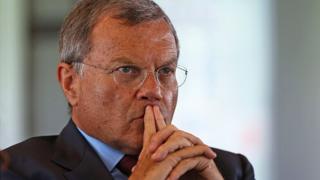 Image copyright