Category: Business News

  • US beekeepers fear for their future

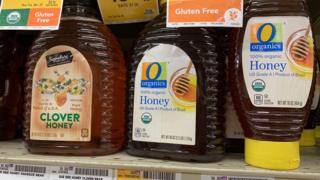
    Honey bottles on a US supermarket shelf

    Image copyright
    Pamela Parker

    Image caption

    The price of honey on US shelves has almost doubled over the past 10 years

    Skyrocketing demand for honey has meant that prices in the US have almost doubled over the past decade – so why are American beekeepers struggling to make ends meet?

    David Bradshaw has been a beekeeper for almost half a century.

    Born in Pasadena, and raised in California’s rural Central Valley, he purchased his first 200 hives while still in high school. He then worked alongside his father until they each had about 2,000.

    With the average price of honey on US supermarket shelves at $8.09 (£6.48) per pound (454g) last month, up from $4.66 in May 2010, you’d think that it was boom times for Mr Bradshaw and the other 36,000 or so US beekeepers.

    Instead, many are on the brink of going out of business, despite the big price rise as US honey consumption has grown by more than a third over the same period.

    Image copyright
    Pamela Parker

    Image caption

    America’s beekeepers say that they are struggling

    “It’s hard,” says the 63-year-old. “It’s hard selling the honey.

    “I do some commercial extraction for other beekeepers. And since they can’t sell their honey either, they have problems paying me.”

    “These days I get paid only $1.25 to $1.50 per pound of honey, with prices falling further. To break even, I need to be paid at least $2 per pound, which hasn’t happened for about three years.”

    So what is the cause of the problem? There are a number of factors, from the US importing huge volumes of low-cost honey from overseas, to insufficient labelling rules, and even outright cheating – whereby honey is mixed with cheaper ingredients, such as corn syrup.

    A trip to any US grocery store indicates the issue regarding honey labels. There are shelves stacked with honey jars labelled “US grade A”.

    Image copyright
    Getty Images

    Image caption

    Could the honey you buy actually contain other ingredients, such as added corn syrup?

    So a patriotic American might think that this is the very best quality honey to buy. Unfortunately it doesn’t actually mean that the honey in question is from the US.

    Instead the term “US grade A” is a guideline issued by the United States Department of Agriculture (USDA) for some metrics of honey, such as moisture, content, colour and clarity. Grades B and C are also available.

    So a jar of A could be labelled as such and then also say, often in very small print, that it is a mixture of honeys from a number of other countries.

    The problem for US beekeepers is that while they say they need to be paid $2 per pound to break even, foreign honey can be imported for as little as 81 cents per pound.

    The US imports its honey from a number countries, with India the biggest source, followed by Vietnam, Argentina and Brazil.

    Image copyright
    Getty Images

    Image caption

    The US gets more than two-thirds of its honey from overseas, with India its biggest supplier

    So the people making big profits from honey sales in the US are the importers and honey retail companies, not the domestic beekeepers.

    However, Nicholas Sargeantson, owner of the largest importer of honey to the US, Sunland Trading, points out that the imports are vital to meet demand.

    “Imported honey, in general, is coming in large volumes because the consumption here is over 500m lb (227m kg) [per year] and only 150m lb are produced domestically,” he says.

    While it is perfectly legal to import and sell foreign honey in the US if the origin is stated, in some cases the country or countries of origin can be illegally hidden or mislabelled. The honey can also have been secretly and fraudulently adulterated, or bulked out, with corn syrup or other cheaper ingredients.

    Image copyright
    Pamela Parker

    Image caption

    US beekeepers are also having to deal with health threats to their bees, such as a deadly mite

    Sweetwater Science Labs, an independent testing lab in Missouri, says that roughly 35-40% of of consumer-instigated honey testing it conducted over the past 18 months was either adulterated, of false origin, or of poor quality because it had been overly processed, such as being overheated.

    “I have been seeing more and more testing requests to verify the origin of honey, [not just from consumers] but even from growers and smaller packers testing the origins of competitor products,” says Sweetwater’s chief chemist James Gawenis.

    Accusations of fraud have dogged the US honey trade for decades and Mitchell Weinberg, chief executive of food fraud detection agency Inscatech, says things remain as bad as ever. “I’ve done numerous honey investigations over the past 10 years, and I can say with certainty that the problem of honey fraud today is still huge,”

    Image copyright
    Pamela Parker

    Image caption

    A jar can say “US grade A”, but then the small print can reveal that the honey is from other countries

    The problem for the US honey industry in dealing with this all is that the sector remains largely self-regulated, with very little government monitoring.

    Take the USDA’s grading system – it isn’t actually enforced. Honeys are not routinely tested by the department, or any other federal agency.

    Global Trade

    More from the BBC’s series taking an international perspective on trade:

    Michael Roberts, executive director at the Resnick Centre for Food Law and Policy at the University of California Los Angeles School of Law, says the government must do more to police the US honey sector.

    “There is insufficient coordination between government agencies to police honey fraud in a way that would make it effective,” he says.

    This lack of coordination is quickly revealed when the USDA was asked whether its honey grading system should be strengthened. It replied to the BBC that “overall authority for food labelling is the responsibility of the FDA [the US Food and Drug Administration, which is part of the US Department of Health and Human Services]”.

    Its response was similar when it was asked what it was doing about the problem of adulterated honey: “Again this is ultimately the authority of the FDA.”

    A spokesman for the FDA said that it “does not have any regulations governing country of origin labelling.” Instead it said it was a matter for the USDA.

    However, he added that regarding honey adulteration: “The FDA considers product labelling, and the statements and representations made therein, on a case-by-case basis. [And] all statements on a food label must be truthful and not misleading.”

    The problem of adulterated foreign honey coming into the US is the biggest issue, says Ron Phipps, of the International Federation of Beekeepers Associations.

    “The reality is not that American beekeepers are non-competitive,” he says. “The problem is other countries are using means of production, which have been observed and documented, that allow production of huge quantities of adulterated honey whose production costs are extremely low.”

    Image copyright
    Pamela Parker

    Image caption

    David Bradshaw says that the US government has got to do more to protect the industry

    Beekeeper David Bradshaw is clear about what he would like to see. “I’d like to see [more] prominent labelling of the country of origin of all honey sold,” he says.

    He also hopes to see stronger enforcement to protect US beekeepers from adulterated honey, or honey that tries to hide its country of origin, both of which suppress prices.

    Chris Hiatt, vice president of the American Honey Producers Association, says that something has to be done. “We need a decent price to keep our businesses going,” he says. “It is a serious problem.”


  • Coronavirus: PM ‘will not return to austerity of 10 years ago’

    Boris Johnson

    Image copyright
    Wiktor Szymanowicz/Getty Images

    The prime minister has pledged his government will “not go back to the austerity of 10 years ago” ahead of a speech on Tuesday.

    In an interview with the Mail on Sunday, Boris Johnson set out his plans for a post-lockdown economic recovery.

    They will include a new taskforce, led by the chancellor, which he says will look at speeding up the building of hospitals, schools and roads.

    The economy shrank by 20.4% in April – the largest monthly fall on record.

    Amid continued criticism of the way his government has handled the pandemic, the PM said ministers will be “doubling down on levelling up” – spending on infrastructure in order to “build our way back to health”.

    “We’re going to make sure that we have plans to help people whose old jobs are not there any more to get the opportunities they need.

    “We are absolutely not going back to the austerity of 10 years ago,” he told the paper.

    The new Infrastructure Delivery Taskforce will look at major projects in the pipeline and remove “bottlenecks at every step of development and delivery”.

    No 10 hopes a building boom will boost jobs and improve connectivity for cities, towns and villages.

    The membership of the taskforce, led by Chancellor Rishi Sunak will be set out in “due course”, a Downing Street spokesperson said.

    Number 10’s confirmation of an infrastructure drive follows a call by ex-Tory prime minister Sir John Major for tax rises to be avoided while the country looks to get back on its feet.

    Sir John said tax rises during the current situation would be a “mistake” and urged the government to borrow in order to exploit the low interest rates available at present.

    And former Chancellor Sajid Javid has previously warned against a return to austerity, calling for low taxes on businesses to help the UK’s recovery.


    Boris Johnson has faced serious criticism for the way his government has handled the coronavirus outbreak – and questions are likely to continue as ministers look to ease the lockdown in England.

    But evidently keen to try and get his wider political agenda back on track, the prime minister is returning to the phrase that was so frequently used in last year’s general election campaign – “levelling up”.

    It means spending on infrastructure – schools, transport and the NHS.

    So, how will these big projects be paid for?

    With billions already spent to support the economy during this pandemic, borrowing, big time, seems on the cards.


    The number of workers on UK payrolls dived more than 600,000 between March and May, official figures suggest, with economists warning the full effect on employment will not be felt until wage support schemes end.

    Almost nine million workers who are unable to do their job because of the pandemic have had their wages paid by the government under its furlough scheme.

    But firms will have to start paying towards the scheme from August, and it will close entirely in October.

    In a major easing of England’s lockdown, the PM announced on Tuesday that pubs, restaurants and hotels were among the list of venues that would be allowed to reopen from 4 July.

    But the announcement was criticised by some businesses – such as indoor gyms – that were not included on the list.

    Media playback is unsupported on your device

    Media caption“I’m frustrated we can’t reopen when pubs and restaurants can”

    The Observer reported that a further one million people could become jobless if further government support is not announced by August, adding to the 2.8 million already out of work.

    New House of Commons Library analysis, commissioned by the Labour Party, suggests that unemployment levels could soar to levels not seen since the 1980s – tipping past the peak of 3.3 million seen in 1984 under Margaret Thatcher, the paper said.

    Shadow business secretary Ed Miliband said: “The scale of the economic emergency facing us is enormous. But the government is pulling the rug from under businesses employing one million people by demanding they start bearing the cost of the furlough when they don’t even know when they can reopen.

    “The government’s approach will put jobs, businesses and livelihoods at risk which will impose costs on us all. Sectors in distress should get special help, and the furlough scheme, and economic support must go hand in hand with public health measures designed to keep us safe.”

    A Downing Street spokesperson said there is no excuse for delays in bolstering the country’s infrastructure.

    “The coronavirus response has shown that it doesn’t have to take years to get essential projects off the ground – the Nightingale hospitals and ventilator challenge were up and running in a matter of weeks,” the No 10 spokesperson added.

    “As we recover from the pandemic we must apply that same urgency to the major projects at the foundations of this country and get them done right, to truly level up opportunity across the UK.”

    Meanwhile, Leicester East MP Claudia Webbe is calling for a local lockdown amid concerns of a spike in cases locally. She describes a “perfect storm” of high poverty, higher numbers of positive tests and higher ethnic diversity in the area.

    Leicester’s mayor Sir Peter Soulsby said the city has been given latest government data which should show which areas – if any – are being “adversely affected” by the virus. Lockdown measures might then have to be introduced, he added.

    The Department of Health said it was supporting the local council and four mobile testing sites have been set up there.

    • TALKING HEADS: Imelda Staunton, Sarah Lancashire and Jodie Comer take on the much-loved monologues
    • SAVING OUR NURSES: Behind the scenes of A&E


    How have you been affected by coronavirus? How have you been affected by the lockdown? Share your experiences by emailing

    Please include a contact number if you are willing to speak to a BBC journalist.

  • Brexit: UK starts work on buying own sat-nav system to rival Galileo

    OneWeb satellite

    Image copyright
    OneWeb

    Image caption

    Artwork: OneWeb had launched 74 spacecraft before it collapsed

    The UK government looks set to put money behind a rescue package for the ailing satellite company OneWeb.

    The London start-up had been trying to build a network of spacecraft to deliver broadband connections but was forced to seek bankruptcy protection in March because of insufficient funds.

    It’s understood Boris Johnson’s government could now put about £500m into the project, in part because it believes OneWeb can also provide a satellite navigation service.

    This has become an important issue since the UK lost its membership of the European Galileo sat-nav system after exiting the EU.

    The OneWeb service would be backup for the US-based Global Positioning System (GPS) in case it is attacked or fails.

    If GPS were to go down motorists, businesses and the military would be left without a precise navigation signal.

    The prime minister has agreed to put up taxpayer money for the purchase, as part of a larger private sector consortium bid, the BBC understands.

    Downing Street declined to comment on the reported negotiations to buy a stake in OneWeb.

    ‘Regular conversations’

    A Number 10 spokesman said the UK was continuing to develop a sovereign space programme through the national space strategy.

    “Work on that is continuing on multiple fronts. This includes developing plans for our own national capabilities in satellite navigation, positioning and timing,” the spokesman said.

    “We continue to work and have regular conversations with the space industry about this.”

    UK-based OneWeb filed for bankruptcy in March in the US, where half its operations and all of its manufacturing are located, after failing to secure new funding.

    Before its collapse, OneWeb had launched 74 spacecraft in what was planned to be a broadband internet constellation of 650. The start-up has a goal, though, for thousands more.

    Image copyright
    OneWeb

    Image caption

    OneWeb has plans for thousands more satellites

    As part of any deal, the government would expect the building of future satellites to be brought to the UK.

    Intelligence sharing

    The American bankruptcy court is now running a bidding process for OneWeb’s assets, such as the radio frequencies it owns.

    The Japanese tech investor Softbank and aerospace giant Airbus are among the largest shareholders.

    They will have to choose whether to go with a UK government-backed rescue package or another offer.

    Airbus issued a statement on Friday, saying: “The reported support of the UK government for a bid for OneWeb looks positive to support (the) UK’s ambition to continue to be a leading player in space. As an original investor, and the manufacturer, in OneWeb, Airbus is pleased that a way forward looks likely.

    It added: “Airbus and the wider UK space ecosystem have the skills to build future capability and then drive export opportunities. We would look forward to supporting OneWeb in the next phase of their business and growing the UK contribution to this market-changing business.”

    If this comes off, it would be a bold move by the government – a statement that it is prepared to spend big in space.

    The question remains, though, whether it would be the right move.

    There is excitement currently about constellations of hundreds – if not thousands – of low-orbiting satellites and how they could be used to deliver broadband internet to places where connections are poor or simply non-existent.

    But the business case is still on trial. Witness OneWeb’s present difficulties; and although rival SpaceX continues to launch more of its Starlink spacecraft month after month, the Californian firm is a long way from earning meaningful revenues.

    So, there are those in the UK space sector who believe the government will be taking an enormous gamble if it seeks to put a positioning, navigation and timing (PNT) service on the back of OneWeb.

    After all, this would be critical national infrastructure. What would happen were OneWeb to fail again?

    A better solution, the doubters argue, would be to use satellites operated by established British telecommunications companies.

    In the flurry of lobbying that’s been going on, the government has been presented with low-cost ideas to use a mix of high and low-orbiting satellites to provide what would, at first, be a regional satellite-navigation service, but one that could eventually be built out into a global system.

    Previously, the UK aimed to build its own global navigation satellite system, at a cost estimated by independent experts of between £3bn and £5bn.

    The EU’s Galileo system went live in 2016, as an alternative to using GPS or the Russian GLONASS system.

    The UK and EU previously argued over the level of access the UK should have to the Galileo satellite-navigation system after Brexit.

    Then-Prime Minister Theresa May said in December 2018 that the UK expected to work with its Five Eyes intelligence-sharing partners – the US, Canada, Australia and New Zealand – in developing a new system.

    The Americans are understood to like the OneWeb solution because it provides something very different to the existing architectures for satellite navigation.

    For the UK, it also presents the possibility of obtaining capability at significantly lower cost than had originally been envisaged for an independent system.

  • Coronavirus: The foods we are all eating during lockdown

    Stir Fried Tofu in a bowl with sesame and greens

    Image copyright
    Getty Images

    Image caption

    Lockdown culinary hit: Tofu has become increasingly popular in recent months

    With most of us stuck at home during the coronavirus pandemic, our eating habits have had to change. Meals out have been impossible, and we’ve all been having to eat from home. So what have we been eating and which firms have been benefiting?

    Barry Smith may be a natural optimist with a market-leading product but as the lockdown loomed, the founder of food probiotic supplement, Symprove, was forced to look at worst-case scenarios.

    “If production had to shut down completely and we had zero sales we may have survived for about six months, perhaps a little longer with a government grant,” says the Surrey-based entrepreneur, who doubled supply routes and stocked up on core ingredients including barley in preparation.

    “It was very scary to think about, and a huge relief that the complete opposite happened and we had a record 50% new business in May.”

    Image copyright
    Symprove

    Image caption

    Symprove’s sales have benefited as customers turned to food supplements during the lockdown, says Barry Smith

    Indeed, with customers flocking online to buy his fermented grain product to boost their general gut health and well-being, Symprove is one of the food supplement and food products enjoying strong sales – boosted by customers changing their behaviour during the outbreak.

    For Mr Smith, the pandemic accelerated an existing move towards proactive health management. There’s been a spike in online searches for “probiotics” and “immunity function”, according to industry watchers, Lumina Intelligence.

    There have also been studies published exploring a possible link between Covid-19 and a lack of diversity in the gut microbiome, says Mr Smith. Whether eventually proven or not, this “may have got more people thinking about the importance of gut health”, he says.

    But besides many of us looking for health supplements, at the other end of the spectrum there has also been a rise in demand for products combining an indulgent fix with a way to pass time in lockdown – notably snacking and baking.

    Image copyright
    Getty Images

    Image caption

    Forget just salted or sweet, popcorn now comes in a multitude of flavours

    One of these is “gourmet popcorn”, which retail intelligence specialists, Stackline, say is one of the fastest growing trends among snacks.

    For London-based Popcorn Shed, which adds flavours such as cherry Bakewell and sundried tomato and goats cheese to the humble corn kernel, its sales to consumers in March and April were 12 times higher than the same period last year.

    • Is my constant lockdown snacking normal?

    Meanwhile, figures from market researchers Nielsen show that sales of baking products were up by almost two-thirds over the same period when compared with 2019.

    With a lot of us turning to home baking, flour has become hard to find and has often been sold out. So many of us have been using flourless recipes – joining those who always preferred them anyway.

    Image copyright
    Anna Rachel Photography

    Image caption

    “Home baking has gone through the roof,” says Julianne Ponan

    Julianne Ponan, owner of Creative Nature Superfoods, whose range includes flourless baking kits, had to move to a larger manufacturing facility and put in 18-hour days to accommodate the rapid increase in demand from consumers and supermarkets for her products.

    “Home baking has gone through the roof,” she says, acknowledging that the shortage of flour during the lockdown period also worked in her favour.

    “As an allergen-free brand, it was hard to source some of the ingredients like banana chips as there was a lockdown from our supplier in Sri Lanka, but because you can add milk and vegetable oil to our mix rather than flour, it does offer a way of baking without the usual commodities.”

    Ms Ponan says 70% of the 1,800 people her firm surveyed were now baking weekly rather than monthly.

    What’s more, during the lockdown more of us seem to have been experimenting with going meat-free.

    Image copyright
    Tofoo

    Image caption

    “We knew with more people cooking and eating at home it would go bananas,” says David Knibbs

    Some one in five Brits says they have reduced their meat consumption during the pandemic. An additional 1.8 million households have been buying meat-free products – and it has been tofu that has become the go-to meat-free food. The UK’s tofu market is now worth £32m, says Nielsen.

    While most businesses were fearful of the unknown at the start of the crisis, the main concern for David Knibbs, managing director of Yorkshire-based The Tofoo Co, was how to meet any additional demand with an already booming business.

    The Tofoo Co has a 46% share of the tofu market, and has seen its monthly turnover double to £1m since the crisis began. It has extended production to Sundays and is employing more workers at its recently expanded factory.

    “We knew straight away with more people cooking and eating at home that it would go bananas, and May was our biggest month ever,” says Mr Knibbs, who bought the brand four years ago.

    Image copyright
    The Tofoo Co

    Image caption

    Tofoo’s biggest seller is its plain blocks of tofu

    In a range that includes chilli-infused and crispy-coated variants, it is the simple plain block of tofu, known as Naked Tofoo, that has been the company’s biggest seller during this period, which he credits to people being more experimental in the kitchen.

    “Many people got their [culinary] inspiration out in restaurants rather than the home, but lockdown stopped all of that so people are expanding their repertoire.

    “I think the meat-free market was getting a little processed, with lots of ready meals and [meat-free] sausage rolls, but Covid has encouraged more cooking from scratch and trying new recipes. That’s where the opportunity is now – people taking something plain and simple and trying to transform it.”

    Not that the real meat is being neglected entirely. Sausages have been eaten in six million more weekly meals, says research firm Kantar, partly due to a surge in barbecues and also a return to comfort food favourites toad-in-the-hole and bangers and mash.

    Image copyright
    Google

    Image caption

    But sausages are still a firm favourite – thanks to barbecues and comfort eating

    “With so many meals being consumed at home it has unlocked many more occasions for consumption bringing families together at mealtimes,” says Alexandra Byrne, brand manager at Kerry Foods, which manufactures Richmond Sausages.

    So what of the long-term prospects for these foods that are doing well at the moment?

    Mark Artus, the chief executive of brand agency 1HQ, says that retailers and food brands will have been watching closely to see whether these changes in our behaviour are lasting, or whether we will revert to old patterns once the immediate crisis has passed.

    For those firms that have benefited, he says: “The challenge will be to double-down on the opportunity and retain the new consumers they have attracted.”

  • Being black in business is being ‘on your own’

    Christopher and Pam Brown

    Image copyright
    Align Brooklyn

    Image caption

    The Browns, owners of a New York wellness studio, say even pandemic relief “is set up to maintain the racial divide”

    Pam Brown and her husband Christopher know they will need help if the yoga studio they own in New York is going to survive the pandemic.

    But they don’t think they will get it, at least not from the government. The reason? They’re black.

    As Ms Brown says: “Being a black business owner is really being out on your own.”

    The Browns, who founded their Align Brooklyn studio in 2014, applied for low-cost government loans offered as part of the trillions of dollars the US government has spent to help business.

    But although they received some funds to help cover wages for their staff, their other applications were rejected.

    Ms Brown hasn’t been told why, but she suspects the value of their assets to act as security for loans – a category that would include homes or other investments – weren’t substantial enough to qualify.

    “We’ve done an exceptional job running our business,” she says. “And I think that when the evaluation comes down to having a basis of wealth – having a house, having a lot of money in the bank to be able to sustain something like this – it’s just obviously going to impact African American people significantly more.”

    • How have African Americans progressed since 1960s?
    • Three facts that help explain anger in the US

    On the face it, giving loans to people based on the size of their assets is not racial discrimination.

    But the net worth of the typical black family in the US was $17,150 in 2016 – one-tenth that of whites, according to the Brookings Institution. That means it’s almost inevitable that black small businesses like the Browns are less likely to get the government lifeline of a loan, than their white counterparts.

    “The key problem here is a lot of African American-owned, Latin American-owned, immigrant-owned businesses – they don’t have a lot of capital,” says economist Robert Fairlie, a professor at the University of California, Santa Cruz. “How long can you last dipping into your savings, when you’re starting at a point that’s so low?”

    Disparate impact

    As coronavirus has whipped through the US, it has resurfaced America’s longstanding racial disparities. They have reappeared not just in the sickness and death caused by the virus – black Americans are more likely to die from Covid-19 than their white counterparts – but also in unemployment levels and business distress.

    More than 40% of black-owned small businesses in the US were shut in April, compared to 17% of those with white owners and 22% overall, according to a study by Prof Fairlie.

    By the end of March, black-owned firms had 26% less cash on hand than the prior year, investment bank JP Morgan Chase reported, more than double the rate of decline for all firms.

    Despite the disproportionate impact, surveys suggest they are less likely to have received help from the government.

    The number of black business owners in the US was already unusually small – roughly 1.1 million or about 7% of the total by Prof Fairlie’s count, even African Americans make up more than 13% of the country’s population. That lag contributes to gaps in areas such as wealth and unemployment.

    Without adequate help, “the disparities in business ownership are going to get even bigger,” Prof Fairlie warns. “That’s a big problem.”

    Government aid

    Analysts say the difficulties accessing aid reflect longstanding injustices, which have left African Americans with less robust ties to the banks charged with distributing pandemic money and fewer personal resources to call on in a crisis.

    In Congress, Democrats have called for an investigation of the emergency relief programmes, and why administrators are not tracking distribution of the funds by race, as required.

    The Federal Reserve, which has mounted its own emergency response to the virus, is also under fire, as critics argue that its support for financial markets – and by extension, wealthy, mainly white investors – is exacerbating the country’s economic divisions.

    Image copyright
    Getty Images

    Image caption

    Outrage over longstanding economic disparities has helped fuel protests set off by police brutality

    At a recent hearing in Washington, Senator Bob Menendez said the inequities would undermine the economy’s ability to bounce back.

    “You cannot have that whole segment of the economy ultimately doing so much worse than everybody else and believe that the economy is going to do well,” he said.

    Early signs suggest the recovery is already uneven. Last month, the overall unemployment rate fell to 13.3%, but among black workers it ticked up to 16.8%.

    Driving the protests

    The differences have helped fuel the demonstrations set off by George Floyd’s death in police custody.

    “I see all this ‘unemployment has gone down’ and ‘oh jobs is opening up now’ and it’s like, I don’t see that in my own community,” says New York protester Christo Braz, who has lost his job and found himself queuing at food banks since the pandemic.

    “I only saw people that look like me in my line. And that just made me so angry,” he says.

    • Why firms are speaking out about George Floyd
    • New York City declares Juneteenth an official holiday

    As companies across the country responded to the protests with an unusual flood of statements decrying systemic racism, the Browns wrestled with their own response.

    “Pre-Covid we didn’t necessarily assess the fact of being black in relationship to being a business owner,” says Ms Brown.

    But she came to feel that staying silent was a form of complicity. She also wanted her customers – the majority of whom are white – to see the way that allowing such injustices to go unresolved hurts them as well.

    Eventually, the couple sent a letter to the 11,000 people on their mailing list, highlighting their own story as an illustration of the way “the system is set up to maintain the racial divide”.

    “Our business may or may not survive the pandemic,” she says. “But we did have an opportunity to speak some truth to people and to allow them to hopefully be changed.”

  • Intu collapse: What went wrong for the retail giant?

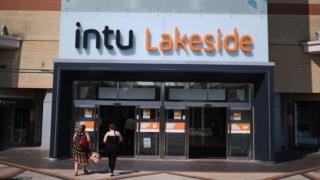
    Shoppers entering Intu Lakeside

    Image copyright
    Getty Images

    Shopping centre giant Intu has entered administration, placing thousands of jobs in doubt.

    But there have long been problems at the firm, which sought help with its debt in January.

    What went wrong at Intu, which was one of the UK’s biggest shopping centre group?

    Debt piling up

    Intu had been struggling even before the coronavirus outbreak.

    One area of concern for potential investors is Intu’s £4.5bn debt, given the declining value of its shopping centres, which will stay open under administrators KPMG.

    They “just aren’t worth the value they once were”, retail expert Kate Hardcastle told BBC News.

    Image copyright
    Getty Images

    Image caption

    Intu owns the Trafford Centre in Manchester

    The value of its the centres it owns fell by 22% in 2019 to £6.6bn. The company also posted a £2bn loss for that year.

    The firm, which owns the Trafford Centre, the Lakeside complex and Braehead, also has a “very complex infrastructure” at its heart, Ms Hardcastle said.

    Another shopping centre owner might use a separate services company to run operations, such as cleaning, security or its car parks. But “at Intu, there’s a web of companies involved in the organisation”, she said.

    Retailer woes

    Shopping centre landlords such as Intu rely on big retailers for their revenues.

    But in recent years, stores have been asking landlords for rent reductions due to the pressures they are under, Ms Hardcastle said.

    • Shopping centre giant Intu enters administration
    • Coronavirus ‘chance to rethink Nottingham redevelopment’

    The coronavirus lockdown imposed by the government on 23 March has meant that rent collection fell even further for retail landlords.

    Shop landlords typically collect rent on a quarterly basis. But when UK retailers had to pay rent for the three months to 29 September this Wednesday, just 14% of the £2.5bn due was paid, according to property data company Re-Leased.

    “The old relationship was quite adversarial between landlords and tenants,” says retail analyst Richard Hyman.

    “That’s not going to work anymore. Everyone is going to have to take the pain, and it’s always best to share it.”

    Changing habits

    “In many ways, the pandemic is an accelerator, and will really have forced change that would have taken five years or more to happen now,” Mr Hyman told BBC News.

    Although the proportion of spending online had been increasing steadily, it reached new highs during lockdown.

    Online sales rose to their highest proportion on record in May while consumers stayed at home. They accounted for 33.4% of total spending, compared with 30.8% in April, according to the Office for National Statistics.

    With the “turbo-charge of online”, shopping centre owners such as Intu need “to understand that they no longer have the monopoly on bringing the customers and the retailers together”, Mr Hyman said.

    “Millions of people in Britain have been shopping happily in lockdown who’ve never done it before, and a lot of people will change their behaviour as a result.”

    Regeneration challenge

    The collapse and contraction of large retailers in the face of rising costs and the ever-increasing online shopping trend had already seen retailers closing outlets.

    That left a number of landlords, such as Intu, struggling to fill empty space as conditions get tougher.

    Kate Hardcastle points out: “We’ve seen in other shopping centres replacing those big units with offices or gyms, but Intu don’t have those relationships – it is pretty dependent on retail.”

    She argues that it could be time for its “glossy infrastructure” and large units to be repurposed.

    “Intu have come in and created something quite sterile, without a celebration of its placing… Now they’re relying on those communities to keep them going.”

    But she added that the outlook could be gloomy for the shopping centre giant as it appoints administrators.

    “This isn’t a typical trading market. Rents not being paid fully which isn’t enticing, consumer confidence is low and we are facing one of the greatest economic challenges of our time ahead.”

  • Coronavirus: Holiday bookings ‘explode’ as travel restrictions ease

    A man and woman lying on a beach wearing face masks

    Image copyright
    Getty Images

    Travel companies say holiday bookings have “exploded” after the government announced current restrictions will be eased.

    Ministers said from 6 July, blanket restrictions on non-essential overseas travel will be relaxed in the UK.

    Holidaymakers will be allowed to travel to certain European countries without having to spend 14 days in quarantine upon their return.

    A spokesperson for TUI said the move was a “hugely positive step forward”.

    “We’ve already seen bookings increase by 50% this week, versus last [week], with holidays to Spain and Greece looking the most popular this summer,” said Andrew Flintham, managing director of TUI UK and Ireland.

    Lastminute.com said it experienced an 80% increase on holiday sales compared to last week, largely attributed to the announcement of Spain lifting the quarantine for Brits.

    The list of travel corridors with the UK is due to be published next week and is expected to include Spain, France, Greece, Italy, the Netherlands, Finland, Belgium, Turkey, Germany and Norway – but not Portugal or Sweden.

    It comes as it was announced a further 100 people had died from the virus in the UK, with a further 890 people testing positive, as of 27 June.

    ‘Traffic light system’

    John Keefe, director of public affairs at Eurotunnel, said phones had been “ringing off the hook”.

    Eurotunnel saw an increase of bookings weeks ago, suggesting that many holidaymakers had already started to “discount the quarantine measures”, said Mr Keefe – but bookings “exploded” when the announcement was made on Friday.

    Foreign Office advice against all but essential international travel has been in place since 17 March.

    Under the new rules, a traffic light system will be introduced – with countries classified as green, amber or red depending on the prevalence of coronavirus. The UK is likely to discuss arrangements with countries over the coming days.

    A government spokesman said measures would give people “the opportunity for a summer holiday abroad” while also boosting the UK economy – but stressed the relaxation depended on risks staying low.

    The government said it “wouldn’t hesitate to put on the brakes” if the situation changes.

    While the UK government is responsible for border controls, the Scottish and Welsh governments say that public health and the response to the pandemic are devolved matters.

    Both warned they had yet to decide to implement the measures.

    Ministers in Scotland said it was “disappointing” that the announcement was made before all four UK nations held discussions.

    Tourism businesses in Wales are not due to reopen until 13 July, a week after the travel restrictions are due to ease elsewhere.

    Image copyright
    Getty Images

    Portugal has seen a rise in the number of new cases in and around Lisbon recently, while Sweden is also unlikely to be on the list because the infection rate there is higher than in the UK. They are both likely to be classified as red.

    But the government spokesman conceded there would be nothing to stop someone avoiding quarantine by flying into a Spanish airport, driving over the border into Portugal for their holiday and returning by the same route.

    UK travellers will still have to hand over the address they plan to stay at on their return from abroad, no matter which country they are coming back from. And they will also be legally required to wear face coverings on planes and ferries.

    How do holidaymakers feel?

    Image caption

    Jon San Jose and his wife Karleen are excited to go on their family holiday to Spain

    Jon San Jose, 38, will be travelling to Spain with his wife and two young children in August to celebrate his mother-in-law’s 60th birthday.

    To minimise risks, they have decided to take the Eurotunnel to France and then drive to Alicante, Spain, where they will be joined in a villa by the rest of the extended family.

    Jon and his wife Karleen welcomed the government announcement, after having doubts the birthday celebration would still go ahead, and said they are doing all they can to limit risks.

    “We probably won’t eat out more than once or twice,” said Jon. “We’re probably going to stay in the villa for most of the time. If anything it will be less risk going there than staying [in the UK] at the moment.”

    Portugal’s Secretary of State for Tourism Rita Baptista Marques told BBC Breakfast her country had been named the most secure destination in Europe by the World Tourism and Travel Council and is a “clean and safe destination”.

    She added that the situation is “completely under control”, with significant testing being carried out.

    But Greece’s Tourism Minister Haris Theoharis suggested that it could be up to three weeks before the country is happy to open up an air bridge to the UK, as discussions with health experts are continuing.

    Spain lifted its state of emergency last Sunday, reopening its borders to visitors from most of Europe and allowing British tourists to enter the country without having to quarantine.

    Travel industry group ABTA said the travel sector “eagerly” anticipates confirmation of the list of countries, which “should encourage customers to book”.

    “The blanket Foreign Office advice against all but essential travel is still a major impediment to travel, however, and we look forward to the government adopting a similar risk-based approach to that advice,” it said in a statement.

    The UK introduced rules requiring all people arriving in the UK to self-isolate for 14 days on 8 June. It was widely criticised by the travel industry and MPs of all parties.

    What are the current quarantine rules?

    • People arriving in the UK should drive their own car to their destination, where possible, and once there they must not use public transport or taxis
    • Arrivals must not go to work, school, or public areas, or have visitors – except for essential support. They are also not allowed to go out to buy food, or other essentials, where they can rely on others
    • Those arriving in England, Wales and Northern Ireland could face a fine of £1,000 if they fail to self-isolate for the full 14 days, while they face a £480 fine in Scotland. The maximum fine for repeat offenders in Scotland is £5,000

    For more on the rules click here.

    “Our new risk-assessment system will enable us to carefully open a number of safe travel routes around the world – giving people the opportunity for a summer holiday abroad and boosting the UK economy through tourism and business,” said a government spokesman.

    “But we will not hesitate to put on the brakes if any risks re-emerge.”

    • DAME JUDI DENCH AND DAVID TENANT: The future of the theatre industry after coronavirus
    • SEAN PENN: The Hollywood actor’s role in getting Americans tested


    How will the rule changes affect your plans for a summer holiday? Email

    Please include a contact number if you are willing to speak to a BBC journalist.

    • WhatsApp: +44 7756 165803
    • Tweet: @BBC_HaveYourSay
    • Please read our terms & conditions and privacy policy

  • Kanye West back at Gap with Yeezy fashion line

    Kanye West and daughter North West

    Image copyright
    Getty Images

    Image caption

    Kanye and his daughter North at his Yeezy fashion show in Paris in March

    Celebrity Kanye West, whose music made him a household name, is now hoping to have the same impact on clothing.

    He is working with Gap on a clothing line, which will carry the name of his Yeezy fashion label. It is expected to be available for customers next year.

    The two brands said the partnership will help them find “new audiences”.

    Gap sales have been struggling in recent years, while Mr West has long expressed interest in selling his fashion to the masses.

    The partnership with the US retailer also represents a bit of a triumphal return for Mr West, who worked at the company as a teenager.

    ‘Modern, elevated basics’

    In a press release, the companies said Mr West would design “modern, elevated basics” at “accessible” prices.

    He has previously partnered with Adidas, which regularly sells out of its batches of limited edition Yeezy trainers, which can go for more than $300 (£243) and far higher on the resale market.

    Mr West’s clothing brand was valued at $2.9bn in April, according to the companies. He will retain sole ownership, receiving royalties and a potential shareholding, tied to sales.

    Mark Breitbard, global head of Gap Brand, said: “We are excited to welcome Kanye back to the Gap family as a creative visionary, building on the aesthetic and success of his Yeezy brand and together defining a next-level retail partnership.”

    News of the deal sent Gap shares surging on Friday, as investors bet the tie-up will help the retailer revive its cool. The shares closed up more than 18%.

    “At a stroke, even announcing it has transformed Gap from being a rather bland and uninteresting brand into something that finally has a bit of cachet,” said Neil Saunders, managing director at GlobalData Retail.

    “People are talking about Gap in a way that they haven’t done in a very long time.”

    ‘Apple of apparel’

    Mr West, who grew up in Chicago and is married to Kim Kardashian, has said in the past that he plans to make Yeezy the “biggest apparel company in human history”.

    He started the Yeezy brand more than a decade ago with sneakers and has since done shows at the fashion runways in New York and Paris.

    In an interview with the Wall Street Journal earlier this year, he discussed his efforts to perfect the hoodie and his interest in becoming “the next Gap” or Apple, companies that defined the look of a product for a generation.

    “I believe that Yeezy is the McDonald’s and the Apple of apparel,” he said. “In order to make the Apple of apparel, the next Gap, it has to be a new invention. To invent something that’s so good that you don’t even get credit for it because it’s the norm.”

    Gap has been a reference point in his music as well. In an early album, he rapped about working at a Gap store, describing getting questioned about stealing from the till and eventually quitting to write music.

    “They take me to the back and pat me. Asking me about some khakis. But let some Black people walk in. I bet you they show off their token blackie,” he said.

    “Oh, now they love Kanye. ‘Let’s put him all in the front of the store’.”

    Great opportunity

    Mr West has at times stirred controversy, particularly with his support for Mr Trump.

    But Gap, which saw sales slip 1% in its most recent financial year and has been pummelled by the pandemic, is betting his aesthetic will be a draw for customers.

    Mr Saunders said Gap will need to make changes to its own products, or it risks getting swamped by Yeezy.

    “There needs to be something that Gap brings to the party and that requires a lot of evolution from Gap,” he said. “This is a great opportunity for Gap but they need to capitalise on it.”

  • Coca-Cola suspends social media advertising despite Facebook changes

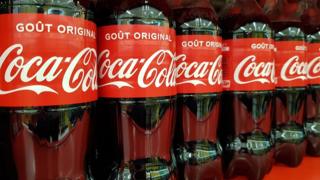
    Coca-Cola bottles on sale at a supermarket in Nice, France (20 January 2020)

    Image copyright
    EPA

    Image caption

    Coca-Cola said its decision did not mean it was joining the #StopHateforProfit campaign

    Coca-Cola will suspend advertising on social media globally for at least 30 days, as pressure builds on platforms to crack down on hate speech.

    “There is no place for racism in the world and there is no place for racism on social media,” the drinks maker’s chairman and CEO James Quincey said.

    He demanded “greater accountability and transparency” from social media firms.

    It came after Facebook said it would label potentially harmful or misleading posts left up for their news value.

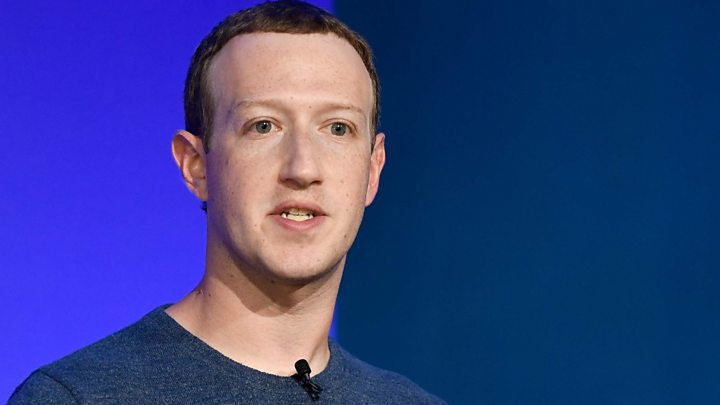
    Founder Mark Zuckerberg said it would also ban advertising containing claims “that people of a specific race, ethnicity, national origin, religious affiliation, caste, sexual orientation, gender identity or immigration status” are a threat to others.

    The organisers of the #StopHateforProfit campaign, which accuses Facebook of not doing enough to stop hate speech and disinformation, said the “small number of small changes” would not “make a dent in the problem”.

    More than 90 companies have paused advertising in support of #StopHateforProfit.

    Coca-Cola told CNBC its advertising suspension did not mean it was joining the campaign, despite being listed as a “participating business”.

    Mr Quincey said the company would use the global “social media platform pause” to “reassess our advertising policies to determine whether revisions are needed”.

    Media playback is unsupported on your device

    Media captionMark Zuckerberg told the BBC’s Simon Jack that Facebook would ‘take down’ coronavirus misinformation

    Clothes maker Levi Strauss & Co also said it would be pausing advertising on Facebook following Mr Zuckerberg’s announcement. Unlike Coca-Cola, it accused the social media firm of not going far enough.

    “We are asking Facebook to commit to decisive change,” CMO Jen Say said.

    “We want to see meaningful progress towards ending the amplification of misinformation and hate speech and better addressing of political advertisements and content that contributes to voter suppression. While we appreciate that Facebook announced some steps in this direction today – it’s simply not enough.”

    The #StopHateforProfit coalition – which includes the National Association for the Advancement of Colored People (NAACP) and the Anti-Defamation League (ADL) – said none of the changes would be vetted or verified.

    “We have been down this road before with Facebook. They have made apologies in the past. They have taken meagre steps after each catastrophe where their platform played a part. But this has to end now,” it added.

    It called on Mr Zuckerberg to take further steps, including establishing permanent civil rights infrastructure within his company; submitting to independent audits of identity-based hate and misinformation; finding and removing public and private groups publishing such content; and creating expert teams to review complaints.

  • Shopping centre giant Intu enters administration

    Intu shopping centre

    Image copyright
    Jeff J Mitchell

    The owner of some of the UK’s biggest shopping centres, Intu, has called in administrators.

    The firm, which owns the Trafford Centre, the Lakeside complex, and Braehead, said earlier it had not reached an agreement in financial restructuring talks with its lenders.

    Its centres will stay open under administrators KPMG.

    The company said shares listed on the London and Johannesburg stock exchanges had been suspended.

    The significance of Intu’s collapse “cannot be understated,” said Richard Lim, chief executive of Retail Economics.

    • Intu collapse: What went wrong for the retail giant?

    The coronavirus lockdown is speeding up a trend towards buying more consumer goods online, he said. He estimates 50% of workers normally can’t receive parcels at work.

    ‘Too much retail space’

    But with many people spending most of their time at home, and car journeys to shopping centres discouraged, many of those people are now ordering via websites.

    How landlords should react is a difficult question and there won’t be a simple solution that will work for every mall, he says.

    Image caption

    Shoppers in Nottingham said they hope the shops will remain open

    Particularly hard-hit will be shops at large office developments like Canary Wharf if more people are working from home.

    “It’s going to be a really, really tough challenge. There’s no getting away from the fact we have too much retail space.”

    While more retailers and shopping centres are likely to close, landlords can offer shorter, flexible leases, he said, to attract retailers with new ideas.

    The firm said it had appointed three administrators at the KPMG accountancy firm and that “the appointment is expected to become effective shortly”.

    The company was one of the UK’s biggest shopping centre group, with 17 centres in the UK.

    In Nottingham, where it owns the Victoria Centre, shoppers said they hoped stores would remain open.

    One worker at the local Boots, who didn’t give her name, said she didn’t know yet whether her shop will be affected. “I think we’ll all be worried,” she told the BBC.

    Intu had been struggling even before the coronavirus outbreak with about £4.6bn worth of debt.

    Image copyright
    Getty Images

    Image caption

    Intu owns the Trafford Centre in Manchester

    Intu has a hugely complicated corporate structure.

    Although the company’s gone into administration, its shopping centres haven’t.

    They are separate companies owned by a myriad of banks and lenders.

    And they’ve now got the keys. Shoppers aren’t likely to notice any real difference in the short term. But buyers will be sought.

    The jewel in the crown is Manchester’s Trafford Centre, followed by Lakeside.

    But Intu’s less-popular malls will prove more difficult to sell, especially given the turmoil in retail right now.

    Intu is a property business which basically put all its eggs in one basket, buying more malls as shopping habits changed, and it ended up with way too much debt.

    Coronavirus then compounded its problems.

    Intu’s spectacular collapse also highlights the pressures retail landlords are now under given the big slump in rental income from their tenants.

    According to its annual report, published in March, its debts were worth 68% of its assets, a jump from 53% a year earlier.

    It told investors earlier this month that it expected rent collected for 2020 to drop to £310m from £492m a year earlier.

    According to Property Week, landlords collected just 18% of commercial rents for the three months to 24 June.

    As rent payments dried up and property values fell, its prospects declined.

    The company employs 2,500 people and its wider supply chain supports about 130,000 jobs, which will now be in doubt.

    Intu’s centres were partially shut during the coronavirus lockdown, with only essential shops remaining open.

    The company had about 60% of shopping centre staff and about 20% of head office employees on furlough.

    Investors in the company’s shares will be nursing heavy losses.

    Its shares traded as cheaply as 1.2 pence each early on Friday, valuing the company at £16m. It was worth as much as £13bn in 2006.