Category: Business News

  • BP sells petrochemicals business to Ineos in $5bn deal

    Saltend Chemicals Park

    Image copyright
    Geography Photos

    BP has sold off its petrochemicals business in a move designed to help it become a lower carbon firm.

    The $5bn (£4.1bn) deal with Ineos will see BP all but pull out of a sector expected to contribute to demand for oil over the coming decades.

    BP boss Bernard Looney said the sale of the business, which employs 1,700 people, “will come as a surprise”.

    Campaign group Greenpeace UK said the sale money “must be invested in a transition to renewable energy.”

    BP is in the process of mapping out a major shift in direction it announced in February, when it said it planned to sharply cut carbon emissions by 2050.

    Further details of how it plans to get there are expected in mid-September.

    BP has also been looking at its assets to decide which ones to sell in the light of this strategy and a decline in demand amid the coronavirus pandemic.

    “Strategically, the [petrochemicals] overlap with the rest of BP is limited and it would take considerable capital for us to grow these businesses,” Mr Looney said in a statement.

    “As we work to build a more focused, more integrated BP, we have other opportunities that are more aligned with our future direction,” he added.

    The business includes stakes in manufacturing plants in the UK, the US, Trinidad and Tobago, Belgium, China, Malaysia and Indonesia.

    The petrochemical plants attached to BP’s oil refineries in Gelsenkirchen and Mulheim in Germany will not be sold.

    Image copyright
    Getty Images

    The International Energy Agency said in 2018 that it expected plastics and other petrochemical products to help boost global oil demand up to 2050, off-setting slower consumption of motor fuel.

    However, in June BP forecast lower oil prices for decades to come as governments speed up plans to cut carbon emissions in the wake of the coronavirus crisis.

    Earlier this month, it announced plans to cut 10,000 jobs after a slump in demand for oil due to Covid-19.

    Asset sale

    BP’s petrochemicals business was smaller compared with rivals such as American oil giant Exxon Mobil or Royal Dutch Shell after it sold its Innovene division in 2005 to Ineos.

    The firm, majority-owned by billionaire Sir Jim Ratcliffe, has a network of more than 180 sites in 26 countries and about 22,000 employees.

    That left BP’s petrochemicals business focused on aromatics, which are used in polymers for plastic bottles and packaging, and acetyles, which are used in paints, solvents and pharmaceuticals.

    However, growing consumer concern about marine pollution has made those sectors a less likely long-term bet for BP as it focuses on improving its green credentials.

    The sale also meant BP has hit a $15bn asset sales target one year ahead of schedule.

    Progress towards the target had slowed after BP had to renegotiate terms of its sale of two oil and gas portfolios in Alaska and the North Sea in recent months.

    Santander analyst Jason Kenney said that the deal is positive for BP because of the limited overlap with its other operations.

    It also strengthened expectations that BP will not cut dividend payments to its shareholders, he said.

    Renewables call

    Environmental campaign group Greenpeace said it was vital that BP invests in renewable energy.

    Mel Evans, senior oil campaigner for Greenpeace UK, said: “BP has sold its petrochemicals business to free up some cash, but it remains to be seen how BP will spend the money.

    “BP’s boss Bernard Looney admits we may be at peak oil demand, and our climate can’t handle more burning of oil or gas. So if BP cares about our planet’s future – or even its own future – this money must be invested in a transition to renewable energy.”

  • Byron Burger ‘files notice to appoint administrators’

    Byron Burger outlet

    Image copyright
    TOLGA AKMEN

    Byron Burger has filed a notice to appoint administrators, as it tries to protect the restaurant chain from creditors while it seeks a rescue deal.

    The chain has 1,200 staff and 52 restaurants across the UK.

    Sources confirmed that the Byron Burger board still remain hopeful that it can be sold as a “going concern”.

    The chain is believed to be in talks with three potential buyers, who could buy the firm or parts of it, in a so-called “pre-pack” administration deal.

    This is where a firm sells all or some of its assets to a pre-determined buyer, and appoints administrators to do so.

    If the chain does go formally into administration in the coming days, KPMG is set to deal with the process. The accountancy firm has been trying to sell Byron since early May.

    The notice to appoint administrators was first reported by Sky news.

    Restaurant chains, which were already under pressure before the coronavirus crisis, have been hit hard by the coronavirus pandemic.

    For example, Cafe Rouge owner Casual Dining Group filing its own notice to appoint administrators in May.

    Byron Burger had not responded to a request for comment at the time of writing.

  • Gambling watchdog ‘toothless’ in helping vulnerable, MPs say

    gambler

    Image copyright
    Getty Images

    The UK’s gambling regulator and the government department that manages it have an “unacceptably weak understanding” of the harms of gambling, according to a report.

    Parliament’s Public Accounts Committee (PAC) said the “toothless” Gambling Commission also did not have measurable targets for helping problem gamblers.

    It called the Department for Digital, Culture, Media & Sport “complacent”.

    The commission insisted it had tightened player protection measures.

    However, it said it would study the report to see what other steps could be taken.

    • Lockdown ‘a disaster’ for problem gamblers

    The PAC’s report also criticised the approach to preventing problem gambling.

    It said: “The government has approached other public health issues on the basis that prevention is better than cure,” said the report by the committee, which scrutinises the value for money of government projects.

    “However, the department was unwilling to accept the premise that increasing the commission’s budget to prevent harm would be preferable to spending on treating problem gamblers.”

    It compared the £19m in licence fees the Gambling Commission gathered in the 2019 financial year with the industry’s £11.3bn revenues.

    The gambling industry itself spends £60m in treating problem gamblers.

    ‘Devastating’ effects

    The committee says there are about 395,000 problem gamblers who bet compulsively in the UK. A further 1.8 million people are “at risk” of becoming addicted to gambling, it says.

    “The effects can be devastating, life-changing for people and whole families, including financial and home loss, relationship breakdowns, criminality and suicide,” said the report.

    MP Meg Hillier, chair of the committee, said the commission needed to be reformed.

    “What has emerged in evidence is a picture of a torpid, toothless regulator that doesn’t seem terribly interested in either the harms it exists to reduce or the means it might use to achieve that,” she said.

    “The commission needs a radical overhaul: it must be quicker at responding to problems, update company licence conditions to protect vulnerable consumers and beef up those consumers’ rights to redress when it fails.”

    A DCMS spokesperson said: “We are absolutely committed to protecting people from the risks of gambling related harm and recognise there is more to do.

    “We have been clear that we will review the Gambling Act to ensure it is fit for the digital age.”

  • Pakistan attack: ‘Gunmen killed’ in raid on stock exchange in Karachi

    A plainclothes police officer (L) surveys the site of an attack at the Pakistan Stocks Exchange entrance in Karachi June 29, 2020.

    Image copyright
    Reuters

    Image caption

    The gunmen entered the building from the car park, “firing indiscriminately”

    Gunmen have attacked the Pakistani stock exchange in the southern city of Karachi, killing at least two people and injuring others, local media report.

    The assailants stormed the exchange after launching a grenade attack at the main gate to the building.

    Latest reports quote police saying officers have killed all four heavily armed gunmen and are combing the area.

    Militants from the Baloch Liberation Army say they were behind the attack.

    Ethnic Baloch groups have fought a long-running insurgency for a separate homeland and a greater share of resources in Pakistan’s Balochistan province.

    Pakistan has suffered years of militant violence, mostly by Islamist groups, but attacks such as this one have become rare in recent years.

    ‘They opened fire on everyone’

    Monday’s attack began when the militants armed with automatic rifles threw a grenade and then began firing at a security post outside the stock exchange.

    “They had come in a silver Corolla car,” Karachi police chief Ghulam Nabi Memon later told Reuters.

    Guards fought back, killing all four attackers, the authorities say, but police officers and security personnel are feared to be among the casualties.

    It is not clear if more assailants were involved and a search of the premises is continuing. The Pakistan Stock Exchange said in a statement that the situation was “still unfolding”.

    Its director, Abid Ali Habib, said the gunmen made their way from the car park and “opened fire on everyone”.

    Reports say most people managed to escape or hide in locked rooms. Those inside the building were being evacuated from the back door, Geo TV reported.

    The stock exchange has offices for hundreds of financial institutions and is situated in a high security zone along with head offices of banks and other businesses.

  • Coronavirus: Restaurants are ‘hurting’, says Deliveroo boss

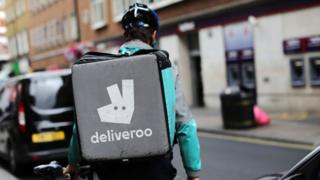
    Deliveroo rider

    Image copyright
    Getty Images

    Restaurants “are hurting” due to the coronavirus pandemic, the boss of food courier Deliveroo has told the BBC.

    “Even if restrictions are lifted soon, there’s going to be a long period of socially-distanced dining,” said Will Shu.

    Deliveroo has expanded its UK customer base, with coronavirus accelerating the adoption of delivery apps, he said.

    Speaking to the BBC’s Today programme, Mr Shu said that “Covid-19 really has marked a new era of delivery.”

    “Since we started Deliveroo, there’s been this incredible adoption towards online and apps. But I think Covid-19 has brought forward this consumer behaviour by about one to three years.”

    “On the other hand, our restaurant partners are hurting,” he said.

    Although restaurants will be allowed to reopen in England on 4 July with social distancing measures in place, Mr Shu said that he believed that “there’s going to be an increased demand for delivery and collection.”

    Image copyright
    Getty Images

    Image caption

    Will Shu co-founded Deliveroo in 2013

    Technology firms like Deliveroo “need to develop better tools for restaurants to operate safely and profitably,” Mr Shu said.

    It comes as Deliveroo launches a new feature called “Table Service”. From 15 July UK users will be able to order food and pay through the Deliveroo app when they have a sit-in meal at participating restaurants, cafes or pubs.

    The firm says it’s aimed at making social distancing easier when eating out.

    “This is an important safety feature to give consumers confidence they can return to restaurants safely, and for restaurant staff, who will be able to work while minimising in-person contact,” Deliveroo said in a statement.

    Hospitality sector woes

    The firm has previously spoken out about the problems the hospitality sector faces during the pandemic.

    In June Deliveroo organised a letter, signed by its partner restaurants including Itsu and Pret A Manger, warning that the sector faces mass job cuts without more help.

    The action called for included slashing VAT on restaurant food and maintaining the Job Retention Scheme for restaurants while social distancing measures are in place.

    The government has issued advice for pubs, restaurants and cafes in England set to reopen from 4 July. They have been encouraged to keep a register of customer details to help track and trace the spread of Covid-19 infections.

    Diners will also be encouraged to book in advance, as well as ordering food and drink direct to their tables through apps.

    However, Kate Nicholls, chief executive of UKHospitality, urged firms on Sunday to be weary of buying expensive apps.

    “There will be a lot of ambulance-chasing on apps if we’re not careful,” she said.

    “We’ve seen a lot of tech firms coming out and saying, ‘If you pay us for a quick fix, we’ll be able to make an app for you’.

    “I’m fearful companies will be seduced into paying more for a tech solution before we know what the government is actually asking us to do,” Ms Nicholls said.

    Deliveroo says that restaurants that use its new “Table Service” feature will not be charged commission.

    Building the business

    Speaking to the BBC’s Today programme, Mr Shu added that while the firm had recently expanded its UK customer base, the hospitality sector was not one that had “been profitable”.

    “We’ve been needing to invest in building up this business,” he said.

    Last week the UK’s competition watchdog said it no longer had concerns about Amazon’s plan to invest in the food delivery service.

    Internet giant Amazon announced plans to buy 16% of Deliveroo in May 2019.

    The Competition and Markets Authority was initially concerned that the £440m deal would prevent Amazon from launching a rival company, which would increase competition and potentially lower prices for consumers, but it later changed its mind.

    “This is the most consumer-obsessed company in the world, and we’re really proud to get investment from them,” Mr Shu said.

    “It’s a huge boost of confidence in the UK tech sector as well as in Deliveroo.”

  • Who needs Wimbledon? Strawberry sales soar

    When Covid-19 forced summer events like Wimbledon to be cancelled, along with all weddings, strawberry growers worried about their sales. However, a surge in demand for eating strawberries at home means sales have leapt by one-fifth this year.

    Video by Jeremy Howell

  • Coronavirus: Can you really do these jobs from home?

    Media playback is unsupported on your device

    Media captionShermeena Rabbi: ‘Initially it was challenging but the children have taken it really well’

    Many people have had to switch suddenly to working from home during the coronavirus outbreak because of lockdown conditions. Dougal Shaw has spoken to three people with jobs where face-to-face contact is usually seen as essential, but who have found working remotely to be surprisingly successful.

    It’s a job that requires trust, intimacy and impeccable listening skills – but does it have to be done face-to-face?

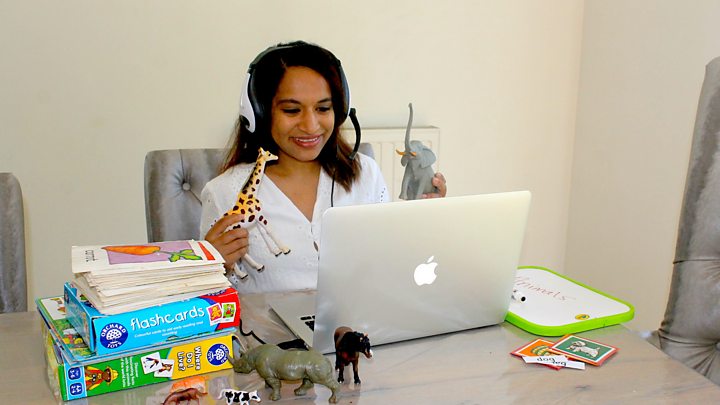
    Shermeena Rabbi, 39, is a speech therapist and businesswoman who lives in Essex. She runs a team of 25 therapists who work with people who have communication issues. Many of her clients are families with children who are autistic, or have Down’s Syndrome, or cerebral palsy.

    Normally the team works in clinics and schools across London, but since lockdown they have had to do things remotely. The therapist makes a video call from their home to the home of the client. They call this teletherapy.

    “Because our work, especially with children, can be so personal, face-to-face, play-based and tactile, we wondered, ‘How’s this going to work?’ We were originally reluctant,” admits Shermeena.

    Therapy sessions with children involve working on pronunciation, often by interacting with toys, symbols and books. Therapists also tackle broader issues, like focusing attention, she explains.

    Image copyright
    Shermeena Rabbi

    Image caption

    Shermeena says younger patients have adapted well to the teletherapy

    As the therapists cannot do the physical aspects of the therapy online, they’ve had to delegate this to parents, who wouldn’t always have been present at sessions.

    However, that has actually turned out to be something surprisingly empowering and beneficial, says Shermeena.

    She is impressed at how effective the online therapy sessions have been. “For younger patients the digital screen is just part of normal life,” she says.

    It’s also nice to see patients in their home setting and it cuts down on travel costs for everyone, she adds.

    The speech therapists use apps such as WhatsApp, Google Meet and FaceTime.

    They follow professional tele-health guidelines, a checklist that ensures things like good microphone quality and the ability to see clearly the patient’s face, including lips and mouth.

    The team meets daily at 2.30pm for their own “fancy-a-cuppa” video call, when they chat and share knowledge.

    The consensus is they will continue to offer this alternative service even when lockdown eases, and they will downsize their physical premises.

    Image copyright
    Anna Wood

    Image caption

    Anna Wood caters for nervous brides

    Anna Wood, 40, runs her own bridal dress boutique in the village of Long Buckby, Northamptonshire.

    She had previously run several online enterprises but always dreamed of owning her own business premises. She took a break from work to get married – and this proved to be her moment of epiphany.

    “I never quite got the experience I wanted as a bride visiting boutiques, so I saw a gap in the market,” she remembers.

    She wanted to specialise in brides who “feel overwhelmed by the process and need a helping hand on the journey”, she says.

    She liked her chosen location – on the first floor above a bakery on the High Street – because her brides-to-be would feel they were visiting somewhere for a special appointment, but wouldn’t have to worry about passers-by looking through the window.

    Her boutique opened in October 2018 and served more than 50 brides before coronavirus struck.

    Image copyright
    Anna Wood

    Image caption

    Anna had always dreamed of having her own shop

    Although Anna loves the space, lockdown has made her question things, and she is now thinking of phasing out the physical boutique once the lease runs out.

    She says working with brides remotely during lockdown has been “strange to get used to”, but ultimately makes sense for her business, and not just by cutting costs on things like rent, business rates and utility bills.

    She can discuss potential dresses with customers by video call, sending them pictures, then organise fittings at designers’ stores or the bride’s home (as and when lockdown rules allow).

    And lockdown has allowed her to focus on the part of the business she found most rewarding anyway – what she calls the bride coaching. “Not all brides go into marriage in a really happy place, some are quite anxious and have self-belief issues,” Anna says.

    Image copyright
    Anna Wood

    Image caption

    Anna sees a future for video appointments with brides-to-be

    She would usually do her pep talks in a separate part of the boutique – but she has found that this intimate part of the service can work surprisingly well online, in video calls.

    People in the bridal industry have recognised for a long time that shopping was migrating online, but thought they would be immune because it is such a specialised, personalised service, says Anna.

    But lockdown is making people realise you can get a satisfying personal service online too.

    The new crop of brides in their 20s and early 30s in particular have grown up as digital natives, and are more than ready for this transition, she thinks.

    Image copyright
    Annabel Sheen

    Image caption

    Digital producer Annabel Sheen has yet to meet any of her museum colleagues

    Annabel Sheen, 30, joined the Imperial War Museum in London in April. The museum was closed to the public because of coronavirus.

    Normally the building would have been the focus of her daily routine. Her role is to bring collections to life – her speciality is making digital exhibits.

    “I haven’t met any of my colleagues in person yet, I haven’t even been given my staff pass,” she says.

    Working at a museum is all about getting to know the physical space, the exhibits and the curators there, so lockdown has been a big challenge.

    “Nearly everything I’m working on is new content that wasn’t part of our team’s plan a few months ago,” she adds.

    For example, she has made this video – appropriately enough, in an age of Zoom calls – about British troops in the Far East sending recorded video messages to loved ones back home in 1945.

    Accessing the archive video was not a problem, but interviewing the curator to add her expertise to the edit meant devising new work methods.

    “We have to interview curators via Teams and ask them to record themselves on their smartphone rather than using a camera and proper audio equipment as we usually would,” she says.

    Image copyright
    Imperial War Museum

    Image caption

    Curator Michelle Kirby had to film herself on her smartphone

    Although some bits had to be rejected in the edit, Annabel has been pleasantly surprised by the quality of work she’s been able to produce.

    Public lectures that would have been conducted in the museum have migrated online as well, and she has to help with the live broadcast of those too.

    She is looking forward to finally being able to meet her team in person when lockdown eases and the museum opens.

    “For now,” she says, “I’m just a pair of initials at the bottom of the screen in a big meeting.”

    Have you had to get creative with your work in lockdown? You can contact business reporter

  • Boeing set for critical 737 Max flight tests

    Grounded Boeing 737 Max planes

    Image copyright
    Reuters

    Image caption

    All Boeing 737 Max planes are grounded

    Boeing’s bid to see its 737 Max return to the skies faces a pivotal week with flight safety tests expected to begin.

    Pilots and technical experts from regulators and the company are understood to be planning three days of tests, possibly starting on Monday.

    Boeing’s best-selling aircraft was grounded last year after two crashes killed all 346 people on the flights.

    The tests are a milestone for Boeing, but even if they go well, months of further safety checks will be needed.

    Aviation regulators grounded the 737 Max about 15 months ago following two crashes – a Lion Air flight and an Ethiopian Airlines flight – within five months of each other.

    The ruling triggered a financial crisis at the 103-year-old company, sparked lawsuits from victims’ families, and raised questions about how Boeing and the US regulator, the Federal Aviation Administration (FAA), conducted their safety approval process.

    Investigators blamed faults in the flight control system, which Boeing has been overhauling for months in order to meet new safety demands.

    A 737 Max loaded with test equipment will run through a series of mid-air scenarios near Boeing’s manufacturing base at Seattle.

    According to Reuters, which first reported the news, pilots will intentionally trigger the reprogrammed stall-prevention software known as MCAS, blamed for both crashes.

    The BBC understands that both the FAA, which is leading the testing, and Boeing, are hopeful that the process will get under way on Monday, barring last minutes hitches.

    Image copyright
    Getty Images

    Image caption

    Ethiopian Airlines’ flight ET302 crashed shortly after take off in March 2019

    The FAA confirmed on Sunday in an email to the US Congress that it had approved key certification test flights for the grounded 737 Max.

    The email noted that the “FAA has not made a decision on return to service” and has a number of additional steps to go, according to Reuters reports.

    Test flights had been planned for last year, but investigations uncovered an array of new safety issues that have delayed a return to service.

    It could take weeks to analyse data from the test flights. But even if this process is successful, further flying, training of pilots, and clearance from European and Canadian regulators will be needed.

    The European Aviation Safety Agency has maintained that clearance by the FAA will not automatically mean a clearance to fly in Europe.

    Norwegian Air, TUI, and Icelandair are among airlines using the 737 Max in Europe, while other carriers have the aircraft on order.

    Boeing and the FAA declined to comment.

  • Starbucks suspends social media ads over hate speech

    Starbucks coffee cups

    Image copyright
    Getty Images

    Starbucks has announced it will suspend advertising on some social media platforms in response to hate speech.

    The coffee giant joins global brands including Coca-Cola, Diageo and Unilever which have recently removed advertising from social platforms.

    A Starbucks spokesperson told the BBC the social media “pause” would not include YouTube, owned by Google.

    “We believe in bringing communities together, both in person and online,” Starbucks said in a statement.

    The brand said it would “have discussions internally and with media partners and civil rights organizations to stop the spread of hate speech”. But it will continue to post on social media without paid promotion, it said.

    The announcement came after Coca-Cola called for “greater accountability” from social media firms.

    Coca Cola said it would pause advertising on all social media platforms globally, while Unilever, owner of Ben & Jerry’s ice cream, said it would halt Twitter, Facebook and Instagram advertising in the US “at least” through 2020.

    The announcements follow controversy over Facebook’s approach to moderating content on its platform – seen by many as too hands off. It came after Facebook said on Friday it would begin to label potentially harmful or misleading posts which have been left up for their news value.

    Founder Mark Zuckerberg said Facebook would also ban advertising containing claims “that people of a specific race, ethnicity, national origin, religious affiliation, caste, sexual orientation, gender identity or immigration status” are a threat to others.

    Media playback is unsupported on your device

    Media captionMark Zuckerberg told the BBC’s Simon Jack that Facebook would ‘take down’ coronavirus misinformation

    The organisers of the #StopHateforProfit campaign, which has accused Facebook of not doing enough to stop hate speech and disinformation, said the “small number of small changes” would not “make a dent in the problem”.

    Starbucks said that while it was suspending advertising on some social platforms, it would not join the #StopHateForProfit campaign. More than 90 companies have paused advertising in support of #StopHateforProfit.

    Coca-Cola also told CNBC its advertising suspension did not mean it was joining the campaign, despite being listed as a “participating business”.

    The campaign has called on Mr Zuckerberg to take further steps, including establishing permanent civil rights “infrastructure” within Facebook; submitting to independent audits of identity-based hate and misinformation; finding and removing public and private groups publishing such content; and creating expert teams to review complaints.

    Last year, Facebook’s saw a 27% increase in advertising revenue on the previous year.

  • Adelie Foods collapse: ‘I just don’t know when I’m going to get work’

    Former workers at one of Britain’s largest sandwich-making firms say they have been struggling since losing their jobs, after the company went into administration.

    Adelie Foods, which has sites across the UK, went bust last month after demand collapsed during the coronavirus lockdown and the company failed to find a buyer.

    Angela Mensah, who lost her job at the Milton Keynes factory which employed more than 600 people, said: “We thought we were coming home for a couple of weeks and after we would go back to work.

    “I’m very nervous about everything because I just don’t know when I’m going to get work.”

    Her colleague, Sylvia Arthur, said: “It’s not easy for me, taking care of three children. Staying at home, doing nothing.”

    Milton Keynes Council said it would “work alongside the Department for Work and Pensions to support people back into employment”.