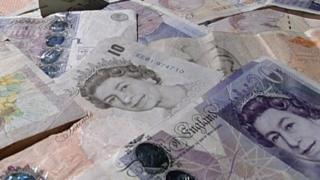
The amount of money put into cash Individual Savings Accounts (Isas) has fallen by a third year-on-year, as low interest rates and tax changes make them less attractive to savers.
In the 2015-16 financial year, cash ISA holders paid £58.7bn into them.
But in 2016-17, only £39.2bn of new money went in, according to latest figures issued by HMRC.
Since April 2016, savers can make £1,000 a year in tax-free interest, reducing the tax advantage of Isas.
Isas have traditionally offered the perk of being exempt from both income and capital gains tax.
At the same time, savings in general have been seeing a decline.
According to the Office for National Statistics (ONS), the savings rate – the amount that households save out of their income – fell to just 1.7% in the first quarter of 2017, the lowest rate recorded.
‘Negative’ savings rate
The ONS has said the savings ratio has been falling since 2015, suggesting that the decline is driven by low interest rates, which reduce the return on accounts.
Rising inflation has made this effect even starker, with the Consumer Prices Index (CPI) inflation rate currently at 2.6%.
“Savers finally seem to be waking up to the reality of inflation eating away returns,” said Ritu Vohora, investments director at M&G Investments.
“Real savings rates have effectively been negative for some time now, when you take price rises into account.
“The latest HMRC figures show that annual contributions to Isas averaged £5,558, and we’ve calculated that putting this amount into a cash Isa in each of the past five years would have created a pot of £27,906.
“By comparison, those contributions invested into a stocks and shares ISA could have generated £34,675 over the same period.”
However, she warned: “Of course, investing does come with greater risk, but savers need to weigh this against the corrosive effect on cash caused by inflation outpacing interest rates.”
A Treasury spokesperson said: “ISAs are a great way of saving for the future in a tax efficient way and over 21 million people are already using them. The total amount held in cash ISAs reached a record high £270bn this year.”
A team of medical clinicians and computer scientists have teamed up to create an app designed to spot early signs of pancreatic cancer.
The disease, which killed Apple’s co-founder Steve Jobs, is one of the hardest types of cancer to treat, but detecting and treating it early can make a big difference to survival rates.
The BiliScreen app is still in development at the University of Washington but is due to be presented at a computing conference later this month.
Image caption
Dubai says it will begin a five-year test period of the Volocopter later in 2017
Tech companies are competing to develop the first viable passenger-carrying sky taxis, whether manned or pilotless, but how soon could these clever copters really be whizzing over our cities? And would you trust one?
Dubai is racing to be the first to put drone taxis in the air.
In June, its Roads and Transport Authority (RTA) signed an agreement with a German start-up Volocopter to test pilotless air taxis towards the end of this year.
The firm has received 25m euros (£22m; $30m) from investors, including German motor manufacturer Daimler, to develop the 18-rotor craft capable of transporting two passengers at a time.
The promotional video claims a top speed of 100km/h (60mph) and a maximum flight time of around 30 minutes, while nine independent battery systems ensure safety.
“You will never require” the onboard emergency parachute, Volocopter assures us.
Dubai’s RTA has also teamed up with China’s Ehang and is testing the drone maker’s single passenger Ehang 184 “autonomous aerial vehicle”.
Image copyright RTA/Ehang
Image caption
The Ehang 184 will land automatically if any systems malfunction, its maker says
Image copyright Ehang
Image caption
Ehang envisages single-click operation via a simple control panel
But the largest city in the United Arab Emirates faces stiff competition. It seems the whole world has gone gaga for air-cabs.
In February, ride-sharing giant Uber poached Nasa chief technologist Mark Moore and set him to work heading their Project Elevate – “a future of on-demand urban air transportation”.
Airbus, the French aircraft maker, is also working on a prototype air taxi, Vahana, saying it will begin testing at the end of 2017 and have one ready by 2020.
They all spy opportunities in the air because traffic is becoming increasingly clogged on the ground. To take an extreme example, in Brazil’s Sao Paulo, the world’s 10th richest city, traffic jams average 180km (112 miles) on Fridays, and sometimes stretch to a barely credible 295km.
Yet the world’s megalopolises are continuing to grow. No wonder air taxis are capturing people’s imaginations.
Image copyright A3/Airbus
Image caption
The Airbus Vahana drone concept features rotors that can swivel for vertical and horizontal flight
Ehang carries a single passenger, Volocopter two, while City Airbus is looking at four to six. And each of these companies is pursuing electric propulsion, seeing it as greener and quieter.
The preferred horizontal rotor technology allows for vertical take off and landing, which makes sense in densely built up urban spaces. And composite materials, such as carbon fibre, help keep weight to a minimum.
But how will they work in practice and will they be affordable?
Uber’s Mr Moore says the cost, with three or four passengers sharing a pool, will be “very similar to what an UberX [car] costs today”.
More seriously, given the trade-off between power and weight, how long will these things be able to stay up in the sky relying on battery power alone?
Because if you don’t like your mobile going flat, you definitely won’t like it when your air taxi does.
Image copyright Getty Images
Image caption
With traffic jams like this in Sao Paulo, Brazil, it’s no wonder sky taxis are an appealing concept
China’s Ehang drone currently flies for 23 minutes. But US Federal Aviation Administration (FAA) regulates stipulate that aircraft require a spare 20 minutes of fuel. So this would limit the drone to a commercially unviable three-minute flight.
“It’s really a problem,” says Janina Frankel-Yoeli vice-president of Israel’s Urban Aeronautics, a firm taking a manned, combustion-engine approach to air taxis instead.
But Mr Moore argues that improvements in batteries are “on the track we need for them to be there in 2023”, when Uber plans to have its first 50 air taxis ready.
The vastly increased investment in electric cars around the world is improving recharging speeds and capacity, he says.
“We don’t need long range – 60 miles covers the longest trip across a city.”
So rapid recharging capability is more important than range, he argues.
Image copyright DANIELFORTMANN.COM
Image caption
Airbus concept: Is it a car? Is it a plane? Could it be both?
Another solution may involve a two-part drone, with the batteries stored in a detachable base that can be swapped quickly between flights, says Tim Robinson, editor of the Royal Aeronautical Society’s magazine, Aerospace.
“If there was a drone waiting and it had a flat battery I’m pretty sure it wouldn’t let you take off, whatever your journey was,” he says.
In other words, it’s very unlikely that a sky taxi would run out of juice mid-flight. Once battery levels reached a critical point, the drone would make an emergency landing.
“I think we’ll see multiple redundancy and back-up systems,” says Mr Robinson, “like a ballistic parachute which would trigger automatically if it detected a descent rate beyond the parameters.”
Another major challenge is managing the airspace and avoiding collisions.
Most major cities already have air corridors set up for helicopters that air taxis could use, Mr Moore says. But requesting to enter the corridors is currently done manually.
More Technology of Business
Image copyright Getty Images
“You’d fly to the edge of that airspace, request to enter, and maybe be told ‘Nope, hold, wait’,” he says.
So Nasa’s NTX research centre is exploring how flight corridors can work without voice interactions. This includes improved “sense-and-avoid” technology that will allow drones to communicate with other passenger aircraft to avoid one other.
But perhaps the biggest drag on sky taxi development is regulation.
While commercial aircraft are already “virtually capable of taking off, flying and landing on their own”, says Ms Frankel-Yoeli, the US FAA and European Aviation Safety Agency will not allow them to fly without a pilot.
It may take a long time for autonomous drone tech to win regulatory – not to mention public – trust. And that’s ignoring the potential complaints about the noise all these buzzing copters would make in our cities.
Uber’s Mr Moore believes air taxis will have autonomous capability built in from 2023, but will have human pilots for the first five-to-10 years while enough data is collected to convince regulators that sky taxis are safe.
Meanwhile Dubai seems to be racing ahead, with ruler Sheikh Mohammed bin Rashid Al Maktoum saying “by 2030, 25% of the mass transportation in the city has to be autonomous”.
But Dubai is a harsh aviation climate, where “winds can go up to 40-50 knots [46-58mph], there’s sand, there’s fog”, warns Mark Martin, an aviation consultant working there.
Perhaps Dubai is moving too quickly and should work more closely with the slower US and European regulators, he argues.
“If one crashes, who’s ever going to take a drone?”
Follow Technology of Business editor Matthew Wall on Twitter and Facebook
US bank Wells Fargo says as many as 3.5 million accounts may have been created for customers without permission over about eight years, even more than previously acknowledged.
The 1.4 million additional accounts were identified as part of a review the bank commissioned after the scandal came to light.
The analysis also uncovered problems with the firm’s online payment system.
The bank has already agreed to pay more than $150m to customers.
Much of that will go to settling a class action lawsuit filed on behalf of the bank’s customers since 2002.
Wells Fargo chief executive Tim Sloan apologised to customers and called the sales practices “unacceptable”.
“To rebuild trust and to build a better Wells Fargo, our first priority is to make things right for our customers, and the completion of this expanded third-party analysis is an important milestone,” he said.
The study reviewed about 165 million customer accounts opened between January 2009 and September 2016, identifying “potentially unauthorised” accounts based on activity.
The bank is now reviewing accounts back to 2002, Mr Sloan said.
The data analysis may have produced some accounts that were in fact authorised, the bank said.
Wells Fargo, one of America’s biggest retail banks, has been in turmoil since revelations that the firm created millions of fake accounts to meet sales goals. and ignored or punished whistleblowers.
The problems cost more than 5,000 lower level employees their jobs and led to the resignation of former chief executive John Stumpf.
The firm’s reputation has also been bruised by problems in other areas. For example, the bank said in July it would pay $80m, after wrongly charging about 570,000 customers for auto insurance.
For David Bradford, his gambling addiction had got as bad as it possibly could.
The 57 year-old was in prison for fraud after stealing £50,000. His habit had cost his family their home and left them buried under £500,000 of debt.
For 888.com, however, there was more to be had out of David Bradford.
While he sat in jail, his son Adam saw that the online gambling company was sending adverts to his father’s mobile phone, at a cost of £5 a time.
Adam Bradford says: “After calling them six times and pleading with them, they switched off the text messages after almost £100 worth of charges.”
Dr Carolyn Downs, senior lecturer at Lancaster University who is an expert on the gambling industry, estimates that there are around 500,000 people in the UK with a “severe” addition.
“And for each of those people with severe problems, you’re looking at four or five other family members being severely affected. Who perhaps don’t know that their family member is a problem gambler until they lose the house, ” she told BBC Radio 4’s Today programme.
Theft
On Thursday, 888 Holdings, which owns 888.com, was fined a record £7.8m by the Gambling Commission for failing to protect thousands of vulnerable customers who had tried to “self-exclude” themselves from their websites.
The regulator also penalised 888 for failing to recognise problem behaviour that resulted in one person stealing £55,000 from their employer.
Image copyright Getty Images
Sarah Harrison, chief executive of the regulator, said: “Messages like this send a strong signal to companies like 888 and every gambling operator that the Gambling Commission will take tough action against companies who don’t meet the rules.”
However, the Gambling Commission wouldn’t have known about any of these problems had 888 Holdings not stepped forward in the first place.
In the regulator’s public statement on the matter, it says that it was 888 Holdings who notified the commission about the technical problem on 28 February 2017,
Self-exclusion or delusion?
In 888’s case, the fault lay with a technical issue.
Customers with acknowledged problems had effectively blocked themselves from gambling on the poker, casino and sports sites.
But they still had access to the bingo sites.
However, even with this loophole now closed, there remains a wider industry problem, with self-exclusion, says Dr Downs.
She said: “It was difficult to do with online gambling, even to find a place on a website to actually go to tell them you want to self-exclude… it quite often requires an awful lot of clicks with a mouse around the web site to find a place.”
And just because a person is excluded from one means of gambling, it doesn’t give them any protection against other methods.
In some instances, self-exclusion is simply farcical.
Tony Franklin, a recovering gambling addict and a campaigner, says: “Self-exclusion from betting shops is paper-based so they are reliant on you providing a photograph of yourself. Then, it might only be circulated to a small number of betting shops in the area.”
It is very easy to go to another town to bet, he says, and it is very difficult for the people working in bookmakers to police their customers.
Dr Downs proposed a national register for self-exclusion: “The Gambling Commission could run this,” she says: “If you wanted to self-exclude you would send your details off on a simple form to the Gambling Commission and they would let everybody know your email address.”
But she adds: “I don’t think there’s any sort of will for that action. Problem gamblers provide most of the profit for the gambling industry and that’s really quite well known.”
Image copyright Getty Images
The Gambling Commission says the industry is working on a national “online multi-operator self-exclusion scheme” which it is aims to have in place by 2018.
GAMSTOP, as it is called, will be run by the Remote Gambling Association (RGA), a group whose members are online gambling companies.
Adam Bradford questions the wisdom of this. “It is like asking a policeman to arrest himself for a crime.”
Clive Hawkswood, chief executive of the RGA, denies that there is a conflict of interest. “On the contrary it is very much in our interests and our aim is to make it as good as any system in the world,” he says.
Mr Franklin thinks betting companies need to take stronger action before allowing people to bet, such as conducting an affordability check on potential customers.
This, he believes, should be outsourced to a third party such as credit checking company Experian.
Liberalising problems
At the moment, however, Mr Franklin says people will remain vulnerable to an industry whose main aim is to make money.
Dr Downs says: “I think legislation is absolutely the only answer. I think when we liberalised the gambling industry – as was predicted by a number of people at the time – we liberalised many more problem gamblers.”
For Mr Franklin, he says: “Never again. Not ever will I give one more pound to these people.”
The Gambling Commission has not yet provided a comment.
888 Holdings declined to comment on individual cases. Its response to the action taken by the Gambling Commission can be accessed here.
India’s economy grew at its slowest pace for three years in the April-to-June quarter, official figures show.
The economy grew by 5.7% in the period compared with a year earlier, down from a rate of 6.1% in the previous quarter.
Many analysts had expected the economy to bounce back after the government’s crackdown on black market cash last year.
However, confusion among some firms over a new tax on goods and services was blamed for holding back growth.
Some retailers said ambiguous rules over the new sales tax, which began on 1 July, left them unsure over how to price their products.
But manufacturing saw the sharpest slowdown in growth, expanding at just 1.2% compared to 10.7% a year earlier.
Growth in the financial, insurance, real estate and professional services sectors also slowed from 9.4% to 6.4%.
“[The] GDP numbers are certainly disappointing,” said Abheek Barua, chief economist at HDFC Bank in New Delhi.
“The numbers seem to suggest that the slowdown from [the] last quarter has intensified due to the combination of long-term slowdown and temporary shock factors like demonetisation and GST (goods and services tax) destocking”.
In November last year, India’s government announced a ban on banknotes with a face value of 500 and 1,000 rupees (worth $7 and $14 respectively). The aim was to make it difficult for black marketeers and tax evaders to retain ill-gotten gains.
The move caused anger, chaos and widespread cash shortages as ordinary consumers rushed to exchange their money before the deadline.
But the impact of the banknote ban has faded.
Analysts said the new goods and services tax was a bigger cause of disruption for retailers, in the recent quarter.
Anjali Verma, economist at Phillip Capital India in Mumbai predicted that the impact of the new tax would be temporary: “GST impact is just a one quarter phenomena, or at (most) one month after that. But then in the medium to long term it’s expected to be a positive.”
“I would expect GDP for the full year will be somewhere closer to 6%.”
US petrol prices have risen after a key network of pipelines was shut in the wake of Hurricane Harvey, sparking fears of a squeeze on fuel supplies to major US cities.
The hurricane has already forced the closure of nearly a quarter of US oil refining capacity.
Colonial Pipeline said it was closing its pipelines delivering diesel, petrol and aviation fuel to the North East.
European traders are scrambling to provide additional supplies.
The threat of a fuel supply crunch has grown as key infrastructure is paralysed by the storm; Colonial’s announcement indicates the knock-on effects are growing.
The firm’s network of pipelines is the country’s largest supply system, taking refined fuel from the Gulf of Mexico to consumers in major US cities including New York, Atlanta and Washington DC. The company did not given any indication when the pipelines might reopen.
Colonial issued a statement on Wednesday announcing its diesel and aviation fuel pipeline was closing immediately and that its petrol, or gasoline, pipeline would be closed from Thursday because of outages at pumping points and a lack of supplies from refiners.
The company said its facilities between Lake Charles and Houston were out of service. Of the 26 refineries that connect to the Colonial system, 13 are located between Houston and Lake Charles, it said.
“Once Colonial personnel can safely access these facilities, we will evaluate and provide an estimate of the time necessary to ensure our pipe, pumps, tanks and related infrastructure are safe to resume operations between Houston and Lake Charles,” the statement said.
US fuel prices have risen by more than 10 cents a gallon compared with a week ago, to nearly $2.45 on average nationwide, according to the American Automobile Association, amid reports that some East Coast refineries are running out of petrol.
Traders in Europe were reported to be rerouting petrol supplies to the US, but it was not certain they would be delivered in time to avert a crunch over the Labor Day weekend.
Online gambling firm 888 is to pay a record penalty of £7.8m after it failed to protect vulnerable customers.
The Gambling Commission said there were “significant flaws” in the firm’s social responsibility processes.
The regulator highlighted a technical failure which meant 7,000 customers who had chosen to bar themselves from their 888 accounts were still able to gamble.
Sarah Harrison, chief executive at the Gambling Commission, said the penalty would ensure that “lessons are learnt”.
888 said it had been working co-operatively with the regulator throughout the review, resulting in the voluntary settlement, adding it was “committed to providing players with a responsible as well as enjoyable gaming experience”.
Part of the penalty package will be used to repay £3.5m in deposits made by the customers who had self-excluded themselves when they wanted to stop gambling. A technical flaw meant that they were still able to gamble on 888’s bingo platform.
‘Serious concerns’
“Our requirements are that every company must provide the facility for every customer to be able to bar themselves from gambling. These 7,000 looked to do that. But 888 didn’t deliver it as effectively as they should have done,” Ms Harrison told the BBC.
The regulator also pointed to one individual case in which a customer staked more than £1.3m, including £55,000 stolen from their employer. The customer in question gambled for 3-4 hours a day, over 13 months, placing a large number of bets.
The Gambling Commission said “the lack of interaction with the customer, given the frequency, duration and sums of money involved in the gambling, raised serious concerns about 888’s safeguarding of customers at-risk of gambling harm”.
Part of the penalty package – £62,000 – will be returned to the employer from whom money was taken.
Another £4.25m will be paid to a socially responsible cause to invest in measures to tackle gambling-related harm.
“There are around two million people now in Britain who either are problem gamblers or are at risk of problem gambling,” Ms Harrison said.
“Companies are beginning to put different practices in place to identify people right up front, but more needs to be done. We need to go further and we need to go faster.”
The Gambling Commission has ordered an independent audit of 888’s processes relating to customer protection.
Are you a 888 customer who was able to continue gambling despite choosing to bar yourself? Share your views and experiences by emailing .
Please include a contact number if you are willing to speak to a BBC journalist. You can also contact us in the following ways:
Image caption
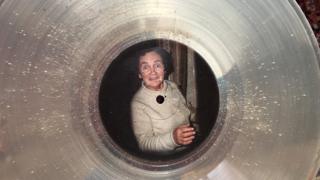
There is about a teaspoonful of Madge Hobson’s ashes in her record
John Hobson is listening to a recording of conversations with his late mother, mostly small talk about family.
The words are on a vinyl record, although this is more than a recording of memories.
The ashes of Madge Hobson are combined with the vinyl, with a photograph and details of her life printed on the labels.
“It makes the perfect family record, which can be passed down the generations,” says Jason Leach, 46, the founder of And Vinyly, which produced the disc.
The firm is part of a fast-growing sector of the end-of-life industry. No longer need ashes be stored in an urn or scattered to the wind. Now you can wear, drink from, or display a little part of what is left of your loved one.
Mr Hobson, a 69-year-old sculptor, says his mother, a devout churchgoer, would thoroughly approve of her record.
“I had to weigh out a quantity of the ashes [which had been kept in an urn], and put a large teaspoonful into a number of small plastic bags, one for each disc,” he says.
Fifteen records were pressed for family and friends. Says Mr Hobson: “I think And Vinyly has undoubtedly helped to keep the memory of my mother alive.”
Image copyright And Vinyly
Image caption
Jason Leach says he wants to increase production to meet increasing demand
Mr Leach, based in Scarborough, north east England, began pondering the possibilities of pressing ashes into records about 10 years ago.
There was no business plan. He was just reflecting on mortality, issues brought into sharper focus when his mother began work at a funeral directors.
“I was amazed by how little I or any of my friends had even properly considered or even accepted our own mortality, and how incredibly sheltered many of us are from death and conversations around it,” Mr Leach says.
“It was not intended to be a business. It was the result of having a bit of fun with what at the time felt like a shocking and disconcerting inevitability.”
The process is the same as making a standard vinyl disc, with ashes (human or pet) added at a specific stage in production.
“It’s a balance between adding enough ashes so as to be seen, but not so much as to affect the grooves’ smooth playing,” says Mr Leach.
“There will, of course, be some extra pops and crackles resulting from the inclusion of ashes – but we like these, as this is you.”
Prices vary as every request is different, he says. A basic package costs about £900, rising to about £3,000.
Options include 7-inch or 12-inch discs, specially-composed music, a portrait painted on the record using the ashes, and clear or coloured vinyl.
Image copyright Algordanza
Image caption
This could be you – an Algordanza diamond is made from human ashes
Mr Leach, a music producer and music label owner, currently presses about two discs a month that have human ashes added to them, on equipment he already owns.
But he is in the process of arranging more funding to meet rising demand. He is also linking with funeral homes which will offer the service. “The concept markets itself,” he says.
“Of course, there are those who find it strange, even creepy, but most people actually come round to the idea.”
And his plans for his own record? Spoken words from him, his partner of more than 25 years, and their two daughters, plus some music he has written.
“I like to think about my great, great grandchildren listening to me. This is about as close to time travel as I’m going to get,” he says.
Image copyright Algordanza
Image caption
Algordanza’s diamond-making machines produce more than 1,000 stones a year
In Domat/Ems, Switzerland, Rinaldo Willy, 37, has another way of keeping memories alive – turning ashes into diamonds.
“I was diagnosed with cancer at the age of 21, and therefore was sensitised to the topic of death,” he says.
While a business studies student, in 2003, he read about isolating carbon from ashes to create synthetic diamonds. A year later, with his professor, he founded Algordanza.
A diamond is 99.9% carbon, while the human body is 20%. After cremation about 1-5% of carbon remains.
Natural diamonds – symbols of love and the everlasting – are created under enormous pressure and high temperatures inside of the earth. Algordanza replicates the process in its laboratory, creating stones within weeks.
About 85 diamonds a month are made, costing between about £2,800 and £12,700.
More stories from the BBC’s Business Brain series looking at quirky or unusual business topics from around the world:
The start-up investment in Algordanza was £300,000, with Mr Willy using all his savings.
“After six years, we were able to pay ourselves a proper salary,” he says. The business now employs 60 people worldwide, with 12 based at the Switzerland headquarters.
Many of Algordanza’s customers have gone through huge trauma. “We have families who lost someone in events and incidents such as the tsunami in Thailand, the earthquake in Chile, soldiers who lost their lives on duty in Afghanistan, the terror attack in Madrid, the flight crash of Germanwings,” Mr Willy says.
In Santa Fe, in the US, Justin Crowe, 29, uses cremated ashes as raw material for pottery.
A fine art graduate, he founded Chronicle Cremation Designs in 2016. He already ran a ceramics studio, so needed minimal initial investment. But he has now raised $100,000 (£78,400) seed funding to expand.
Image copyright Lifeware
Image caption
At Chronicle Cremation, Justin Crowe will turn ashes into home decor and small jewellery pieces
A typical ceramic glaze is made up of flint, minerals and clay. “We’ve developed a special glaze recipe that incorporates the cremated remains, which ultimately function to form the gloss you see on the surface of the work,” Mr Crowe says.
His Lifeware product line includes vases, urns, and coffee cups. The most popular items are candle luminaries and jewellery. Prices range from $195 for a necklace up to $995 for a large bowl.
Image copyright Chronicle Cremation
Image caption
The ashes are used to help glaze the cups
He gets plenty of unusual requests, such as from a women who wanted the ashes of her sister and two dogs glazed on to coffee mugs.
Mr Crowe acknowledges that some people feel that transforming someone into a piece of homeware is disrespectful.
But, he says, a flower vase or candle holder provide daily reminders of loved ones. “Ultimately, the pieces are about keeping memories close in daily life.”
Follow Business Brain series editor Will Smale on Twitter @WillSmale1
As Brexit negotiations continue, how are EU workers in the United Kingdom feeling about their future, their right to work in the country and their job security?
The BBC visited Northern Industrial, a small family business in Blackburn that repairs and revamps old industrial parts. Fifteen percent of the workforce are from the EU.