Category: Business News

  • Coronavirus: Tui scraps Spanish holidays amid quarantine ‘blow’

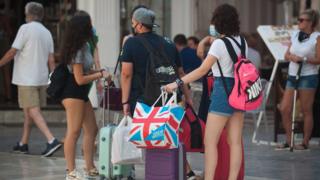
    British tourists in Malaga

    Image copyright
    Getty Images

    The UK’s biggest tour operator, Tui, has cancelled all mainland Spanish holidays until 9 August.

    The move comes after the government imposed a 14-day quarantine on people arriving in the UK from Spain.

    The firm said all those going to the Balearic and Canary Islands could still travel as planned from Monday, although flights before then are cancelled.

    The airline industry has reacted with dismay to the decision to impose the quarantine, calling it a big blow.

    The Foreign and Commonwealth Office (FCO) is advising against all but essential travel to mainland Spain. Quarantine measures apply to those returning from mainland Spain, the Canary Islands and the Balearic Islands, such as Majorca and Ibiza.

    British Airways is still operating flights, but said the move was “throwing thousands of Britons’ travel plans into chaos”.

    Budget airline easyJet is also maintaining a full schedule,.

    Rob Griggs of Airlines UK said it was a “big blow” to the aviation sector.

    He told the BBC that individuals should be tested for coronavirus instead of having to self-isolate automatically.

    “We back the idea of voluntary testing on arrival or before you leave,” he told BBC Breakfast.

    “We think testing would… enable individuals to come back without the need for quarantine if they test.”

    Uncertainty and confusion

    Mr Griggs also called on the government to be “a little more specific” in its advice, since the latest spike in coronavirus cases in Spain did not affect the whole country in the same way.

    Tui said it would contact customers affected and offer them the right to cancel or amend their holidays,

    “All customers currently on holiday can continue to enjoy their holiday and will return on their intended flight home,” it added.

    Tui said health and safety was its highest priority, but urged the government to “work closely” with the travel industry.

    “This level of uncertainty and confusion is damaging for business and disappointing for those looking forward to a well-deserved break,” it added.

    Quarantine measures for UK travellers were first introduced in early June. But after pressure from the aviation and travel industries, the government and devolved administrations published lists of countries exempt from the rules.

    The decision to remove Spain from those lists was announced on Saturday following a spike in Spanish coronavirus cases, with more than 900 new cases reported on Friday.

    Spanish officials have also warned a second wave could be imminent as major cities have seen cases surge.

    Image copyright
    Reuters

    Image caption

    BA is among the airlines disappointed by the government’s move

    The Airport Operators Association said the new measures would “further damage what is already a fragile restart of the aviation sector, which continues to face the biggest challenge in its history”.

    However, easyJet said it was “disappointed” and would operate a full schedule in the coming days.

    “Customers who no longer wish to travel can transfer their flights without a change fee or receive a voucher for the value of the booking,” the company said in a statement.

    Industry damaged

    A spokesman for the Association of British Travel Agents (Abta) said the government’s quarantine rule change was “disappointing”.

    “We suggest the government considers lifting the quarantine rules for flights to and from certain regions with lower infection rates, or to places such as the Balearic Islands or the Canaries – which are geographically distinct from mainland Spain – to avoid further damage to the UK inbound and outbound tourism industries,” he said.

    People currently on holiday in Spain have been advised by the Department of Transport to follow the local rules, return home as normal, and check the Foreign Office’s travel advice website for further information.

    The Association of British Insurers advised holidaymakers that if they were already in Spain when the government’s advice changed, their insurance was likely to cover them until they returned home.

    But it added: “Travelling to countries against FCO advice is likely to invalidate your travel insurance and this would apply to those yet to travel to mainland Spain.

    “Customers looking to change or cancel their travel plans should speak with the airline provider, tour operator or travel agent in the first instance.

    “If you booked your trip or took out your travel insurance after Covid-19 was declared a pandemic, you may not be covered for travel disruption or cancellation. In either circumstance, we’d advise checking with your insurer.”

  • Coronavirus: Travellers from Spain told to quarantine

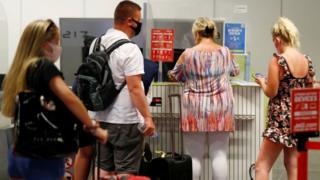
    British tourists at an airport

    Image copyright
    Reuters

    Image caption

    The measure is likely to cast doubt on thousands of Briton’s holiday plans

    Travellers arriving in the UK from Spain must now quarantine for 14 days, under new coronavirus travel rules.

    They were announced on Saturday following a spike in coronavirus cases in Spain, with more than 900 new cases of the virus reported on Friday.

    Spanish officials have also warned a second wave could be imminent as major cities have seen cases surge.

    Airlines including British Airways have criticised the new measures as “yet another blow” to British holidaymakers.

    And Rory Boland, editor of consumer rights magazine Which?, said many travellers would be “deeply angry” that the government did not make the decision 48 hours earlier “before tens of thousands of them flew off for their summer holidays in Spain”.

    “Many would not have travelled if they had known they’d face 14 days of quarantine on their return,” he said.

    Prof Jonathan Van-Tam, deputy chief medical officer for England, said the timing of such a measure will never suit everyone.

    “Whenever a decision is made there will always be people who have just left the UK,” he said.

    “So there is no magic time at which to do this. The thing that we have to do is do it as soon as we are certain about the data.”

    People currently on holiday in Spain have been advised by the Department of Transport to follow the local rules, return home as normal, and check the Foreign Office’s travel advice website for further information.

    The Foreign Office is advising against all but essential travel to mainland Spain. Quarantine measures apply to those returning from mainland Spain, the Canary Islands and the Balearic Islands, such as Majorca and Ibiza.

    It is unlikely that any travel insurance will be valid where the Foreign Office advice states UK residents should not travel, according to BBC personal finance reporter Kevin Peachey.

    Among those affected by the new rules is Transport Secretary Grant Shapps, who began his holiday in Spain on Saturday. He is expected to continue his trip as planned and isolate in line with guidance on his return.

    Image copyright
    Lois Stothard

    Image caption

    Lois Stothard had planned a surprise trip for boyfriend James Allott but has had to cancel

    Lois Stothard, from South Yorkshire, told the BBC she had booked a holiday to Seville as a surprise for her boyfriend’s 30th birthday – due to fly out on Sunday morning – but now feels that she cannot travel.

    “I’m a key worker – I’m a teacher – and my boyfriend has work commitments so we cannot quarantine for 14 days when we return,” she said.

    “We can’t get any money back and to change the company want double what I’ve already paid in fees. I’m very disappointed and upset as we’re packed and ready to go.”

    John Blackmore, from Hampshire, was also due to fly out to his family in Spain with his wife and two young children. But the new rules mean he has had to cancel, for fears his wife’s employer would not be able to accommodate her taking an extra two weeks off to quarantine on their return.

    He said he thought it was unlikely they would get a refund for the flight, as it has not been cancelled.

    “I’m devastated,” he told the BBC. “I have family in Spain who haven’t seen their only grandkids since Christmas.”

    Image copyright
    AFP

    The government is urging employers to be “understanding of those returning from Spain who now will need to self-isolate”.

    But Labour’s shadow home secretary Nick Thomas-Symonds called for the government to explain in detail how it would support those affected, adding that the news would be “deeply concerning for families who are in caught in Spain or are planning travel”.

    Quarantine measures for UK travellers were first introduced in early June. But after pressure from the aviation and travel industries, the government and devolved administrations published lists of countries exempt from the rules.

    British Airways said it was “disappointed” about the latest changes to the government’s travel advice and rules, although the airline said its flights were continuing to operate.

    It said the move was “throwing thousands of Britons’ travel plans into chaos”.

    The Airport Operators Association said the new measures would “further damage what is already a fragile restart of the aviation sector which continues to face the biggest challenge in its history”.


    What’s happening in Spain?

    Spain has so far seen more than 28,000 coronavirus deaths. On Thursday, it saw the biggest daily increase in infections since its lockdown ended.

    Catalonia has become the latest region to crack down on nightlife. The wealthy north-east region, which is home to Barcelona, ordered all nightclubs to close for two weeks and put a midnight curfew on bars in the greater Barcelona area.

    The BBC’s Guy Hedgecoe in Madrid says contagion among young people is a particular worry, as they have been gathering in large numbers in cities at night.

    France has warned its citizens not to travel to Catalonia while Norway has said it will start quarantining people arriving from Spain.


    The UK’s biggest tour operator, Tui, cancelled its flights due to depart to mainland Spain and the Canary Islands on Sunday. Customers currently on holiday will be able to return on their intended flight home.

    However, budget airline EasyJet said it was “disappointed” and would operate a full schedule in the coming days.

    “Customers who no longer wish to travel can transfer their flights without a change fee or receive a voucher for the value of the booking,” the company said in a statement.

    A spokesman for the Association of British Travel Agents (Abta) said the government’s quarantine rule change was “disappointing”.

    “We suggest the government considers lifting the quarantine rules for flights to and from certain regions with lower infection rates, or to places such as the Balearic Islands or the Canaries – which are geographically distinct from mainland Spain – to avoid further damage to the UK inbound and outbound tourism industries,” he said.

    Scottish First Minister Nicola Sturgeon tweeted that the decision was made after reviewing the latest data earlier on Saturday.

    “This reinforces the point that these matters are subject to change at short notice and so my advice is to be cautious about non-essential foreign travel,” she said.


    Are you in Spain? Are you planning to travel to Spain? What do you think about the quarantine? Share your experiences by emailing

    Please include a contact number if you are willing to speak to a BBC journalist. You can also contact us in the following ways:

  • Top 10 tips for diversifying your workplace

    Karen Blackett

    Image copyright
    MediaCom

    How can businesses move to better represent their customers and workforces following the cultural shifts aided by the Black Lives Matter movement? Advertising boss Karen Blackett OBE – who was made race equality business champion by former Prime Minister Theresa May – has a series of tips for bosses seeking to tackle racism and to diversify their firms. Ms Blackett is the UK manager of advertising giant WPP and UK CEO of media investment firm GroupM.

    1. Watch out for microaggressions

    I think it’s people just not even realising what they’re saying. [People have said to me:] “With your skin tone you can get away with that colour.” Or, a comment about the size of your lips: “She could take shares out in those.” It’s like a mosquito bite. It’s annoying and itches, but you can live with it. If you have another, and then another, and another, all on the same arm, by the end of the day you’ve got an arm that’s quite painful and quite swollen. And that’s what it feels like if you keep getting those tiny little putdowns day after day.

    2. Look at your phone

    Image copyright
    Getty Images

    I always ask senior leaders to tell me the four people in your phone that you contact most often from a work perspective. Now look at the next four people. Look at the eight people and now start telling me what these people are like. And if they’re similar to you in terms of background, in terms of social class, in terms of race, none of us are doing enough. That applies to me as well.

    • BBC Radio 4 The Bottom Line: How to build a racially diverse business
    • ‘I am still the only person of colour on the team’

    3. BAME is too broad a category

    What’s really important is understanding the differences – even between African and Caribbean. Understanding the differences and what the pressure points are or the triggers are so that you can address it. And I always talk about how important data is, and that really means drilling and mining the data, not lumping it together to get an average.

    Media playback is unsupported on your device

    Media captionFour people from different backgrounds discuss the term ‘BAME’

    4. Get past uncomfortable

    Unless we’re comfortable talking about race and making it part of our everyday vernacular, it’s going to be the elephant in the room every single time. We’ve all got to get comfortable talking about race. But we’ve got one black CEO in the FTSE 100. So it’s something that you have to get comfortable with. It’s something you have to talk about.

    5. Treat diversity like any business issue

    Image copyright
    Getty Images

    If you had a business issue you would absolutely drill down and you would look at where you can improve and where you have targets and how you set them. You break it down and you address it and you focus on it and you have a strategy for it. And actually, more diversity is a huge solution to so many business issues that we all have, where you can source growth and have that real opportunity to leap forward. We do that with any other business metric, and this should be exactly the same.

    6. Use targets and reporting

    If you look at gender, we have seen how the Davies report and the Hampton-Alexander report were a catalyst to organisations doing more to make sure that they had senior women on their decision-making boards. We’ve also seen how gender pay gap reporting has made organisations really analyse and focus on the data and focus on what proportion of our business is female. We’ve seen how legislation can just help businesses focus. I don’t believe in overloading businesses with lots of paperwork and reporting, but when it can make a huge economic difference to the UK and for society as well, I think it’s something that we should do.

    7. Go further than unconscious bias training

    Image copyright
    Getty Images

    I believe that unconscious bias training is hygiene. It’s hygiene, which any responsible company should do. But does it make a fundamental difference to your culture? I don’t believe it does. I genuinely believe in much more active interventions. And that involves the boardrooms of all of our organisations and all of our companies across the UK.

    • ‘I’ve been stared at in disbelief when I introduce myself’

    8. Don’t just level the recruitment playing field

    You need to really focus on your people practices and your interview systems. Because if you level the playing field, you still might not allow somebody to get through the door. It’s actually considering that somebody with a 2:2 degree from a university in a really deprived area, which is where they were brought up, could be the equivalent of a First from a Russell Group university (group of 24 leading universities).

    9. Look beyond universities

    Image copyright
    Getty Images

    We had the first government-backed apprenticeship programme in our industry sector, whereby we looked to people aged 18-24 that haven’t been to university. We specifically looked at recruiting from areas where the schools had above-average exam results, but also an above-average reliance on subsidised school meals. So you had talent, but not necessarily matched with opportunity. We started that in 2012 at MediaCom (she was UK CEO from 2011-16) and it’s been one of the most successful things that we have done to bring diversity of thought and diverse talent into the organisation – not just in terms of more talent from ethnic minority backgrounds, but also social class as well.

    10. ‘Blind’ CVs are only a start

    If [using anonymised CVs] helps with the sifting and getting people through the door because there’s some sort of bias which is happening at the recruitment stage, I understand that. But at some point you have to meet the person, even in the remote working world which we’re in now – whether it’s through a laptop screen or whether it’s face to face. Unless you’ve absolutely, fundamentally looked at your recruitment system – and that system can sometimes perpetuate inequality – then it doesn’t make a bit of difference.

    Media playback is unsupported on your device

    Media captionHow video is challenging the traditional CV

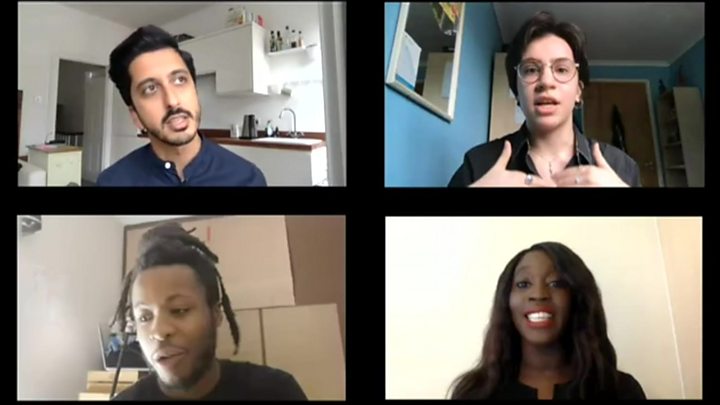
    Karen Blackett was speaking to Evan Davis for The Bottom Line on BBC Radio 4

  • Coronavirus: ‘Soft play is heading for a cliff edge’

    Child in ball pool

    Image copyright
    Getty Images

    Image caption

    Bye bye ball pools: The fun but tricky-to-clean attractions may disappear amid the Covid-19 pandemic

    They are the salvation of a rainy day – where children can fearlessly fling themselves up and down brightly-coloured, spongy mats as parents seek solace with coffee and a chat, the latter usually drowned out by deafening, delirious-with-happiness screams.

    But soft play centres face being wiped out amid the coronavirus pandemic as one of the last industries to have a proposed opening date. In the last three weeks, at least 15 have closed their doors permanently and many more are set to follow.

    More than 25,000 people have signed the #RescueIndoorPlay petition, calling on the government to make a decision on reopening or offer more financial support to the UK’s 1,100 centres, which employ 30,000 people. There is also concern among operators about the impact closure could have on families with young children, which rely on soft play centres for sanity and socialisation.

    “I feel for children and parents’ mental health,” says Helen Whittington, who has started a crowdfunder to replace “tricky to clean” ball pools at DJ Jungles in St Albans and Hemel Hempstead with new sensory areas that would enable social distancing.

    “We have baby classes, NCT meets and are a place for people to socialise – postnatal depression could increase and children lose the confidence to mix and make friends, share and take turns.”

    Image caption

    Helen Whittington says soft play centres are vital for children’s and parents’ mental health

    Simon Bridgland made the heartbreaking decision to close Big Fun House in Canterbury at the beginning of July, which he’d run for six years. The announcement was met with an “outpouring of love” from customers on his Facebook page.

    “I was blown away by the volume of comments,” he says. It was not an easy decision to make, with 17 staff losing their jobs.

    “We’d not had any income whatsoever since March. Soft play isn’t the gold mine people think it is – you make your money in winter to get through the summer months. Most are in big warehouses and cost a lot of money to keep going.”

    Only last year he opened a £50,000 go kart track which had just a few months of use. Instead, he has decided to diversify. Mr Bridgland runs Snowflakes Day Nursery on the same site, and is going to extend it into what was Big Fun House. Children will have the run of the place and its facilities.

    Image copyright
    Simon Bridgland

    Image caption

    The go kart track at Big Fun House was only installed last year

    “It’s going to be one hell of a nursery, what with the sheer volume of space and lots of unique features.

    “Personally, I think soft play is dead. The kids, they can’t social distance. So we were left with no option but to repurpose the centre.”

    Another owner reworking their business is Ellis Potter, managing director of the Riverside Hub in Northampton, who is soon to get a delivery of 80 tonnes of play sand for a pop-up beach on the car park.

    “It’s cost us about £1,000 a day just to stand still with the doors closed, which is a serious chunk of money,” he says.

    “We’ve received hundreds of emails from parents who want to bring a sense of normality back to their children’s lives, because it’s the children that are being affected in all of this.

    “We’ve implemented massive hygiene and safety measures, and spent tens of thousands of pounds with air sterilisation and antibacterial fogging – all the things that we can do to keep safe but the government are just not having it. They just won’t let us open indoor play.

    Image copyright
    Riverside Hub

    Image caption

    Ellis Potter has had “literally hundreds of emails” from parents who say their children have been missing out

    “We’ve 60 staff on furlough who are apprehensive about the future, and we want to give them some clarity. There’s been some very dark times but emails and Facebook messages from customers have kept us going.”

    Mikey Johnson, assistant manager of Jungleland in Telford, said the lack of clarity for soft play centres was “diabolical”.

    Takings went down 90 per cent in the week before lockdown as worried families stayed at home. Within a week it was zero. As the pandemic took hold, Jungleland became a drop-off point for a local food bank.

    Image copyright
    Mikey Johnson

    Image caption

    “Hundreds of families” were helped by the pop-up food bank at Jungleland, which sent supplies to Telford Crisis Support

    In March the firm had 26 members of staff. Now eight remain on furlough, all eyes on the next government announcement.

    “At the minute it’s an unknown,” said Mr Johnson. “Even if we have a date, it’s the rebuilding period after that.

    “We’d probably be working at half capacity, and that’s just not a viable business. We need bums on seats. It’s just a waiting game.”

    Representatives from the British Association of Leisure Parks, Piers and Attractions (BALPPA) – many in furry costumes – descended on 10 Downing Street recently to raise awareness of their #RescueIndoorPlay campaign. The pandemic meant they weren’t allowed to physically hand in a petition, but that is gathering pace on Change.org.

    “We’ve had a huge amount of support from people who use these centres all the time – they are embedded in our local communities,” said Paul Kelly, chief executive of BALPPA.

    “We want the government to tell us the date we can reopen, or tell us why we can’t. There are 1,100 centres and I can’t see them surviving if we don’t hear something soon.

    “We are heading for a cliff edge.”

    Lizzie Elston, 45 from Harpenden, mum to Oliver, eight, is among those who are backing the campaign.

    Image copyright
    Lizzie Elston

    Image caption

    Oliver Elston’s mum says she would have “no hesitation” taking him to soft play because she knows how seriously they are taking cleanliness

    “The benefits of soft play are massive. Oliver’s not into organised sport – we’ve tried to get him into rugby or cricket, but he’s at his happiest when he’s jumping off things just being a ninja,” she says.

    “He’s always absolutely loved soft play – just being a lunatic – so it is brilliant as a parent because you can have a coffee with friends and know he’s safe, either by himself or with friends. It’s so important for his physical and mental wellbeing just not being in front of a screen.

    “It can’t be overestimated, the importance of soft play – it helps how they develop, how they learn and socialise, so it’s critically important for their mental health.”

  • Drivers furious after waiting months for licences

    Tanya Prime

    Image copyright
    Tanya Prime

    Image caption

    Tanya Prime has been waiting more than four months for her documents

    Drivers are fuming after being left without crucial documents because of coronavirus-related delays at the DVLA office in Swansea.

    They report waiting months for replacement documents or licence renewals as reduced staff numbers at the DVLA have left it unable to cope.

    “I sent my documents to the DVLA on 10 March,” Tanya Prime told the BBC.

    The DVLA has blamed the problems on having to cope with the Covid-19 pandemic.

    “We continue to receive paper applications and while we process these as quickly as possible there are significant delays,” it said.

    “This is because the two metre social distancing measures in Wales have resulted in a reduced number of staff on site.”

    Image copyright
    James Balls

    Image caption

    James Balls

    James Balls of Durham told the BBC: “I’ve been waiting nearly eight weeks for paperwork relating to putting a number plate on retention in order to change my car.

    “The DVLA has literally nothing to say other than wait. They couldn’t even tell me how far behind I am in the queue. It’s bonkers.”

    The DVLA said that paper applications have continued to flood into its office throughout the pandemic, with a current average of around 250,000 envelopes received weekly.

    “Our online services are working as normal and we’ve processed more than 18 million online transactions since March,” it added.

    To help, the DVLA has automatically extended photocard driving licences that expired between 1 February 2020 and 31 August 2020 for seven months.

    An anxious wait

    “I may have missed advice on the news about driving licences but I am quite concerned that I have not received my new licence back, having tried to renew it before my 70th birthday,” Susan Wood of Folkestone in Kent told the BBC.

    Early in May she had tried to process her application online.

    “But I got nowhere so I posted it off to Swansea with the form supplied,” she said.

    Image copyright
    Getty Images

    Since then she’s had an anxious wait.

    “On their website there is no clear advice. I did find a telephone number but on ringing it the number was unobtainable.

    “I then found the email form, completed all the questions, only to be told at the end there is nobody available to answer emails.

    “I cannot understand why so many companies have organised their businesses with people working from home, yet this government department cannot have the technology for the staff to answer emails from home.”

    The DVLA told the BBC that Susan Wood was issued a new driving licence in March. “We are writing to her to offer a free replacement if she hasn’t received it,” it said.

    Lost documents

    Tanya Prime of Ilkeston in Derbyshire has been waiting for a response from the DVLA for more than four months and was getting worried about driving because the tax on one of her vehicles is due to expire.

    “I sent five vehicle documents to the DVLA on 10 March to have the address changed on them,” she told the BBC.

    “I have received nothing in return. I posted registered, signed for, and have a Royal Mail confirmed signature of receipt.”

    • UK passport backlog reaches 400,000 due to virus
    • Driving lessons to resume in England from 4 July

    She complained of not being able to get hold of the DVLA by phone and having to send numerous follow-up letters.

    “Their latest response is that they have never received the documents and I must apply for replacements and pay for each one,” she said.

    After an investigation, the DVLA said that Tanya Prime’s documents had been received. “The letter was sent to her in error and we are processing her changes of address application. We’re writing to her to let her know,” it said.

    More complaints

    The BBC has been sent more complaints, while on social media the DVLA is being kept busy apologising to fed-up motorists.

    The DVLA said the best way to deal with queries was online through the GOV.UK website as online transactions will be processed more quickly than paper ones.

    It added that it is prioritising transactions that create the biggest impact on the customer, which include those with ID documents.

    The estimated 790,000 drivers over 70 who have applied for a renewal since March may have been hit by the problems, but the DVLA pointed out that some drivers applying to renew their licence may be able to drive while the agency is considering their application.

    They will need to have a current driving licence and not been told by their doctor or optician that they should not drive. More information can be found here.

    Additional research by Bernadette McCague.


  • ‘They said I’d be cleaning toilets so I quit’

    Sandra Gilbert

    Image copyright
    Sandra Gilbert

    When Sandra Gilbert returned to work at a safari park after weeks of furlough, it didn’t turn out as she had expected.

    “On my return I was told that I wouldn’t be in the gift shop any more,” she says. Instead she would be wiping tables in the restaurant and cleaning toilets.

    Before the pandemic she’d worked for 13 years first as a manager, then as a retail supervisor, talking to customers, tidying displays, ordering stock.

    “I am 60 years old and felt this was very unfair,” she says. “To be pushing a big trolley round, cleaning toilets, it’s a bit of a come-down. I don’t want to sound snobbish, but I felt I was treated badly.”

    The next morning she got up and emailed to say she wouldn’t be returning to work.

    With the end of lockdown, retail outlets have promised customers more frequent and more thorough cleaning regimes. While some businesses are using more contract cleaning services, others including staff at Tesco’s smaller stores will be asked to take on these duties.

    Tesco suggests that by asking staff to clean shelves, floors, windows and shared toilet facilities, stores will be kept cleaner. But many people, including some Tesco workers are sceptical, concerned that staff will end up pushed for time or switching between cleaning and serving customers in a way that might not be hygienic.

    And it is a debate that applies not only to Tesco but to dozens of other workplaces according to BBC readers who shared their views over who should be keeping these spaces clean.

    ‘There’s no-one else’

    Not everyone objects to the new arrangements, however.

    “I think you’ll find that most community pharmacy staff, including the pharmacist, are required to clean the whole of the pharmacy, kitchen, toilet facilities, etc, several times a day. There is no-one else to do it,” writes a pharmacy worker who contacted the BBC.

    “We just get on with it. Every time I see a patient privately in the consultation room it’s up to me to clean it down. Every time we speak to a patient at the counter, we clean it down. Yes, it’s a waste of my professional time, but that’s just the way it is. No one else is going to do it.”

    Staff in hospitals and other medical facilities say they have also pitched in during these unprecedented times, as have primary school teachers who are wiping down desks, door handles, books and toys every day. Now it seems that we will have to adjust to this being the new normal for now.

    Image copyright
    Getty Images

    According to employment experts Acas, employers can ask staff to take on additional duties, such as cleaning, and refusing to do so could provoke disciplinary action. And while trades unions will often support staff who object to such changes, for the most part workers are likely to be obliged to accept the new duties.

    ‘Clean that!’

    “Our store has no specially paid cleaner,” says a worker at a large clothing chain in a retail park, who doesn’t want to be named.

    “We have to clean every hour, and for an hour after store closing. We are supposed to mop the whole store and back of house, clean toilets, common areas as well as the store,” she says.

    She says from the first day back she was expected to clean but was given no practical training, only a ten minute online training module. Managers would simply point and say “clean that”, she says.

    “Cleaning is a skilled job and it will not be done properly by people with no training for example how to disinfect cloths and mop heads when there’s no washing machine.”

    Given that we clean at home, some don’t believe training is necessary. However large scale, public areas can pose different challenges to a domestic bathroom or kitchen. Staff may be expected to use potentially hazardous chemicals, as well as facing the risk of infection with coronavirus if they aren’t given protective clothing.

    Pull together

    Nevertheless Allison Tipper, who works at a 24-hour Budgens grocery store at a Shell petrol station in Somerset, thinks shifting cleaning out of the hands of contractors to shop staff is a smart move.

    “Contract cleaners are poorly paid and work extremely anti-social hours, therefore have little interest in doing a good job. If the task is completed by supermarket employees themselves, in my opinion it is much better.”

    Image copyright
    Alison Tipper

    Image caption

    ‘No-one should think cleaning is beneath them’

    Allison works nights, and while footfall is low in the early hours, she is busy replenishing stock, mopping the floor, cleaning coffee machines, making sure the forecourt is litter free and bins emptied, and cleaning the toilets.

    “I take a lot of pride in cleaning at work,” she says. It’s a small team and she likes to leave the place spotless for when the morning crew arrive.

    She says when she used to work for a big supermarket she thought the contract cleaners were “slapdash” because they didn’t have a reason to do a really good job, whereas, in a small place, it’s in everyone’s interests to keep the environment clean.

    “If you’ve never been asked to clean the loo or the floor you shouldn’t throw a wobbly,” she adds.

    “No one, not even a manager, should consider any cleaning job ‘beneath’ them. Everyone should pull together to do a great job.”

  • ‘You need to support your smaller suppliers’

    Indian online furniture retailer Pepperfry was severely affected during the Covid-19 lockdown, and had to ask staff to take pay cuts. But co-founder Ambareesh Murty says it was just as important to make sure smaller businesses, whom his firm rely on, also survived.

    Video by Jaltson Akkanath Chummar

  • What is redundancy, who can be made redundant and what are my rights?

    Job interview

    Image copyright
    Getty Images

    Job losses are climbing as businesses feel the financial effects of the coronavirus crisis.

    What are your rights if you are made redundant?

    What is redundancy?

    When a business needs to reduce its workforce, it closes jobs and the people doing those jobs are made redundant.

    It is not the same as getting the sack.

    If you are made redundant, you have rights written into law.

    Who can be selected for redundancy?

    You must have been chosen fairly.

    Among the reasons that are not considered a fair basis for selection:

    • Your age or gender
    • You are pregnant
    • You have been a whistleblower
    • You are a member of a trade union
    • You have asked for holiday or maternity leave

    Employers may make selections based on length of service (last in, first out) or disciplinary records.

    Many firms ask for volunteers, and offer a redundancy payment.

    However, it is up to the employer whether they actually select those volunteers for redundancy.

    I’m furloughed. Can I be made redundant?

    You can be made redundant while on furlough, but the same rules of fairness apply.

    Some people will have redundancy rights in their contract which may be more generous than the legal minimum.

    Can my employer make me redundant on the spot?

    No.

    The amount of notice you are given will depend on how long you have been employed:

    • At least one week’s notice if you have been employed between one month and two years
    • One week’s notice for each year if employed between two and 12 years
    • 12 weeks’ notice if employed for 12 years or more

    You are entitled to a consultation with your employer if you are being made redundant.

    If an employer is cutting 20 or more jobs at any one time, it must organise a collective consultation involving a union or employee representative. This must start at least 30 days before anyone’s job ends.

    If 100 or more people are being made redundant, group meetings must start at least 45 days before anyone’s job ends.

    Even if a company is insolvent and is shutting down, there is still a consultation process.

    Image copyright
    Getty Images

    What redundancy pay am I entitled to?

    If you have worked continuously for your employer for two years or more, you have the legal right to redundancy pay. There is a statutory minimum but some employment contracts and employers are more generous.

    The amount is calculated from your age, length of continuous service, and current salary. You will get at least:

    • Half a week’s pay for each full year worked when you’re under 22
    • A week’s pay for each full year worked when you’re between 22 and 41
    • One and a half week’s pay for each full year worked when you’re 41 or older

    An employer is not obliged to pay you more than £16,140, or £16,800 if you’re in Northern Ireland.

    If you want to check your entitlement, the government has a redundancy calculator as does the Money and Pensions Service.

    If you still have holiday owed when you leave, you are entitled to be paid for that too.

    If a business has gone bust, then redundancy pay may be provided by the government.

    Guides to redundancy

    What happens to the tax I’ve paid?

    The first £30,000 of any redundancy pay is tax-free.

    This amount includes any non-cash benefits that form part of your redundancy package, such as a company car or computer. These will be given a cash value and added to your redundancy pay entitlement.

    Any amount over that will be taxed.

    At the end of the financial year (which runs from April to March) when you have been made redundant, it is worth checking whether you have paid too much or too little tax. This may depend on whether you have found another job.

    What can I do to find another job?

    If you are facing redundancy, you may be allowed paid time off to look for another job.

    If you have worked continuously for your employer for at least two years, you are allowed to take 40% of your working week off – two days out of a five-day week, for example – to attend interviews.

    Your employer will have to pay you for this time. If you take any more time off than this, they do not have to pay you for it, although some employers may be more generous.

    Anyone re-training after being made redundant may also be entitled to grants, bursaries, loans, and free courses.

  • Coronavirus: ‘We made a feature film in lockdown’

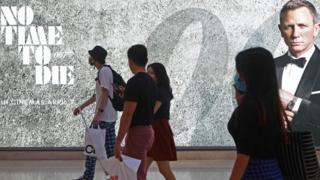
    People walk past poster for James Bond film No Time To Die in Singapore on 29 March

    Image copyright
    Suhaimi Abdullah/Getty Images

    Image caption

    The global release of James Bond film No Time To Die was cancelled in April

    Like so many other industries, Covid-19 struck at the heart of the film industry shutting down production on big blockbusters, closing cinemas and even making the mighty James Bond franchise abandon its scheduled release of No Time To Die.

    Hundreds of millions of dollars had been spent on a global marketing push for an April release, which had to be abandoned.

    With Bond and other blockbusters, including Disney’s new Avatar and Star Wars films, in retreat, some smaller independent film makers have taken lockdown and the pandemic as a creative point of departure.

    Image copyright
    Fizz and Ginger Productions

    Image caption

    Matthew and Tori Butler-Hart are a film-making husband and wife partnership

    “We are not great at really not doing things,” says London-based film director Matthew Butler-Hart who, along with his producer and actress wife Tori Butler-Hart, not only made a feature film during the last few months, they also persuaded stars such as Sir Ian McKellen and Conleth Hill to be in it.

    They had already been working on a large-scale idea for a science-fiction project, which imagined a universe where people were having an experiment performed on them without knowing it. It began with a woman waking up in a van and not knowing who she was.

    While they had been developing the idea as a TV series and a graphic novel, when lockdown came they thought they could make a side-story about the woman.

    Matthew would be the director and using a smartphone would directly film the footage, Tori would produce and act and they would work with what they could for lighting.

    Image copyright
    Fizz and Ginger Productions

    Image caption

    This Jacobean mansion was empty due to lockdown so the couple received permission to film there

    One location immediately fell into their lap, or at least under their feet. Their landlord let them use the apartment below theirs.

    “It hasn’t been updated since the 70s. So it’s got that really sort of otherworldly strange vibe to it. No-one lives there. So it’s kind of stuck in a time,” says Tori.

    The couple filmed what they could in that apartment and then a second location, a massive Jacobean mansion in Oxford where Tori’s mother worked as a lecturer, allowed them access to film.

    “We had to write down exactly where we were going and then they would deep clean everywhere that we’ve gone,” says Tori. But an empty location for free is something that independent film makers dream of.

    Image copyright
    Fizz and Ginger Productions

    Image caption

    Sir Ian McKellen is a long-time supporter of the couple’s film projects

    As lockdown eased, the couple got their long-time collaborators Sir Ian McKellen and Conleth Hill to film socially distanced inserts bringing a bit of star power to the production.

    We speak just a few hours after their film editors sent them the very first assembly of the film – always a nervous time for a director and producer – and they seem genuinely happy with what has come together.

    “The film world one way or another will always survive and thrive because of technology, we know we’re able to adapt to whatever situation happens. There’s always gonna be bumps and lumps in the way but you know, people always find a way,” says Matthew.

    It’s a sentiment echoed by another British film maker who has been busy in lockdown.

    “Film-making is a craft. It’s an art form, but it’s also a military operation,” says Ian Pons Jewell.

    Image copyright
    Ian Pons Jewell

    Image caption

    British director Ian Pons Jewell has worked through most of the pandemic

    During lockdown the director, most used to making adverts with a crew of around 60 per shoot, has not only managed to make a short film on the empty streets of London but also continued to make adverts for some of the biggest brands in the world by a variety of methods.

    “What lockdown did was create a new worldwide event which was shared by every home. Almost every human on the planet has now experienced this once-in-a-generation event,” he says.

    It inspired a short film idea. The story is set in 2040, Covid is still with us and lockdown hasn’t ended.

    Pons Jewell roped in his regular director of photography who lived close by. They hired a London black cab and made the driver one of the central characters of the film.

    Days later Pons Jewell was on his way to Kyiv in Ukraine where he started to set up filming for adverts as the industry there restarted.

    He has also been working around the clock remotely directing adverts that are being filmed in South Korea, while his crew monitor and direct from Kyiv and some of the clients watch from the United States.

    Image copyright
    Zoom

    Image caption

    Ian Pons Jewell directs an advert from Ukraine on Zoom, which is being filmed in South Korea

    People’s body clocks were all over the place but it’s a model that has been used more than once.

    He says the UK has lost out on some film opportunities to other countries where Covid has been dealt with.

    “I know about some jobs that have gone to Australia because the direction is there and they can fully shoot. Sweden as well has done some shoots that you wouldn’t normally shoot there for the American market.”

    But production in some of the big filming facilities is getting under way in the UK, and cinemas have now been allowed to reopen, though it may be some time before the blockbusters come back.

    “The rest of the world will pretty much have to wait for big American markets like New York, like Los Angeles to get moving again,” says Daily Telegraph film critic Robbie Collin.

    While the likes of Bond wait to come back, Collin thinks this could favour smaller film makers.

    “What we will see in the wake of this is I hope one of these great realignments that Hollywood occasionally goes through.

    “There will be fewer enormously expensive blockbusters being produced, these ‘too big to fail’ films. I think a few of them probably will fail and as a result, people will pivot to these smaller, nimbler, more creative movies.”

    That’s something that will give some hope at least to smaller film makers, but little help to the vast majority of people who work in film, many of them self-employed and who wait for major productions to start again.

  • Almost 1,000 apply for receptionist job in Manchester

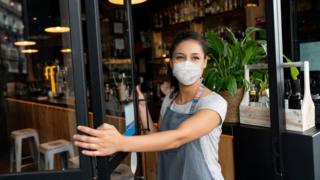
    A cafe worker wearing a mask

    Image copyright
    Getty Images

    When a Manchester hotel advertised for a receptionist on Monday, the owners were shocked to received almost 1,000 applicants in a day.

    They had only expected about 30 people to be interested.

    The UK’s hospitality sector has been savaged by the coronavirus crisis, with many bars, restaurants and hotels struggling.

    “It really is quite sad to see the amount of people that are looking for a job,” the company said.

    “On Monday we placed an advert for a receptionist role for our 20 Stories restaurant in Manchester,” Carol Cairnes, director of people at the restaurant’s owner D&D London, told BBC Radio 4’s Today programme.

    “The next day, James, our head of talent, went to look at applications and was amazed to find that in less than 24 hours we had 963 people apply.”

    Normally for such a role they’d expect at that stage to receive about 30 applications, she said.

    “Going through the candidates who applied, we could see there were a lot of very talented and highly-qualified people that applied for the role, including some restaurant general managers.”

    Hospitality jobs have proved highly-sought-after as thousands of roles have been slashed by restaurant groups.

    In the last two weeks, popular chains such as Pizza Express and Azzurri have kick-started restructures of their businesses that are likely to lead to more than 2,000 job losses and hundreds of restaurant outlets closing.

    Social-distancing rules have also led to businesses reducing staff numbers, as they have re-opened with less space, meaning they can cater for fewer customers at a time now.

    Over-qualified applicants

    Other businesses have reported similar experiences this week.

    Emily Pringle of Alnwick-based fragrance company Notes of Northumberland told the BBC that she received 583 applicants when she advertised a 16 hour-a-week retail job.

    “Most of the applicants were massively over-qualified,” she said.

    “It’s a very sad sign of the times. A large number of people have been educated to PhD level and applying for our job, which is telling about the current state of the job market.”

    Image copyright
    Getty Images

    Image caption

    “Massively over-qualified” people are applying for retail, restaurant, cafe and bar jobs

    In Swansea, Sarah John, founder of Boss Brewing, said that her firm had advertised for a bar manager two days before and were surprised by the number and quality of applicants.

    “We would normally only get five or so responses, but have had 35 people apply already and the calibre of applicants is really high,” she said.

    Most of the applicants had worked at reasonably well-known businesses, but have either lost their jobs, or are still furloughed and worried about their future, she added.

    “There have also been quite of a lot of people who said they would be happy to relocate to work,” she said.

    “We’re in Swansea and have had applications from people from as far as Manchester, Leeds and Cornwall.”

    Vacancies have halved

    Meanwhile, when a London pub manager posted an advert for a £9-an-hour bar job last week, he was so overwhelmed by the response that he took to Twitter to report it.

    Mick Dore, general manager of the Alexandra pub in Wimbledon, said: “I don’t want to alarm anyone about the economy or anything, but I advertised two bar jobs at 16:30 on Thursday. We’ve had well over 400 applicants. Gulp.”

    He added: “We’d normally get a dozen or so sensible replies.”

    Research by the Institute for Employment Studies this week found that the total number of live job vacancies across the country now stands at 433,000.

    That’s less than half of the number in February, indicating that there’s a long way to go in the recovery for the UK job market.

    “Without doubt, this is now the toughest jobs market in a generation, and there are no signs yet of a significant recovery,” said Tony Wilson, director of the Institute for Employment Studies.